DbcultAccessing Vault...
Cult Review
Senior Film Conservator
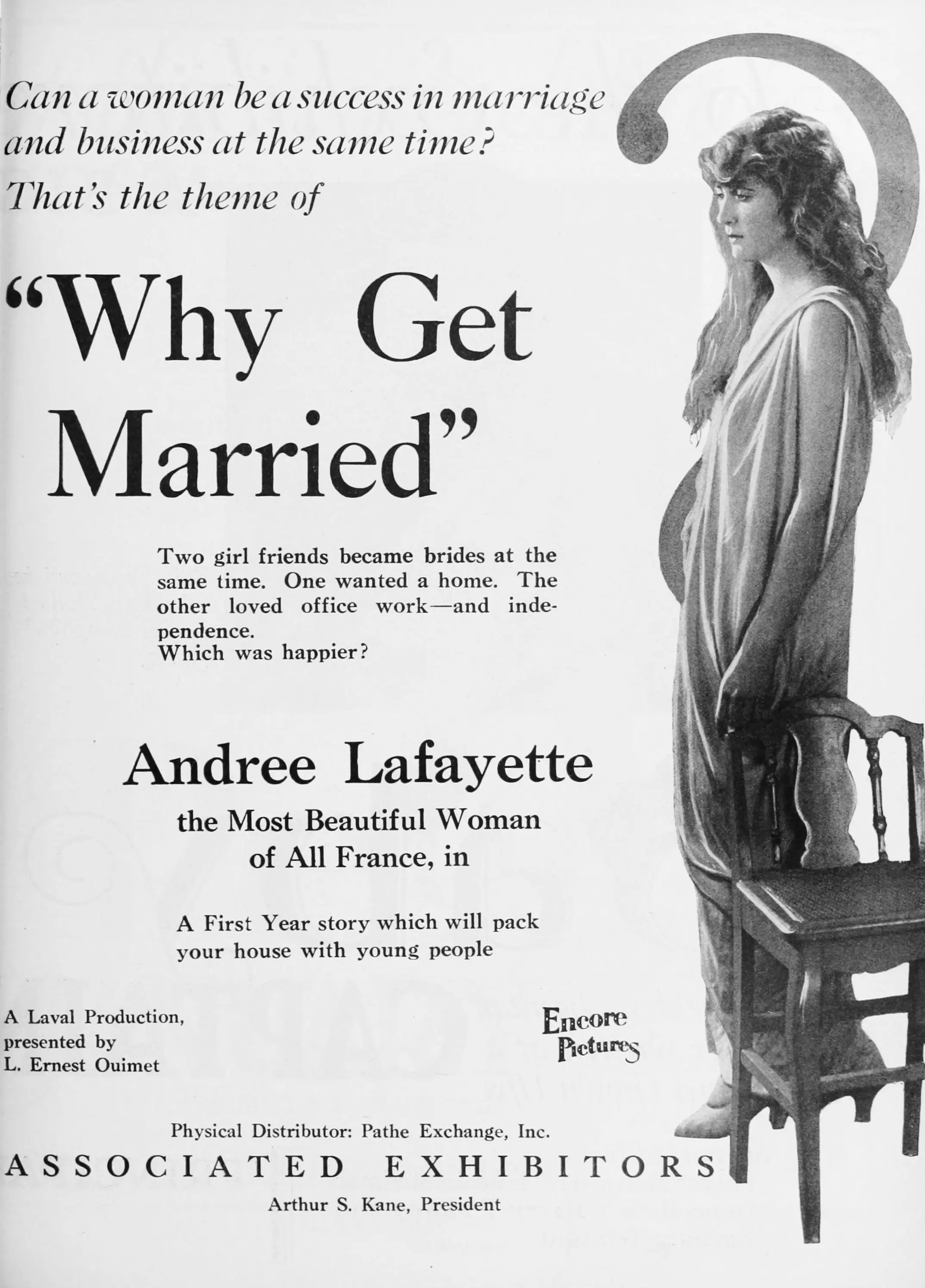
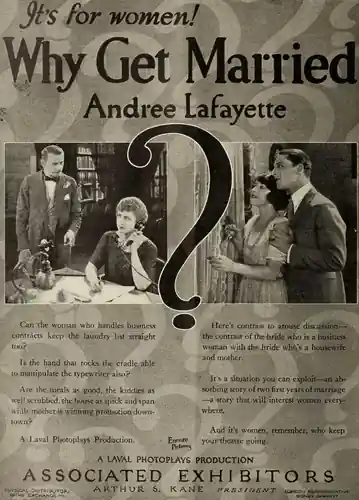
Released in the pivotal year of 1923, Why Get Married? emerges as a fascinating, if ideologically rigid, artifact of the silent era's struggle to reconcile the 'New Woman' with the traditional sanctimony of the home. The film arrives at a moment when the aftershocks of the suffrage movement were still vibrating through the American social fabric, forcing a cinematic dialogue between the allure of the paycheck and the duty of the apron. Unlike the more whimsical explorations of marriage seen in Her Temporary Husband, this William M. Conselman-penned drama operates with a heavy-handed moralism that feels both archaic and strangely contemporary in its anxiety over economic status.
The narrative architecture is built upon a binary opposition between two friends: Janet Carroll and Marcia Wainwright. Janet, portrayed with a soft-focus compliance by Helen Ferguson, represents the idealized surrender to domesticity. Her decision to relinquish her professional identity upon marriage is framed as the 'correct' path, a serene transition into the role of the supportive spouse. In stark contrast, Andrée Lafayette’s Marcia is the disruptor. Her refusal to abandon her career after marrying Jack Wainwright (Jack Perrin) sets the stage for a psychodrama rooted in the fragility of the 1920s male ego. The film doesn't just suggest that a working wife is a social anomaly; it posits her ambition as a corrosive force that directly invites misfortune upon the household.
One of the most arresting aspects of Why Get Married? is its unflinching depiction of Jack Wainwright’s downward mobility. In a sequence of events that mirrors the economic anxieties found in The Man Life Passed By, Jack loses his respectable position and is forced into the grueling, soot-choked reality of a railway freight-man. This transition is not merely a change in occupation; it is a visual and spiritual demotion. The contrast between his grimy, manual labor and Marcia’s continued presence in the polished world of commerce creates a visual dissonance that the film exploits to generate tension. Jack’s reduction to a 'freight-man' serves as a visceral metaphor for the perceived loss of patriarchal authority when the wife remains the primary, or even equal, breadwinner.
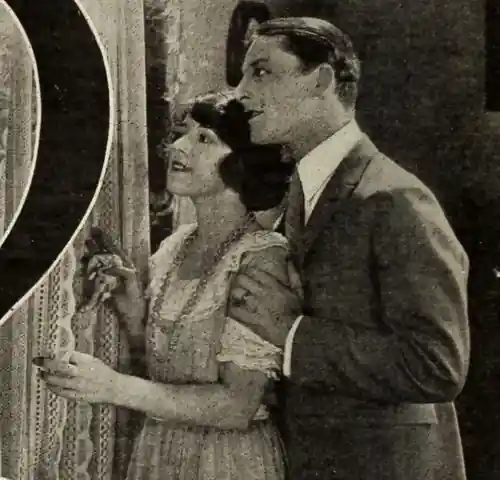
The cinematography during these railway scenes captures a certain industrial grit that stands in opposition to the soft, ornate interiors of the upper-middle-class homes. It is here that the film’s subtext becomes text: the world of work is a masculine battleground, and Marcia’s presence in it—even if successful—is presented as a violation of the natural order. This thematic thread is handled with more nuance here than in the melodramatic excesses of Burning the Candle, yet the underlying message remains a stern warning against the blurring of gendered spheres.
No silent melodrama is complete without a catalyst for chaos, and Rodney Stone (Max Constant) fills this role with a reptilian grace. As the son of Marcia’s employer, Rodney represents the predatory side of the professional world. His advances toward Marcia are not merely romantic; they are an exercise in power. When Marcia rejects him, his retaliation through anonymous letters—claiming mutual infidelity between the two couples—transforms the film from a social drama into a suspenseful thriller. This 'epistolary poison' is a common trope of the era, yet it is used here to underscore the vulnerability of the working woman to the whims of powerful men.
The letters act as a narrative accelerant, igniting the latent insecurities within both marriages. The film cleverly uses these missives to explore the theme of perception versus reality, a concept also central to the plot of The Lady of the Photograph. However, in Why Get Married?, the focus remains squarely on how these lies confirm the characters' worst fears about their unconventional lifestyle. Jack’s immediate belief in the letters speaks volumes about his internalised shame over his economic status; he is primed to believe he has been cuckolded because he feels he has already failed as a provider.
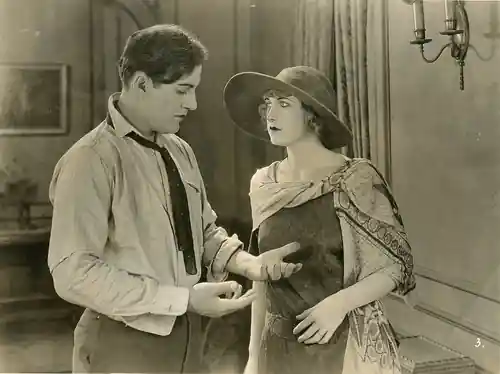
The climax of the film is a masterclass in the silent era's reliance on physical action to resolve complex emotional conflicts. When Jack finally uncovers Rodney’s duplicity, the resolution isn't found in a quiet conversation or a legal challenge, but in a 'thrashing.' This return to primal physicality allows Jack to reclaim the masculinity he felt he lost in the railway yards. It is a cathartic moment for the audience of 1923, signaling a return to a world where problems are solved with fists rather than negotiations. This visceral redirection of energy is reminiscent of the rugged justice found in The Brute Master, though here it is transposed into a domestic setting.
However, the true 'resolution' for the film’s moral compass is not Jack’s victory over Rodney, but Marcia’s subsequent decision to quit her job. The film frames this not as a defeat, but as a homecoming. The final frames suggest a restoration of harmony that is only possible once the 'New Woman' has been sufficiently chastened and returned to the domestic sphere. It is a conclusion that echoes the conservative sentiments of The Social Code, where individual desire must ultimately bow to the perceived stability of societal norms.
Technically, Why Get Married? is a handsomely mounted production. The lighting by the uncredited cinematographer uses shadows to great effect, particularly in the scenes involving the anonymous letters, creating a noir-lite atmosphere long before the term was coined. The performances are earnest; Buddy Smith and Bernard Randall provide solid support, but it is the central trio of Lafayette, Perrin, and Constant who carry the emotional weight. Lafayette, in particular, manages to convey a sense of genuine professional competence before the script forces her into a state of penitent domesticity.
When compared to the spiritual inquiries of The Right to Be Happy, this film feels much more grounded in the material and social anxieties of its time. It doesn't seek a metaphysical answer to the question of fulfillment; it provides a socio-economic one. The film’s title is a provocation, but its answer is a resounding affirmation of the status quo. It argues that marriage is only sustainable when it adheres to a specific, rigid hierarchy. While this may alienate modern viewers, it provides an invaluable window into the collective psyche of the early 1920s.
In the grander scheme of silent cinema, Why Get Married? stands as a testament to the medium's role as a social regulator. It captures the tension of a world in flux, documenting the push and pull between the burgeoning corporate world and the ancient traditions of the home. The film’s insistence on Marcia’s retreat into the kitchen is a poignant reminder of the barriers faced by women of the era, even as it attempts to paint that retreat as a victory. It lacks the surrealist ambition of The Dreamer or the sprawling international intrigue of Die Herrin der Welt 8. Teil, but its intimacy is its strength.
Ultimately, the film is a product of its writers and its era. William M. Conselman, who would go on to contribute significantly to the screen, demonstrates a keen eye for the micro-aggressions of marital life. Every look of disappointment from Jack, every smug smirk from Rodney, and every moment of hesitation from Marcia is choreographed to lead the audience toward a singular conclusion. While we might find the ending stultifying by today’s standards, the film’s craftsmanship and its ability to articulate the fears of a generation make it a compelling watch for any serious student of film history. It is a stark, beautifully shot reminder that the 'burning questions' of 1923—much like those in The Burning Question—often revolve around who we are allowed to be when the office lights go out and the front door closes.
A fascinating relic of 1920s gender politics, 'Why Get Married?' is essential viewing for those interested in the evolution of the domestic drama and the silent era's response to the changing role of women in society.
IMDb —
1919
Community
Log in to comment.