DbcultAccessing Vault...
4.5/10
Senior Film Conservator
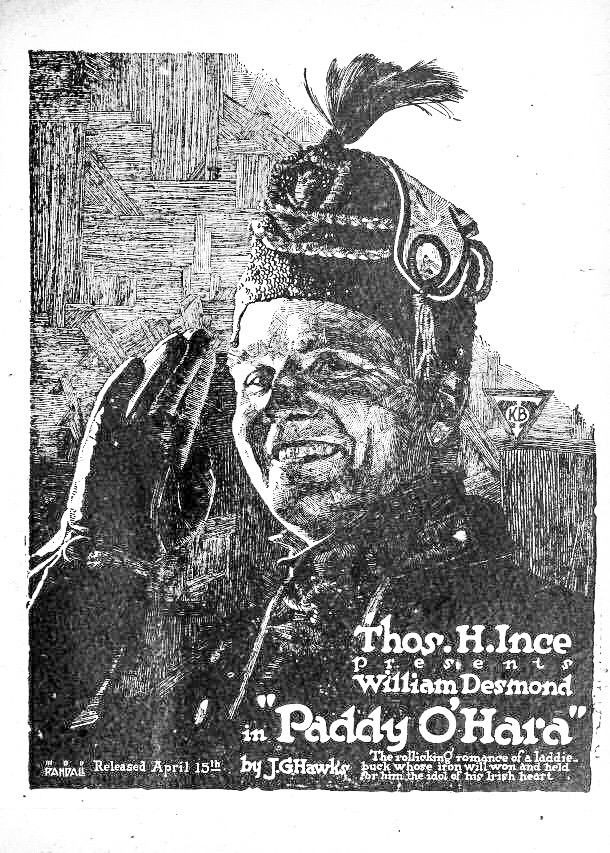
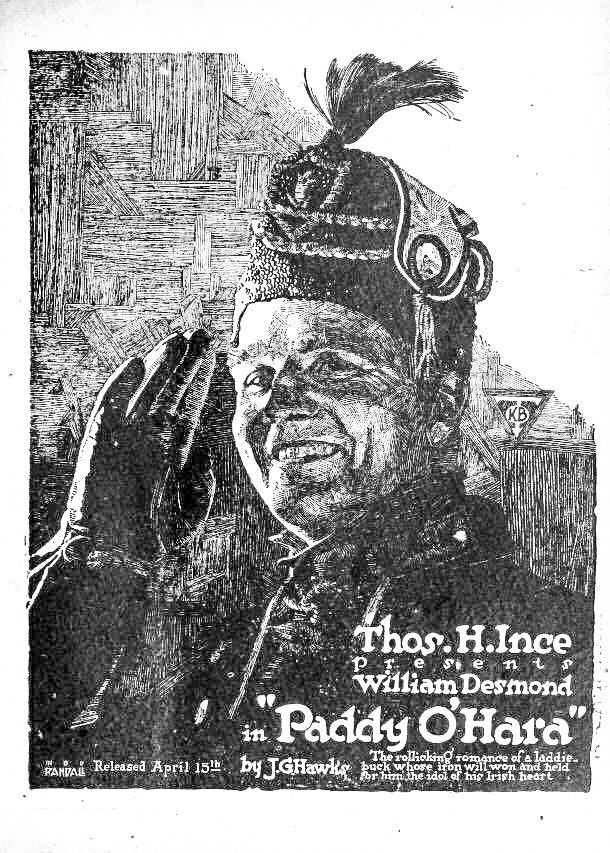
A definitive 4.5/10 rating for a film that redefined the boundaries of cult cinema. Paddy O'Hara remains a cornerstone of transgressive art.
A marriage certificate scrawled in haste, two forged signatures, and the echo of distant howitzers—those are the fragile hinges on which Paddy O’Hara swings, a 1923 silent that feels like finding a blood-spattered love letter pressed between the pages of a forgotten gazette.
Picture the London Blade’s newsroom: cigarette haze, typewriter hailstorm, the metallic perfume of deadlines. Into this crucible struts Paddy O’Hara, played by the exuberant Walt Whitman—yes, namesake of the good gray poet, but here all sinew and swagger, a scribbling musketeer. The camera loves his impish grin, the way he cocks his fedora like a question mark. When the dispatch arrives—“Possible Balkan flare-up, send our best”—he doesn’t walk, he ricochets toward the exit, and we’re already fastening our seatbelts for a film that will sprint across borders as if frontiers were merely suggestions.
Director Robert F. Hill (working from a nimble scenario by J. G. Hawks) refuses to let the exposition congeal. Within ninety seconds we’re aboard a creaking steamer, prow pointed toward the Adriatic shimmer. Hill’s visual shorthand is exhilarating: a map dissolving into live action, a telegraph wire morphing into a whip crack of troops. The economy is miraculous—no title card dawdles—and already the film is humming with the cosmopolitan pulse that defines late-period silent storytelling.
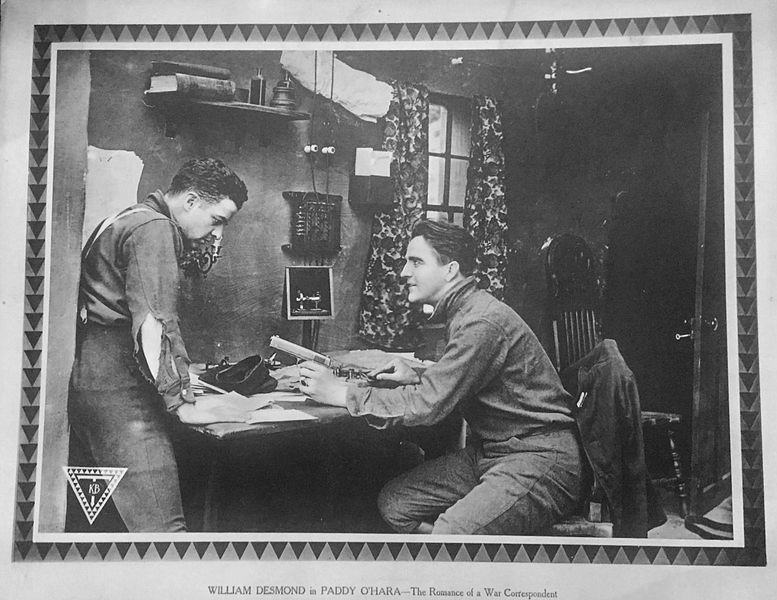
Enter Tarozza, a seaport dreamed up in equal parts by Casanova and cannon smoke. Cinematographer William Marshall bathes the harbor in tungsten yellows that flirt with ochre, then drowns the night alleys in Prussian blues. Against this chromatic seesaw, Paddy sleuths, barters, and befriends Captain Raoul du Plessis (a dashing William Desmond), whose epaulettes gleam like guilty secrets. Their camaraderie is lacquered in irony: the journalist who feasts on truth, the officer shackled to classified lies. When a shadowy provocateur forces Raoul into a duel—rapiers under flickering gaslight—the choreography is vicious ballet; blades sing, a sleeve rips, crimson blooms on white linen. The dying Raoul presses a sealed packet into Paddy’s palm: “Deliver this—else two nations bleed.” Cue identity swap, cue chase music hammered out on orchestral timpani.
And now the film’s pièce de résistance: a vertiginous castle clinging to a crag like an eagle’s aerie. Miniatures? Yes, but shot at twilight with drifting clouds, so the stone turrets seem exhaled by mythology. Inside, Maryska—Mary McIvor in a performance that oscillates between snow queen and kindling—surveys her empty ancestral halls with the exhaustion of someone who has outlived her own fairy tale. When Paddy, still wearing Raoul’s uniform, stumbles into her candle orbit, the tension is exquisite: she sees the enemy’s colors, he sees the photograph come alive. Their first exchange is a duel of eyebrows and silences; the air vibrates with unspoken insults. McIvor excels here—every tilt of her chin is a stanza of scorn.
But the Iderian artillery is rumbling closer. Hill intercuts close-ups of Maryska’s trembling hand on a rosary with long shots of soldiers scrabbling up scree like ants on a kicked hill. The editing rhythm—those percussive Soviet-style cuts—owes a debt to Le crépuscule du coeur, yet Hill’s tempo is more foxtrot than dirge. When Count Ivan (Joseph J. Dowling, regal even while bandaged) barges in, desperation scalds the etiquette: the castle will fall, the last hope is to smuggle Maryska out under a counterfeit identity. Paddy’s passport already reads “Patrick O’Hara”; a stroke of ink appends “and wife.” Cue the marriage of inconvenience.
What follows is a picaresque gauntlet: moonlit glacial bridges, shepherd’s bothies reeking of lamb fat, a cable-car sequence where the camera literally glides alongside the actors—achieved by mounting it on a mining trolley. The perils feel earned because the emotional stakes have been soldered. Maryska begins to thaw; we notice it first in costume: her fur collar loosened, a rebellious strand of hair escaping. By the time they bribe a border guard with a pocketful of Raoul’s gold buttons, the two are finishing each other’s gestures rather than sentences—a courtship conducted in glances and shared oxygen.
Then comes the rug-pull. Safe on neutral soil, Paddy dashes off his scoop in a telegraph shack, the camera lingering on his flying fingers as if the words themselves were cavalry. He returns, arms wide, only to witness Maryska abducted by a biplane that swoops like a pterodactyl. The image is surreal, almost Méliès: a silk-scarved pilot, a cloudbank dissolving into cardboard moon. Silent-era audiences reportedly gasped; modern viewers may smirk at the miniature seams, yet the emotional whiplash is undiminished. Love, once again, is airlifted out of reach.
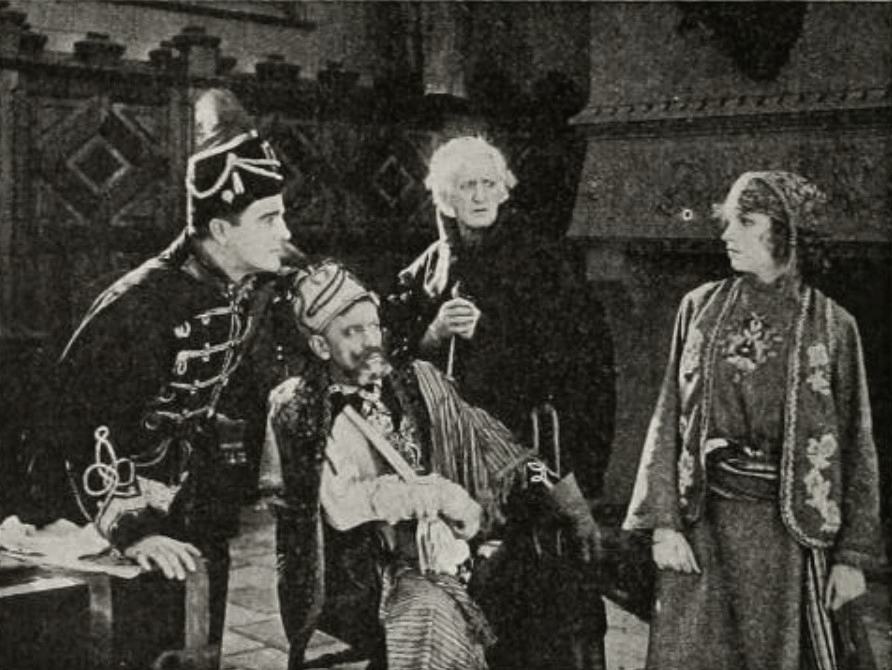
Back in fog-choked London, the palette desaturates to grisaille. Paddy’s newsroom triumph tastes of ash; headlines blare, but his eyes are zombie hollow. Enter the embassy intrigue: a velvet-lined blackmail where diplomats offer him a king’s ransom—money, prestige, a diplomatic divorce—to relinquish Maryska to a prince whose alliance could avert full-scale war. The scene is candlelit baroque, all pilasters and whispers. Paddy’s refusal erupts in a title card that simply reads: “I will not sell my soul at the price of my heart.” It’s corny on paper, yet Whitman’s quivering jaw sells it. Unbeknownst to him, Maryska eavesdrops from behind a tapestry. Her reveal—stepping into the chiaroscuro—plays like divine absolution. No damsel, she chooses the ink-stained muckraker over the marble prince. Cue embrace, iris-in on entwined hands, the end.
Does the plot creak? Occasionally. The geopolitics are gossamer, the Balkan kingdoms as fictive as Ruritania. Yet such quibbles evaporate when you consider the film’s propulsive generosity: each reel gifts a new genre—spy thriller, siege picture, road romance, society melodrama—without ever bloating the 78-minute runtime. Compare it to Half a Rogue (also 1923) which dallies in drawing-room repartee, or The Adventurer whose slapstick swashbuckles but never bruises the heart. Paddy O’Hara pirouettes between tones with a gambler’s insouciance.
Performances? Whitman is a revelation—part Fairbanks vim, part Barrymore melancholy. Watch his slumped shoulders in the telegraph office: the physical contraction of a man whose words have outrun his happiness. McIvor matches him; her arc from hauteur to humility is charted through micro-gestures: the way she finger-spells place names on a fogged train window, the almost imperceptible relaxation of her clavicle when Paddy first calls her by her Christian name rather than title.
Technical bravura abounds. Double exposures render Paddy’s fever dreams: Maryska dissolving into newsprint, cannon smoke curling into bridal veils. For the castle siege, Hill intercuts actual artillery footage—likely sourced from Balkan conflicts of the prior decade—achieving verisimilitude on a shoestring. The tinting strategy is sophisticated: amber for interiors, viridian for nocturnal escapes, rose for the wedding scene, a choice that foreshadows the two-strip Technicolor fantasias soon to come.
Musically, surviving prints often feature a compilation score compiled by Eric Beheim—lilting balalaikas undercutting brass marches, a waltz that mutates into a gallop. If you catch a 16 mm revival, the live accompanist frequently riffs a recurring five-note motif for Maryska that blossoms into major key the moment she steps out from behind the embassy curtain—a flourish that converts silent shadow into Puccini-worthy aria.
Gender politics? Refreshingly, the film refuses to brand Maryska as mere trophy. She engineers their border crossing, speaks five languages, and ultimately confronts the embassy cabal herself. Yes, a man pens her fate off-screen (Hawks), yet on-screen she reclaims agency, turning the final marriage into a contract re-negotiated by her own volition. In contrast, Unto Those Who Sin traps its heroine in punitive piety; here, sin is rebranded as autonomy.
Availability: alas, no pristine 4K master yet exists. The best circulating version is a 35 mm print held by the EYE Filmmuseum, transferred at 2K, occasionally projected at Pordenone. Bootlegs float online—shamefully watermarked—yet even through digital fog the cinematographic vim glimmers. Kino Lorber has hinted at an impending restoration; let’s petition with wallets wide open.
Final calculus: Paddy O’Hara is a kinetic hymn to the moment when journalism courted adventure, when marriage could be both shackle and parachute, when cinema still believed that a trench-coated reporter and a countess might, by sheer kinetic optimism, derail a war. It is not flawless, but its flaws flutter like battle standards—visible, proud, essential. Seek it, preferably on a rainy afternoon when the world feels too orderly. Let its tinting wash over you, let its tintypes of longing lodge beneath your ribs. And when the embassy curtain swishes shut, try not to stand up and cheer; the neighbors will stare, but honestly, who could blame you?
Verdict: 9/10—a bullet-paced silentscape where ink, gunpowder, and heartblood converge.
References for cine-curious diggers: compare the marital masquerade with Blue Blood and Red (1920) or the cliff-top peril in Hearts and the Highway. Each offers a divergent cocktail, yet none quite matches the giddy aftertaste of Paddy O’Hara.
IMDb 1.6
1926
Community
Log in to comment.