DbcultAccessing Vault...
6.3/10
Senior Film Conservator
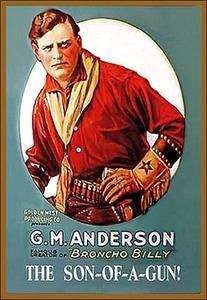
A definitive 6.3/10 rating for a film that redefined the boundaries of cult cinema. The Son-of-a-Gun remains a cornerstone of transgressive art.
Stepping back into the nascent days of cinematic storytelling, 'The Son-of-a-Gun' emerges not merely as a relic, but as a vibrant, if brief, testament to the enduring power of archetypal narratives. This early Western, crafted with the raw energy characteristic of its era, encapsulates a morality play distilled to its purest essence, presenting a stark dichotomy between predatory villainy and selfless heroism. It's a film that, despite its brevity and the technological limitations of its time, manages to etch a poignant and memorable vignette into the annals of film history, largely thanks to the indelible presence of one of cinema's earliest stars, Gilbert M. 'Broncho Billy' Anderson.
The narrative, penned by Jess Robbins and Anderson himself, unfurls with an almost fable-like simplicity. We are introduced to a young man, whose vulnerability is immediately palpable, entrusted with a sum of money critical for his mother's very survival. This solemn duty, a weighty burden for anyone, is compounded by his unfortunate susceptibility to temptation, a fatal flaw that leads him to a card game. This isn't just any game; it's a rigged affair, orchestrated by a crooked dealer whose intentions are as dark as the shadows clinging to the saloon's corners. The stakes are instantly elevated beyond mere coin; they represent life, hope, and the desperate plea of a parent. The audience's empathy is immediately engaged, witnessing the swift, inevitable descent into despair as the young man's meager funds are systematically siphoned away, not through skill or chance, but through calculated deception.
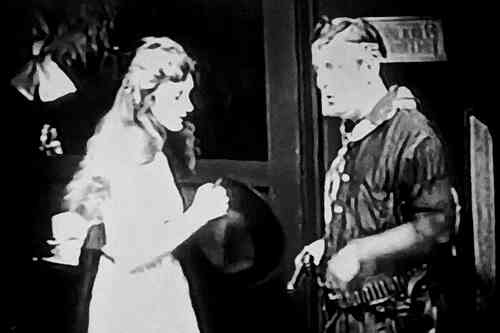
It is at this nadir, this precipice of utter ruin, that the titular 'Son-of-a-Gun' – the local cowboy, portrayed with an understated gravitas by Gilbert M. 'Broncho Billy' Anderson – makes his dramatic, yet utterly natural, entrance. Anderson, a figure synonymous with the genesis of the Western genre, doesn't burst onto the scene with a theatrical flourish. Instead, his arrival is that of an established moral compass, a silent arbiter of justice whose very presence shifts the balance of power. He embodies the frontier ideal: a man of few words but decisive action, whose keen eye discerns the injustice unfolding and whose moral code compels him to intervene. This moment of rescue is not just a plot device; it's the very heart of the Western mythos, where the lone hero rights wrongs and protects the innocent, often against overwhelming odds or insidious trickery. It’s a narrative beat that resonated deeply with early audiences and continues to hold a timeless appeal, much like the straightforward heroism found in a film such as Jim Bludso, where a protagonist's inherent goodness guides his actions.
Anderson's portrayal is, as ever, a masterclass in silent film acting. His expressions, though perhaps broad by modern standards, convey a wealth of emotion and intent. The subtle narrowing of his eyes, the set of his jaw, the deliberate way he carries himself – all contribute to building a character who is both formidable and inherently good. He is not just a cowboy; he is an icon, a template for countless Western heroes who would follow. The very name 'Broncho Billy' became a brand, synonymous with a particular brand of justice and rugged individualism. His influence on the genre is immeasurable, setting precedents for character archetypes and narrative structures that would echo through decades of filmmaking. One could argue that his performance here, though brief, carries the same weight and genre-defining quality as his more extensive roles, establishing a benchmark for the stoic, capable hero.
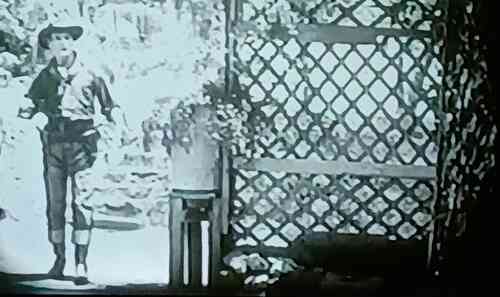
The supporting cast, including A.E. Witting, Thomas Kelly, Fred Church, George Cleethorpe, Joseph Flynn, Mattie Witting, Harry Todd, Joy Lewis, Paul Willis, and Frank Whitson, collectively contribute to the film's atmosphere, even if their roles are often more functional than deeply character-driven. In early cinema, ensemble acting often served to populate the world, providing context and reaction shots that amplified the central drama. The crooked dealer, for instance, must project an air of conniving deceit, while the young man's despair needs to be visibly communicated without dialogue. These actors, through their physicality and facial expressions, successfully convey the emotional beats necessary for the story to resonate. Their performances, though uncredited in many historical accounts beyond their names, are integral to the film's impact, creating a believable, if archetypal, frontier setting.
From a technical perspective, 'The Son-of-a-Gun' is a fascinating glimpse into early filmmaking. The cinematography, while rudimentary by today's standards, effectively captures the confined tension of the card game and the broader, more open feel of the Western setting. The use of limited camera movement and static shots places emphasis squarely on the actors' performances and the unfolding action. Editing is direct, propelling the narrative forward without unnecessary flourishes, a characteristic feature of films from this period. The narrative economy is striking; within its short runtime, the film establishes character, conflict, and resolution with impressive clarity. This efficiency in storytelling, a hallmark of early silent films, often forced filmmakers to be incredibly precise with their visual language, making every gesture and every frame count. In this regard, it shares a certain narrative directness with films like The Bells, where the dramatic thrust is paramount.
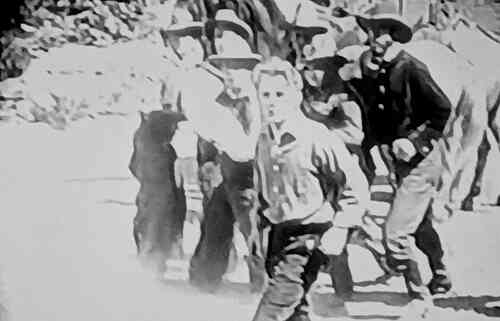
The thematic underpinnings of 'The Son-of-a-Gun' are robust. At its core, it's a story about the inherent good and evil that co-exist, particularly in the untamed expanses of the American West. The young man's plight highlights vulnerability and the consequences of poor judgment, while the dealer epitomizes greed and moral corruption. Broncho Billy's character, conversely, represents justice, integrity, and the protective instinct. It's a morality tale, plain and simple, designed to elicit clear emotional responses: sympathy for the victim, disdain for the villain, and admiration for the hero. This clear-cut moral framework was immensely popular with audiences of the time, offering clear-cut heroes and villains in a world that was rapidly changing and often confusing. The film doesn't delve into moral ambiguities; it celebrates the triumph of right over wrong, a reassuring message that continues to resonate across generations.
Comparing 'The Son-of-a-Gun' to other films of its era, or even later Westerns, reveals its foundational significance. While films like The Masked Rider might have introduced more complex heroic personas, 'The Son-of-a-Gun' establishes the purity of the 'Broncho Billy' archetype – a hero whose intervention is swift, effective, and motivated by an unshakeable sense of justice. It’s less about the mystery of the hero's identity and more about the certainty of his moral stance. The film also stands in contrast to more sprawling, epic narratives that would emerge later in the Western genre. Its focus is singular, intimate, and deeply human, despite the grand backdrop of the frontier. It’s a testament to the idea that compelling drama doesn't always require elaborate plots or massive budgets; sometimes, a simple, well-told story with resonant characters is all that's needed.
The cultural impact of films like 'The Son-of-a-Gun' cannot be overstated. These early Westerns were instrumental in shaping America's self-image, contributing to the mythology of the frontier and the archetypes of rugged individualism, justice, and self-reliance. They provided a form of escapism and moral instruction, projecting an idealized version of a challenging historical period. The popularity of Broncho Billy Anderson himself speaks volumes; he wasn't just an actor, he was a cultural phenomenon, a living embodiment of the ideals his characters represented. His films, including this one, helped solidify the Western as a distinct and beloved genre, paving the way for countless iconic films and filmmakers who would follow in his boot-steps.
Reflecting on the film today, it’s easy to dismiss its simplicity as quaint or dated. However, to do so would be to miss its profound charm and historical importance. 'The Son-of-a-Gun' is a powerful reminder of cinema's origins, a time when storytelling was often direct, unadorned, and deeply impactful. It speaks to universal themes of morality, vulnerability, and the eternal human desire for justice. The fear for the young man's mother, the visceral anger at the dealer's deception, and the relief brought by the cowboy's intervention are emotions that transcend the silent film format and the passage of a century. It's a narrative that, even without spoken words, communicates volumes.
The film's legacy lies not just in its individual merits, but in its contribution to the broader tapestry of early American cinema. It's a piece of a larger puzzle that shows how narratives were constructed, how archetypes were forged, and how the very language of film began to take shape. For anyone interested in the evolution of the Western, or indeed, the evolution of cinema itself, 'The Son-of-a-Gun' is an essential viewing experience. It offers a window into a bygone era, allowing us to appreciate the foundational work that laid the groundwork for the complex, sophisticated films we enjoy today. It's a testament to the vision of pioneers like Jess Robbins and Gilbert M. 'Broncho Billy' Anderson, who, with limited resources, managed to craft narratives that continue to resonate.
In conclusion, 'The Son-of-a-Gun' may be a short film from a distant past, but its narrative power and thematic clarity remain undiminished. It’s a compelling example of early Western filmmaking, anchored by Broncho Billy Anderson's iconic performance and a story that champions justice against deceit. It serves as a vital historical document and a surprisingly engaging piece of entertainment, reminding us that the fundamental elements of compelling storytelling are timeless. Its influence, though subtle in the grand scheme of cinema, is undeniable, echoing through every subsequent tale of frontier justice and the triumph of the underdog. It stands as a vibrant, enduring fragment of the genre's very foundation, a small but potent reminder of where it all began, much like the seminal quality found in films such as The Land Just Over Yonder or Shirley Kaye, which, in their own ways, contributed significantly to the cinematic landscape of their time.

IMDb —
1927
Community
Log in to comment.