DbcultAccessing Vault...
Cult Review
Senior Film Conservator
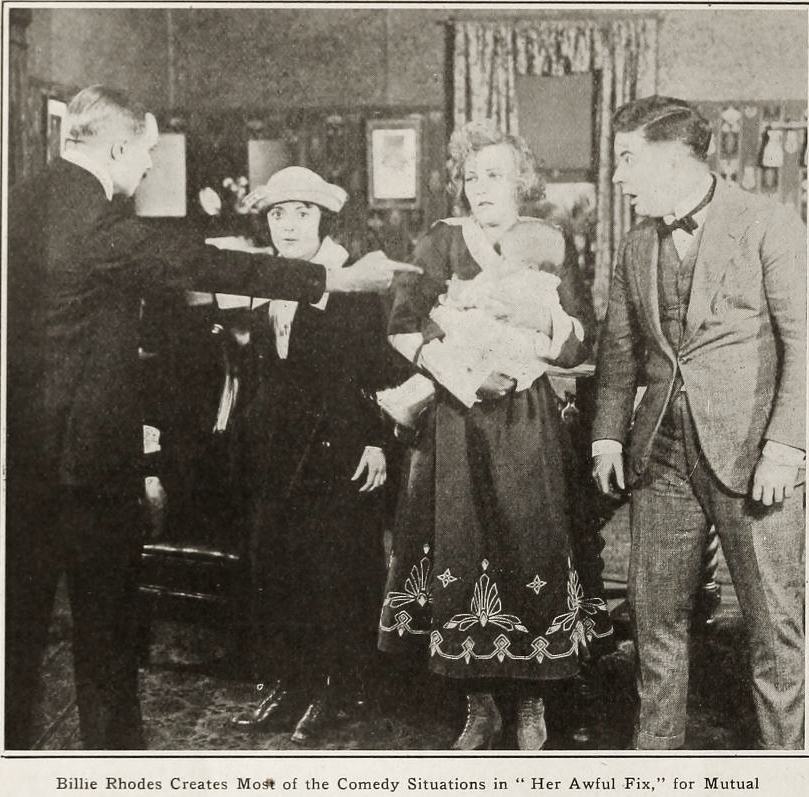
In the annals of early cinematic farce, few narratives capture the whimsical absurdity of human misjudgment and romantic entanglement quite like 1919's "Her Awful Fix." This delightful silent-era comedy, starring the effervescent Billie Rhodes and the earnest Cullen Landis, unfurls a tale of pre-nuptial pandemonium that is as charmingly intricate as it is uproariously funny. At its core, the film is a masterclass in escalating comedic tension, demonstrating how a simple act of altruism, when manipulated by malice, can plunge an entire wedding party into utter disarray. It’s a testament to the ingenuity of early screenwriters and the expressive power of silent performers to craft a narrative that, despite its century-old vintage, still resonates with a timeless appeal for lovers of classic cinema.
The narrative commences with the joyous anticipation of a wedding, the entire party poised for the ceremonial exchange of vows. Yet, the bride-to-be, Mary (Billie Rhodes), a character imbued with a benevolent spirit and an undeniable vivacity, has, unbeknownst to her eager fiancé and the assembled guests, embarked on a compassionate detour. Her destination: the home of a friend whose infant child is suffering from an undisclosed malady. This seemingly innocuous act of kindness, however, forms the fateful pivot upon which the entire comedic edifice of the film is constructed. The child's sickness, initially a minor inconvenience, rapidly transforms into a dire predicament through the machinations of a truly dastardly figure: a physician who also happens to be a spurned suitor of Mary's. This malevolent doctor, his professional ethics eclipsed by personal pique, seizes the opportunity for a deliciously cruel, albeit medically dubious, revenge. He diagnoses the infant's condition as smallpox, a pronouncement designed not to cure, but to isolate.
The immediate consequence of this fabricated diagnosis is a swift and uncompromising quarantine of the entire household. The once-joyful scene is transmuted into one of enforced confinement, trapping Mary and her friend within the walls of a house now deemed a public health hazard. The irony, of course, is that the true 'malady' afflicting the situation is not biological, but rather the virulent jealousy festering in the heart of the jilted physician. This element of a vengeful expert manipulating public fear for personal gain is a potent narrative device, echoing through subsequent cinematic history in various forms, though rarely with such lighthearted comedic intent. One might draw a faint parallel to how misdirection and personal vendettas drive the plot in films like Tigre reale, where emotional manipulation often dictates the characters' fates, albeit in a far more dramatic and tragic vein.
Meanwhile, the groom-to-be, portrayed with endearing anxiety by Cullen Landis, is left in an agonizing state of suspense. Unaware of the true nature of Mary's absence or the sinister plot unfolding, his concern for his missing bride propels him into action. Guided only by the knowledge that Mary was visiting her ailing friend, he sets out to retrieve her, a heroic gesture that inadvertently leads him directly into the heart of the quarantined house. The moment he crosses the threshold, he is irrevocably ensnared, becoming another unwitting victim of the vengeful doctor’s elaborate ruse. This twist amplifies the comedic stakes considerably. The couple, meant to be united in wedlock, now finds themselves united in involuntary isolation, separated from their wedding guests by a wall of medical decree – a wall built on a foundation of pure deception. This kind of ironic entrapment, where the hero's earnest attempts to solve a problem only deepen his predicament, is a classic comedic trope, seen in various forms across silent comedies, often building towards a grand, chaotic resolution.
Billie Rhodes, as Mary, is the undeniable heart and soul of "Her Awful Fix." Her performance is a masterclass in silent screen acting, conveying a spectrum of emotions – from compassionate concern to bewildered frustration – with remarkable clarity and expressiveness. Rhodes possesses an inherent charm that makes Mary instantly sympathetic, ensuring the audience is fully invested in her predicament. Her wide, expressive eyes and subtle facial movements communicate volumes, crucial in an era devoid of spoken dialogue. One can observe a similar vivacity in performers like those in The Little Dutch Girl, where the lead actress's ability to command attention without words is paramount. Rhodes’ Mary is not merely a damsel in distress; she is an active, albeit constrained, participant in her own fate, her resilience shining through the absurdity of her situation.
Cullen Landis, as the anxious groom, provides an excellent foil to Rhodes' spirited Mary. His portrayal of mounting desperation and devoted persistence is both believable and genuinely amusing. Landis masterfully uses physical comedy and exaggerated gestures, common to the era, to convey his character's escalating panic and unwavering love. The dynamic between Rhodes and Landis is palpable, their on-screen chemistry contributing significantly to the film's overall appeal. Their interactions, even when separated by the cruel decree of quarantine, suggest a genuine affection that transcends the immediate comedic chaos. This kind of endearing romantic pairing, navigating extraordinary circumstances, is a hallmark of successful early romantic comedies, making the audience root for their eventual reunion and matrimonial bliss. The challenges faced by lovers, often orchestrated by external forces or misunderstandings, formed the bedrock of many narratives, much like the intricate romantic entanglements explored in Tangled Fates.
The direction of "Her Awful Fix", while perhaps not groundbreaking in its technical innovation, is remarkably effective in its comedic pacing and visual clarity. The film’s strength lies in its ability to build tension and humor through well-orchestrated sequences and clear visual cues. Intertitles are employed judiciously, providing necessary exposition and dialogue to advance the plot without bogging down the visual flow. The camera work, typical of the period, is largely static, yet it is expertly positioned to capture the full scope of the actors' performances and the unfolding farcical scenarios. The visual language of the film is direct and unambiguous, ensuring that even without spoken words, the audience grasps the motivations, the deceptions, and the escalating absurdity of the situation. This directness is a hallmark of many successful silent films, where the narrative had to be conveyed primarily through action and expression, a skill honed to perfection in productions like The Crown Prince's Double, which relied on visual storytelling to convey its intricate plot.
The film’s visual narrative effectively contrasts the initial scene of wedding anticipation with the sudden, jarring reality of the quarantine. The confined setting of the friend's house becomes a stage for escalating comedic chaos, with the actors’ reactions to their imprisonment providing much of the humor. The repeated visual motif of the quarantined house, perhaps with a sign or a guard, serves as a constant reminder of the predicament, amplifying the longing for freedom and the comedic potential of the eventual release. The judicious use of close-ups on key characters, especially during moments of distress or realization, allows the audience to connect intimately with their emotional states, a technique vital for conveying nuance in silent cinema. This meticulous attention to visual detail and emotional resonance is what elevates many silent films beyond mere historical curiosities into enduring works of art.
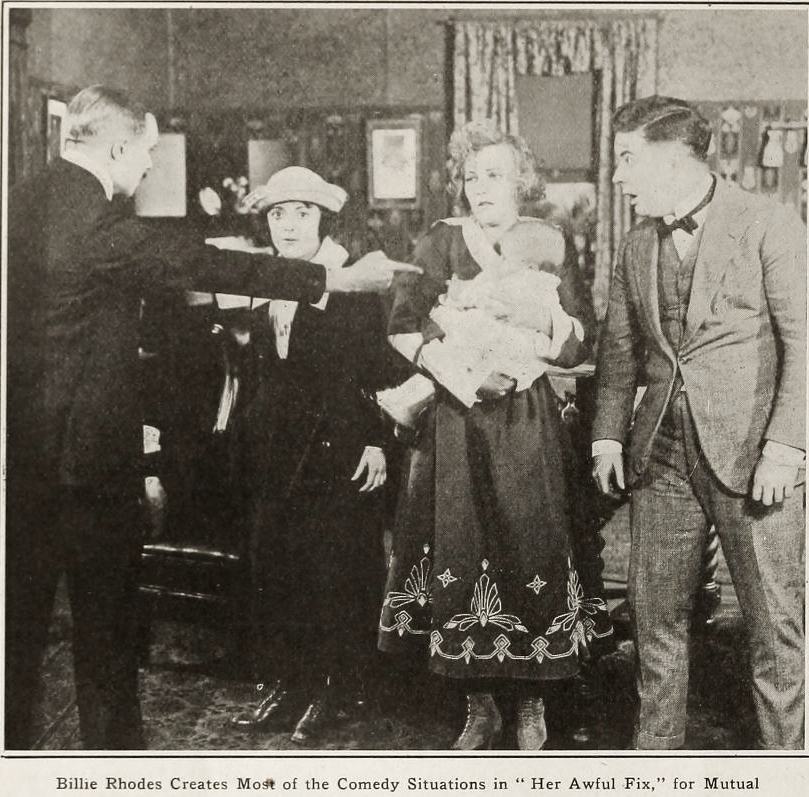
"Her Awful Fix", beneath its comedic veneer, touches upon several enduring themes that lend it a surprising depth. At its heart is the theme of love and devotion, epitomized by Mary’s compassionate nature and her fiancé’s unwavering pursuit. Their journey through this bizarre predicament reinforces the strength of their bond, suggesting that true love can overcome even the most absurd of obstacles. This steadfast devotion in the face of adversity is a powerful and universally appealing narrative thread, found in countless romantic tales across all eras of filmmaking.
Another prominent theme is that of revenge and jealousy. The jilted doctor, driven by personal bitterness, abuses his professional authority to inflict suffering upon Mary. This highlights the destructive power of unrequited love and the ethical compromises individuals might make when consumed by such emotions. The film, in its lighthearted way, serves as a cautionary tale about the dangers of allowing personal feelings to corrupt professional integrity, a theme that, while played for laughs here, can have serious implications in more dramatic narratives. One might consider the dark psychological undercurrents explored in films like Behind Closed Doors, where personal motivations and hidden agendas can create profound and often tragic consequences, standing in stark contrast to the comedic resolution here.
The film also subtly explores the theme of misinformation and its consequences. The entire plot hinges on a false diagnosis, leading to widespread panic and the unjust confinement of innocent individuals. In an era before instant communication and widespread scientific literacy, the pronouncements of a medical professional held immense weight, making the doctor’s deception particularly potent. The swift public reaction to the smallpox scare underscores the power of social perception and fear, a timeless concept that continues to resonate in contemporary society. The resolution, where a second, more competent doctor dispels the falsehood, champions the triumph of truth and reason over malicious deception. This narrative arc, where truth eventually prevails, offers a satisfying and reassuring conclusion, a common motif in stories where justice and clarity are ultimately restored.
The comedic tension, meticulously built throughout the film, reaches its crescendo before a most satisfying denouement. Just as the situation seems utterly hopeless, with the wedding plans in complete shambles and the lovers indefinitely separated by a fabricated medical emergency, salvation arrives in the form of another medical professional. This second doctor, untainted by personal vendettas and armed with genuine expertise, conducts a proper examination of the ailing infant. His diagnosis is starkly different from his predecessor's: the child is not suffering from smallpox, but rather from the far more benign and utterly un-quarantinable condition of prickly heat. This revelation is the ultimate comedic punchline, deflating the entire elaborate ruse with a single, simple truth.
With the true nature of the infant's malady exposed, the spurious quarantine is immediately lifted, shattering the walls of confinement that had held Mary and her fiancé captive. The comedic relief is palpable, not just for the characters, but for the audience who have been swept along on this tide of farcical anxiety. The jilted doctor's scheme crumbles ignominiously, his vengeful plot exposed for the petty, unethical act it was. The path is now clear for the long-delayed nuptials. Wedding bells, finally free to ring without the ominous shadow of infectious disease, herald the joyous union of Mary and her devoted groom. It is a conclusion that ties all the comedic threads into a neat, satisfying bow, affirming the enduring power of love and the ultimate triumph of truth. This kind of sudden, liberating reversal is a staple of many comedies, providing a cathartic release after sustained tension, much like the unexpected turns and resolutions found in films such as That Sort, where misunderstandings are finally cleared, leading to a joyful outcome.
"Her Awful Fix" stands as a charming example of early American silent comedy, a genre that perfected the art of visual storytelling and physical humor. While it may not possess the grand scale or dramatic gravitas of some of its contemporaries, its strength lies in its tight narrative, engaging performances, and infectious good humor. It offers a fascinating glimpse into the social anxieties and comedic sensibilities of 1919, a year that saw cinema rapidly evolving into a dominant cultural force. The film serves as a reminder of the foundational principles of comedic storytelling: conflict, misunderstanding, escalating stakes, and a triumphant resolution.
For modern audiences, "Her Awful Fix" is more than just a historical artifact; it is a delightful piece of entertainment that showcases the enduring talent of performers like Billie Rhodes and Cullen Landis. It’s a film that proves the universality of laughter and the timeless appeal of a good romantic farce. Its ability to weave a compelling, funny, and ultimately heartwarming story without a single spoken word is a testament to the artistry of the silent era. In an age of complex narratives and CGI spectacles, there's a refreshing simplicity and genuine charm to this kind of storytelling. It underscores the idea that sometimes, all you need is a clever premise, charismatic actors, and a little bit of well-placed irony to create a truly memorable cinematic experience. Its charm is akin to the simple yet profound narratives found in films like Három hét or Embers, which, despite their varied genres, captivate through compelling character-driven plots and clear emotional arcs.
Ultimately, "Her Awful Fix" is a joyous romp that deserves to be rediscovered by enthusiasts of classic cinema. It's a testament to the power of a well-crafted plot and engaging performances to transcend the limitations of time and technology, delivering a timeless tale of love, deception, and the sweet relief of a happy ending. So, if you're ever in the mood for a dose of vintage charm and a good chuckle, seek out this hidden gem from the silent era – you won't be disappointed by its delightful "fix." The film’s joyous conclusion and the overcoming of seemingly insurmountable obstacles resonate with the celebratory spirit often found in films like De Voortrekkers, where a community triumphs over adversity, or the individual journeys of overcoming challenges as seen in Out of the Drifts.
IMDb 6.7
1935
Community
Log in to comment.