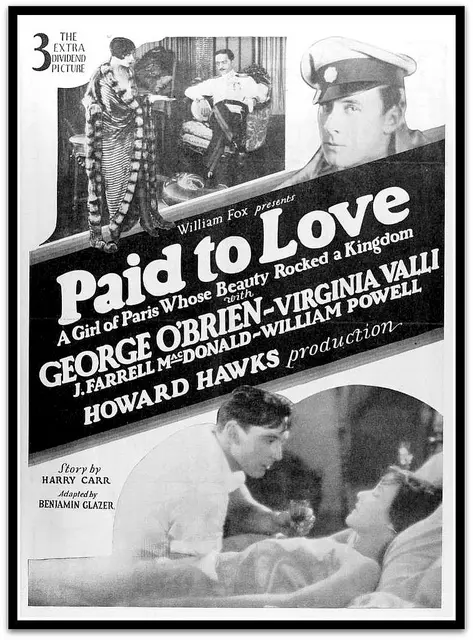
A definitive 6.2/10 rating for a film that redefined the boundaries of cult cinema. Paid to Love remains a cornerstone of transgressive art.
Is Paid to Love worth watching today? Short answer: yes, but with significant caveats that demand a particular kind of viewer. This 1927 romantic comedy, a fascinating relic from Hollywood’s transitional era, offers a unique window into the nascent days of sound film and the burgeoning star power of actors like William Powell and George O’Brien. It’s a film that demands historical appreciation as much as pure entertainment value, a distinction crucial for any modern audience considering a viewing.
This film is undeniably for classic film enthusiasts, those with a keen interest in pre-Code Hollywood’s often audacious narrative freedoms, and anyone who cherishes the early, formative performances of screen legends. Conversely, it is decidedly NOT for viewers seeking contemporary pacing, intricate character development, or narratives free from the social conventions and occasional problematic humor of a bygone era. If you’re accustomed to the slick, rapid-fire storytelling of modern cinema, Paid to Love will test your patience.
This film works because its period charm is undeniable, offering a rare glimpse into the early sound era’s unique blend of stage-bound theatricality and cinematic ambition. The specific performances, particularly from William Powell, demonstrate a charisma that transcends the technical limitations of the time.
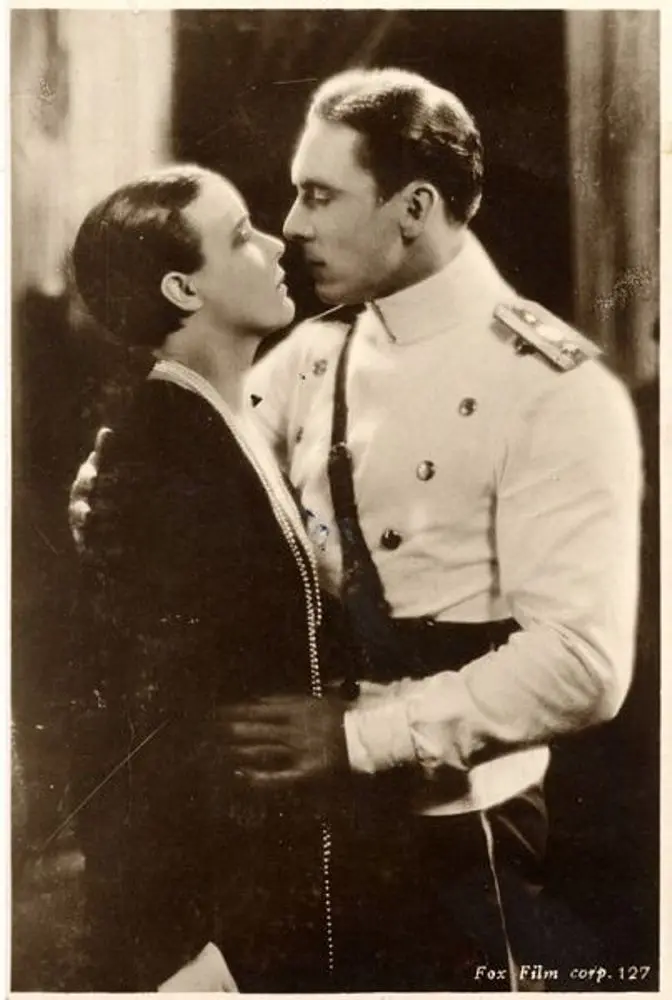
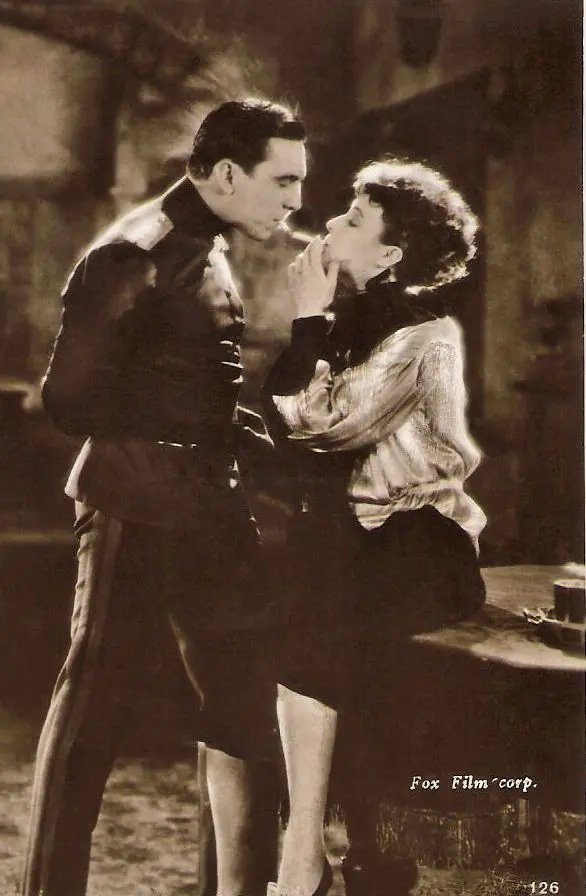
Scene from Paid to Love
Cinematic perspective: Exploring the visual vocabulary of Paid to Love (1927) through its definitive frames.
This film fails because its pacing can be wildly inconsistent, a common affliction of early talkies struggling with new technology, and some of its comedic beats and cultural portrayals are undeniably dated, veering into uncomfortable territory for modern sensibilities.
You should watch it if you appreciate film history, are curious about the evolution of cinematic storytelling, and can approach a movie from nearly a century ago with an open mind, willing to overlook its flaws for its historical and performative merits.
A Royal Gambit for Profit and Love
At its core, Paid to Love presents a premise that is both cynical and charming, a reflection of pre-Code Hollywood’s willingness to explore less-than-ideal motivations. The story centers on Peter Roberts, an American banker, who descends upon a fictional Balkan kingdom named ‘Carpathia’ with a singular goal: to stabilize its shaky economy and, in doing so, maximize his bank’s investment returns. This isn't just about charity; it's about shrewd capitalism thinly veiled beneath international diplomacy. It’s a surprisingly pragmatic setup for a romantic comedy, immediately grounding the fantastical elements in a very real-world drive for profit.
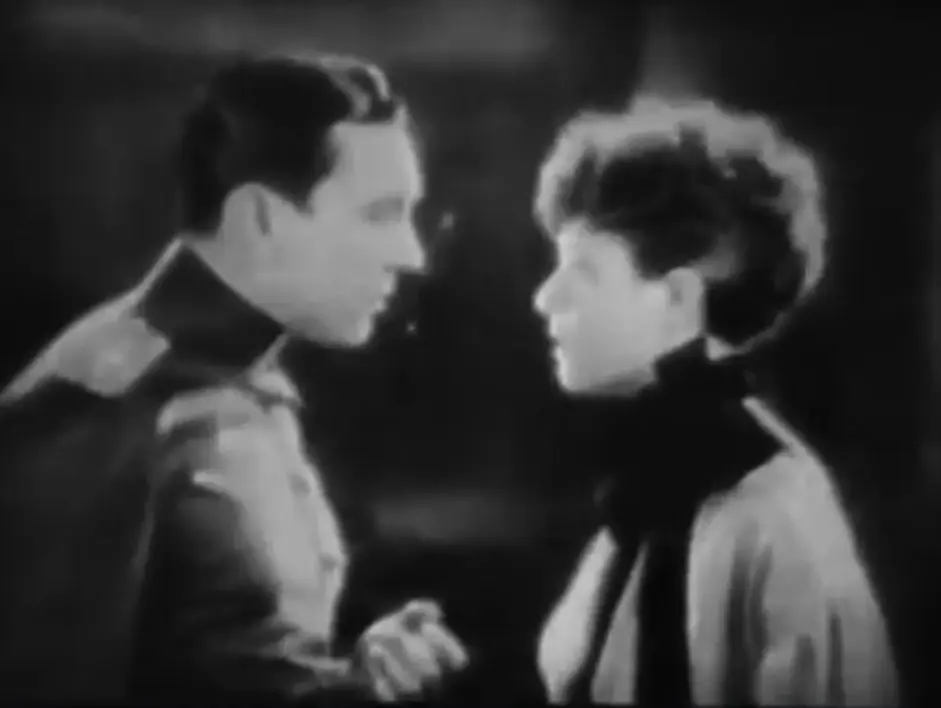
Scene from Paid to Love
Cinematic perspective: Exploring the visual vocabulary of Paid to Love (1927) through its definitive frames.
Roberts, portrayed with a nascent twinkle by William Powell, quickly allies himself with the kingdom’s beleaguered King Michael. Their joint scheme is audacious: arrange a marriage for the Crown Prince, a union they believe will not only bolster national morale but also provide a much-needed economic injection through strategic alliances or perhaps just a good old-fashioned public relations boost. The Crown Prince, played by George O’Brien, initially views this matrimonial mandate with understandable disdain. He's a prince, not a pawn in a financial chess game.
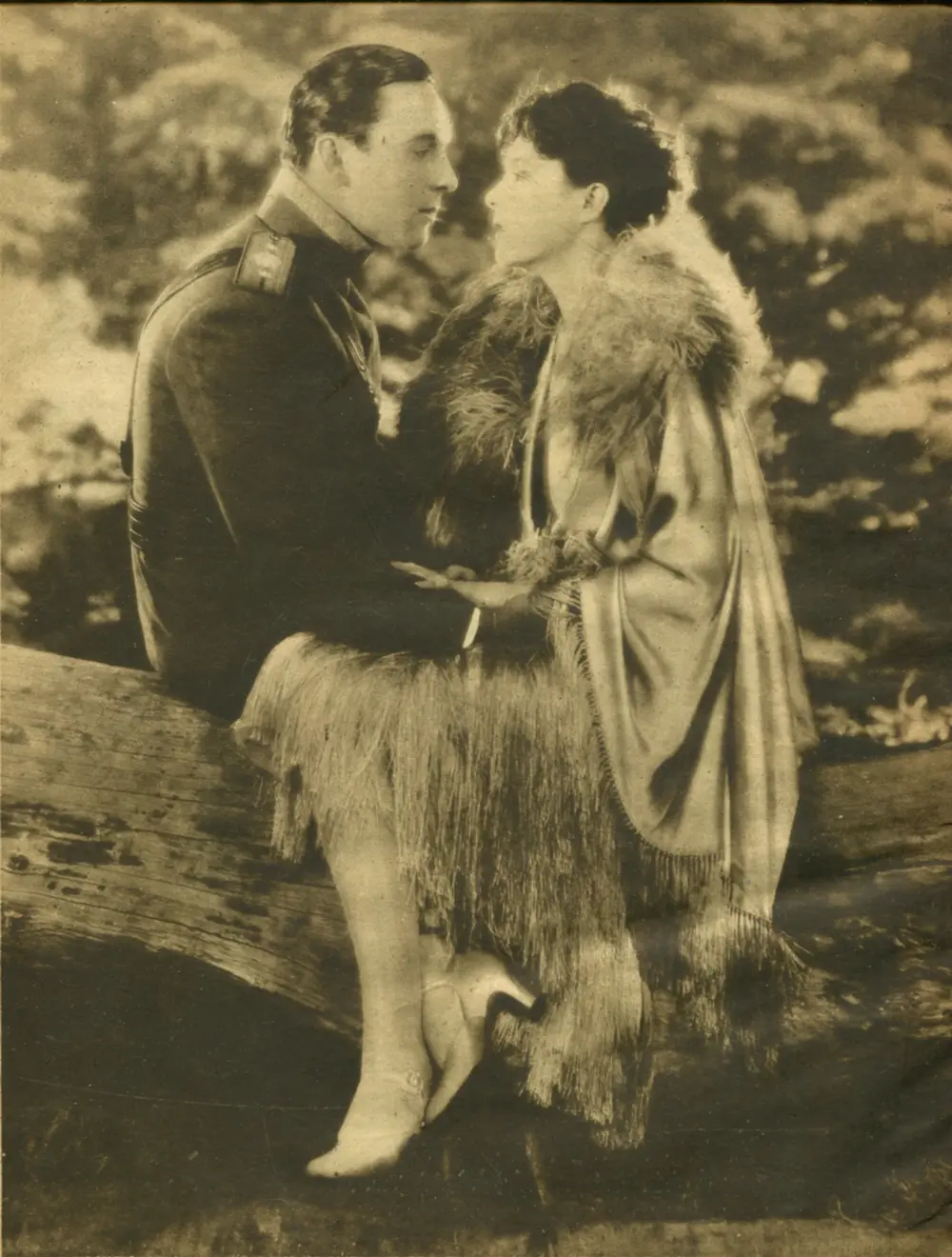
However, the narrative pivots when the chosen bride is revealed not as a fellow royal, but as a vivacious cabaret dancer. This choice, unconventional and scandalous for its time, immediately injects the film with its romantic tension and comedic potential. The prince’s initial resistance gives way to genuine attraction, transforming a cold, calculated arrangement into a burgeoning love story. This dynamic, where duty clashes with unexpected desire, is a timeless trope, but Paid to Love executes it with a distinctive pre-Code irreverence, where the lines between morality and expediency are delightfully blurred.
Performances: A Glimpse of Stardom's Genesis
One of the most compelling reasons to revisit Paid to Love is to witness the early performances of actors who would soon become household names. William Powell, even in this relatively early role, exhibits the effortless charm and sophisticated wit that would define his legendary career. He moves through scenes with a confident ease, delivering lines with a precision that belies the still-new technology of synchronized sound. His portrayal of Peter Roberts isn't just a banker; it's a proto-Nick Charles, a man who navigates complex social situations with a knowing smirk and an underlying, pragmatic intelligence. You can see the genesis of his later iconic roles, such as his turn in The Wolf Man, where his presence elevates even the most dramatic material.
Scene from Paid to Love
Cinematic perspective: Exploring the visual vocabulary of Paid to Love (1927) through its definitive frames.
George O’Brien, as the Crown Prince, embodies the heroic leading man archetype prevalent in the era. His performance is less nuanced than Powell’s, leaning more into a broad sincerity and physical presence. He captures the initial reluctance and eventual infatuation of the prince convincingly, even if his character arc feels somewhat predetermined. O’Brien’s strength lies in his earnestness, making his transformation from reluctant royal to smitten suitor believable within the film’s romantic comedy framework. Compare his straightforward charm to the more complex anti-heroes that would emerge decades later, and you appreciate the specific appeal of this era's leading men.
Sally Eilers, as the captivating cabaret dancer, is the film's vibrant heart. She brings a vivacity and modern sensibility to her role, making her character a compelling foil to the royal stiffness. Her screen presence is undeniable, radiating a youthful energy that makes the Prince’s sudden attraction entirely plausible. Eilers manages to imbue her character with both vulnerability and a surprising strength, navigating the delicate balance of being a chosen bride for political gain while retaining her individual spirit. Her performance, especially in the dance sequences, highlights the era's fascination with the 'flapper' archetype, a woman both independent and alluring.
The supporting cast, featuring familiar character actors like Henry Armetta and J. Farrell MacDonald, provides solid comedic relief and grounding presence. Their reactions and interactions often punctuate the main narrative with well-timed gags, even if some of the humor hasn’t aged gracefully. For instance, a scene involving Armetta's character attempting to navigate courtly etiquette provides a moment of genuine, if broad, physical comedy that stands out amidst the more dialogue-driven exchanges.
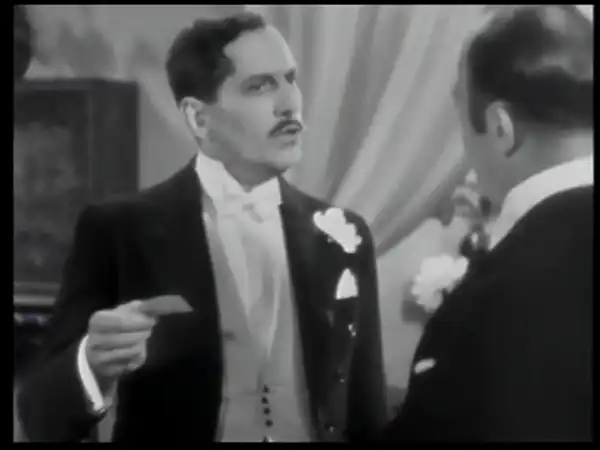
Scene from Paid to Love
Cinematic perspective: Exploring the visual vocabulary of Paid to Love (1927) through its definitive frames.
Filmmaking in a Transitional Era: Directorial Choices and Cinematography
Paid to Love is a fascinating case study in early sound filmmaking. The cinematic approach is heavily influenced by the technical limitations of the time, yet it also showcases the ingenuity of filmmakers striving to adapt. Cameras, once liberated, were often encased in soundproof booths to dampen their whir, leading to static shots and a more theatrical blocking of scenes. This is evident in many of the film’s indoor sequences, where characters often move to the camera rather than the camera moving with them, creating a distinct visual rhythm that feels alien to modern viewers.
Pacing, a crucial element in any comedy, is perhaps the film's biggest struggle. It swings between surprisingly brisk comedic exchanges and moments of drawn-out exposition or silent reaction shots that feel ponderous today. This inconsistency isn't necessarily a flaw in the film's artistic intent, but rather a symptom of the industry finding its footing with synchronized dialogue. Directors were still learning how to integrate sound naturally, often resulting in scenes that feel like filmed stage plays rather than fluid cinematic narratives. A particular scene where the King and Roberts discuss the marriage plan, while dialogue-heavy, suffers from an almost complete lack of camera movement, emphasizing the stage-like presentation.
Despite these limitations, there are flashes of visual flair. The production design, though perhaps modest by later Hollywood standards, effectively creates the illusion of a quaint European kingdom. The cabaret sequences, in particular, manage to convey a sense of energy and spectacle, utilizing lighting and crowd reactions to draw the viewer into the performance. The tone, for the most part, remains lighthearted and comedic, but there are subtle undertones of the Balkan country's economic desperation, adding a layer of dramatic weight to the otherwise frothy romance. This balancing act, between genuine stakes and comedic resolution, is a hallmark of the pre-Code era, and Paid to Love handles it with a surprising degree of grace for its age.
Scene from Paid to Love
Cinematic perspective: Exploring the visual vocabulary of Paid to Love (1927) through its definitive frames.
Thematic Resonance: Old World Charm Meets New World Values
Beyond its surface-level romance, Paid to Love explores several intriguing themes that, while rooted in its era, still hold a degree of resonance. The central conflict between love and duty, or more specifically, love and economic pragmatism, is a timeless narrative device. The film bravely asserts that love can indeed flourish even when initially spurred by financial gain, a decidedly unromantic notion that pre-Code cinema wasn't afraid to tackle head-on. This bluntness sets it apart from later, more sanitized Hollywood romances.
The film also touches upon the allure of American influence in a seemingly quaint European setting. Peter Roberts, the American banker, isn't just a financier; he's a symbol of modern, capitalist efficiency entering a world of archaic royal traditions. His solutions are practical, even if they involve manipulating a royal marriage. This dynamic is an interesting reflection of America's growing global presence and its confident, sometimes arrogant, belief in its own systems. The portrayal of the Balkan country itself is a blend of charming exoticism and, at times, problematic stereotypes, a debatable opinion that suggests the film’s cultural lens was very much a product of its time. It’s a vision of Europe filtered through an American gaze, a common trope in early Hollywood.
Perhaps the most unconventional observation one can make about Paid to Love is that its true audacity isn't the romantic pairing of a prince and a cabaret dancer, but the explicit and unapologetic linking of a nation’s economic stability to a royal wedding. It’s a surprisingly cynical underpinning for what is ultimately a light romantic comedy. This overt connection between statecraft, finance, and personal happiness speaks volumes about the pragmatic, often unsentimental worldview that pre-Code films could get away with. It’s a stark contrast to the more idealized romances that would follow in the stricter Hays Code era, making films like Paid to Love invaluable for understanding Hollywood’s evolving moral landscape.
Is This Film Worth Watching?
Yes, Paid to Love is worth watching for those curious about early sound cinema and the formative years of Hollywood stars like William Powell. It offers a unique window into a bygone era of filmmaking and societal values.
No, if you expect contemporary pacing or nuanced social commentary. Its historical value often outweighs its artistic perfection when viewed through a modern lens.
It serves as a valuable document of Hollywood's transition from silent films to talkies, capturing the awkward charm and experimental spirit of the period. For film historians and dedicated cinephiles, it’s an essential viewing experience.
Key Takeaways
Best for: Classic film historians, fans of William Powell's early work, pre-Code enthusiasts, and those interested in the evolution of romantic comedies.
Not for: Viewers sensitive to dated humor and cultural stereotypes, those seeking high-production values and fast-paced narratives, or audiences uninterested in cinematic history.
Standout element: William Powell’s effortlessly charismatic performance, which hints at his future stardom and showcases his unique blend of charm and wit even in early roles.
Biggest flaw: Inconsistent pacing that can make some scenes drag, combined with moments of humor and cultural depiction that feel uncomfortably dated by today's standards.
Pros and Cons
Pros:
Significant historical value as an early sound film.
Strong, charismatic performances from its lead actors, particularly William Powell.
A charming and surprisingly pragmatic premise for its time, reflecting pre-Code sensibilities.
Offers a unique peek into the social and cultural landscape of the late 1920s.
Moments of genuine comedic flair and romantic chemistry.
Cons:
Pacing issues that lead to uneven narrative flow.
Some humor and characterizations are crude and have not aged well.
Simplistic character development, typical of early genre films.
Limited cinematic ambition due to the technical constraints of early sound technology.
The portrayal of the Balkan setting can feel stereotypical.
Verdict
So, does Paid to Love stand the test of time? It works. But it’s flawed. This isn't a film you'll likely stumble upon and immediately fall in love with if you're not already predisposed to classic cinema. Its value is less about timeless artistry and more about its fascinating position in film history. It serves as a vital artifact, a snapshot of Hollywood grappling with new technology while still pushing boundaries with its storytelling.
For those who appreciate the quirks and charms of early sound films, and especially for fans of William Powell who wish to trace the origins of his inimitable screen persona, Paid to Love is a rewarding, if occasionally challenging, viewing experience. It reminds us that even in their nascent stages, films were capable of blending romance, comedy, and surprisingly cynical social commentary. It’s a film that demands historical context, but rewards with genuine insight into a pivotal era of moviemaking. You might not adore it, but you will certainly learn from it.