DbcultAccessing Vault...
Cult Review
Senior Film Conservator
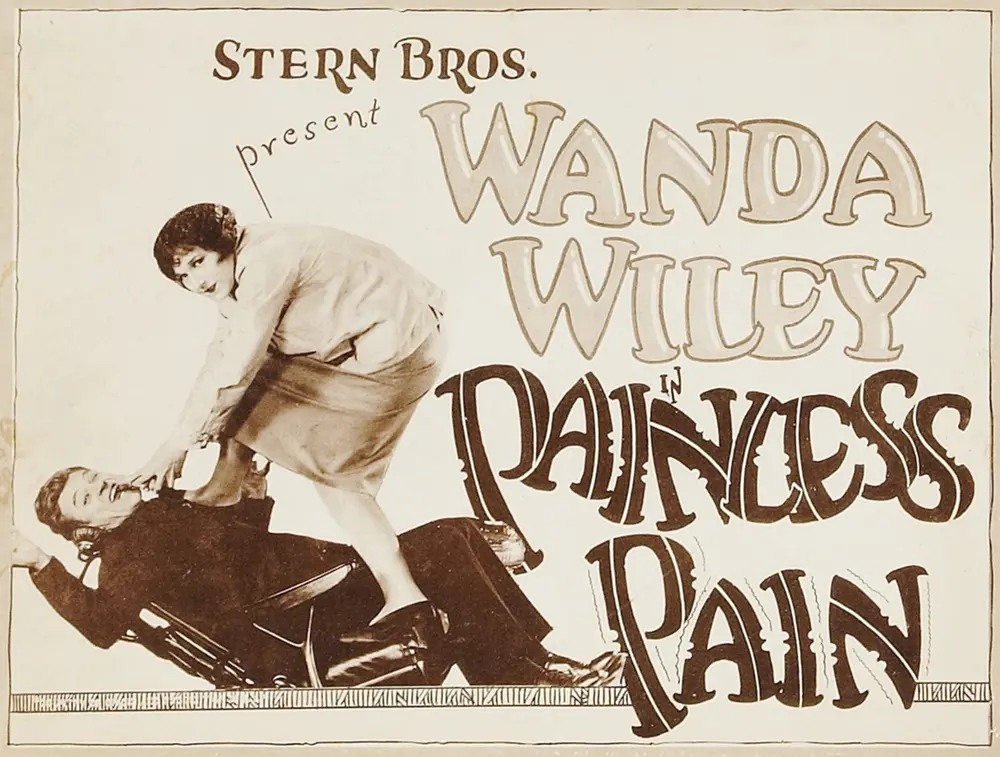
Is this peculiar silent film, 'Painless Pain,' worth your precious viewing time in the bustling 21st century? The short answer: yes, but with significant caveats that demand a specific kind of cinematic palate. This film is a curious, almost unsettling, artifact of its era, offering a glimpse into a very different comedic sensibility.
It is unequivocally for those who possess a deep appreciation for early cinema, especially silent-era comedies that flirt with uncomfortable themes. Conversely, if your preference leans towards modern pacing, clear moral lines, or easily digestible humor, 'Painless Pain' is decidedly not the film for you. It requires a willingness to engage with its historical context, rather than judge it solely by contemporary standards.
This film works because it is so utterly unique in its premise, a bizarre blend of romantic ambition and outright street violence played for laughs. It offers an unfiltered window into the kind of outlandish scenarios that once passed as light entertainment.
This film fails because its central premise, while audacious, is deeply unsettling and, frankly, disturbing when viewed through a modern lens, making sustained engagement challenging for many.
You should watch it if you are a film historian, a silent film enthusiast, or someone fascinated by the evolution of comedic storytelling and societal norms in early 20th-century cinema.
Edward Ludwig’s 'Painless Pain' is not merely a film; it’s a sociological exhibit. At its core, it’s a story of ambition, love, and a highly questionable business strategy. Wanda Wiley, desperate to marry her sweetheart, a struggling dentist played by Jack Singleton, devises a plan that is both audacious and morally bankrupt. She hires a tough thug to literally knock out citizens, then directs them to her beloved's practice. The premise alone is enough to raise eyebrows, even in an era accustomed to slapstick violence.
The film’s title itself, 'Painless Pain,' is a darkly ironic foreshadowing of the narrative's central conflict. There is, of course, nothing painless about being punched in the jaw, yet the film attempts to frame these acts as a necessary, almost whimsical, means to an end. This tension between the literal pain inflicted and the comedic intent is where the film truly either succeeds as a provocative piece of dark humor or falters as a tone-deaf relic.
I argue that it leans heavily towards the latter for a contemporary audience, yet its very audacity makes it compelling for academic study. It’s a film that demands discussion, not just passive viewing. It works. But it’s flawed.
Edward Ludwig, a director who would later helm more conventional fare like 'The Last Gangster' (1937) and 'Wake of the Red Witch' (1948), demonstrates an early, almost unnerving comfort with pushing boundaries in 'Painless Pain.' His direction here is surprisingly direct, almost clinical, in presenting Wanda's scheme. There's little overt judgment from the camera, which simply observes the unfolding events with a matter-of-fact tone.
Ludwig doesn’t shy away from showing the physical comedy of the assaults, which, for its time, would have been standard slapstick. However, the context — violence as a business model — elevates it beyond simple pratfalls. Consider the scene where the thug, with almost mechanical efficiency, dispatches one unsuspecting pedestrian after another. Ludwig frames these moments with a detached observation that allows the audience to confront the absurdity, and indeed the horror, of Wanda’s machinations.
This directorial choice, whether intentional or a byproduct of early filmmaking conventions, gives the film an unsettling edge. It doesn't soften the blow, so to speak. Instead, it presents the 'solution' with an almost chilling pragmatism, making the audience complicit in witnessing a morally dubious enterprise unfold. This lack of overt moralizing is, perhaps, its most surprising observation.
Wanda Wiley, as the eponymous Wanda, is the true engine of 'Painless Pain.' Her performance is a fascinating study in early screen acting, blending a saccharine sweetness with a ruthless, almost Machiavellian drive. She embodies the 'sweetheart' archetype, yet her actions betray a hardened pragmatism that is startling. There's a particular twinkle in her eye, often seen as she hands out her fiancé's business card to the dazed victims, that suggests a character utterly convinced of the righteousness of her twisted endeavor.
Her chemistry with Jack Singleton, who plays the beleaguered dentist, is less about romantic spark and more about transactional ambition. Singleton's role is largely reactive, portraying a man oblivious to the dark origins of his sudden success. His wide-eyed innocence, juxtaposed with Wanda's calculating nature, creates a dynamic that is more unsettling than endearing. You can almost feel the audience's discomfort as they watch him unwittingly profit from street violence.
Wiley's portrayal is a strong, debatable opinion in itself: is she a proto-feminist figure, taking agency in a world where women had little, even if through extreme means? Or is she simply a villain, albeit a charming one, whose moral compass is entirely broken? I lean towards the former, seeing her as a character who, within the confines of her limited social power, finds an unconventional, albeit dark, path to her desired future.
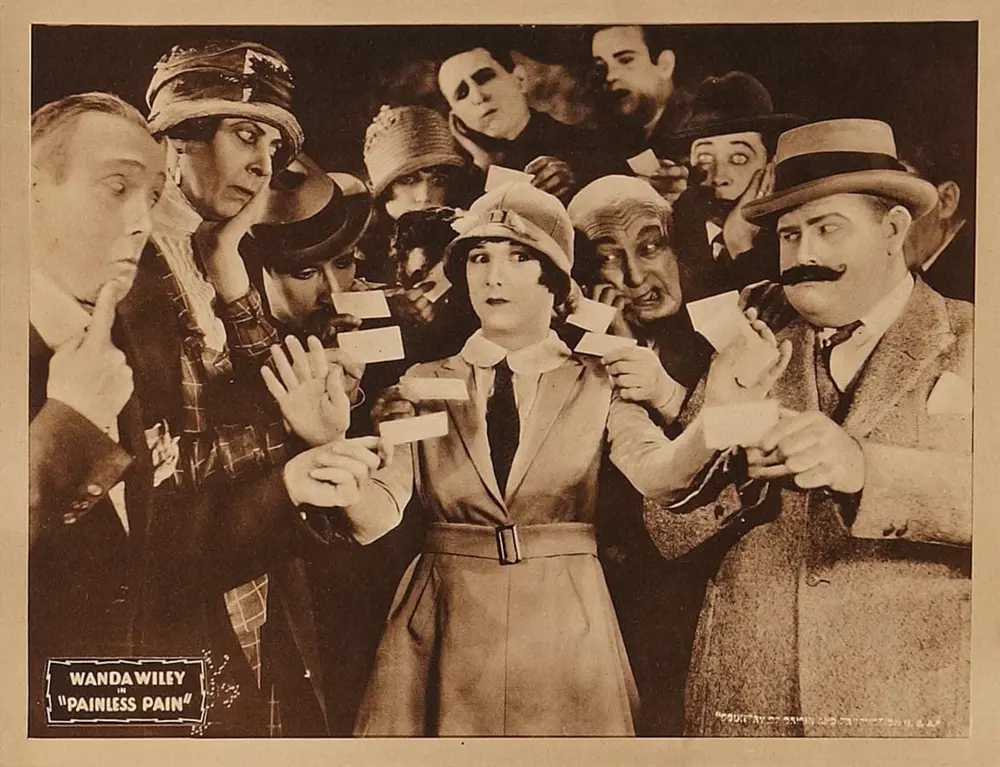
'Painless Pain' is a stark, if unintentional, commentary on the desperation that can arise from financial insecurity and the desire for social stability. Wanda’s actions, while extreme, stem from a very real societal pressure: the inability to marry due to economic hardship. This film, therefore, can be viewed as a darkly comedic exploration of the American Dream, twisted into a nightmare of ethical compromise.
The film doesn’t merely present a bizarre situation; it forces the audience to grapple with its implications. How far is too far for love? For financial security? It’s a question that resonates, even if the methods presented are absurd. The narrative, stripped of its comedic veneer, is a bleak reflection on a society where success, even if ill-gotten, is celebrated.
One could even draw parallels to modern 'gig economy' hustles, where individuals resort to unconventional, sometimes ethically gray, methods to make ends meet. The film's core message, that desperation breeds invention, is timeless, even if its execution is jarringly dated. It's a testament to Ludwig's unheralded skill that such a simple premise can provoke such complex thought.
The pacing of 'Painless Pain' is typical of silent comedies of its era: brisk and reliant on visual gags. The film moves quickly from setup to execution, with little time wasted on exposition or character development beyond what’s necessary to understand the scheme. This directness contributes to its unsettling tone; there's no opportunity for reflection, only the rapid succession of events.
The tone is where the film truly becomes a tightrope walk. It’s clearly intended as a comedy, yet the humor is derived from physical violence and ethical depravity. This proto-dark comedy would feel right at home with films like The Love Burglar in its willingness to push boundaries, but 'Painless Pain' takes it a step further into the realm of the truly questionable. The laughs it elicits are often uncomfortable, a nervous chuckle rather than a hearty guffaw. This is not the innocent charm of a Chaplin or Keaton.
Unlike the broader, more overtly slapstick humor found in something like All Wet, the comedy here is derived from the sheer audacity of the premise. It requires a specific kind of historical empathy to appreciate without judgment. For many, the disconnect between the presented 'comedy' and the actual acts of violence will be too great to bridge, leading to an experience that is more perplexing than entertaining.
As with many films from this period, the cinematography of 'Painless Pain' is functional rather than artistic. The camera is largely static, capturing the action in wide shots that allow the physical comedy and character movements to play out. There are no elaborate tracking shots or complex lighting schemes; the focus is squarely on clarity and narrative progression. This simplicity, however, is not without its charm.
The film's visual style provides an authentic window into early 20th-century street life, even if fictionalized. The period costumes, the storefronts, and the general ambiance offer a fascinating backdrop to Wanda’s scheme. It's a reminder of a bygone era, where the immediate visual impact was paramount. The stark black and white imagery, while rudimentary by today’s standards, effectively conveys the grim reality of the 'business' at hand, even when played for laughs.
One particular shot, where Wanda stands proudly in front of her sweetheart's now-bustling dental office, patients lining up with bandaged jaws, speaks volumes. It’s a simple, yet powerful, visual summation of her 'success.' It’s a moment that, despite its simplicity, has stuck with me long after viewing, a testament to the film's peculiar impact.
Absolutely, 'Painless Pain' is worth watching, but only if you approach it as a historical document and a study in the evolution of dark humor. It’s not a film for casual viewing or for those seeking feel-good entertainment. This is a niche film for a niche audience.
It's invaluable for understanding the boundaries, or lack thereof, of early cinematic comedy. The film’s willingness to embrace a morally ambiguous plot, even for comedic effect, is genuinely surprising. It challenges modern sensibilities in a way few other films from its time do.
For film students, historians, and silent film enthusiasts, it offers a rich vein for discussion. It’s a bold, if uncomfortable, piece of cinematic history. You will be thinking about its premise long after the credits roll.
'Painless Pain' is not a film to be enjoyed in the traditional sense. It's a film to be studied, debated, and perhaps, even marveled at for its sheer, unadulterated audacity. Edward Ludwig, Wanda Wiley, and Jack Singleton deliver a piece of cinema that, while undeniably flawed by modern ethical standards, is an invaluable time capsule. It forces us to confront how much comedic boundaries have shifted and how societal desperation has always driven individuals to extreme lengths.
It’s a peculiar, unsettling, yet undeniably compelling relic that demands a specific kind of engagement. It’s not a classic by any stretch of the imagination, but it is undeniably memorable. You won't love it, but you won't forget it. For those willing to venture into its morally ambiguous depths, 'Painless Pain' offers a uniquely uncomfortable, yet historically significant, viewing experience.
IMDb 7.3
1936
Community
Log in to comment.