DbcultAccessing Vault...
Cult Review
Senior Film Conservator
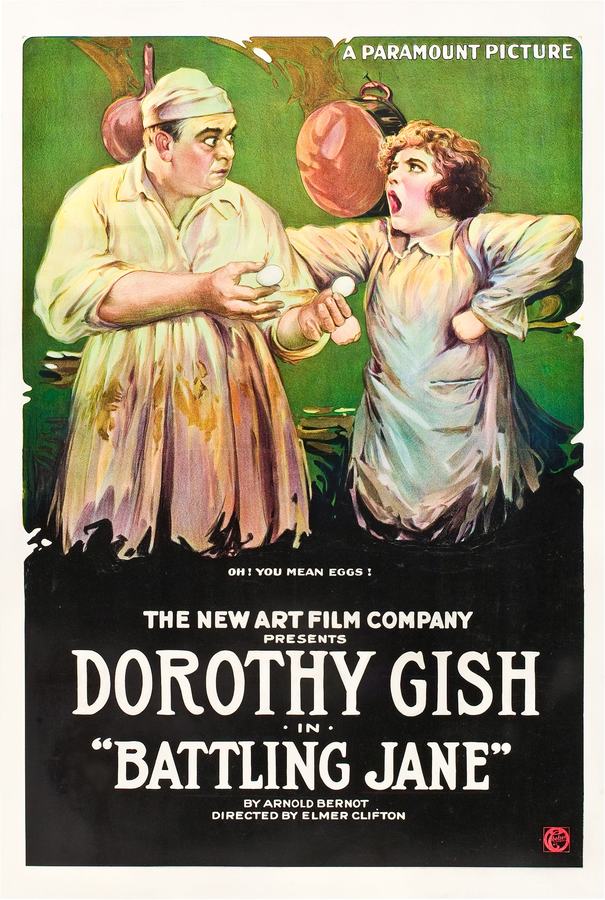
Battling Jane (1926) emerges as a strikingly modern narrative cloaked in the conventions of early 20th-century cinema. Arnold Bennett’s adaptation, rendered with stark visual poetry by director George Nichols, transcends its era’s romantic melodrama tropes to delve into the existential crisis of a woman redefining herself through motherhood. The film’s opening sequence—a drifting Jane (Kate Toncray) wandering through a desolate urban landscape—establishes her as a soul adrift, a figure both liberated and alienated by the absence of familial ties. Her fateful encounter with an abandoned infant, later revealed to be the offspring of a notorious outlaw (George Nichols), becomes the catalyst for a narrative that oscillates between social commentary and visceral drama.
What distinguishes Battling Jane from its contemporaries is its unflinching examination of the psychological toll of adoption. Unlike the saccharine portrayals in Alma de Sacrificio or the romanticized heroism of The On-the-Square Girl, this film frames motherhood as an act of rebellion against societal expectations. Jane’s decision to take in the child is not portrayed as a selfless gesture but as a desperate assertion of identity. The cinematography—particularly the use of chiaroscuro in scenes where Jane interrogates the child’s origins—mirrors her internal struggle between vulnerability and determination. The child’s ambiguous gaze, often framed in extreme close-up, becomes a silent indictment of the world that abandoned him.
Kate Toncray’s portrayal of Jane is a masterclass in physical storytelling. Her clenched jaw during moments of resolve, the slight tilt of her head when confronting the child’s father—each gesture is a narrative device surpassing intertitles. George Nichols, as the outlaw, channels a feral charisma that evokes both menace and pathos, recalling the tragic antagonists of The Shooting of Dan McGrew. The chemistry between the two leads is electric, particularly in the climactic confrontation where words fail and their performances rely solely on glances and body language. Dorothy Gish’s supporting role as a pragmatic neighbor provides crucial exposition while adding levity, her comedic timing a welcome counterbalance to the film’s darker themes.
The child’s character, though nonverbal, is the emotional linchpin of the film. His interactions with Jane are rendered with aching realism—whether in scenes of playful curiosity or sudden, unexplained fear. The film’s most haunting image comes in a dream sequence where the child’s past is visualized as a series of fragmented, Expressionist-style tableaux. This sequence, reminiscent of the surreal transitions in Vengerkák, elevates the narrative into a metaphysical realm where innocence is both a weapon and a vulnerability.
Battling Jane’s visual language is deceptively minimalistic. The use of vertical framing in scenes set in Jane’s cramped apartment creates a sense of claustrophobic tension, contrasting sharply with the horizontal vistas of the rural landscapes she flees to. This spatial duality mirrors her internal conflict—trapped by societal judgment yet yearning for freedom. The recurring motif of a broken clock, first seen in the orphanage and later in Jane’s home, symbolizes the characters’ entrapment in a cycle of fate they cannot escape.
The film’s score, though lost to time, was apparently composed with dissonant strings that heighten the drama without overpowering the visuals. This aligns with the film’s broader thematic concern: the tension between order and chaos. Jane’s attempts to impose structure on her life—through meticulous housekeeping or rigid routines—crumble as the outlaw’s influence seeps into her world. The final act’s use of slow motion during a violent confrontation is a technical marvel, allowing the audience to process the emotional fallout in real time.
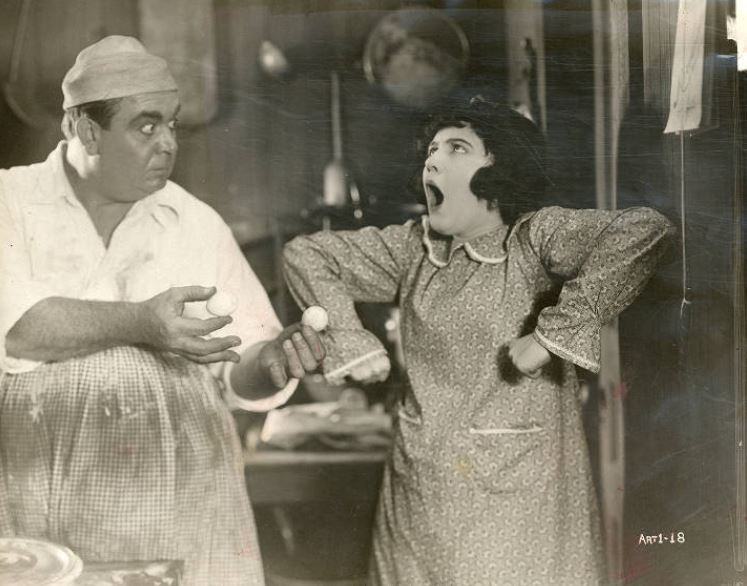
While not as technically ambitious as Chûshingura, Battling Jane shares with it a focus on moral ambiguity and familial duty. The film’s exploration of single motherhood in a patriarchal society anticipates themes later expanded in Just Peggy and Peggy, yet its unflinching depiction of maternal sacrifice sets it apart. The film’s climax, where Jane must choose between protecting her child and confronting the outlaw’s legacy, echoes the tragic choices in Restitution, but with a distinctly feminist slant.
The production design deserves special mention. The outlaw’s hideout, a decaying mansion with peeling wallpaper and creaking floorboards, becomes a character in itself—a physical manifestation of the moral decay Jane must overcome. Meanwhile, Jane’s temporary homes are rendered with stark simplicity, their lack of ornamentation emphasizing her transient existence.
Though often overshadowed by the silent film era’s more commercially successful works, Battling Jane remains a critical artifact of early 20th-century cinema’s social consciousness. Its themes of found family and personal reinvention resonate with modern audiences, particularly in an era marked by debates over reproductive rights and identity. The film’s subversive take on motherhood—portraying it as both a burden and a liberation—parallels contemporary discussions in Sixty Years a Queen and Barbara Frietchie, though with a grittier, more unromanticized edge.
For cinephiles, Battling Jane offers a masterclass in silent film technique. The use of negative space in framing, the strategic placement of shadows to convey psychological states, and the innovative editing of the dream sequences all demonstrate a filmmaking maturity that belies its 1926 release date. The film’s influence can be seen in later works like The Indian Wars, which similarly grapples with the clash between individual ethics and systemic violence.
"The truest form of bravery is not in the absence of fear, but in the persistence of love despite it." — Narrator’s voiceover in Battling Jane
In conclusion, Battling Jane is more than a period piece—it is a timeless exploration of the human capacity for reinvention. Arnold Bennett’s screenplay, coupled with the stellar performances and innovative direction, creates a cinematic experience that lingers long after the credits roll. For those seeking a film that balances emotional depth with technical ingenuity, this 1926 gem remains an essential watch. Its themes of found family, societal judgment, and the transformative power of love continue to echo in contemporary cinema, making it a bridge between the silent film era and modern narratives of personal struggle.
IMDb 5.4
1933
Community
Log in to comment.