DbcultAccessing Vault...
Cult Review
Senior Film Conservator
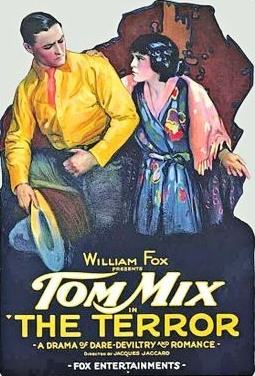
The first thing that strikes you about The Terror is how it weaponizes silence. In 1920, sound-on-film was still a laboratory curiosity; directors like Jacques Jaccard had to orchestrate emotion without spoken syllables, relying instead on the staccato flicker of iris-ins, the syncopated gallop of intertitles, and the synesthetic crunch of a boot on desert gravel. The result is a picture that feels paradoxically louder than most talkies—every gesture amplified, every shadow elongated.
Tom Mix, cowboy icon and co-writer, understood this alchemy. His Bat Carson doesn’t merely enter a room; he detonates into it, fringe chaps whipping like battle flags. Mix’s athleticism—circa 1920, the man was 40 yet could still vault into a saddle without touching stirrup—turns chase sequences into kinetic sonnets. Observe the moment he swings from a mining trestle onto the back of a fleeing outlaw: the camera holds wide, refusing edits, letting the stunt exist in unbroken bravado. No CGI, no wires, just gravity and gall.
Plot-wise, the film is a mosaic of genre tropes freshly varnished. The embezzlement of ore shipments recalls The Mystery of the Fatal Pearl’s fascination with criminal subterfuge, yet here the loot is not a bauble but the very lifeblood of a frontier town—gold as metonym for Manifest Destiny gone septic. Meanwhile, the love triangle between lawman, ingénue, and compromised brother borrows from Victorian stage melodrama, but Jaccard relocates it to a saloon’s honky-tonk haze, where cigar smoke and piano rag smear any trace of drawing-room propriety.
Phyllis Harland, played by Francelia Billington, radiates what contemporaneous reviewers dubbed “sunlit pathos.” Her close-ups—shot through diffused muslin—soften the harsh carbide lighting typically used to carve masculine jaws. In one insert, she learns her brother faces the noose; her pupils dilate like ink dropped in water, a microscopic tragedy more harrowing than any scaffold.
Con Norton, essayed by Wilbur Higby, is the film’s Mephistophelian core. Note his wardrobe: a maroon brocade waistcoat that appears black in low-key lighting, but when he steps beneath a kerosene chandelier it bleeds crimson—as though the garment itself confesses guilt. Norton’s body language oscillates between languid barkeep and coiled rattler; in a bravura two-shot he polishes a glass while whispering instructions to Canby, the reflection of his eyes superimposed over the sheriff’s badge—an early, unsplit-screen example of optical overlay that foreshadows noir visual grammar.
Jacqueline’s desert chase—the film’s set-piece—deserves pedagogical deconstruction. Shot on location in the Alabama Hills, the sequence intercuts long lenses that compress riders against jagged tuff with under-cranked wide shots that accelerate hooves to a stroboscopic frenzy. A dust cloud becomes a surrogate for Wagnerian brass; you can practically taste alkali. When Bat finally overtakes Norton, the confrontation is staged not on a cliff but in a shallow creek, water ricocheting off spurs like liquid shrapnel. It’s baptism by gunfire.
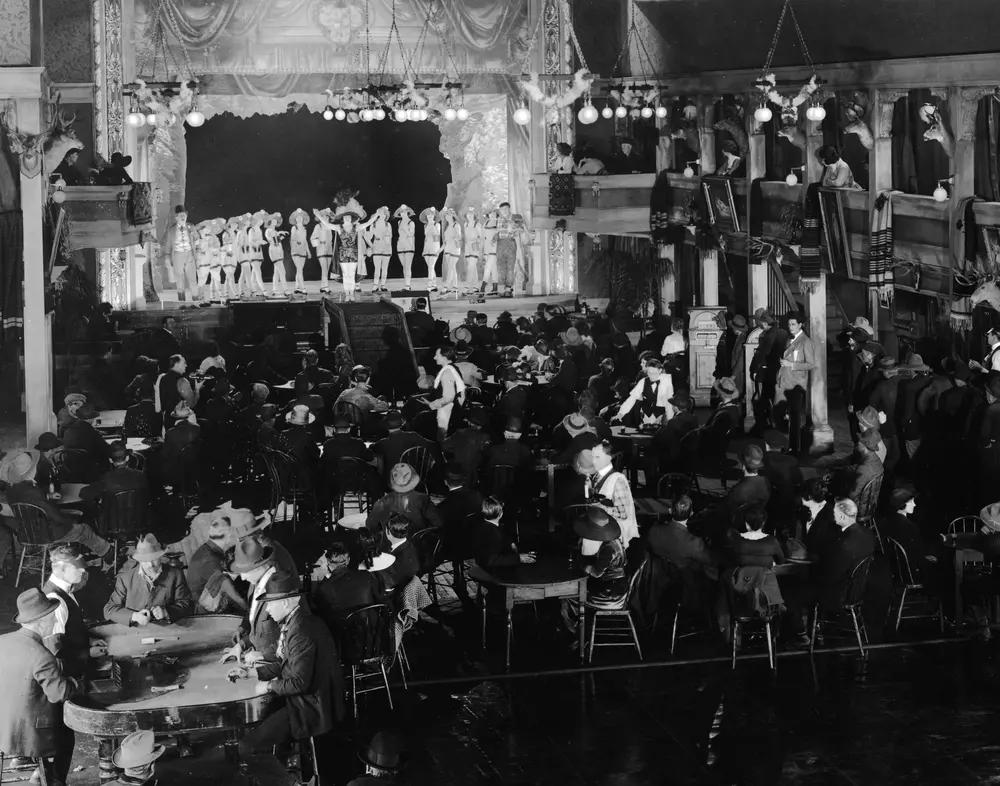
Yet for all its bravura, The Terror is not without fissures. The courtroom finale feels tonally discordant: extras cheer in mechanical loops, and the last-minute rescue of Fay La Cross—bound inside a derelict ore cart—leans on the same deus-ex-machina that weakens Officer 666. Moreover, the film’s treatment of Fay smacks of puritanical retribution; her sensuality is initially celebrated, but once she testifies she’s shunted into the narrative’s margins, a cautionary Eve neutralized by civic order.
Still, these are quibbles when weighed against the film’s historical valence. Released months after Prohibition became statute, The Terror stages alcohol as both commodity and corrupter—Norton’s saloon is a cathedral of sin whose swinging doors never quite close. The picture anticipates the moral hysteria that would soon dominate Hollywood, leading to the Hays Code. Its very title—generic, ominous—was later recycled for countless Poverty Row oaters, but here it carries existential heft: terror not of monsters, but of institutional rot.
Cinematographer Frank Good’s chiaroscuro anticipates German Expressionism: watch how a lone lantern backlights Bat, casting his silhouette onto a canvas wagon sheet, transforming the marshal into a mythic colossus. Good also experiments with day-for-night, underexposing skies until they resemble bruised parchment—a technique later refined in The Way Back (albeit for snowscapes rather than sandscapes).
In the pantheon of Mix vehicles, The Terror sits between the whimsical The Man from Mexico and the elegiac The Outcasts of Poker Flat. It lacks the flamboyant trick-horse stunts of the former, yet predates the psychological nuance of the latter. Instead, it occupies a liminal sweet spot where pulp exuberance meets proto-noir fatalism—think of it as a nickelodeon bridge between Alexander den Store’s imperial spectacle and the intimate psychosis of Moon Madness.
Restoration-wise, the 2022 4K scan by Film Preservation Associates reveals flecks of hand-painted tinting—cyan for moonlight, amber for lamplight—that had dissolved into monochrome on earlier prints. The new transfer exposes perforation damage, yet those jitters evoke kinesthetic urgency; they remind us the medium itself is scarred, like the frontier it depicts.
To modern viewers reared on revisionist Westerns, the film’s moral absolutism may seem quaint. But consider the context: 1920 America, freshly emerged from a war billed as crusade, jittery over Bolshevik boogeymen, beset by labor strikes and race massacres. In such a climate, Bat Carson’s unimpeachable rectitude offers cultural ballast—a fantasy where justice can outrun corruption on a horse named Starlight.
Ultimately, The Terror endures because it fuses kinetic spectacle with uncynical hope. Its final image—Phyllis and Bat framed against a sunrise that blooms like molten brass—promises that love and order can coexist, provided one rides hard enough. Ninety minutes of hoofbeats later, you’ll believe it too.
IMDb 6.3
1929
Community
Log in to comment.