DbcultAccessing Vault...
6.4/10
Senior Film Conservator
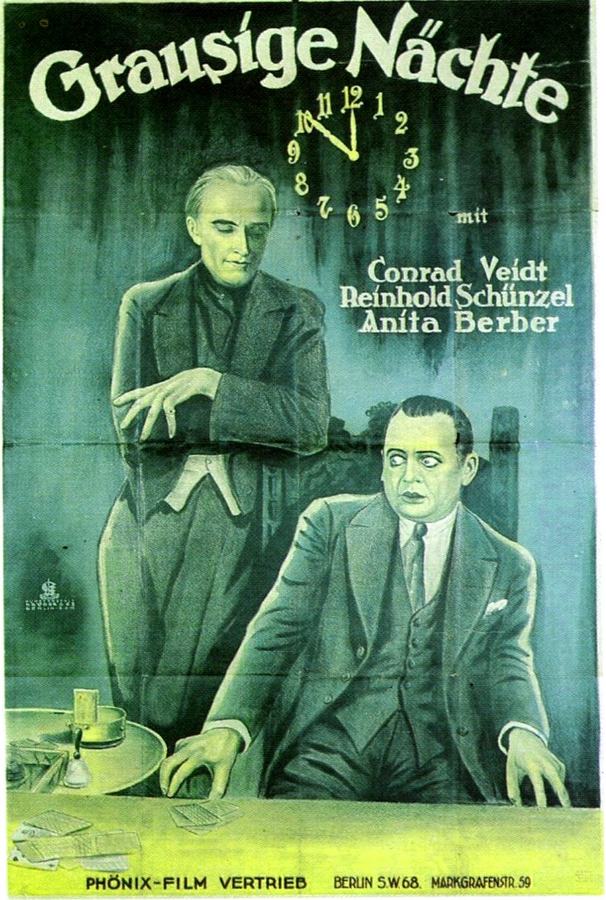
A definitive 6.4/10 rating for a film that redefined the boundaries of cult cinema. Eerie Tales remains a cornerstone of transgressive art.
Richard Oswald's Eerie Tales (Unheimliche Geschichten) materializes from the shadows like a phantom carriage rattling down Berlin's post-war streets. This 1919 anthology doesn't merely adapt Poe and Stevenson—it weaponizes their dread through a radical framing device where the narrators are the archetypes of human terror. Conrad Veidt's demon isn't just a host; he's the id of German Expressionism made flesh, his angular limbs slicing through the gloom as he selects tales like a sommelier choosing poisoned vintages. The genius lies in how Oswald mirrors the characters' damnation through the storytellers themselves: the Reaper (Bernhard Goetzke) reading a chronicle of mortality while fingering his scythe, the specter (Anita Berber) shuddering at a story of sexual violence that mirrors her own demise. It's cinema as séance.
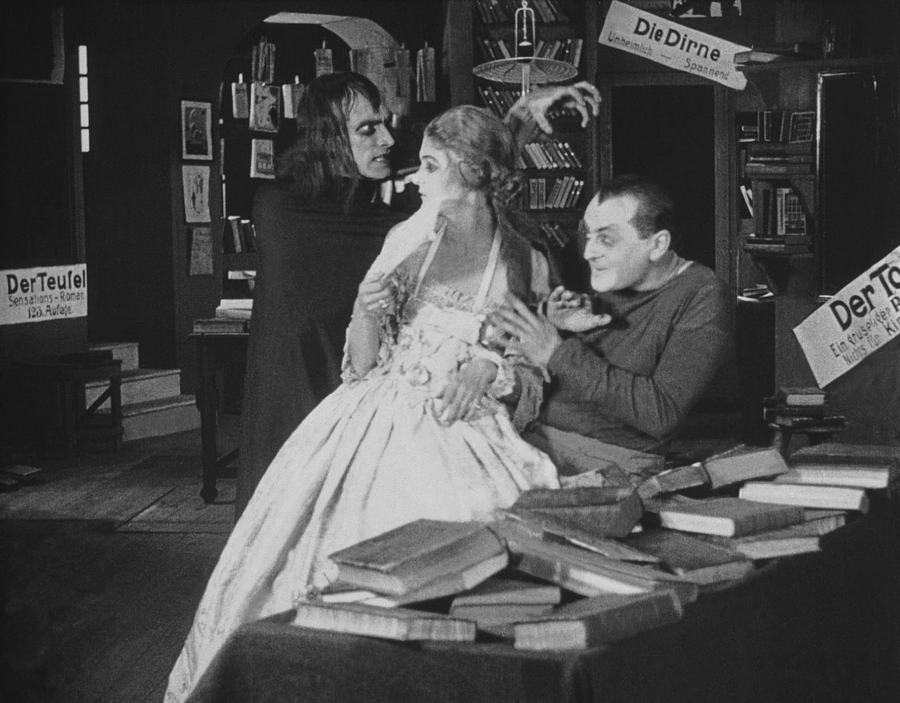
Oswald crafts dread through a syntax of distortion that predates Fear by a decade. Watch how cinematographer Carl Hoffmann contorts space—bookcases lean like drunken headstones, staircases yawn into nothingness, and mirrors reflect not faces but intentions. In "The Black Cat" segment (loosely butchered from Poe), Veidt's demon-turned-murderer descends into a cellar where shadows seem to lick the walls. The set design becomes predatory: a swinging lamp casts staccato illumination that turns his movements into stop-motion violence, while the victim's widening eyes fill the frame like full moons. Compare this to the clinical claustrophobia of The Master of the House and you witness horror inventing its own visual dialect.
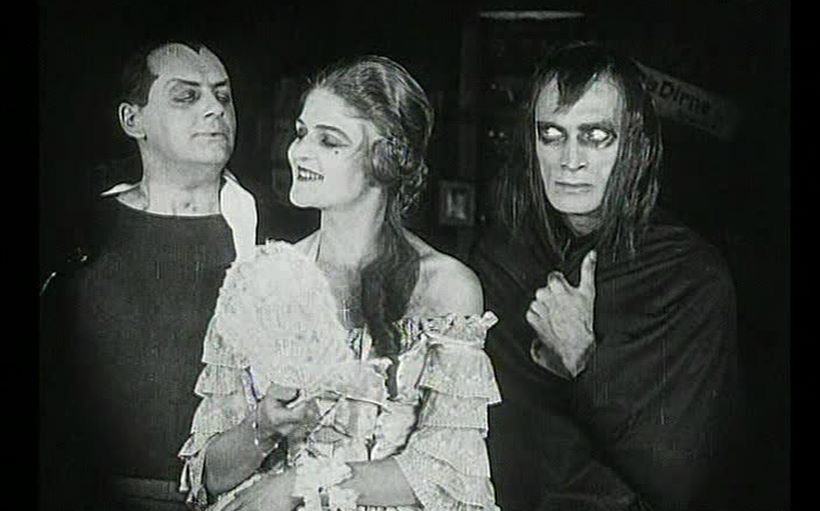
Veidt doesn't act—he invades. As the framing narrative's demon, he's all reptilian grace, fingers steepled like a blasphemous priest. Yet when he steps into the stories, his transformations are seismic. In Stevenson's "The Suicide Club," he becomes a louche aristocrat whose smile reveals teeth like shards of bone, sipping champagne while arranging deaths like floral arrangements. Then, jarringly, he shifts into a tremulous opium addict in the Berber-led segment, sweat glistening on his brow like condensation on a coffin lid. This protean range makes Lon Chaney's work in The Last Days of Pompeii feel like pantomime. Veidt understands horror lives in the twitch beneath the skin—the moment before the scream.
If Veidt embodies masculine dread, Anita Berber's ghostly courtesan is the film's bleeding heart. Her introduction—materializing from a fog of dry ice, wrists still bearing the bruises of strangulation—pioneers the "traumatized femme" archetype that would later haunt film noir. Notice how her movements differ between identities: as narrator, she floats with wounded grace, but when enacting "The Drowned Maiden's Vengeance," she becomes feral. A scene where she garrotes her murderer using her own pearl necklace plays like a danse macabre scored to silence. Berber, a scandalous dancer whose real-life decadence mirrored Weimar excess, lends the role a meta-tragedy. Her career would soon implode, making this performance a sealed premonition.
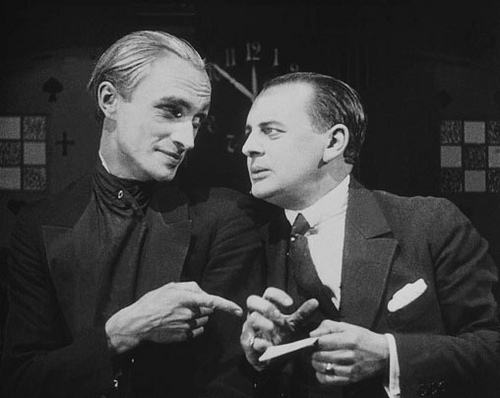
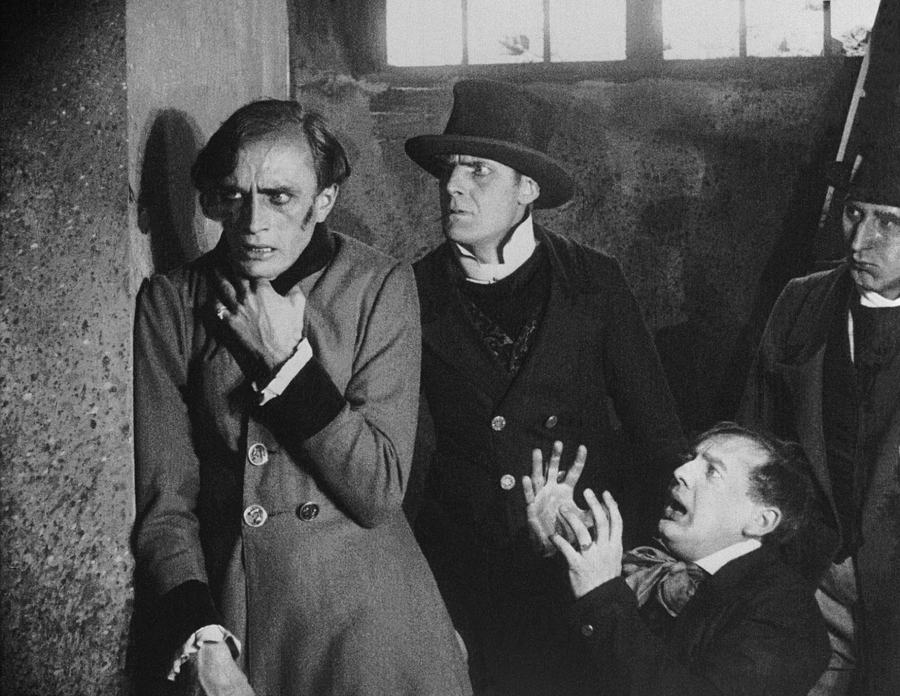
Purists may wince at how Oswald shreds Poe and Stevenson. "The Tell-Tale Heart" becomes a wordless pantomime where the victim's eye glows like a malevolent moon under Veidt's lantern. "The Body Snatcher" transforms into a surreal duel between Goetzke's Reaper and a grave robber played by Reinhold Schünzel, their confrontation staged amid cruciform tombstones. This isn't adaptation—it's alchemy. Oswald distills the essence of gothic anxiety: the heartbeat beneath the floorboards, the corpse refusing decay. Where Ikeru Shikabane explored reanimation through science, Eerie Tales treats it as psychodrama. The dead walk because the living cannot forget them.
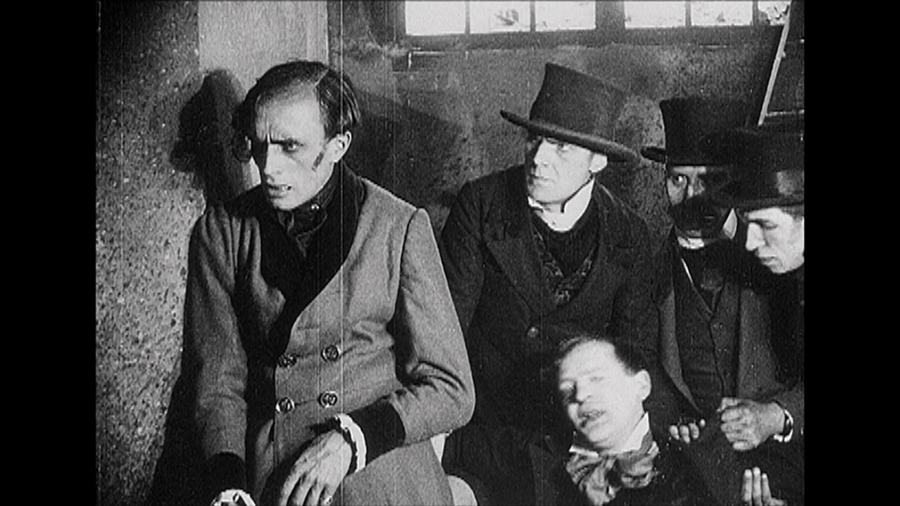
Modern viewers underestimate silent horror's auditory power. Eerie Tales weaponizes its silence—a creaking door isn't heard but felt through Bernhard Goetzke's flinch. When Veidt's demon seals a victim behind a brick wall, the absence of screaming makes the sequence more suffocating. Intertitles appear sparingly, often as grim epitaphs ("He paid the debt" after a poisoning). The real score is in the actors' physicality: the scrape of a scythe against stone, the rustle of Berber's taffeta gown, the wet thud of a spade striking earth. It anticipates the minimalist dread of Der Tunnel, where machinery's silence becomes apocalyptic.
Though less cited than Caligari, Eerie Tales haunts cinema's DNA. Its anthology structure births everything from Dead of Night to Creepshow. The demon-reaper-ghost triad resurfaces in The Woman and the Beast as a destructive ménage à trois. Even the bookstore setting becomes a purgatorial template, echoed decades later in Ghost Story. Yet its boldest innovation remains the meta-narrative: horror isn't just witnessed but performed by monsters themselves. When Veidt's demon grins at the camera while reading, he implicates the audience. We're not spectators—we're accomplices turning the pages.
Surviving prints of Eerie Tales resemble fragmented nightmares. Stories like "The Spectre Bridegroom" survive only in still photographs—ghosts of ghosts. This incompleteness, ironically, deepens the film's power. Gaps in the narrative become tombs for our imagination. We reconstruct Berber's vanished "Opium Dream" sequence from production sketches showing her writhing amid skeletal trees. The lost finale—where the storytellers realize they're trapped in their own tale—exists only in critics' notes. Like the ghostly courtesan, Eerie Tales is forever reaching across the void, urging us to complete its narrative. It doesn't just demand viewing; it demands collaboration.
A century later, Eerie Tales retains its necromantic power because it understands horror's true source: narration as invocation. Every story these damned entities read aloud isn't fiction—it's a spell conjuring their own sins. When the Reaper whispers Stevenson's words, he's confessing. As the demon enacts Poe, he's reliving his fall. This reflexive horror—stories as both mirror and cage—feels unnervingly modern. In our age of curated trauma and digital confessionals, we're all haunted by the tales we choose to tell. Oswald's masterpiece is more than a relic; it's a cracked looking glass reflecting our own relationship with darkness. The bookstore remains open. The demons are still turning pages. And somewhere, a ghost waits for you to pick up the next volume.
Footnotes in the Margins: The restoration by the Friedrich-Wilhelm-Murnau-Stiftung reveals astonishing details—Veidt's demon has irises the color of tarnished copper, Berber's gown is hand-painted frame-by-frame with indigo dye. Look for the recurring raven motif: it perches on bookshelves, appears as a brooch, and in one obliterated sequence, transformed into the Reaper himself.
IMDb 6
1933
Community
Log in to comment.