DbcultAccessing Vault...
Cult Review
Senior Film Conservator
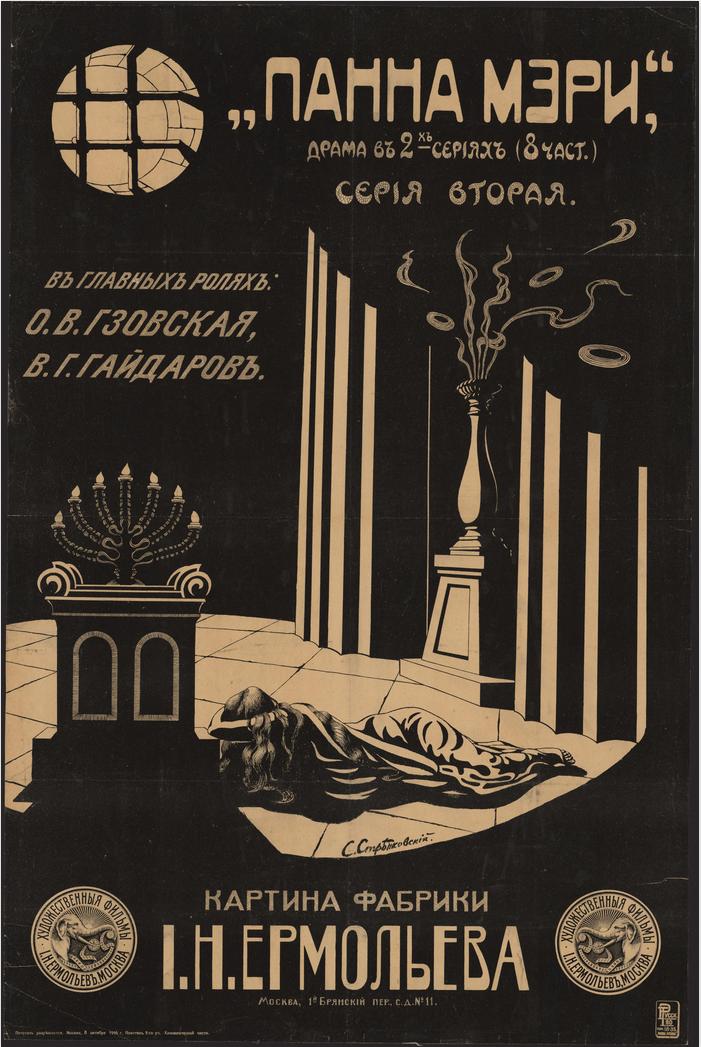
There are films you watch, and films that watch you back. Panna Meri belongs to the latter species—an unblinking celluloid wolf that follows you home, padding silently across the snow-crushed decades between 1925 and whatever damned year you happen to be screening it now.
Protazanov’s plot—ostensibly the simple pilgrimage of a woman who wants her hometown back—unspools like a Möbius strip dipped in brine. Every time Panna smooths the parchment across tavern tables, the inked rivers have rearranged themselves, as though the land itself were gaslighting her. The effect is less magic-realism than epistemological horror: if geography can be rewritten overnight, what of memory, of grief, of the very scar tissue she carries like a private constellation?
Compare this to the static moral cartography of The Fool's Revenge, where every sin has its allotted coordinates, or to the nautical determinism of Ein Gruss aus der Tiefe, whose sailors navigate by star-charts inked on whale vertebrae. Protazanov’s world is slipperier: borders are gossip, meridians are rumors, and even the compass needle flirts with multiple true norths.
Olga Gzovskaya doesn’t act; she erodes. Her cheekbones carry the same jagged grace as the glacier-scored cliffs she trudges past. When the camera lingers in close-up—an audacious thirty-second stare-down—you see tectonic plates shifting behind her irises. The performance is silent only in the acoustic sense; geologically it rattles with subterranean thunder.
Vladimir Gajdarov’s Leitus, by contrast, is alluvial: silt and smuggled psalms settle on him moment by moment. Watch the way his fingers tremble while folding a black-market icon into a pamphlet extolling electrification; the contradiction is erotic, sacramental, and doomed. In their shared scenes the screen becomes a fault line where two kinds of devastation grind against each other—hers glacial, his sedimentary.
The man-made lake that drowned Panna’s village is more than backdrop; it is the film’s amnesiac spine. Cinematographer Yevgeni Shofman shoots it through rippled glass, turning every reflection into a double exposure: the world we see and the world that was erased. When Panna wades chest-deep, the water reaches exactly to the scar on her collarbone—a liquid mirror severing her body into archive and myth.
Other films of the era fetishize water as cleansing: The Shine Girl ends with a plunge that scrubs the heroine’s past spotless. Protazanov denies us that baptismal comfort. His reservoir is an indifferent god, neither wrathful nor merciful—merely a bureaucratic afterthought that happened to swallow a cosmos.
Forget Eisenstein’s explosive collisions; Protazanov’s montage is a slow creep. Shots last longer than patience, then snap away just as you adjust to their rhythm, like ice breaking beneath a sleeper who thought the night solid. The most devastating cut arrives after Panna burns her map: we linger on the ashes curling into blackened calligraphy, then—without warning—leap to a government newsreel of bulldozers rerouting a river. The splice is so abrupt you feel your own memory sheared in half.
Silent though it is, the film orchestrates a symphony of absences: the hush of snow absorbing footfalls, the vacuum where a church bell once tolled. Intertitles appear sparingly, printed on what looks like thawing ice—white letters bleeding into translucent grey. When colour tints intrude, they obey meteorological logic rather than emotional cliché. Cyanide-blue for the pre-dawn trek across the reservoir; septic yellow when bureaucrats sign eviction orders; arterial orange only once, when Panna uncorks the vodka mixed with map-ash and drinks the landscape of her life.
Unlike Cora or The Yankee Girl, where women navigate male-conquered worlds, Panna Meri redraws the very notion of space as feminine, cyclical, treacherous. The men here—engineers, officers, smugglers—brandish blueprints and ordinances, brittle certainties that snap under the film’s glacial cynicism. Panna’s refusal to accept the redrawn borders becomes a radical act of re-remembering, a matriarchal insurgency against the patriarchal pen that first sketched the reservoir.
Icons smuggled in secular pamphlets, bell-towers submerged like whale ribs, a woman who literally ingests her homeland—Panna Meri is strewn with relics in search of a religion. Faith here is not lost; it is hydrologically redistributed. The sacred survives not in churches but in brackish water, in mildew, in the scar under a collarbone. Protazanov anticipates by a century the post-secular anxieties that later haunt The World, the Flesh and the Devil, yet his vision is colder, more geological, less apocalyptic—eschatology replaced by slow erosion.
The final image—Panna adrift on an ice floe, bell clapper in hand, staring toward an unnamed horizon—refuses closure the way the sea refuses deeds of ownership. Will she reach land? Will the ice melt? Protazanov cuts to white, not black, as if the film itself were drowning in the same overexposed glare that erased the villages. You walk out carrying that glare in your retinas, a private aurora that flickers whenever you unfold a city map and notice how streets renamed by committee no longer align with the ones you remember walking at night.
In an era when every silent classic is hastily colorized, speed-corrected, sonorized—violated—Panna Meri survives only in a single worn print at Gosfilmofond, its emulsion scarred like Panna’s cheek. Some cinephiles will never forgive Protazanov for not being Eisenstein, for trading bombast for glacial drift, for preferring the tremor inside a map to the triumph atop a battleship. Their loss. This is the rare film that understands exile not as geography’s cruelty but as its fundamental physics: the way tectonic memory grinds against the continental plates of history until both are pulverized into silt that drifts, unanswered, toward nameless seas.
Seek it out—if not on screen, then in the trembling parchment of your own recollections. Unfold whatever atlas you keep tucked beneath the ribs. Notice how the coastlines have rearranged themselves while you slept. Listen: somewhere beneath the reservoir of ordinary forgetting, a bell still rings, waiting for a woman reckless enough to answer.

IMDb 6
1928
Community
Log in to comment.