DbcultAccessing Vault...
Cult Review
Senior Film Conservator
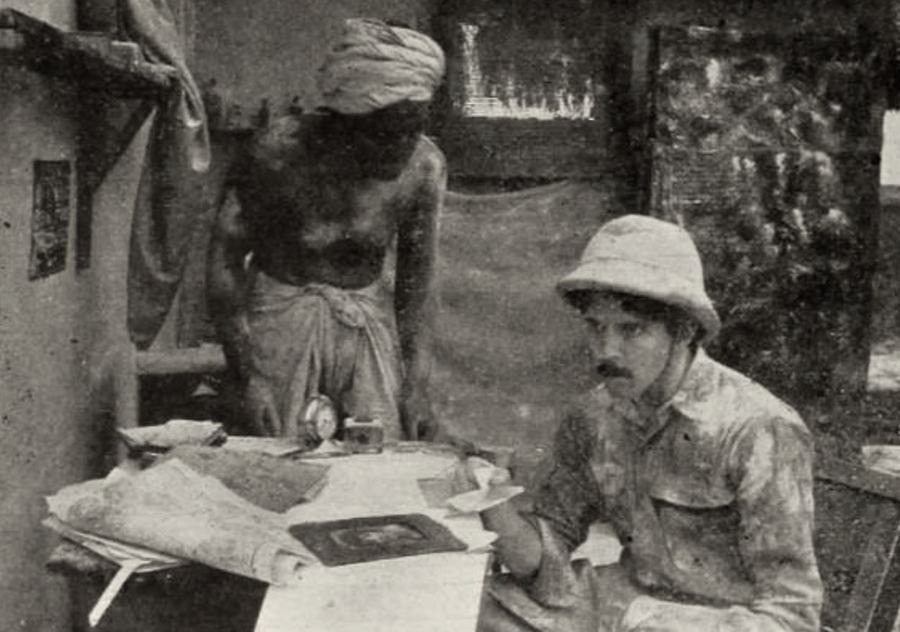
The flickering nitrate of Thou Art the Man arrives like a blood-smudged postcard mailed from the afterglow of empire. Viewed today, its very title—half accusation, half lament—feels hurled across a century of silence. Within the first intertitle, Mrs. Sidney Drew’s scenario has already knotted together thrift, desire, and pestilence: three threads that will tighten until breath itself is strangled.
George Cooper’s Gilbert Raynor is introduced through ledger books and perspiration stains; he counts rupees the way anchorites count rosary beads, each coin a miniature prayer for domestic reunion. When Emily—Billie Billings channeling porcelain fragility—steps off the steamer, the camera seems to inhale the dust from her hem. Immediately the tropics commence their slow devour: palms droop like exhausted sentinels, cicadas buzz in morse code, and the screen’s sepia shifts toward bruise-lavender. Illness is never named; it is simply the climate’s id, seeping through cambric and courtesy.
Enter Walter McGrail’s Marner, a man whose spine appears carved from cold bureaucracy. Watch his pupils dilate the instant Emily’s veil lifts—an infinitesimal flicker, yet the entire moral axis of the film tilts. From here the narrative becomes a venomous arithmetic: one promotion equals one death sentence, one withheld signature equals one soul mortgaged. The imperial machine, usually a humming background turbine, suddenly bares its orthodontic grin.
Cinematographer S. Rankin Drew (pulling double duty as supporting player) eschews postcard panoramas for claustrophobic counterpoints. Ceiling fans slice shadows across faces like rotating guillotine blades; mosquito nets billow into ghostly confessionals. Note the repeated motif of half-closed doors—a sliver of light dissecting darkness—mirroring marital fracture and the eventual breach of conscience.
Color tinting strategies weaponize mood: moonlit hill stations drip in cyanide-blue, while the fever ward blazes in infernal amber. When Marner finally thumbs Raynor’s Bible, the film burns a sulphur yellow that seems to scorch the very celluloid. The intertitle—white letters trembling atop black—quotes Nathan’s parable until the words throb like varicose veins.
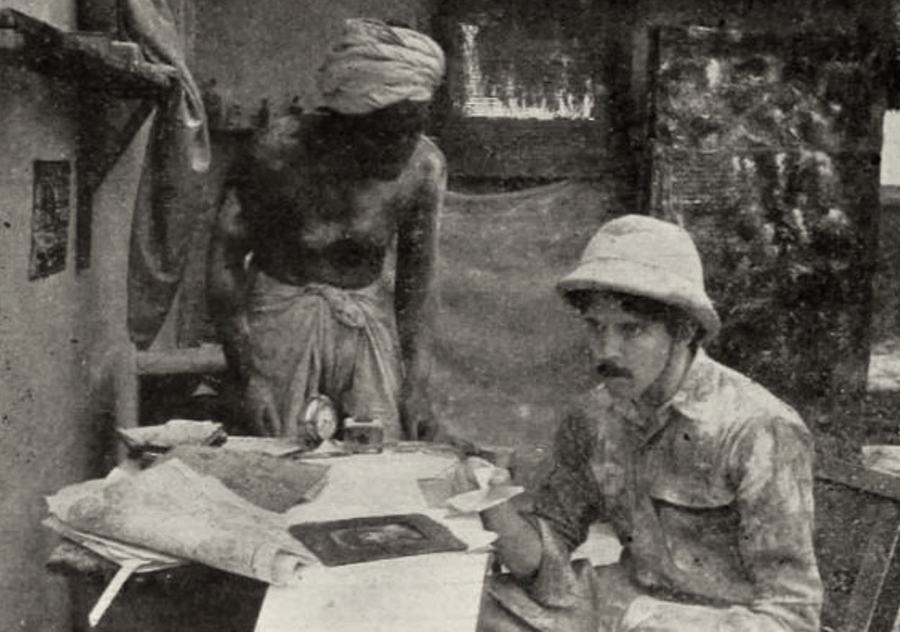
Silent acting is too often caricatured as semaphore histrionics; here, restraint is the dominant key. Cooper lets panic metastasize microscopically: a fingertip tapping a quill, the blink rate accelerating as fever spikes. Billings, draped in invalid lace, suggests desire and repulsion flickering behind corneas like heat lightning. McGrail has the hardest task—rendering magnetic lust without dialogue or modern psychological shorthand. His strategy: stillness as predation. Each time he inhales, the collar seems to bite his carotid; you sense the pulse counting down to ethical detonation.
When Marner’s carriage rattles toward the mountain sanatorium, the camera holds on his gloved hand drumming the window frame—five beats, rest, five beats—a Morse confession that the audience alone is privy to.
Mrs. Drew’s adaptation layers biblical allegory atop bureaucratic thriller without sermonizing. The Uriah letter is no mere plot hinge; it becomes the empire’s original sin in miniature—a man dispatched to death so another may possess his Bathsheba. Yet the film refuses facile moral ledger-balancing. Marner’s late-hour rescue mission does not cancel usurpation; rather, it reveals conscience as another colonial commodity—imported, belated, and ruinously expensive.
Compare this to Mr. Barnes of New York, where transatlantic capitalism is a game of reversible fortunes, or the anarchic eroticism of The Cossack Whip—both contemporaneous yet politically myopic. Thou Art the Man dares to indict not merely individual villainy but the very grammar of empire: language that euphemizes exploitation as “transfer,” theft as “opportunity.”
Editorial strategy oscillates between two temporal registers: the languid drip of bureaucratic delay (interminable paperwork montages) and the staccato spasms of medical emergency. Cross-cutting reaches apotheosis in the third act: Emily’s mountain convalescence, Raynor’s delirious tent, Marner’s candlelit Bible reading. The intervals shorten like a failing heartbeat until all three vectors collide at the river ford—an Eisensteinian collision before Eisenstein codified the theory.
Original exhibition likely featured a single sitar and harmonium, instruments whose microtonal slides echo malaria’s oscillating fevers. Modern restorations sometimes plaster generic orchestral treacle, betraying the film’s ethnographic specificity. Seek instead the 4K restoration scored by the Bombay Cinematic Collective—tabla heartbeat underscoring each ethical palpitation, sitar scraping like a conscience on rusted hinges.
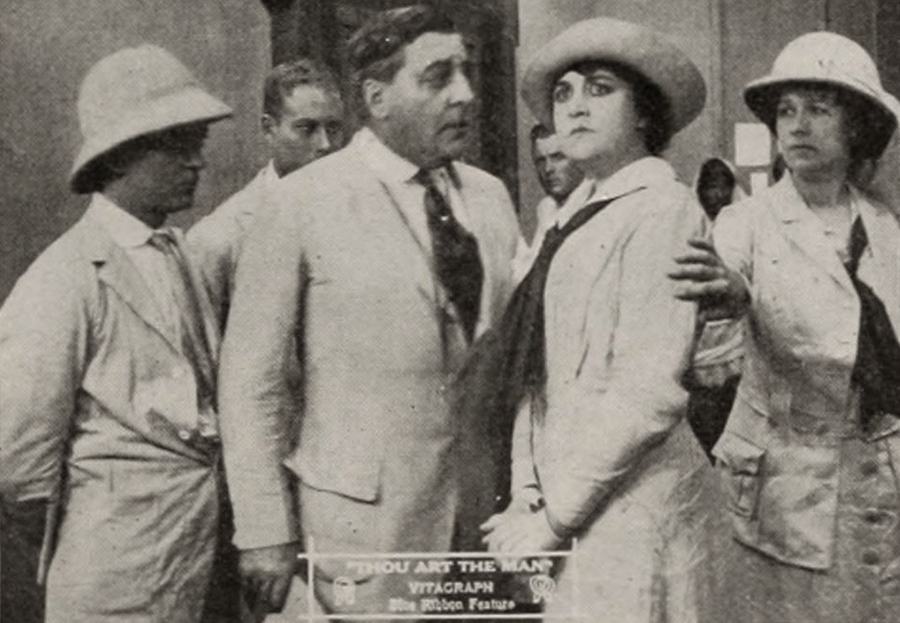
Emily’s illness is never diagnosed because pathology here is gendered spectacle: the wasting wife as blank parchment upon which men ink desire and guilt. Yet Billings complicates victimhood; her refusal of Marner carries a quiet cadaverous authority, the invalid body weaponized as moral veto. In contrast, The Idol of the Stage commodifies female convalescence for voyeuristic pity; Thou Art the Man allows Emily a final act of narrative agency—she commands the rescue expedition, reversing the damsel trajectory.
Initial trade papers praised the film’s “moral tonic,” yet Calcutta’s colonial censors excised intertitles referencing “empire’s bloody ledger,” fearing seditious undertones. Thus circulated two prints: one domestic, one subcontinental, each a palimpsest of the other. Such schism renders every extant print archaeological evidence of imperial anxiety.
Place this alongside Martin Eden’s individualist fatalism or the historical pageantry of Tsar Ivan Vasilevich Groznyy; what unites them is the tragedy of belated recognition—heroes who apprehend moral truth only when corporeal collapse renders action moot. Conversely, Protéa and Der Tunnel celebrate futurist agency, protagonists who tunnel or invent their way out of destiny. Thou Art the Man stands at the crossroads: modern enough to question providence, Victorian enough to punish hubris with death.
Rewatch Marner’s coercion through a post-#MeToo prism: every “benevolent” intervention reeks of quid-pro-quo grooming. Yet the film refuses to caricature him as monster; his final sacrifice complicates restorative justice discourse. Likewise, the depiction of India as fever-swamp risks orientalist stereotype until one recalls that the British are the true contagion—administrative viruses breeding in hill-station bungalows.
Is Thou Art the Man a rediscovered masterpiece or merely an eloquent relic? The answer hinges on what you seek from silent cinema. If you crave the kinetic swagger of The Reckoning or maritime bravado of The Man o’ War’s Man, this film will feel chamber-scale. Yet its psychological incision rivals Strathmore, and its ethical sophistication surpasses The Double Event.
What lingers is the afterimage of Marner’s deathbed: candle guttering, Bible splayed to Nathan’s parable, sweat mixing with ink until scripture blurs into self-indictment. In that moment, colonial ambition collapses into personal culpability, and the film achieves the rarest alchemy—turning imperial melodrama into universal tragedy.
For the cineaste, it is essential viewing; for the historian, a Rosetta stone of imperial guilt; for the casual viewer, a 67-minute fever dream that haunts well beyond its runtime. Seek it out, preferably at midnight, when the whir of your projector sounds like a punkah counting down to judgment.
IMDb —
1920
Community
Log in to comment.