DbcultAccessing Vault...
Cult Review
Senior Film Conservator
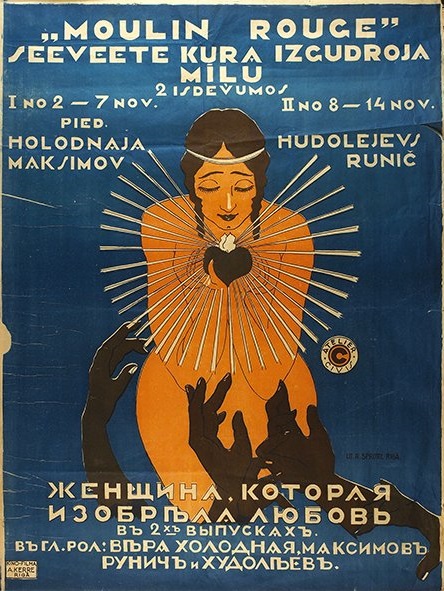
In the annals of early cinema, particularly within the evocative realm of pre-revolutionary Russian film, certain works stand as poignant testaments to human ambition, moral compromise, and the relentless pursuit of an idealized existence. Among these, Zhenshchina, kotoraya izobrela lyubov (The Woman Who Invented Love), a 1918 production, emerges as a particularly compelling, if tragically overlooked, artifact. This cinematic gem, starring the ethereal and incandescent Vera Kholodnaya, delves into the intricate psychological landscape of a woman whose desires transcend the conventional boundaries of her station, propelling her into a maelstrom of calculated affections and ultimate reckoning. It is a narrative that, even a century later, resonates with a timeless exploration of societal pressures and personal agency.
The film, a product of a turbulent era, showcases a remarkable depth of character study, eschewing simplistic morality tales for a nuanced portrayal of a woman driven by complex motivations. Antonella, the protagonist, is not merely a villain or a victim; she is a fascinating study in self-invention, a figure who attempts to sculpt her destiny with the raw materials of cunning and charisma. Her story, penned by the perceptive Guido Da Verona, transcends the melodramatic tropes often associated with silent cinema, offering instead a psychological drama that probes the very essence of human desire and its often-unforeseen consequences.
At its core, Zhenshchina, kotoraya izobrela lyubov unfurls the intricate tapestry of Antonella's life, beginning from her seemingly humble origins as a pawnbroker's daughter. This initial setting immediately grounds her character in a world of commerce and transactions, subtly foreshadowing her later propensity for emotional bartering. Her engagement to the handsome Lieutenant Gilly, portrayed with earnest charm by Osip Runich, appears, on the surface, to promise a life of respectable domesticity. Yet, Antonella's gaze extends far beyond the confines of such a modest future. Her ambition, a simmering, potent force, seeks a grander stage, a more opulent existence than Gilly, despite his affection, can ever provide.
This aspiration leads her down a path of calculated deception, a journey where love becomes less of an emotion and more of a strategic tool. Antonella, with a chilling precision, begins to weave a web of falsehoods around her fiancé, systematically dismantling the foundations of their relationship even as she maintains its outward appearance. Her true target, the elderly duke, represents not merely wealth, but an entry point into a world of aristocratic privilege and unquestioned luxury. Her seduction of him is a masterclass in performative affection, a carefully choreographed dance where every glance, every touch, every whispered word is designed to secure her elevation. This isn't merely a dalliance; it's an investment, a ruthless gamble for a better life.
The film, through its silent visual narrative, brilliantly conveys the internal conflict and external machinations at play. Kholodnaya's expressive face, a canvas for Antonella's shifting emotions and veiled intentions, is central to this portrayal. She embodies the character's duality: the charming fiancée on one hand, the cold, calculating social climber on the other. This complexity elevates Antonella beyond a simple antagonist, rendering her a figure of tragic ambition, much like some of the morally ambiguous heroines explored in contemporary literature. The narrative, therefore, isn't just about a woman's choices, but about the societal structures that might compel such drastic measures.
No discussion of Zhenshchina, kotoraya izobrela lyubov would be complete without acknowledging the towering performance of Vera Kholodnaya. Her presence on screen was nothing short of mesmerizing, a quality that cemented her status as Russia's first true cinema star. Kholodnaya possessed an innate ability to convey profound emotional depth with minimal gestures, relying on her luminous eyes and subtle facial expressions to communicate Antonella's complex inner world. She doesn't just play Antonella; she inhabits her, making palpable the character's yearning, her cunning, and ultimately, her despair.
Her portrayal of Antonella's 'invented love' is particularly striking. One can almost feel the psychological effort required to maintain such a facade, to constantly perform affection for a man she sees primarily as a means to an end. Kholodnaya manages to imbue Antonella with a certain tragic grace, ensuring that even as we witness her manipulative actions, we are also afforded glimpses into the vulnerability that might underpin such a desperate pursuit of security and status. This nuanced performance prevents Antonella from becoming a caricature, instead presenting her as a deeply flawed yet undeniably human figure. Her ability to hold the audience's gaze, to convey a torrent of unspoken thoughts through a mere tilt of the head or a fleeting glance, is a testament to her extraordinary talent, which remains captivating even across the chasm of time and cultural shifts.
The supporting cast, including Eugenie Leontovich and Vladimir Maksimov, provide solid grounding for Kholodnaya's central performance. Osip Runich, as the jilted Gilly, evokes genuine sympathy, effectively portraying the pain of betrayal. Ivan Khudoleyev, as the elderly duke, embodies the unwitting target of Antonella's machinations with a blend of vulnerability and a slightly naive susceptibility, making his character both pitiable and a symbol of the wealth Antonella so desperately craves. The ensemble works cohesively to build a believable world, even within the stylized conventions of silent cinema, allowing Kholodnaya's star power to shine without overshadowing the narrative's emotional core.
The thematic richness of Zhenshchina, kotoraya izobrela lyubov lies in its unflinching examination of ambition's darker side and the corrosive power of deception. The film posits a world where love can be manufactured, a commodity to be traded for social advancement. Antonella's 'invention' of love is a profound commentary on the artificiality that can pervade human relationships when external factors, such as wealth and status, become paramount. This resonates with other silent era narratives where societal pressures often dictated personal choices, such as in The Marriage Market, though Antonella's agency in her deception is far more pronounced.
The narrative also explores the inescapable nature of consequence. Antonella's ascent, however meticulously planned, is built on a foundation of lies, and the film suggests that such a structure is inherently unstable. The 'payoff with life' mentioned in the plot summary is not a literal transaction but a profound existential reckoning. It implies that the universe, or perhaps the moral fabric of existence, demands a balance, and that the debts incurred through deceit must eventually be settled. This theme of inescapable fate and the repercussions of one's actions is a recurring motif in cinematic history, echoing the tragic arcs found in works like East Lynne, where moral transgressions lead to devastating personal ruin, or even the hidden truths that unravel in The Dead Secret, though Antonella's narrative is arguably more about overt manipulation than concealed heritage.
Furthermore, the film subtly critiques the societal structures that create such desperate ambition. In a world where a woman's worth and security were often inextricably linked to her marital status and her husband's financial standing, Antonella's actions, while morally questionable, can also be viewed through the lens of survival and aspiration in a restrictive environment. This doesn't absolve her, but it adds a layer of understanding to her ruthless pragmatism. Her story, in this regard, might be seen as a darker mirror to the struggles for recognition and self-determination found in films like False Ambition, where characters grapple with the allure and perils of pursuing desires beyond their reach.
Despite the technical limitations of its era, Zhenshchina, kotoraya izobrela lyubov employs a sophisticated cinematic language to tell its story. The direction, while not overtly flashy, focuses on intimate character studies, leveraging close-ups to capture the emotional nuances of Kholodnaya's performance. The use of mise-en-scène, though perhaps not as overtly symbolic as later Soviet cinema, effectively contrasts Antonella's initial modest surroundings with the opulent world she strives to enter. The costumes and sets, even in their monochrome presentation, communicate the stark class distinctions that fuel Antonella's ambition.
The pacing of the film, characteristic of its time, allows for extended scenes of emotional intensity, giving the audience ample opportunity to immerse themselves in Antonella's psychological journey. This deliberate tempo, far from being sluggish, builds a sense of mounting tension as Antonella's deceptions deepen and the inevitable consequences draw nearer. The film’s narrative structure, though perhaps appearing linear to modern eyes, was quite progressive for its time in its focus on internal motivation over purely external events.
The enduring legacy of Zhenshchina, kotoraya izobrela lyubov, even amidst its relative obscurity outside specialized circles, lies in its profound psychological depth and its star's iconic performance. It stands as a testament to the power of early Russian cinema to explore complex human themes with grace and intensity. While other films of the period like Simon, the Jester or The Adventurer might have focused on broader societal commentary or slapstick, this film zeroes in on the individual's moral landscape, making it a compelling piece of character-driven drama. Its preservation, however fragmented it may be, offers invaluable insight into the artistic sophistication that flourished in Russia's cinematic landscape before the dramatic shifts of the Soviet era.
In an era marked by rapid social and political upheaval, films like this offered audiences a mirror to their own aspirations and anxieties. Antonella’s story, while extreme, speaks to universal themes of longing for a better life, the allure of luxury, and the ethical compromises one might consider to achieve it. The film doesn't offer easy answers or clear-cut heroes and villains, but instead presents a nuanced portrait of human fallibility and the intricate dance between desire and destiny. It’s a compelling reminder that the 'golden age' of silent cinema was far more diverse and intellectually stimulating than often perceived, featuring narratives that challenged and engaged audiences on a deeply personal level.
The climax of Zhenshchina, kotoraya izobrela lyubov delivers on its promise of a 'payoff with life,' bringing Antonella's meticulously constructed world crashing down. The nature of this reckoning, while left somewhat to the viewer's interpretation due to the inherent ambiguities of silent film and potential loss of specific details over time, is undeniably severe. It signifies that the price of her invented affections and calculated deceptions is ultimately exacted not in monetary terms, but in a profound loss—perhaps of love, status, or even her very sense of self. This stark conclusion serves as a powerful moral commentary, suggesting that while one might temporarily escape the consequences of their actions, fate, or perhaps conscience, ultimately demands its due.
The film leaves a lingering impression of the fragility of human ambition when untethered from genuine connection. Antonella's journey, from aspiring pawnbroker's daughter to the architect of her own downfall, is a cautionary tale, yet one infused with a tragic beauty thanks to Kholodnaya's indelible performance. It reminds us that the most compelling dramas often stem from the deepest human flaws and the relentless pursuit of dreams, however misguided. For those interested in the rich tapestry of early European cinema, and particularly the captivating magnetism of its pioneering stars, Zhenshchina, kotoraya izobrela lyubov remains an essential, albeit melancholic, viewing experience, offering a glimpse into a cinematic past that continues to echo with relevance today.
It is a film that challenges its audience to look beyond the surface, to understand the complex interplay of desire, societal expectation, and personal morality. The 'woman who invented love' ultimately discovers that genuine affection cannot be manufactured or bartered, and that the true cost of ambition can be far greater than any material gain. This profound exploration of the human condition, delivered through the evocative power of silent cinema, secures its place as a significant work in film history, deserving of renewed attention and appreciation for its timeless insights into the heart's labyrinthine machinations.
IMDb 5.2
1935
Community
Log in to comment.