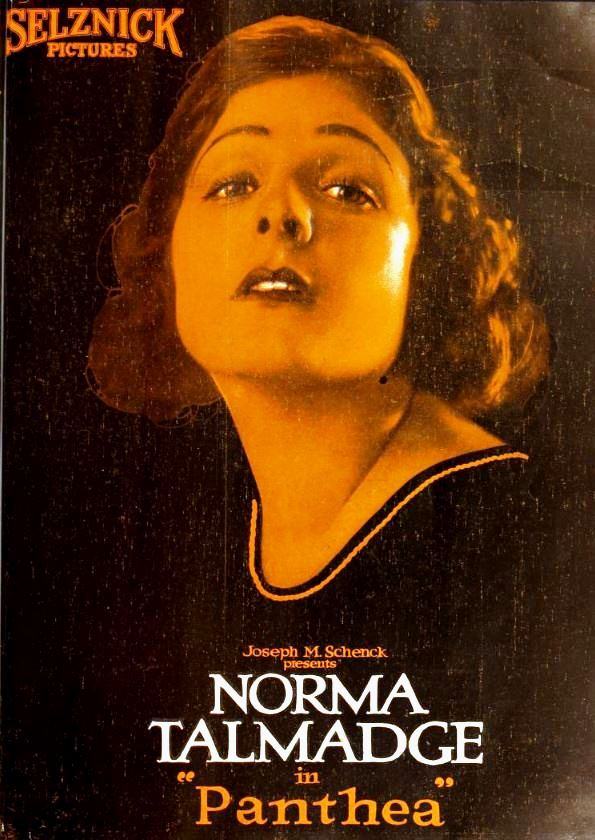
Panthea refuses to behave like any melodrama you have archived under “woman suffers for man.” Allan Dwan’s camera glides through parlors and ateliers as if on casters of doom, each track-in pushing us closer to the moment when Norma Talmadge’s magnanimity calcifies into marble anguish. Notice the first dinner party: the husband unveils a rough clay sketch; guests applaud; Dwan cuts to Talmadge’s gloved hand slipping beneath the table to grip her own wrist, a private tourniquet against the surge of secondhand glory. In that flicker of self-inflicted pain, the film announces its thesis—female altruism as a slow bloodsport.
Color in 1923 was emotion painted onto grayscale cheeks. Cinematographer Harold Rosson suffuses key scenes with amber washes that feel like preserved sunlight; elsewhere he bleaches the frame until cheekbones become cliff edges. When Panthea sells her ancestral emeralds to finance a Paris exhibition, the close-up of the jewel chest is hand-tinted sea-blue (#0E7490), a bruise of oceanic regret that anticipates the cyanotype stillness of her later exile. You half expect the screen to smell of brine and velvet rot.
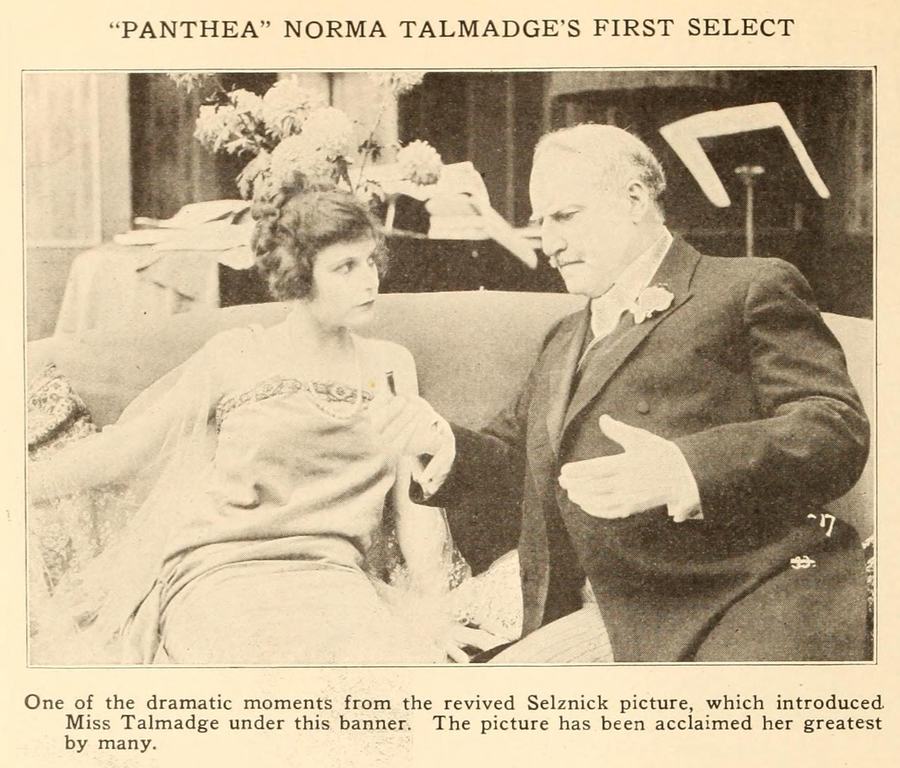
George Fawcett’s urbane dealer, Corti, is capitalism in white gloves, forever flicking ash that never quite falls. He speaks of “investment” the way undertakers speak of “perpetual care.” Compare him to the predatory banker in Dollars and the Woman and you’ll see how Dwan prefers seduction over assault; the villain here is courtesy with a sliding scale.
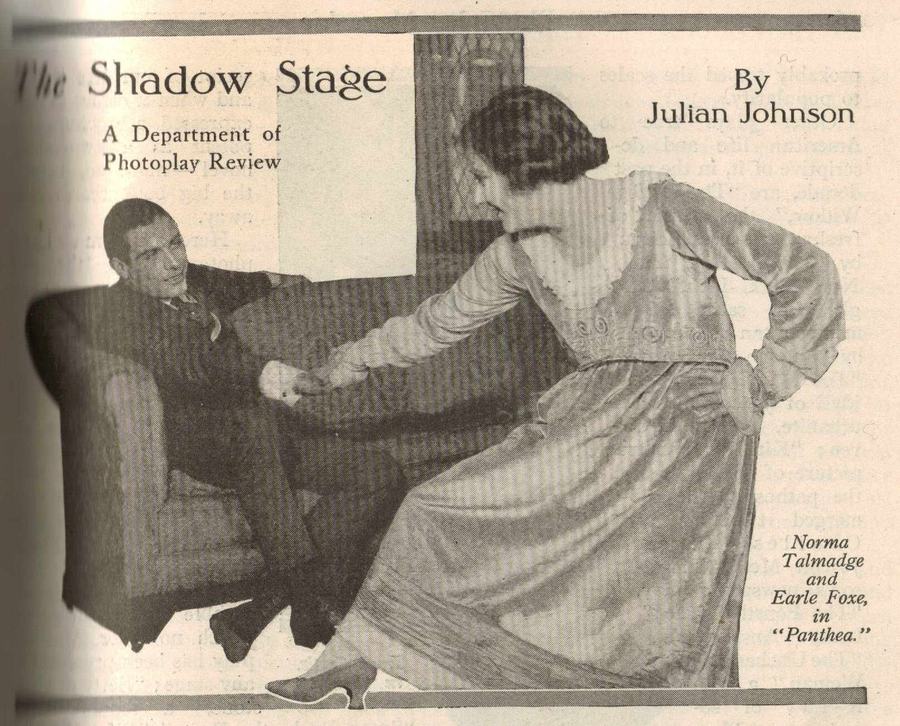
Earle Foxe sculpts his performance like his character sculpts marble—lots of grand posture, little texture. Yet that vacuity serves the narrative: we understand why Panthea must compensate for his imaginative shortfall with her own flesh. In one tableau, Foxe stands beside an unfinished colossus; both man and stone share the same vacant stare, as though waiting for the chisel of destiny to supply a soul.
Intertitles, usually the weak vertebrae of silent storytelling, here attain haiku cruelty. “I have sold my laughter—do not ask the price” appears over an iris shot of Talmadge’s eyes gleaming like wet knives. Another card reads simply: “Tomorrow the world will know his name. Tonight she will forget hers.” Each curt sentence feels scrawled on the inside of a prison wall.
Dwan’s blocking deserves a semester in any film school. Note the sequence where Panthea begs a patron for gallery space: the camera begins in a high perpendicular, then descends a spiral staircase behind her, turning the marble steps into a nautilus shell that squeezes her toward the center. Space itself becomes an accomplice in her diminishment. Contrast this with the open-air optimism of The Golden Chance, where Cecilia de Mille’s camera tilts up toward sky as exit strategy; in Panthea there is no sky, only plaster ceilings cracking like old contracts.
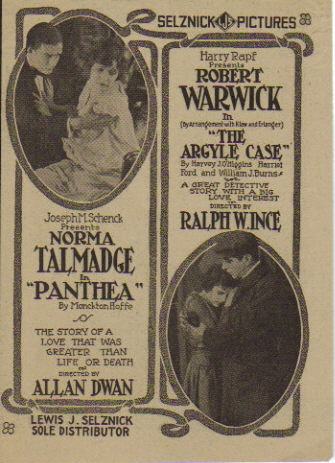
Norma Talmadge operates in the register of restraint until the instant she doesn’t. Halfway through, she learns her husband has been philandering with a sitter who “has the advantage of stillness”—a cruel pun on modeling and morality. Talmadge’s response is not the expected vase-throwing hysteria but a minute-long close-up: pupils dilate, breath fogs the edges of the frame, and something behind her eyes seems to pack its suitcase. It is among the most articulate silences ever committed to nitrate.
Mildred Considine’s scenario, adapted from Monckton Hoffe’s novella, prunes the source’s religiosity and leaves a bare myth of exchanged identities. Where Hoffe moralized, Considine monetizes; every favor carries compound interest. The resulting austerity makes later “self-sacrifice” weepies like Angel of His Dreams feel like butter commercials.
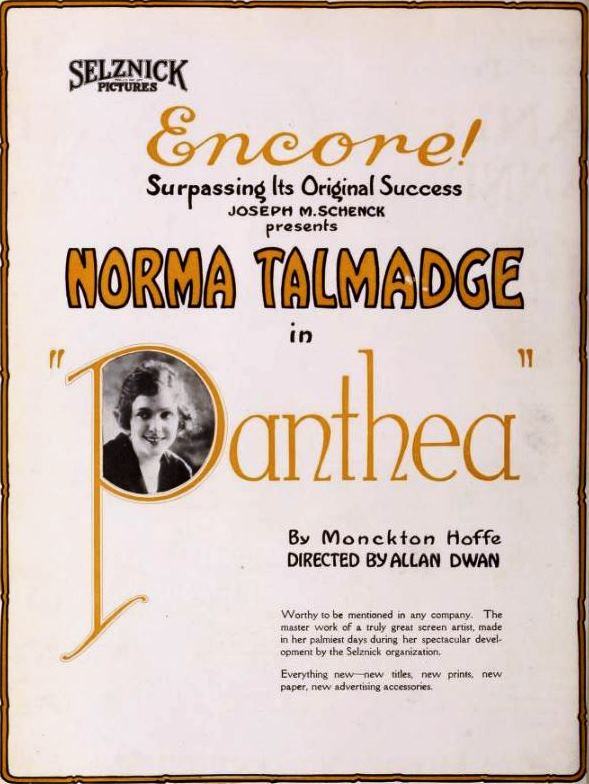
Critics of the period praised the film’s “exoticism,” a code word for its cosmopolitan despair. Trade papers drooled over the Parisian sets, but what lingers is the claustrophobia: velvet drapes that swallow sound, corridors that elongate like lies. Even the outdoor scenes feel interior—fog machines erase the horizon until every boulevard becomes a corridor.
The score, reconstructed by the Mont Alto Motion Picture Orchestra in 2018, deploys a motif of falling thirds every time Panthea considers rebellion, a musical shrug that implies resignation before the thought has even hatched. During the climactic gallery opening, timpani enter like heartbeats overdosed on caffeine, culminating in a dissonant chord struck the exact frame she glimpses her rival wearing the necklace once owned by her mother. The synchronization is so cruel it provoked laughter at the Bologna Cinema Ritrovato screening—nervous laughter, the kind that admits complicity.
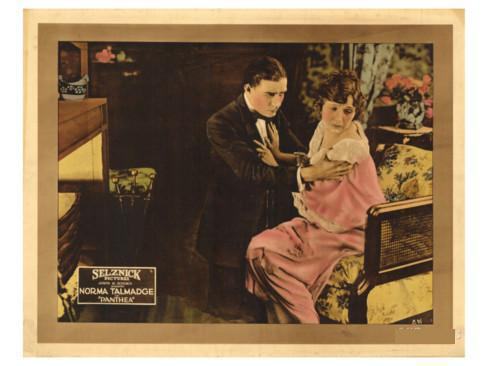
Some viewers fault the ending for abruptness, but abruptness is the point. The film’s last third accelerates like a runaway victoria, cross-cutting between the husband’s triumphal toast and Panthea’s traverse through midnight streets. When she finally steps into the mist, the image overexposes until her silhouette becomes a white absence—an inverted cameo. No epilogue, no text overlay, only the whir of projector gears hungry for the next reel. Compare this to the restorative coda of For King and Country, where sacrifice begets patriotic resurrection; Panthea offers no kingdom, merely a void where a passport once sat.
Restoration-wise, the 4K scan by La Cineteca del Friuli reveals textures previously smothered under generations of dupes: the scumbled gilt on picture frames, the down on Talmadge’s nape, the arterial red of a cigarette tip in a darkened salon. Yet the real revelation is the negative space—the grainy cosmos swirling around characters like cosmic dust, reminding us that obliteration is never tidy but particulate.
Gender readings proliferate. Feminist scholars see Panthea as an anticipatory portrait of emotional labor commodified; economists cite her as a case study in sunk-cost fallacy. I see something more primal: a woman who treats her life as a relay race without a baton, sprinting to hand over vitality to a partner who drops it. The tragedy isn’t that she loses—it's that she confuses proximity to art with authorship of it.
Modern echoes reverberate. Replace marble with tech start-ups and you have the plot of half the prestige dramas on streaming platforms. Yet where contemporary narratives tack on triumphant rebounds, Panthea denies us that dopamine. Its scar tissue is the narrative.
Should you watch it? If you believe silent cinema is all timid maidens and pratfalling Keystone cops, the film will vivisect that prejudice. If you already worship at the altar of Talmadge, the restoration offers Eucharistic clarity. And if you merely crave an antidote to algorithmic happy endings, Panthea is a bracing shot of absinthe—bitter, pale green, and capable of inducing hallucinations about your own relationships.
Availability: Streams on Criterion Channel in 4K during Women’s History Month, and occasionally tours repertory houses with live accompaniment. A Blu-ray from Kino Lorber includes an essay by Shelley Stamp that unpacks the marketing campaign which sold the film to 1923 suffragettes as empowerment—history’s most exquisite troll.
Final aside: the original Hoffe novella ends with Panthea becoming a nun. Considine and Dwan discarded that as too merciful. Instead they give us fog, footsteps, and the most terrifying intertitle of the silent era: “The curtain fell.—No one took a bow.” Roll credits, lights up, and the audience realizes the curtain they saw descending was their own.