DbcultAccessing Vault...
8.2/10
Senior Film Conservator
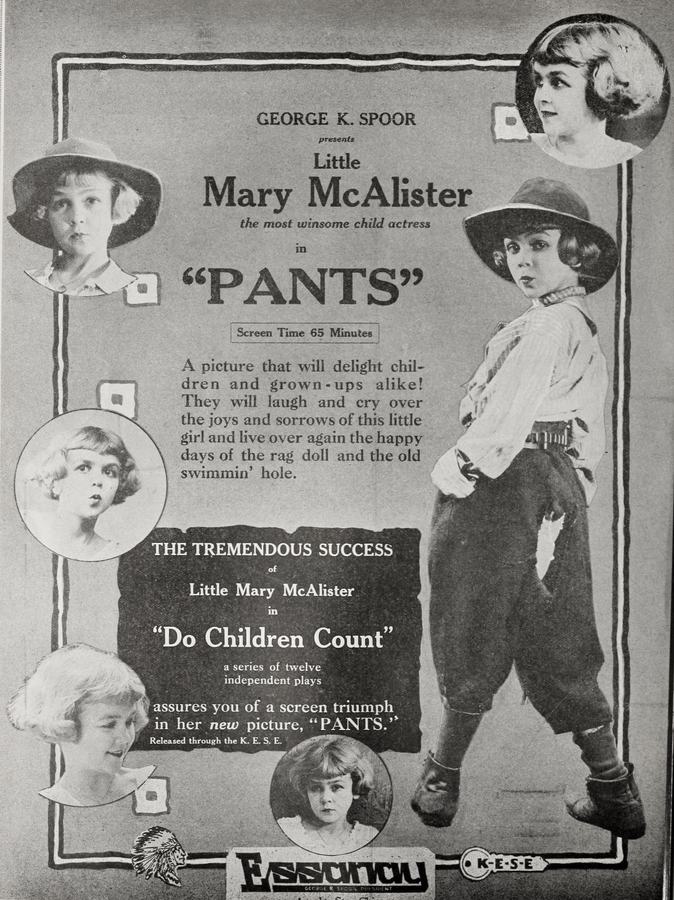
A definitive 8.2/10 rating for a film that redefined the boundaries of cult cinema. Pants remains a cornerstone of transgressive art.
There’s a certain magic to silent cinema, a unique alchemy that transcends the absence of spoken dialogue, communicating profound truths through gesture, expression, and the sheer visual poetry of the moving image. Charles Mortimer Peck’s 'Pants,' a 1917 offering, stands as a testament to this enduring power, delivering a narrative that, despite its century-old vintage, resonates with startling contemporary relevance. It’s a film that peels back the layers of societal artifice, exposing the often-stark disparities between material wealth and genuine human connection, all through the innocent eyes of a child.
From the outset, 'Pants' establishes a world of stark contrasts. We are introduced to Little Betty, portrayed with an endearing blend of youthful exuberance and underlying melancholy by Mary McAllister. Her existence is one of unbridled opulence: a sprawling, luxurious home, an attentive retinue of servants, and a veritable treasury of the costliest toys imaginable. Yet, for all this material abundance, Betty's world is a gilded cage. The very walls designed to protect her from the perceived harshness of the outside world also imprison her, isolating her from the one thing a child truly craves: the unadulterated joy of playing with other children. This isn't merely a tale of a lonely rich girl; it's a subtle but potent commentary on the psychological cost of extreme wealth, where the pursuit of material security inadvertently starves the soul of its most fundamental needs.
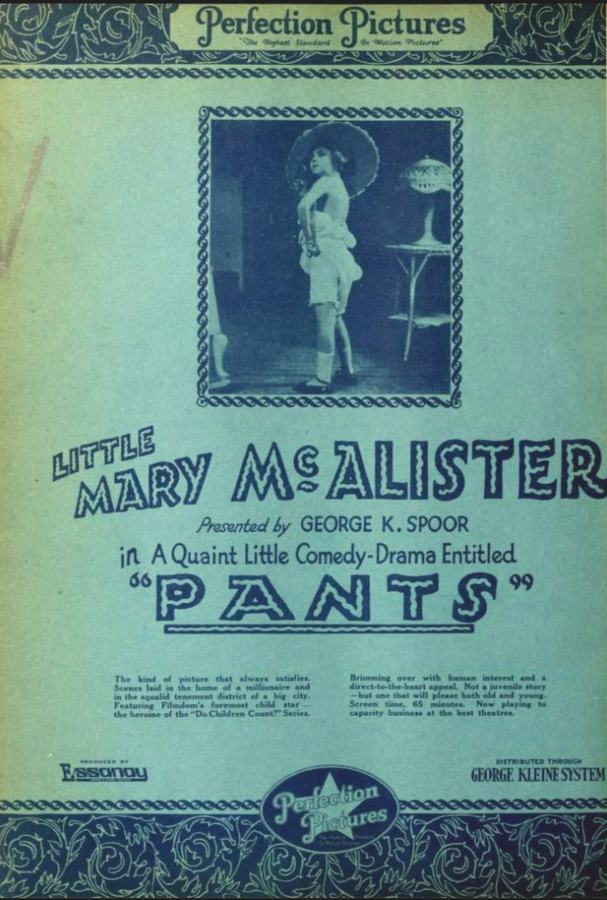
The impetus for the film's central conflict arrives with Betty's audacious decision to run away. It’s not an act of rebellion born of malice, but rather a desperate, instinctual search for belonging. Her journey leads her not to another grand estate, but to the bustling, vibrant, and undoubtedly less privileged world of the ghetto district children on the beach. Here, amidst the sun-drenched sands and the uninhibited laughter of children free from the strictures of formal upbringing, Betty finds her tribe. This sequence is particularly illuminating, showcasing the universal language of play that transcends socio-economic boundaries. It’s a powerful visual metaphor: the pristine, regulated world of Betty’s home gives way to the chaotic, organic freedom of the beach, a space where social hierarchies dissolve under the egalitarian warmth of the sun.
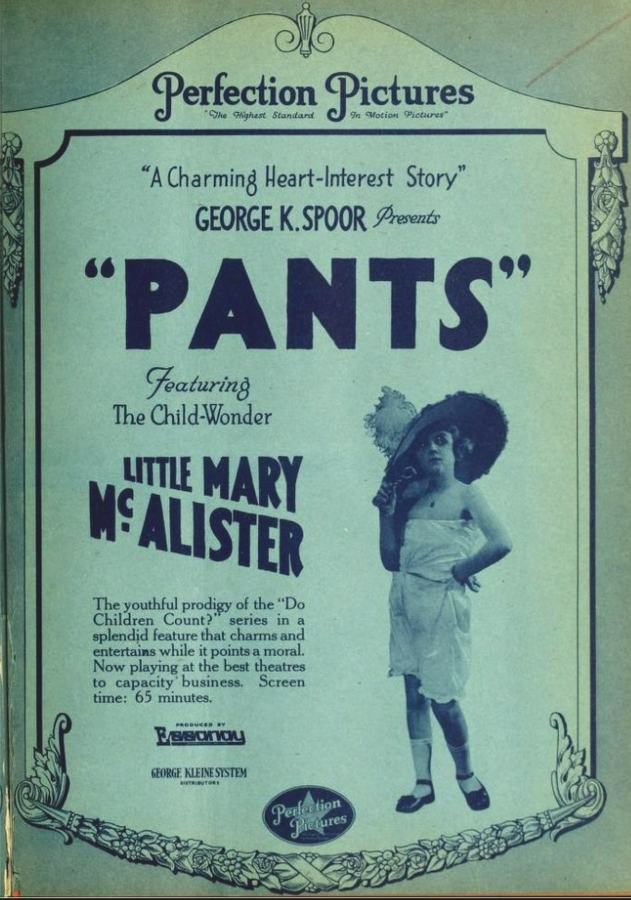
The pivotal moment, and indeed the film's namesake, occurs when Betty, in a spontaneous act of childhood whimsy and perhaps a deeper yearning for true anonymity, exchanges clothing with a little boy. This seemingly innocuous swap of 'pants' and dresses is far more than a simple plot device; it’s a profound symbolic act. Clothing, throughout history, has served as a powerful signifier of status, identity, and social role. By exchanging garments, Betty momentarily sheds the burden of her class and wealth, embracing a fleeting sense of normalcy, while the boy unwittingly steps into a role of privilege, albeit one fraught with peril. This motif of swapped identities through clothing is a classic cinematic trope, seen in films as diverse as Double Trouble, where comedic misunderstandings arise from mistaken identities, or even more dramatically in tales of social inversion. Here, it’s employed not just for comedic effect, but as a mechanism to explore the fluidity of identity and the superficiality of outward appearances.
The ensuing confusion is the engine of the film's narrative. Betty's prolonged absence sends her maiden aunt, portrayed by Marian Skinner with a commendable blend of concern and perhaps a touch of upper-class hysteria, into a frantic state. Her over-zealous guardianship, intended to protect Betty, has paradoxically driven her away. The police are notified, setting in motion a chain of events that will intertwine the lives of the wealthy and the impoverished in an unexpected, almost farcical manner. Simultaneously, we are introduced to the plight of the boy's father, played by John Cossar. A man utterly ravaged by the economic hardships of the era, he has lost his position and faces the grim reality of starvation. His desperation drives him to a desperate act: burglary. His target, in a twist of dramatic irony, is none other than Betty’s opulent home.
The climax unfolds with a masterful orchestration of dramatic irony and mistaken identity. The household is awakened, the intruder captured. At this precise, chaotic juncture, the police arrive, not with Betty, but with the little boy, whom they have apprehended and mistaken for Betty, precisely because he is wearing her distinctive, expensive clothing. The bewilderment on the faces of all involved – the captured burglar, the frantic aunt, the confused police – is palpable, a silent symphony of misunderstanding. This scene effectively highlights the power of perception, how external signifiers can entirely alter one's understanding of reality. It's a moment that could easily veer into slapstick, but 'Pants' maintains a delicate balance, allowing the underlying social commentary to shine through.
The denouement is both heartwarming and insightful. Just as the confusion reaches its peak, Betty makes her dramatic entrance, now garbed in the boy's simple clothes. Her appearance, a stark visual contrast to the expectations of her family and the authorities, immediately clarifies the situation. It is her innocent yet resolute voice that cuts through the societal noise. Betty, having experienced genuine connection and empathy, speaks not from a place of privilege, but from a newfound understanding of human dignity. Her plea for the boy and his father’s liberation is the emotional anchor of the film, a testament to the transformative power of compassion. Mary McAllister, even at a young age, conveys this shift with remarkable sensitivity, showing Betty’s growth from a sequestered child to a surprisingly empathetic advocate.
The film’s resolution extends beyond the mere clearing of names. It delivers a profound lesson to Betty’s father. His daughter’s harrowing experience, her brief sojourn into a world so different from his own, serves as a stark awakening. He realizes that his vast wealth, while providing material comfort, has inadvertently deprived his daughter of something far more precious: the simple, invaluable gift of childhood companionship. This epiphany is a powerful indictment of a society that often prioritizes accumulation over connection. It’s a message that echoes through time, reminding us that the richest lives are not necessarily those with the most possessions, but those enriched by meaningful relationships. One could draw parallels here to the father-son dynamic explored in films like Father and Son, though 'Pants' focuses more on the father's realization of his daughter's emotional needs rather than a direct intergenerational conflict.
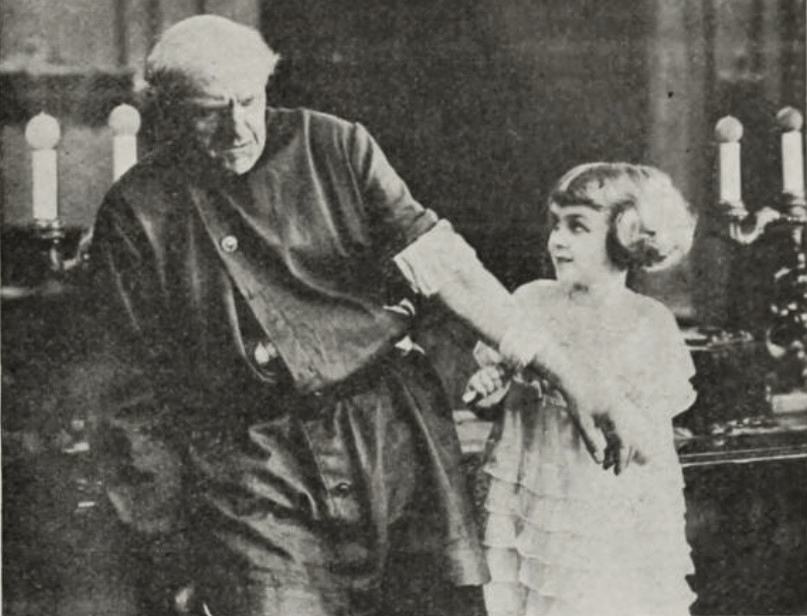
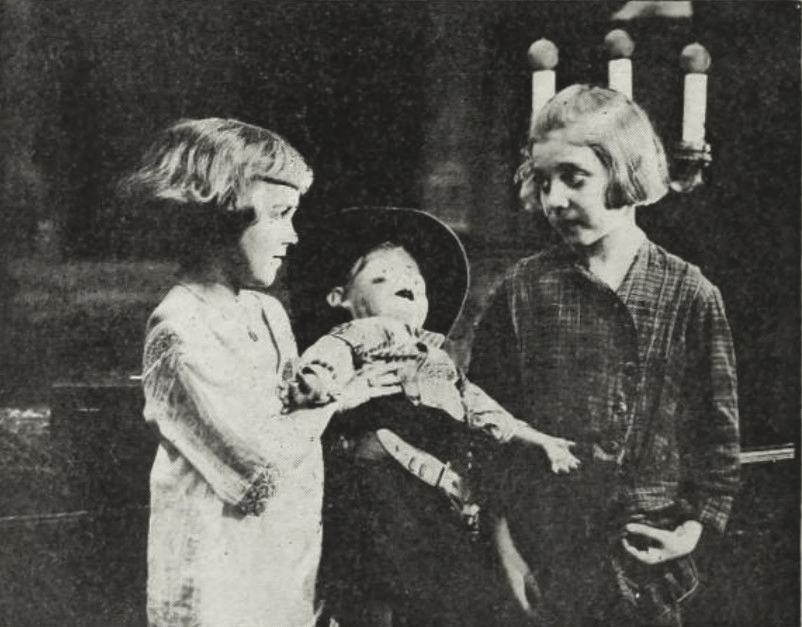
Charles Koeppe, as the little boy, provides an excellent foil to McAllister's Betty. His uninhibited playfulness and natural demeanor ground the beach scenes in an authentic sense of childhood joy. His father, portrayed by John Cossar, embodies the struggles of the working class with a quiet dignity that makes his descent into desperation all the more tragic. The film, through these characters, paints a vivid picture of early 20th-century social stratification, a theme explored with varying degrees of intensity in other silent era films such as Shoes, which depicted the grim realities faced by working-class women, or the more expansive social critique found in Mysteries of Paris. 'Pants' distills this broader social commentary into a deeply personal, child-centric narrative.
The direction by Charles Mortimer Peck is understated yet effective. He understands the power of visual storytelling inherent in silent film. The contrasts between Betty's lavish home and the bustling beach are not merely set dressings; they are characters in themselves, speaking volumes about the societal divide. The use of close-ups on the children's faces, capturing their fleeting emotions, is particularly adept, allowing the audience to forge an immediate connection with their experiences. The pacing, while typical of the era, never drags, maintaining a steady momentum towards the inevitable, yet cleverly constructed, resolution. The script, credited to Charles Mortimer Peck as well, demonstrates a keen understanding of human nature and the complexities of class relations, delivering its message with clarity and compassion.
What makes 'Pants' particularly compelling is its ability to weave a tale of social critique within an accessible, emotionally resonant framework. It doesn't preach; it shows. It demonstrates how superficial markers of wealth can inadvertently create profound emotional voids, and how genuine connection can bridge the widest social chasms. The film suggests that true freedom and happiness are found not in isolation and material abundance, but in the shared experiences and simple joys of human interaction. This universal theme, of course, is timeless. One could even consider the thematic resonance with films like Manegens Børn or The Nightingale, which also explore the innocence and often harsh realities faced by children from different social strata, albeit in different cultural contexts.
In an era marked by significant social upheaval and economic disparity, 'Pants' served as a gentle yet firm reminder of what truly matters. It’s a film that champions empathy, understanding, and the fundamental right of every child to experience a childhood rich in companionship, regardless of their family's economic standing. The 'pants' in the title become a symbol not just of clothing, but of the roles we are assigned or choose, and how those roles can be shed or adopted, revealing the shared humanity beneath. It is a quiet masterpiece, often overlooked, but deserving of renewed attention for its enduring message and its skillful execution. The film transcends its silent era origins to speak directly to modern audiences about the persistent challenges of class, identity, and the timeless quest for belonging.
The performances, particularly from Mary McAllister, are remarkably nuanced for the period. McAllister conveys Betty's initial loneliness, her burgeoning joy on the beach, and her final, resolute plea with an authenticity that defies the lack of spoken dialogue. Her expressions are a masterclass in silent film acting, allowing the audience to fully grasp Betty's emotional journey. Charles Koeppe, as her young counterpart, is equally engaging, embodying the carefree spirit of a child unburdened by material concerns but acutely aware of the harsh realities of poverty. The supporting cast, including Marian Skinner as the anxious aunt and John Cossar as the desperate father, round out the narrative with credible portrayals that underscore the human element of the social commentary.
Ultimately, 'Pants' is more than just a charming silent film; it's a profound social document. It offers a window into the anxieties and aspirations of early 20th-century America, while simultaneously delivering a message that remains profoundly relevant today. In a world still grappling with issues of economic inequality and social division, the film’s central tenet—that human connection and empathy are the most valuable currencies—is a powerful and necessary reminder. It’s a film that, like a well-worn pair of trousers, might seem unassuming on the surface, but holds within its fabric a story of enduring warmth, resilience, and quiet revolution. It challenges the viewer to look beyond superficial appearances and recognize the shared humanity that binds us all, regardless of the 'pants' we wear. It’s a cinematic gem that, given the chance, will undoubtedly resonate deeply, proving that some stories, like some truths, are truly timeless.
IMDb 6.6
1924
Community
Log in to comment.