DbcultAccessing Vault...
Cult Review
Senior Film Conservator
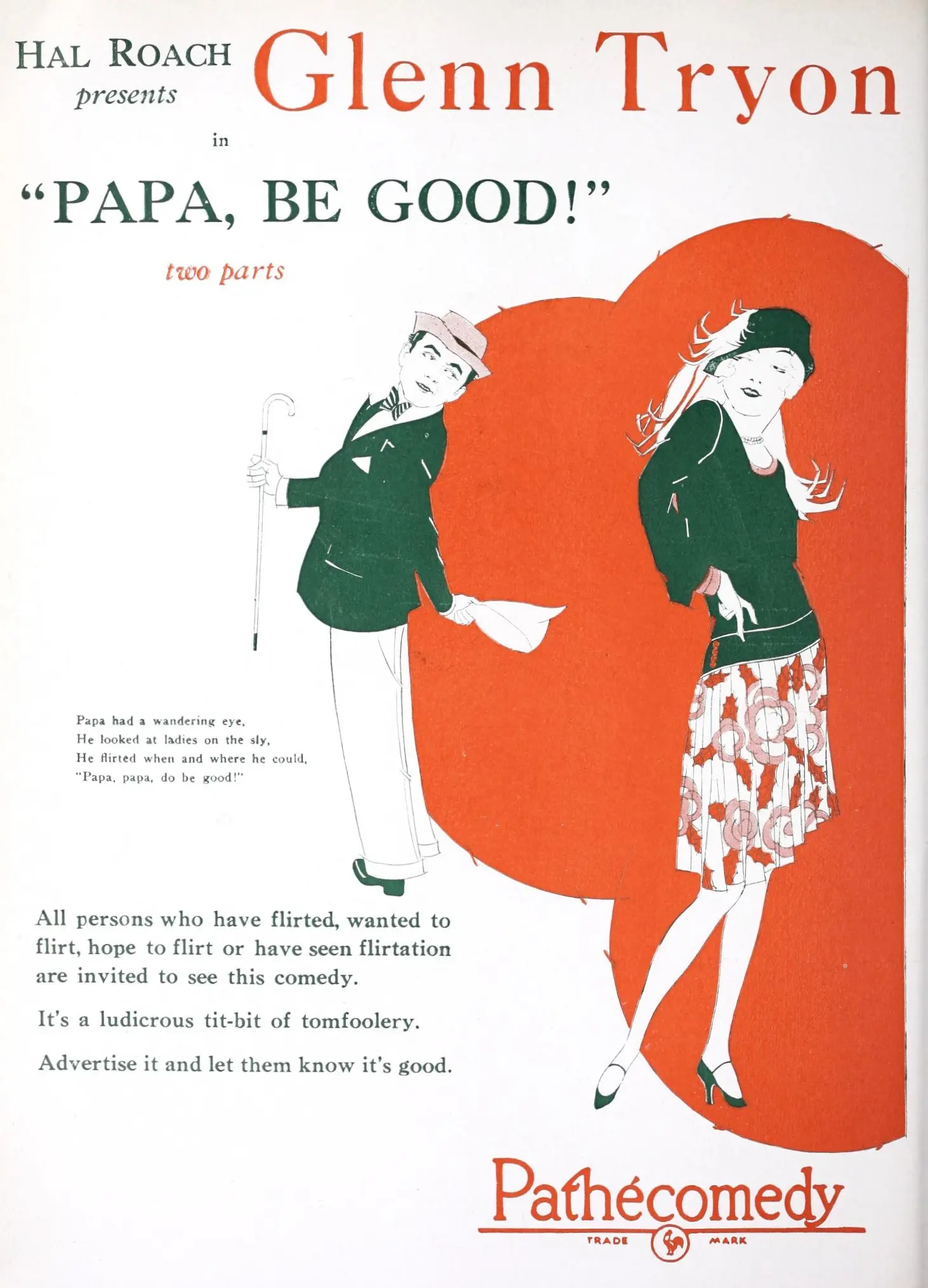
Is 'Papa Be Good!' worth watching today? Short answer: yes, but with significant caveats. This 1920s silent comedy offers a fascinating, albeit time-bound, window into early cinematic humor and social mores. It’s a film that demands a certain appreciation for its historical context, rewarding those willing to overlook its structural simplicity for moments of genuine, if broad, comedic ingenuity.
This film is unequivocally for silent film enthusiasts, historians, and anyone curious about the foundational elements of screen comedy and how marital infidelity was portrayed in a less explicit, more farcical era. Conversely, it is absolutely NOT for viewers seeking modern pacing, sophisticated humor, deep emotional arcs, or a plot that prioritizes nuance over slapstick. Its charm is niche, its appeal specific.
Early in its runtime, 'Papa Be Good!' lays its cards on the table, revealing both its strengths and its limitations. The film is a product of its time, reflecting the prevalent comedic styles and narrative conventions of the silent era. Understanding these foundational elements is key to appreciating its sporadic brilliance.
This film works because of its energetic physical comedy, its invaluable historical context as a snapshot of 1920s morality and entertainment, and the earnest, if exaggerated, performances from its leads. It serves as a vital artifact for understanding the evolution of cinematic humor.
This film fails because its plot is undeniably simplistic, its humor often dated and reliant on broad stereotypes, and its character development is virtually non-existent, prioritizing gags over depth. The narrative arc feels less like a story and more like a scaffolding for a few standout comedic sequences.
You should watch it if you appreciate the unique charm of silent cinema, are fascinated by historical portrayals of social dilemmas, and can forgive a film its structural limitations in favor of its comedic highlights and the sheer audacity of its central stunt. It’s a curiosity that offers more than just a historical footnote.
H.M. Walker's 'Papa Be Good!' unfurls a narrative that, by today's standards, is as thin as the plank its protagonist eventually traverses. It centers on a young man, played with an almost frantic energy by Glenn Tryon, whose marital vows seem to sit lightly on his conscience. His attention is easily swayed, particularly by the allure of a new neighbor, portrayed by Katherine Grant, whose own husband, Tyler Brooke, is similarly prone to wandering.
The inciting incident — a dropped comb — feels almost laughably trivial, yet it serves as the perfect catalyst for the escalating absurdity. This isn't a story of profound moral quandaries; it's a vehicle for a series of escalating physical gags and comedic misunderstandings. The film’s genius, such as it is, lies in its ability to take such a flimsy premise and stretch it to its breaking point, culminating in a courtroom scene that feels both inevitable and utterly preposterous.
The film’s portrayal of infidelity is less a critique and more a casual observation of human foibles. It reflects a period where such lighthearted depictions of marital straying were common in vaudeville and early cinema, often resolved with a wink and a nod rather than serious introspection. This casual approach might strike modern viewers as naive or even problematic, but it’s crucial to remember the comedic sensibilities of the era.
The story’s progression from innocent flirtation to a high-stakes plank walk, and then to a courtroom, is a testament to the silent film's reliance on visual storytelling and escalating physical stakes. It’s less about character development and more about situation development. The plot, while simple, is effective in constructing a framework for the comedic set pieces, which were, after all, the main draw for audiences of the time.
The cast of 'Papa Be Good!' operates within the established parameters of silent film acting, where subtlety often took a backseat to broad gestures and exaggerated facial expressions. Glenn Tryon, as our wandering protagonist, is the undisputed engine of the film's comedy. His performance is a whirlwind of wide-eyed panic, mischievous grins, and impressive physical agility. He embodies the 'everyman' caught in a self-made predicament, eliciting sympathy even as his actions are clearly misguided.
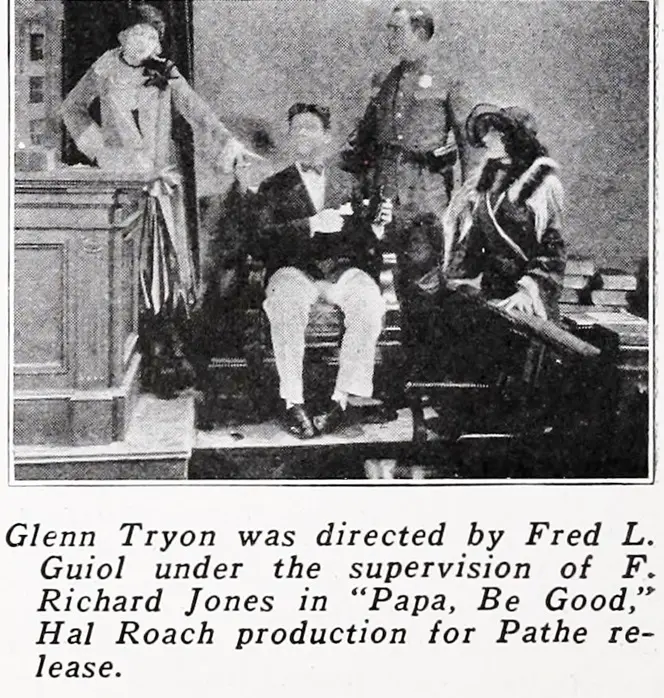
Tryon’s ability to convey complex emotions through purely visual means is remarkable, even if those emotions are primarily variations of 'Oh no!' and 'I’m in trouble now!'. The highlight of his performance, and indeed the entire film, is the infamous plank-walk sequence. Here, Tryon transforms into a silent acrobat, his body language a symphony of terror and determination. Every wobble, every desperate grab for purchase, is meticulously choreographed and executed, drawing genuine gasps and laughs from the audience. It’s a masterclass in silent physical comedy, reminiscent of the best work of Buster Keaton or Harold Lloyd, though perhaps lacking their consistent genius.
Marjorie Whiteis, as Tryon's attractive but often-ignored wife, delivers a performance that balances sweetness with a growing sense of frustration. Her reaction shots, particularly when she suspects her husband's dalliances, are a study in silent film pathos, conveying disappointment without a single spoken word. Katherine Grant, as the object of Tryon's affection, plays the role with a charming coyness, never quite overtly inviting trouble but certainly not discouraging it. Tyler Brooke, as the blustering, equally unfaithful husband across the way, provides a perfect foil, his anger and indignation being as theatrical as Tryon's fear.
The ensemble works well together, each actor understanding their role in the comedic machinery. There’s a certain theatricality to their movements and expressions that would feel out of place in a sound film, but here, it’s entirely appropriate. It is a style that demands a suspension of modern disbelief, inviting us to appreciate the craft of communicating narrative and emotion through purely visual cues.
H.M. Walker’s direction in 'Papa Be Good!' is straightforward and functional, prioritizing clarity and comedic timing over stylistic flourishes. The film's visual language is unpretentious, designed to serve the gags rather than overshadow them. Walker understands the rhythm of silent comedy, allowing moments to breathe for reactions while keeping the overall pace brisk.
The staging of the apartment setting is particularly effective. The layout of the two apartments, separated by a precarious void, becomes a character in itself, enabling the central plank gag. The camera is largely static, capturing the action from a respectful distance, allowing the physical comedy to unfold naturally within the frame. There are few intricate camera movements or experimental angles, which is typical for many films of this era, focused more on capturing the performance than on visual innovation.
Cinematography, while not groundbreaking, is competent. The lighting is generally flat but sufficient, ensuring that the actors' expressions and actions are always visible. Close-ups are used sparingly but effectively, primarily to emphasize a reaction or a moment of comedic realization. For instance, a close-up on Tryon’s face as he contemplates the perilous journey across the plank perfectly encapsulates his internal struggle and terror.
The film's visual aesthetic is clean and unfussy, a direct contrast to the chaotic antics unfolding within the frame. This simplicity allows the audience to focus entirely on the performers and the escalating comedic situations. It's a directorial choice that, while not flashy, is entirely appropriate for the genre and the story being told. One could argue that a more adventurous directorial hand might have elevated the film, but Walker’s approach ensures that the comedy remains front and center.
'Papa Be Good!' maintains a relentlessly fast pace, a hallmark of many silent comedies designed to keep audiences engaged before the advent of spoken dialogue. The film wastes little time on exposition, thrusting its characters into a series of escalating predicaments almost immediately. This rapid-fire approach ensures that even when the gags are simplistic, the momentum carries the viewer forward.
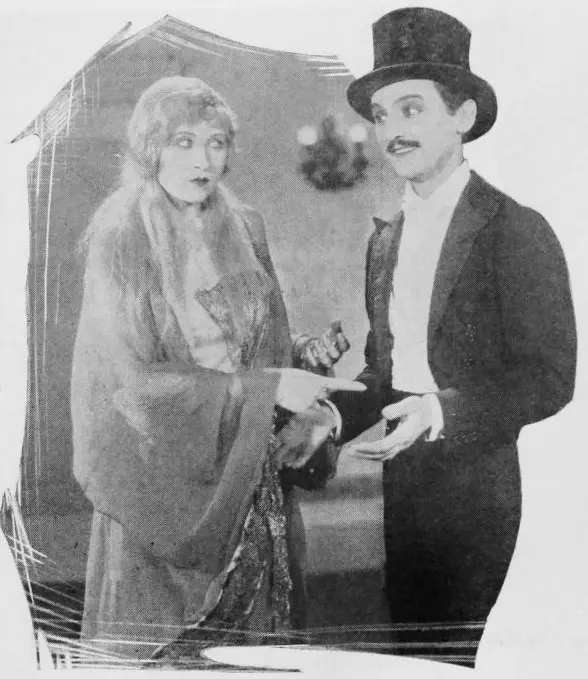
The tonal balance is expertly struck between lighthearted farce and a comedic sense of impending doom. The flirtations, while potentially serious in real life, are handled with a playful innocence that prevents the film from becoming overly dramatic. Even the courtroom scene, which could have been somber, is played for laughs, transforming legal proceedings into another stage for exaggerated performances and absurd revelations. The film never takes itself too seriously, which is its saving grace.
The build-up to the plank sequence is a prime example of the film’s pacing. It establishes the characters, introduces the conflict, and then quickly sets the stage for the big stunt. Once Tryon is on the plank, the pacing becomes even more frenetic, with quick cuts between his struggle and the reactions of the onlookers. This creates a palpable sense of tension and excitement, culminating in the dramatic, yet comedic, confrontation.
However, this breakneck pace also contributes to the film’s lack of depth. There’s little room for character reflection or emotional resonance. The film is a sprint, not a marathon, and while it delivers on its promise of quick laughs, it leaves little lasting impression beyond its standout set pieces. This isn’t necessarily a flaw for a film of its type, but it is a characteristic that distinguishes it from more ambitious works of the era, such as The Slim Princess, which, while also comedic, aimed for a slightly richer narrative.
For the uninitiated, approaching 'Papa Be Good!' without proper context might lead to disappointment. The humor is dated. The plot is thin. But for those with an appreciation for silent cinema, it's a valuable, enjoyable watch.
It offers a pure distillation of early cinematic comedy. Glenn Tryon's physical performance is genuinely impressive. The plank scene is a classic, foundational piece of slapstick. It works. But it’s flawed.
This film serves as an excellent educational tool for understanding film history. It showcases how simple premises could be expanded into full-fledged shorts. It also highlights the universal appeal of physical comedy, transcending the language barrier.
Ultimately, its worth is subjective. If you cherish the unique artistry of the silent era, 'Papa Be Good!' is a delightful, if minor, entry. If you demand modern narrative sophistication, you will likely find it wanting.
'Papa Be Good!' is a delightful, if undeniably dated, relic from the silent era. It doesn't aspire to be a profound character study or a groundbreaking cinematic achievement. Instead, it aims to deliver laughs through physical comedy and farcical situations, and in that regard, it largely succeeds. Glenn Tryon's central performance is a testament to the power of silent acting, particularly during the film's memorable plank-walking stunt, which remains genuinely impressive even a century later.
While its narrative is thin and its humor occasionally predictable, the film offers valuable insight into the comedic sensibilities of the 1920s. It's a charming, energetic piece of film history that, despite its flaws, manages to entertain. It demands a viewer willing to meet it on its own terms, to appreciate its historical context and the earnest efforts of its cast. For those with an open mind and a love for the foundational elements of cinema, 'Papa Be Good!' is a worthwhile, if not essential, watch. It reminds us that sometimes, all a film needs is a good gag and a committed performer to leave a lasting, if lighthearted, impression.
IMDb —
1930
Community
Log in to comment.