DbcultAccessing Vault...
3/10
Senior Film Conservator
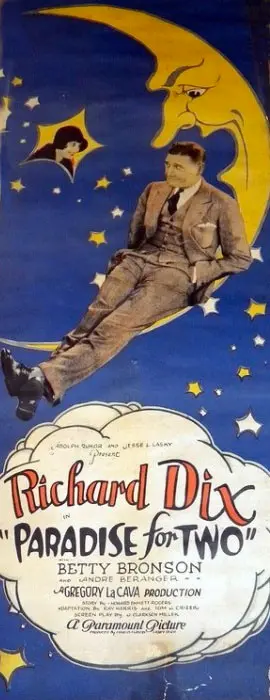
A definitive 3/10 rating for a film that redefined the boundaries of cult cinema. Paradise for Two remains a cornerstone of transgressive art.
Is Paradise for Two worth watching today? Short answer: yes, but only if you have a soft spot for the breezy, physical comedy of the late silent era. This film is a perfect fit for enthusiasts of classic romantic farces who enjoy the 'fake dating' trope, but it is certainly not for those who require modern pacing or complex, gritty character arcs.
This film works because the chemistry between Richard Dix and Betty Bronson feels authentic despite the exaggerated physical language of the 1920s. This film fails because the second act relies too heavily on repetitive misunderstandings that stall the narrative momentum. You should watch it if you want to see a masterclass in how silent cinema could turn a thin premise into a charismatic character study.
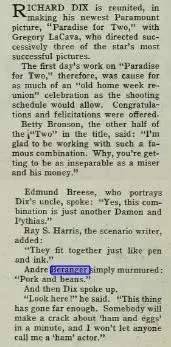
The setup of Paradise for Two is as old as the hills. A man wants money; the money requires a wife. It is a plot device we have seen in everything from Matri-Money to modern-day rom-coms. However, in 1927, this premise allowed for a specific kind of high-society satire that feels distinct. Steve Porter, played with a rugged, slightly frantic energy by Richard Dix, isn't a misogynist; he’s just a man who likes his peace. When he is forced to find a wife, the film avoids the darker implications of the era's gender politics by keeping the tone light and the stakes purely financial.
The introduction of Maurice, the theatrical agent, adds a layer of meta-commentary on the industry itself. Maurice doesn't see marriage as a sacred bond; he sees it as a casting call. This cynical perspective provides a sharp contrast to Steve’s growing desperation. When they eventually land on Sally Lane, the film finally finds its pulse. Betty Bronson, fresh off her success in Peter Pan, brings a grounded yet ethereal quality to Sally. She isn't just a girl for hire; she’s a professional performing a job, and she’s often the smartest person in the room.
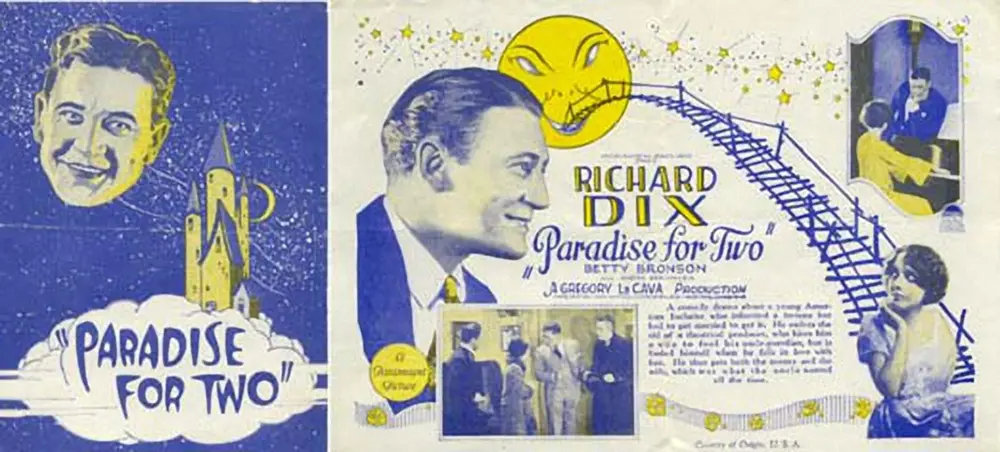
Richard Dix was a powerhouse of the silent era, often categorized as a rugged leading man. In Paradise for Two, he proves he had significant comedic chops. His physical reactions to the threat of marriage are genuinely funny. There is a specific moment where he first sees Sally and tries to maintain a professional distance, but his eyes betray a mix of terror and attraction. It’s subtle for the time, and it works. He doesn't play the character as a buffoon, but as a man out of his depth. This makes his eventual fall into love feel earned rather than forced.
Betty Bronson is the film's secret weapon. While Dix provides the energy, Bronson provides the heart. In the scenes where they are 'practicing' being a couple, she displays a range of facial expressions that convey both her amusement at Steve’s awkwardness and her own growing affection. Unlike the more aggressive 'vamp' characters seen in films like The Vamp, Bronson’s Sally is relatable and warm. She makes the audience root for the lie to become the truth.
There is a scene mid-way through the film where the 'newlyweds' have to host a dinner for the executor of the estate. The tension is palpable. Every time Steve tries to show affection, he overdoes it, looking more like he’s wrestling a bear than hugging a wife. Sally’s attempts to smooth over his clumsiness provide the film's best laughs. It’s a classic comedy of errors that feels remarkably modern in its execution. The way the camera lingers on their hands as they awkwardly try to touch shows a director who understood that in silent film, the smallest gesture is a scream.
The direction is efficient, focusing heavily on character placement and reaction shots. The sets, particularly Steve’s bachelor pad, are designed to look lived-in and comfortable, which emphasizes his sacrifice. When the setting shifts to the more chaotic theatrical agency, the lighting becomes harsher, and the framing tighter, reflecting the transactional nature of that world. It’s a clever visual shorthand that tells the story without needing excessive intertitles.
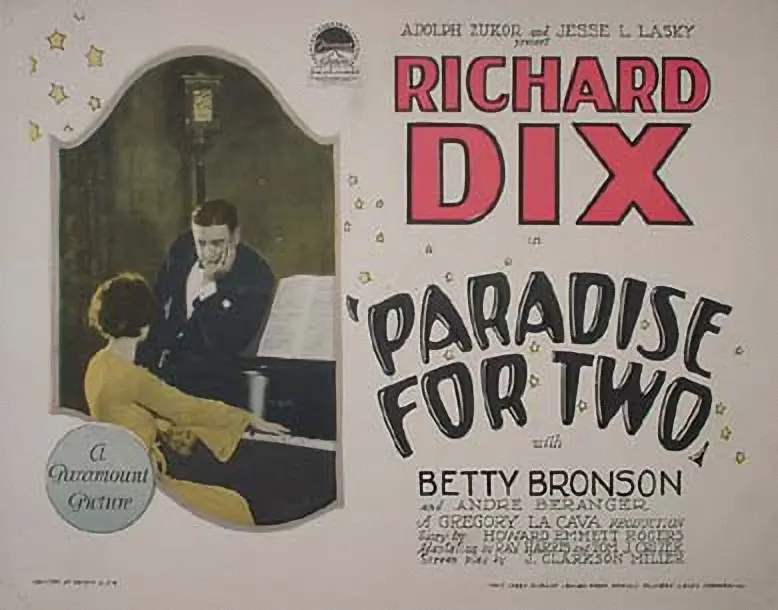
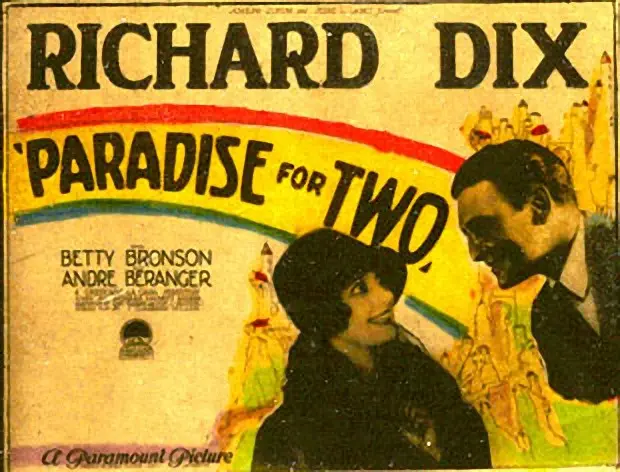
Compared to the high-octane drama of Underworld, Paradise for Two is a much smaller, more intimate production. It doesn't try to reinvent the wheel. Instead, it focuses on the geometry of the frame. The way Dix and Bronson are positioned in the final act—often with a physical barrier between them that slowly disappears—is a masterclass in visual storytelling. It’s simple. It works. But it’s flawed in its reliance on the static camera angles common in late-silent comedies before the fluid movement of the 1930s took over.
If you are looking for a lighthearted escape that showcases the peak of silent film star power, then yes, Paradise for Two is absolutely worth your time. It offers a charming look at 1920s social mores and features two leads at the height of their popularity. While the plot is predictable, the execution is polished and the humor remains surprisingly effective nearly a century later. It is a delightful artifact of a bygone era of filmmaking that prioritized charm over complexity.
Pros:
- Richard Dix delivers a surprisingly nuanced comedic performance.
- Betty Bronson is incredibly charismatic and carries the emotional weight of the film.
- The production design effectively contrasts Steve's two worlds.
- The film avoids the overly melodramatic tendencies of other 1927 releases like The Temptress.
Cons:
- The 'inheritance clause' plot was already a cliché by the time this was filmed.
- Some of the supporting characters, like the executor, are one-dimensional caricatures.
- The pacing slows down significantly in the second half before the finale.
It is worth noting how often the 'marriage clause' appeared in cinema during this period. Films like Forbidden Fruit and The Money Mill explored similar themes of financial desperation driving romantic choices. Paradise for Two stands out because it doesn't treat the situation with gravity. It treats it as a game. This reflects a shift in the late 1920s toward more sophisticated, urban comedies that would eventually pave the way for the screwball era of the 1930s. Steve Porter is a proto-screwball hero: wealthy, slightly neurotic, and ultimately softened by a woman who is his intellectual equal.
The writing team, including Ray Harris and Thomas J. Crizer, clearly understood the mechanics of farce. They set up the 'rules' of the lie early on and then systematically break them. It is a standard formula, but it is executed with a level of professionalism that makes it go down easy. Even when compared to more experimental works of the time, such as Kino-pravda no. 21, Paradise for Two holds its own as a piece of pure entertainment.
Paradise for Two is a quintessential example of the 'polished' silent comedy. It doesn't have the slapstick insanity of Keaton or the pathos of Chaplin, but it has a sophisticated charm that is all its own. Richard Dix is a revelation here, proving that he could have been a major sound-era comedy star if the cards had fallen differently. The film is a bit of a slog in the second act, and the ending is as predictable as a sunrise, but the journey there is filled with enough genuine warmth to make it a recommendation. It’s a relic, but a shiny one. It works. But it’s flawed. Ultimately, it’s a delightful 70 minutes of cinema that reminds us why the world fell in love with movies in the first place.
IMDb 5.1
1934
Community
Log in to comment.