DbcultAccessing Vault...
Cult Review
Senior Film Conservator
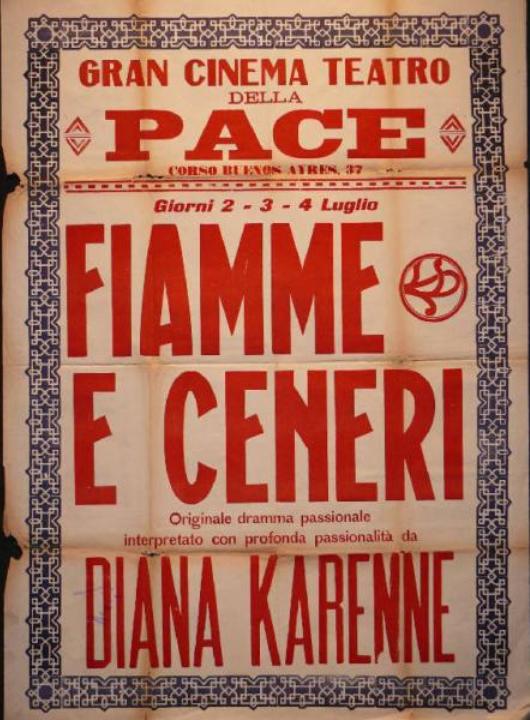
Ah, the silent era. A time when emotions were writ large on the screen, conveyed through the eloquent dance of gesture, the intensity of a gaze, and the sweeping grandeur of orchestral scores that filled the darkened auditoriums. It was a period ripe for melodrama, for tales of grand passion and devastating sorrow, and few films encapsulate this spirit quite like 'La fiamma e la cenere.' This cinematic gem, despite its age, speaks volumes to the enduring complexities of the human heart, weaving a tapestry of desire, betrayal, and ultimate disillusionment with a artistry that transcends the absence of spoken dialogue.
From its opening frames, 'La fiamma e la cenere' plunges us into a world of stark contrasts: the gilded cages of aristocracy versus the fervent yearnings of individual souls. Diana Karenne, in a performance that truly defines the term 'star power,' embodies Countess Isabella with a magnetism that is almost palpable. Her Isabella is not merely a figure of beauty, but a woman ablaze with an inner fire, stifled by the rigid expectations of her era and the suffocating reality of her marriage to the venerable Duke Alessandro, played with a masterful portrayal of weary resignation by Alfonso Cassini. Cassini’s Duke is a man burdened by lineage and the slow, inevitable decline of his family’s fortunes, a figure of tragic pathos whose quiet suffering forms a compelling counterpoint to Isabella’s simmering discontent. One cannot help but draw parallels to the societal critique subtly woven into films like East Lynne, where the constraints placed upon women of a certain standing often led to desperate measures and tragic outcomes, though 'La fiamma e la cenere' elevates this theme with a more pronounced psychological depth.
It is into this atmosphere of quiet despair that Arnold Kent’s Marco strides, a force of nature in human form. Kent’s portrayal of the bohemian sculptor is nothing short of electrifying. Marco is the embodiment of artistic passion, his every movement exuding a raw, untamed energy that serves as an irresistible siren call to Isabella’s starved spirit. Their initial encounters are masterclasses in cinematic tension – stolen glances across crowded salons, fleeting touches that convey worlds of unspoken longing. The director, with a keen eye for visual storytelling, uses close-ups and dramatic lighting to amplify the illicit thrill of their burgeoning affair, making the audience complicit in their dangerous game. This visceral portrayal of forbidden desire, burning bright against a backdrop of societal expectation, might remind some of the intense, almost primal emotionality explored in a film like Wrath, though 'La fiamma e la cenere' channels its intensity more into the internal conflict and moral decay.
The narrative’s brilliance, however, lies not just in the fiery romance but in the nuanced inclusion of Mario Parpagnoli’s Pietro. Parpagnoli crafts a character of profound quietude, a man whose loyalty to the Duke is matched only by his unspoken, unrequited devotion to Isabella. Pietro is the silent observer, the moral compass, and ultimately, the tragic witness to the unfolding drama. His presence adds a layer of complexity, transforming what might otherwise be a straightforward tale of adultery into a poignant exploration of duty, sacrifice, and the corrosive power of secrets. His subtle reactions, the slight tremor in his hands, the sorrow etched in his eyes, communicate more profound emotion than many spoken dialogues ever could. This kind of understated yet powerful character work, where a supporting role becomes integral to the thematic core, is a hallmark of truly exceptional silent cinema, akin to the psychological depth found in a film like The Student of Prague, where inner turmoil drives much of the narrative.
The director’s command of visual metaphor is truly exceptional. The flame, representing Isabella’s fervent passion and Marco’s artistic fire, is contrasted sharply with the ashes, symbolizing the inevitable decay of their illicit love and the ruin it leaves in its wake. The cinematography, even in its restored form, showcases a masterful use of light and shadow, creating chiaroscuro effects that underscore the moral ambiguity of the characters and the darkening trajectory of their choices. Grand ballrooms, initially scenes of glittering deception, gradually transform into arenas of impending doom. The camera lingers on Isabella’s increasingly haunted expressions, on Marco’s possessive grip, and on Pietro’s despairing gaze, each frame meticulously composed to convey maximum emotional impact.
As the Duke’s health declines and his financial burdens mount, the affair between Isabella and Marco becomes increasingly reckless. There's a palpable sense of impending catastrophe, a tension that builds with each stolen moment and each whispered promise. Marco, driven by an artist's hunger to possess his muse completely, pushes Isabella towards an impossible choice, seemingly oblivious to the social annihilation such a scandal would unleash. His fervent declarations, initially intoxicating, slowly begin to reveal a darker, more self-absorbed facet of his personality. He is not merely a lover but an artist consuming his subject, a dynamic that subtly shifts the audience's perception of him from romantic hero to something more complex and even menacing.
The film’s climax, centered around a lavish ball, is a tour de force of silent storytelling. The Duke, frail and weakened, observes a fleeting, yet undeniable, exchange between his wife and her lover. The scene is handled with exquisite subtlety; no grand pronouncements are needed, merely a flicker of recognition in the Duke’s eyes, a tremor in his hand, and the subsequent, rapid decline of his health. His death, while outwardly attributed to natural causes, carries the heavy implication of a broken heart. This dramatic turn of events, where a single glance can shatter a life, echoes the poignant emotional devastation seen in films like The Fatal Wedding, where the consequences of illicit love reverberate with devastating force.
Pietro’s subsequent discovery of Marco’s incriminating letters and sketches is not a moment of vengeful triumph, but one of profound sorrow. Parpagnoli masterfully conveys the weight of this revelation, the burden of knowing the truth. His confrontation with Isabella is a pivotal scene, devoid of histrionics, instead steeped in a quiet, desperate plea for her to confront the moral wreckage she has wrought. It’s a moment that elevates the film beyond mere melodrama, pushing it into the realm of profound psychological drama. Isabella, now ostensibly free, finds herself trapped in a different kind of prison – one forged by guilt and the unraveling of her idealized romance. Marco, once her passionate liberator, becomes increasingly possessive and volatile, his artistic temperament shading into a troubling egocentrism. The flame of their love, once so radiant, begins its inexorable transformation into cold, bitter ash.
The film’s resolution is a testament to its artistic integrity, refusing the easy escape of a tidy, happy ending. Isabella is left isolated, her reputation in tatters, the freedom she so desperately craved having come at the devastating cost of her soul and societal standing. Marco, the catalyst for her rebellion, having exhausted his inspiration and perhaps his genuine affection, moves on to new muses, new conquests, leaving Isabella to grapple with the desolate landscape of her choices. Her final scenes are heartbreaking, a poignant depiction of a woman consumed by regret, a figure of tragic grandeur who embodies the film’s central metaphor perfectly. The vibrant flame of her passion has indeed been reduced to the cold, desolate ashes of a life irrevocably altered.
The thematic richness of 'La fiamma e la cenere' extends beyond simple morality. It delves into the destructive nature of unchecked desire, the suffocating power of societal conventions, and the often-illusory nature of romantic ideals. It explores how passion, untempered by wisdom or consequence, can lead to profound self-destruction. The film’s exploration of a woman's agency within a patriarchal society, and the heavy price paid for defying its norms, resonates even today. This nuanced look at societal pressure and individual yearning finds echoes in other powerful silent dramas, perhaps even in the introspective character studies seen in a film like The Life Mask, though 'La fiamma e la cenere' casts a wider, more overtly melodramatic net.
From a technical perspective, the film is a marvel. The set designs evoke the grandeur and claustrophobia of the era with equal skill. The costumes are exquisite, each garment speaking volumes about character and status. The editing, particularly in the sequences leading up to the Duke's death and Pietro's discovery, builds suspense with admirable precision. Even without an audible score (which would have been live in its original screenings), the visual rhythm and pacing are expertly crafted to guide the audience through the emotional crescendo and subsequent denouement. The performances, particularly from Karenne and Parpagnoli, are exemplary, demonstrating the profound capacity of silent acting to convey complex inner lives through subtle gestures and expressive facial work. One might compare their nuanced performances to the emotional depth found in a film like Wild Youth, where the internal struggles of characters are paramount.
In conclusion, 'La fiamma e la cenere' is far more than a historical curiosity; it is a timeless piece of cinema that continues to captivate and provoke thought. It stands as a powerful testament to the artistry of the silent era, showcasing how universal themes of love, loss, ambition, and regret can be conveyed with profound impact through purely visual means. Its legacy is not just in its dramatic narrative but in its masterful execution, its unforgettable performances, and its enduring relevance to the human condition. It reminds us that some flames, though beautiful in their intensity, are destined to leave only ashes behind, a bitter residue of what once burned so brightly. This film deserves a place among the most compelling dramas of its time, standing proudly alongside other intense narratives like Khleb or the dramatic societal critiques often found in films like Der fremde Vogel, offering a rich, emotionally resonant experience that lingers long after the final fade to black.
The enduring power of 'La fiamma e la cenere' lies in its ability to transcend the specific historical context in which it was made. While the societal strictures depicted might seem antiquated to a modern audience, the core human emotions—desire for freedom, the intoxicating allure of forbidden love, the pangs of guilt, and the bitter taste of regret—are as fresh and potent today as they were a century ago. The film’s exploration of the consequences of impulsive choices, particularly when those choices defy deeply entrenched social norms, remains acutely relevant. Isabella’s journey from a woman seeking liberation to one ensnared by the very freedom she attained offers a cautionary yet deeply empathetic character study. This universal appeal, where the specific setting gives way to broader human truths, is a hallmark of truly great cinema, akin to the timeless narratives found in films such as A Trip to the Wonderland of America, which, despite its fantastical premise, explores fundamental human curiosities and desires.
Furthermore, the film’s visual language serves as a masterclass for aspiring filmmakers and a delight for cinephiles. The way emotions are conveyed through subtle gestures, the strategic use of intertitles to heighten dramatic impact without over-explaining, and the sheer artistry of its compositions demonstrate a profound understanding of the cinematic medium. It’s a powerful reminder that storytelling doesn't always require dialogue to be deeply moving or intellectually stimulating. The dynamic between the characters, particularly the complex web of relationships between Isabella, Marco, and Pietro, offers rich material for discussion and analysis. It challenges viewers to consider the various facets of love—the passionate, the possessive, the unrequited—and the often-destructive interplay between them. This intricate web of human connection and conflict, where every glance and every gesture holds significant weight, is reminiscent of the detailed character work seen in a film like Her New York, albeit with a more tragic bent.
The legacy of 'La fiamma e la cenere' also speaks to the incredible talent of its cast and crew, who, working within the technological constraints of their time, managed to create a work of enduring artistic merit. Diana Karenne’s performance, in particular, should be celebrated for its raw emotional power and nuanced portrayal of a woman caught between desire and duty. Her ability to convey such a vast spectrum of feelings without uttering a single word is a testament to her skill and the expressive potential of silent film acting. Her portrayal stands as a beacon for how profound character depth can be achieved through purely visual means. It’s a performance that rivals the intensity and emotional depth seen in other classic silent film heroines, perhaps even those in the dramatic narratives of Khishchniki sletelis, where strong female leads often navigate treacherous social landscapes.
Indeed, revisiting 'La fiamma e la cenere' today is not just an exercise in historical appreciation; it is an immersion into a compelling human drama that resonates deeply. It serves as a potent reminder that the most powerful stories are often those that explore the universal struggles of the human spirit, regardless of the era or the technological advancements of the medium. The film’s title itself, 'The Flame and the Ashes,' is a perfect encapsulation of its themes: the fleeting, intense beauty of passion, and the lasting, often sorrowful, consequences it leaves in its wake. It is a cinematic experience that continues to burn brightly in the annals of film history, a poignant and powerful narrative that demands to be seen and appreciated by new generations of film lovers, much like how certain groundbreaking films such as Ungdomssynd continued to capture the public imagination with their bold thematic explorations. For anyone seeking a deep dive into the emotional landscape of early cinema, 'La fiamma e la cenere' offers an unforgettable journey into the heart of human desire and its tragic aftermath.
The film’s exploration of moral ambiguity is particularly striking. No character is entirely good or entirely evil; each is driven by a complex mix of desires, societal pressures, and personal flaws. Isabella’s yearning for passion is understandable, but her pursuit of it leads to devastating consequences. Marco’s artistic fervor is compelling, but it masks a self-centeredness that ultimately proves destructive. Even Pietro, the seemingly moral observer, is not without his own quiet, unfulfilled desires. This lack of clear-cut heroes and villains imbues the narrative with a realism that elevates it beyond simple melodrama. It forces the audience to confront the difficult truths about human nature and the often-blurred lines between right and wrong, a thematic approach that lends itself to the philosophical depth found in films like En defensa propia or Wer ist der Täter?, which often delve into questions of culpability and justice.
As a final thought, 'La fiamma e la cenere' is a masterclass in how to tell a powerful story visually. The film relies on strong performances, evocative cinematography, and a meticulously crafted narrative arc to draw the viewer into its world. It is a testament to the fact that compelling cinema has always been about more than just dialogue; it's about the universal language of emotion, expressed through the subtle artistry of the moving image. It leaves an indelible mark, a searing memory of a flame that burned too brightly and the ashes it left behind, much like the unforgettable impact of powerful narratives such as Stingaree, which leaves its audience pondering the depths of human resilience and moral complexity.
IMDb 6.4
1926
Community
Log in to comment.