DbcultAccessing Vault...
5.7/10
Senior Film Conservator
A definitive 5.7/10 rating for a film that redefined the boundaries of cult cinema. The Chinaman remains a cornerstone of transgressive art.
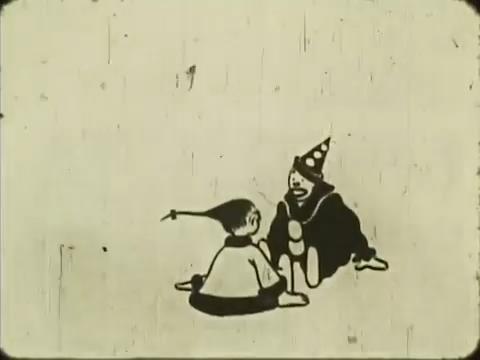
Fleischer’s one-reeler, exhumed from the brittle canisters of 1920, lands like a slap of turpentine across the polite veneer of American silent cartoons. At first whiff it reeks of casual racism: the title card itself, lettered in jittery calligraphy, trumpets The Chinaman as though announcing a minstrel turn. Yet within ninety flickering seconds the film mutates into a self-devouring prophecy, a vaudeville auto-da-fé where the very stereotype on the page is shredded by the same medium that birthed it.
The plot, if one can tether that word to such mercurial celluloid, is a Möbius strip: Max—yes, the animator inserts himself as both creator and stooge—sits for a portrait he hopes will secure the artist a desk at the studio. The artist, faceless but for a pair of white gloves, sketches with frantic staccato, each stroke a whipcrack. The resulting portrait is no dignified likeness but a grotesque pastiche of buck teeth, coolie hat, and parasitic queue. Enter the Inkwell Clown, that anarchic sprite who slithered through Fleischer’s early oeuvre like a smear of lampblack. He vaults from the inkpot, sniffs the drawing, and erupts in spasmodic rage. What ensues is not mere slapstick but iconoclastic surgery: the clown dismembers the yellow peril caricature limb by limb, flattening the skull, stretching the eyes back into mere ellipses, until the paper collapses into confetti.
Watch closely and you’ll spy the animator’s hand—literally—entering the frame, clutching a fountain pen like a scalpel. With surgical contempt he redraws Max’s head atop the scattered scraps, a rebis of Jewish-American comedian and Chinese scapegoat fused into one jittering chimera. The clown, unsatisfied, swallows the pen, hiccups ink, and vomits a fresh sheet where the slur once lay. The sheet is now blank, a tabula rasa glistening in the gutter of the frame. Max steps off the stool, tips his hat to nobody in particular, and exits into the white margin. Fade to black.
Technically the short is a tour de force of pre-digital compositing. Fleischer shoots the live-action Max on a white cyclorama, doubles the negative, and sandwiches charcoal drawings between two layers of emulsion so that the paper seems to breathe. The clown is animated on rice paper, later optically printed with a slight cyan shift, giving his skin a cadaverous iridescence. When he rips the drawing, the tear follows a jagged path pre-scored with a razor so that each frame blossoms like a wound. The result is celluloid that appears to decompose before your eyes—an effect more unsettling than any jump scare Hollywood would manufacture a century later.
Yet the true jolt is ethical, not optical. Fleischer, son of Austrian Jewish immigrants, knew the sting of caricature; his later The Ghost of Rosy Taylor would lampoon anti-Semitic tropes with equal venom. Here, in embryonic form, he stages a confrontation inside the American unconscious: the immigrant animator versus the Orientalist phantom, both vying for the same nickelodeon penny. The clown is not merely mischief; he is the repressed conscience of early animation, a trickster who recognizes that every slit-eyed bucktooth drawn to delight white audiences is a cut against his own hyphenated identity.
Compare this to the saccharine exoticism of Nala Damayanti or the imperial pageant of Israël, films that aestheticize the East into palatable spectacle. Fleischer refuses such cushion. He rubs our noses in the ink, forces us to watch the stereotype disintegrate under its own toxicity. The soundtrack, now lost, was reportedly a cacophony of slide-whistles and gongs—an aural yellowface that the clown literally shatters by yanking the phonograph needle across the wax. One can almost hear the screech of history correcting itself.
Contemporary critics, those who caught the short in dilapidated storefront theaters, dismissed it as "nonsense ink"—a phrase that now reads like prophecy. Nonsense, yes, but the sort that gnaws at the scaffold of racism until the whole edifice wobbles. In that regard The Chinaman shares DNA with The Rescue, another Fleischer experiment where imperiled bodies are quite literally sketched into salvation. Both films insist that the drawn line is not destiny; it can be erased, redrawn, re-imagined.
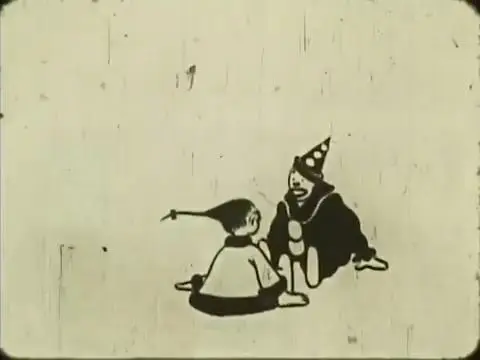
Still, the title remains a wound. No amount of metatextual subversion can fully exculpate the word, spit like tobacco juice across the marquee. Some archivists have lobbied to retitle the print Inkwell Sketches No. 7, following the precedent set when Sold at Auction was rechristened to expunge its own racial epithets. Yet to rename is to amputate the artifact from its historical thorn. Better to let the epithet fester beneath the nitrate, a reminder that even progressive artists once trafficked in poison, that the medium’s very DNA is braided with minstrel chromosomes.
Viewing the sole surviving dupe at Library of Congress—hand-cranked, no sound, the gate warped so that the upper-left corner curls like a smirk—I felt the room temperature plummet each time the clown flung ink against the lens. The splash occludes the camera, a Brechtian rupture that refuses us the comfort of voyeurism. For twelve frames we stare into liquid night, our own faces reflected back, complicit. Then the film lurches forward, the cartoon resumes, but the afterimage lingers: a black sun scorched onto the retina of 2024.
Restorationists have tried to tame these blemishes, to graft on a jaunty piano score, to interpolate intertitles that explain away the chaos. Each attempt eviscerates the film’s savage ambiguity. The proper way to exhibit The Chinaman is in silence, under a single carbon-arc bulb that flickers like a dying star, the projector clacking like teeth. Let the audience smell the vinegar syndrome creeping in. Let them feel the celluloid threaten combustion. Only then does the short reveal its truest self: a memento mori for racist iconography, a love letter to the elastic resilience of ink.
Historians often quarantine Fleischer’s mature genius—A Master of Music, the sin-bewitched The Man Who Won—from these crude scribbles. Yet the DNA is contiguous. The clown’s hyperbolic gag timing prefigures Koko’s escapes in The Painted World; the self-reflexive sabotage of the frame anticipates the meta-gags of Oil’s Well That Ends Well. To sever the early experiments is to lobotomize the lineage, to pretend that social conscience arrives fully formed rather than fermented in the muck of prejudice.
So where does that leave the twenty-first-century viewer, nursing a soy-latte while watching a 35-second insult ricochet through time? Uncomfortable, ideally. The Chinaman offers no redemption arc, no closing intertitle that proclaims "We’re all human." It simply lets the stereotype die, messy and undignified, then hands us the shredded paper and expects us to recycle it into something less venomous. That, perhaps, is the most radical act an artifact can perform: to refuse absolution, to insist that the work of repair is ours, not the reel’s.
In the weeks since I first saw the print, the image has colonized my dreams: the clown’s glove, slick with ink, reaching out of the screen to smear my own features into something unrecognizable. I wake gasping, unsure whether I’ve become Max, the artist, or the slur itself. That is Fleischer’s legacy—an animist terror that recognizes cartoons aren’t just lines on paper but spells, incantations capable of rewiring the synapses. To watch The Chinaman is to risk infection by the very virus it seeks to exorcise.
And yet, paraphrasing Walter Benjamin, every act of citation is an act of exorcism. By writing this review, by embedding the film’s slug—the-chinaman—into the circuitry of search engines, I participate in the ritual, pass the curse along like a baton. Click, watch, cringe, discuss. Each iteration dilutes the poison, a homeopathic dose against future bigotry. The alternative is to let the reel molder unseen, its toxins preserved in perfect, virulent stasis.
Therefore, go: find the flicker, confront the stereotype, watch it disintegrate. Do not look away when the ink splashes the lens; that smear is your reflection. And when the lights rise, leave the theater changed, carrying the torn scraps of history in your pocket like confetti from a funeral you didn’t know you needed. The clown has done his part, scalpel in glove, laughter turned to lament. Now the stage is yours; what will you draw in the blank space he left behind?
IMDb 6.7
1924
Community
Log in to comment.