DbcultAccessing Vault...
6.4/10
Senior Film Conservator
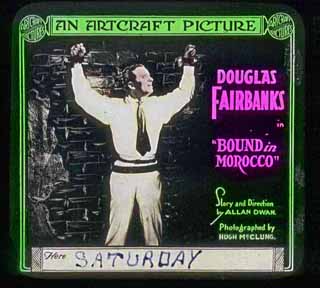
A definitive 6.4/10 rating for a film that redefined the boundaries of cult cinema. Bound in Morocco remains a cornerstone of transgressive art.
In the annals of early cinema, few figures commanded the screen with the sheer vivacity and athletic grace of Douglas Fairbanks. His magnetic persona, a potent blend of boyish charm, daring acrobatics, and an unshakeable moral compass, defined an entire genre of swashbuckling adventure. "Bound in Morocco," a 1918 silent spectacle, stands as a testament to this nascent star power, a thrilling escapade that plunges audiences into an exoticized North African landscape, a stage perfectly suited for Fairbanks' brand of heroic derring-do. Directed by Allan Dwan, a prolific filmmaker whose career spanned decades, this collaboration with Fairbanks, who also co-wrote the story, exemplifies the era's fascination with distant lands and the timeless appeal of a lone hero championing the oppressed.
The film unfurls its narrative threads amidst the bustling, sun-drenched souks and hidden courtyards of a romanticized Morocco, a locale rendered with an almost painterly touch, despite the limitations of black-and-white photography. Fairbanks portrays an intrepid American traveler, a figure of boundless energy and unyielding optimism, whose journey takes an unexpected turn when he stumbles upon a situation of profound injustice. His character, often a proxy for the audience's own sense of adventurous curiosity, quickly becomes entangled in the plight of a beautiful young woman, a captivating figure portrayed with poignant vulnerability by Marjorie Daw. She is, to the film's dramatic core, a harem girl, ensnared within the gilded cage of a local potentate's compound. Her existence, circumscribed by tradition and the whims of her master, is one of quiet desperation, a stark contrast to the boundless freedom embodied by our American hero.
Fairbanks' hero, whose name is almost secondary to his archetypal function, doesn't merely observe this injustice; he is compelled to act. This impulse to rescue, to right wrongs with a combination of wit, agility, and sheer physical prowess, is a hallmark of his cinematic identity. His commitment to the damsel in distress is not merely a romantic conceit but a deeply ingrained aspect of his heroic code. The narrative swiftly escalates from mere observation to active intervention, transforming the leisurely traveler into a dynamic liberator. The film meticulously crafts a series of increasingly perilous challenges, each designed to showcase Fairbanks' extraordinary athleticism and his character's cunning. We witness him scaling walls with improbable ease, leaping across rooftops with breathtaking audacity, and engaging in spirited skirmishes against the potentate's guards, all in a relentless pursuit of the girl's freedom. These sequences are not just plot devices; they are the very essence of Fairbanks' appeal, turning the screen into a live-action stage for his acrobatic artistry.
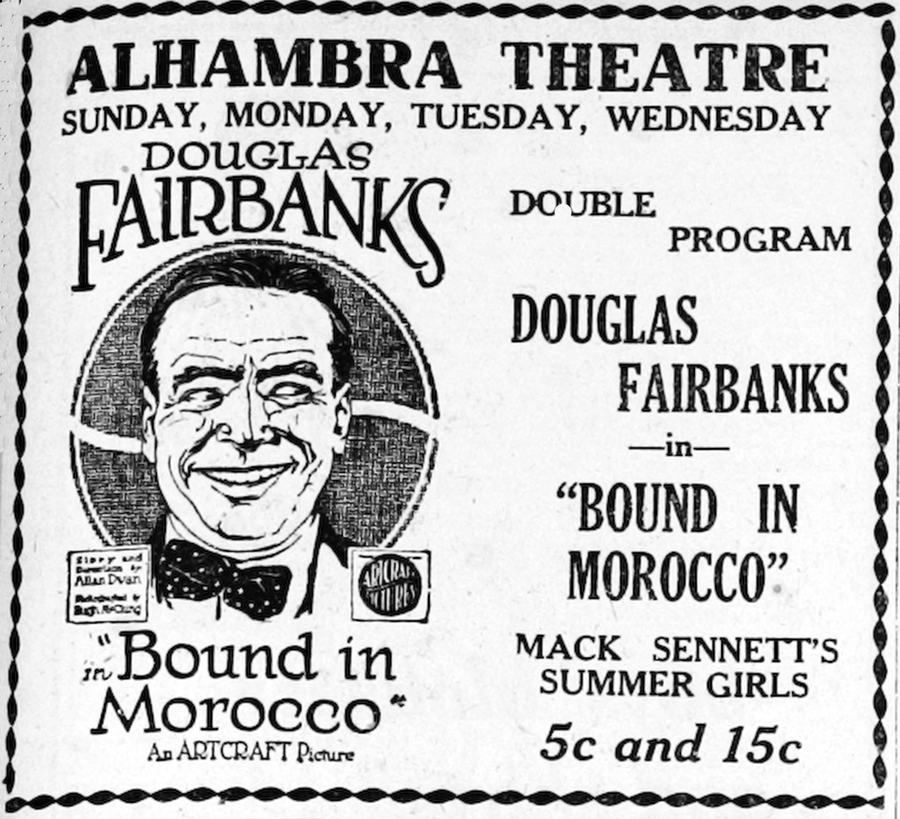
The portrayal of Morocco itself, while visually striking, is undeniably filtered through the lens of early 20th-century Western exoticism. It's a land of veiled women, stern-faced guards, opulent interiors, and mysterious customs – a common trope in films of the era that sought to transport audiences to far-flung locales. This Orientalist gaze, while problematic by modern standards for its often simplistic and stereotypical representations, was a powerful draw for contemporary audiences seeking escapism and adventure. The film leverages these visual motifs to create a vivid backdrop for the drama, making the setting itself an almost sentient character, full of both allure and danger. The contrast between the stifling confines of the harem and the expansive, often perilous, world outside serves to amplify the stakes of the rescue mission.
Allan Dwan's direction, while perhaps less celebrated than some of his contemporaries, demonstrates a clear understanding of silent film storytelling. He masterfully uses visual cues, dynamic compositions, and effective pacing to convey emotion and propel the plot forward without the aid of spoken dialogue. The close-ups on Marjorie Daw's face effectively communicate her fear, hope, and burgeoning trust in her unlikely savior. Similarly, Fairbanks' expressive physicality and famous grin articulate his character's resolve and buoyant spirit. Dwan orchestrates the action sequences with a kinetic energy that keeps the audience enthralled, allowing Fairbanks' stunts to shine without becoming mere spectacle. He understands that the emotional core, the girl's longing for freedom, must remain paramount, giving purpose to the thrilling acrobatics.
The supporting cast, featuring stalwarts like Tully Marshall and Frank Campeau, adds layers of intrigue and menace to the proceedings. Marshall, often cast in roles demanding a certain gravitas or villainy, here embodies a formidable obstacle to Fairbanks' heroic endeavors. His presence underscores the very real dangers faced by the protagonists, lending a sense of weight to the otherwise lighthearted adventure. Campeau, another familiar face from countless silent features, contributes to the ensemble, creating a believable world populated by distinct, if sometimes archetypal, figures. Even minor characters contribute to the rich tapestry of the narrative, enhancing the sense of a bustling, vibrant, and sometimes dangerous Moroccan society.
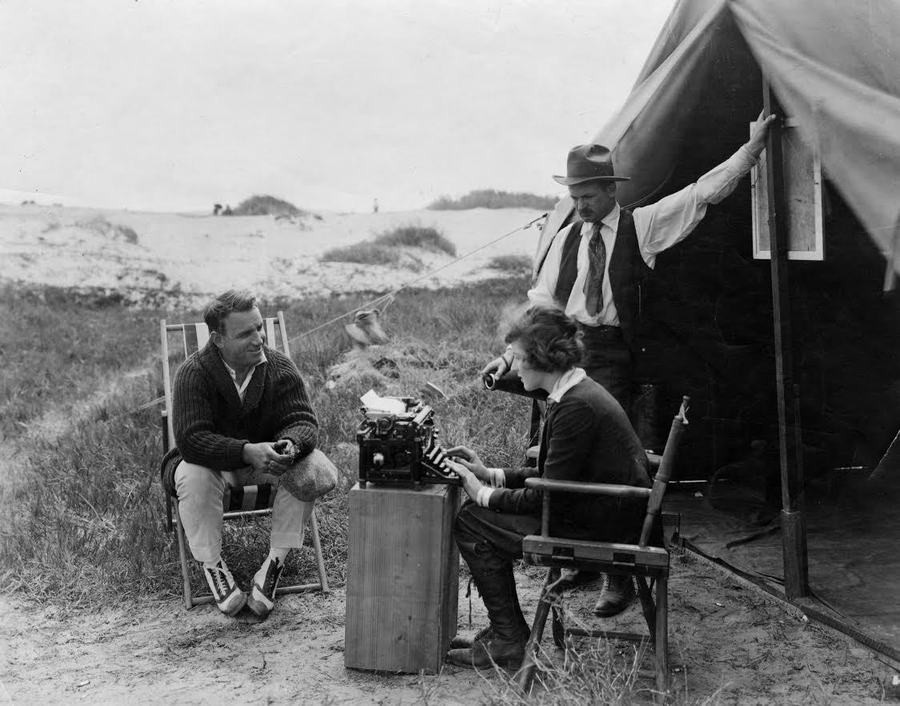
The thematic undercurrents of "Bound in Morocco" resonate beyond its surface-level adventure. At its heart, it is a story about freedom versus subjugation, about the individual's right to self-determination against the strictures of tradition and power. Fairbanks' character, an embodiment of American individualism, becomes a symbol of liberation, challenging an established order that he perceives as unjust. This theme of rescue and breaking free from oppressive circumstances was a recurring motif in silent cinema, finding echoes in films where characters faced overwhelming odds, such as the desperate fight for survival in a film like "The Fatal Ring" or the struggle against societal constraints seen in dramas like "The House of Mirth". Fairbanks, however, imbued these themes with a unique brand of joyous, almost effortless heroism, making the pursuit of liberty seem not just noble, but exhilarating.
Fairbanks' personal involvement in the screenplay, alongside Dwan, is evident in the finely tuned balance between dramatic tension and comedic relief, a characteristic blend in many of his early films. He understood his strengths – his physical comedy, his infectious optimism, and his capacity for awe-inspiring stunts – and crafted scenarios that allowed these attributes to flourish. This collaborative writing process ensured that the narrative was perfectly tailored to his unique screen persona, making his character feel authentic and his actions genuinely thrilling. The script provides ample opportunities for his signature leaps, climbs, and daring escapes, each sequence meticulously planned to maximize audience engagement and astonishment.
Comparing "Bound in Morocco" to other films of the period, one can discern Fairbanks' distinct approach to action and character. While films like "The Iron Hand" might have focused on more conventional forms of heroism or espionage, Fairbanks consistently brought a buoyant, almost fantastical element to his adventures. His heroes were not grim, brooding figures; they were joyous, spirited individuals who approached danger with a grin and an unwavering belief in their own capabilities. This made his films incredibly rewatchable and cemented his status as a beloved screen idol, a stark contrast to the more somber or melodramatic tones often found in contemporary dramas like "The Warfare of the Flesh".
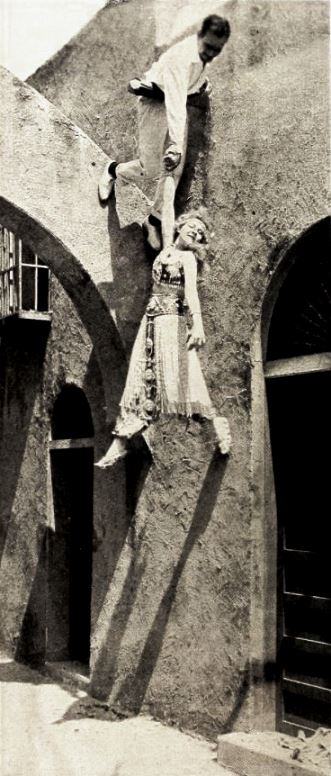
The film's visual language is a fascinating study in early cinematic techniques. The use of location shooting (or convincing sets designed to mimic it) contributes significantly to the immersive quality. The costumes, the architectural details, and the crowded marketplace scenes all work in concert to transport the viewer to this exotic locale. While not perhaps as visually experimental as some German Expressionist works that would emerge a few years later, Dwan’s cinematography is robust and functional, serving the story with clarity and dynamism. The camera often follows Fairbanks' movements, emphasizing his agility and drawing the audience into the heart of the action, a technique that would become standard in adventure filmmaking for decades to come.
The historical significance of "Bound in Morocco" cannot be overstated. It arrived at a time when cinema was rapidly evolving, moving beyond mere novelty to become a powerful storytelling medium. Fairbanks, along with figures like Mary Pickford and Charlie Chaplin, was instrumental in shaping this evolution, demonstrating the commercial viability and artistic potential of star-driven vehicles. His ability to perform his own stunts, a rarity for the time, added an unparalleled authenticity to his screen presence, making him a true pioneer of the action genre. This film, like many of his early efforts, helped establish the template for the adventure film, influencing countless subsequent productions and performers.
Beyond the thrills, there’s an undercurrent of social commentary, however subtle. The film, perhaps inadvertently, critiques the subjugation of women and the arbitrary exercise of power. Marjorie Daw’s character, initially a passive object of rescue, gradually develops agency through the narrative, her hope and determination growing with Fairbanks’ efforts. This arc, though simple, speaks to broader themes of individual rights and the universal human desire for freedom. It’s a message that, despite the specific cultural trappings of the setting, remains resonant. Other films of the era, such as "The Child of Destiny", explored themes of fate and self-determination, but few did so with the sheer physical exuberance that Fairbanks brought to the screen.
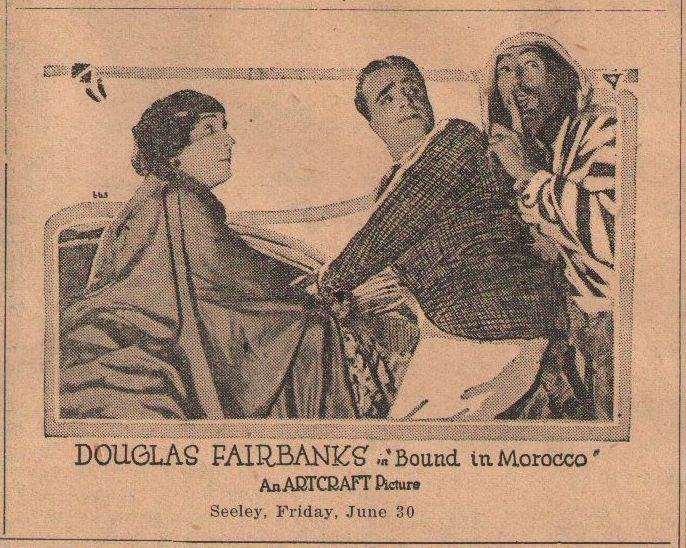
The enduring appeal of "Bound in Morocco" lies in its unadulterated escapism and the timeless charm of its lead. It's a film that doesn't pretend to be high art, but rather embraces its identity as pure entertainment, delivering spectacle, romance, and adventure in equal measure. For modern viewers, it offers a fascinating glimpse into the early days of Hollywood, showcasing the innovative spirit and boundless creativity that characterized the silent era. It reminds us of a time when film heroes were often defined by their physical prowess and their unwavering moral compass, embodying ideals of justice and courage without the need for complex internal monologues. Much like the straightforward heroism found in "The Ghost House", but imbued with a distinctive Fairbanksian zest.
The dynamic between Fairbanks and Daw is central to the film's emotional weight. Their chemistry, conveyed through gestures and glances, transcends the silence, creating a believable bond that motivates the entire rescue mission. Daw’s character is not merely a prize to be won; she is a person whose freedom is inherently valuable, and her eventual liberation feels genuinely earned, not just a plot convenience. This focus on the human element, even within a spectacle-driven adventure, elevates the film beyond mere acrobatics. It's a testament to the actors' ability to convey complex emotions without dialogue, relying on the universal language of expression and movement. The film’s narrative arc, from captivity to freedom, is a powerful one, and its execution is a prime example of silent film’s capacity for impactful storytelling.
In retrospect, "Bound in Morocco" serves as a crucial artifact in understanding the evolution of Douglas Fairbanks' screen persona and the broader development of the adventure genre. It’s a vibrant, energetic film that captures the youthful exuberance of early Hollywood, showcasing a star at the peak of his physical and charismatic powers. While the cultural depictions may be viewed with a critical eye today, its spirit of adventure, its embrace of individual heroism, and its sheer entertainment value remain largely undimmed. It stands as a joyful reminder of the power of silent cinema to transport and captivate, proving that a compelling story, told with visual flair and genuine heart, needs no spoken words to resonate across generations. Its influence on subsequent adventure films is palpable, shaping the very language of cinematic heroism for decades to come, akin to how "Time Lock No. 776" might have influenced thriller tropes, or "As Men Love" explored romantic drama. Fairbanks' legacy is firmly cemented in films like this, showcasing his unparalleled ability to blend thrills, romance, and an infectious sense of fun.
IMDb —
1927
Community
Log in to comment.