DbcultAccessing Vault...
5.6/10
Senior Film Conservator
A definitive 5.6/10 rating for a film that redefined the boundaries of cult cinema. Parsifal remains a cornerstone of transgressive art.
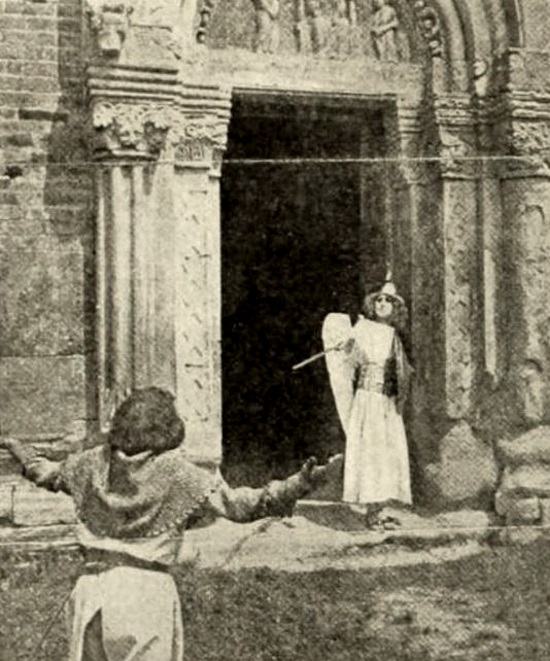
In the nascent epoch of cinematic storytelling, when the flickering image was just beginning to assert its narrative dominance, a film like Parsifal (1912) emerged as a testament to ambition and thematic depth. This silent epic, an early Italian contribution to the burgeoning art form, dared to tackle one of Western literature’s most hallowed and intricate narratives: the quest for the Holy Grail. It’s a remarkable artifact, not just for its historical placement, but for its earnest attempt to translate the spiritual gravitas and mythic sweep of Arthurian legend into a visual language that was still very much in its infancy.
The film introduces us to Sir Parsifal, portrayed with a compelling blend of naiveté and burgeoning resolve by Mario Bonnard. Bonnard, a prominent figure in early Italian cinema, imbues the character with a physicality and expressive power crucial for silent acting. His Parsifal is not immediately the wise paragon of chivalry; rather, he is a raw, unrefined youth, whose journey is one of profound internal evolution. This developmental arc, from an unworldly innocent to a knight capable of spiritual insight, forms the bedrock of the film’s narrative thrust. The challenge for Bonnard, and indeed for all actors of this period, was to convey complex emotions and character transformations through gesture, posture, and facial expression alone, a task he undertakes with commendable conviction.
The visual grammar of Parsifal is, perhaps, its most striking feature. Drawing on the theatrical traditions of the era, the film employs elaborate sets and meticulously crafted costumes to evoke the grandeur of Camelot and the mystical landscapes of the Grail quest. While modern audiences might find the staging somewhat static or overtly theatrical, it’s essential to appreciate these elements within their historical context. These were not merely backdrops; they were integral to creating a sense of scale and immersion in a time before sophisticated cinematic techniques became commonplace. The panoramic shots, though limited by the technology of the day, strive for an epic scope, attempting to capture the vastness of Parsifal’s spiritual and physical journey. The use of natural light, combined with painted backdrops, often lends a painterly quality to many scenes, transforming the celluloid into a series of living tableaux.
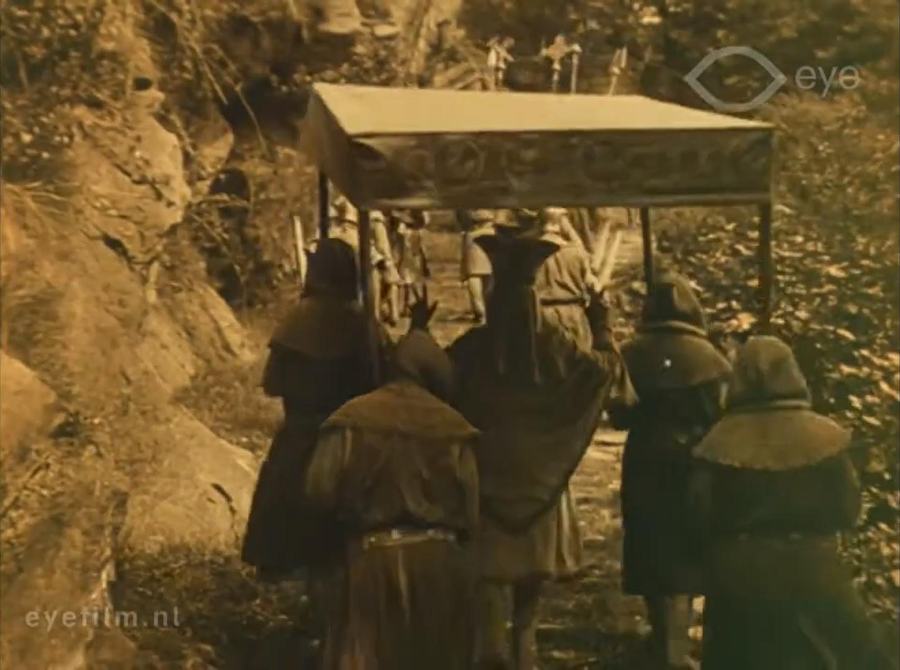
Comparing Parsifal to other monumental silent productions of its time reveals a shared ambition to tackle grand narratives. Films like Cleopatra (1912) or even the earlier The Life and Death of King Richard III (1912) demonstrated a similar commitment to historical and literary adaptations. These films sought to elevate cinema beyond mere novelty, positioning it as a serious medium for cultural storytelling. What sets Parsifal apart is its deep dive into spiritual allegory, a theme often explored in contemporary religious epics like From the Manger to the Cross (1912) or Dante's Inferno (1911), but rarely with such a focus on individual spiritual awakening within a chivalric framework.
At its heart, Parsifal is a profound meditation on purity, compassion, and the redemptive power of self-discovery. The Holy Grail, rather than being a mere MacGuffin, functions as a potent symbol of spiritual healing, not just for the individual knight, but for the entire kingdom. The film deftly portrays the various trials Parsifal faces, from the seductive temptations of Kundry (likely embodied by Maria Caserini, whose presence would have added a vital layer of dramatic complexity) to the enigmatic suffering of the Fisher King. These encounters are not merely episodic adventures; they are crucial crucible moments that forge Parsifal’s character, slowly transforming his raw innocence into enlightened wisdom. The narrative progression, while sometimes reliant on intertitles to bridge gaps, manages to convey the essence of this spiritual awakening with a surprising degree of emotional resonance.
The supporting cast, including Vitale Di Stefano and Mary Cleo Tarlarini, contributes significantly to the film’s atmosphere. Their performances, while adhering to the exaggerated gestural language common in silent films, are effective in conveying their respective roles in Parsifal’s journey. Di Stefano, perhaps as the Fisher King or a mentor figure, would have needed to project gravitas and suffering, while Tarlarini might have embodied a more ethereal or tragic presence. The collective effort was to build a believable, if stylized, world around Parsifal, ensuring his quest felt both personal and universally significant.
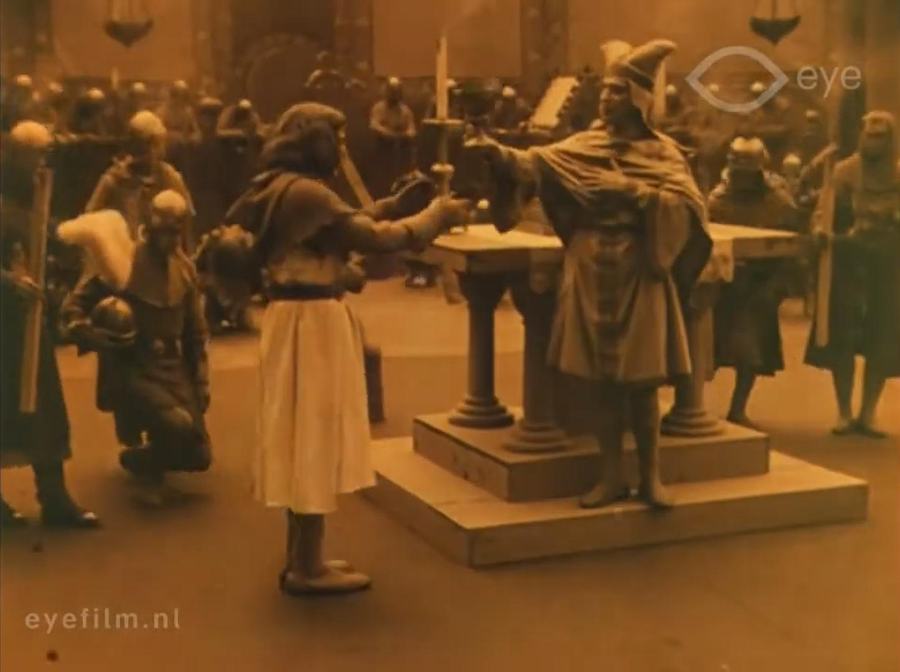
Technically, Parsifal showcases the evolving capabilities of early cinema. While it lacks the fluid camera movements and sophisticated editing of later decades, its reliance on elaborate mise-en-scène and careful composition speaks volumes about the filmmakers’ dedication. The use of tinting and toning, although not always evident in surviving prints, would have added crucial emotional and atmospheric layers – blue for night, amber for interiors, red for passion or conflict. These techniques, rudimentary by today's standards, were revolutionary then, allowing for a richer, more immersive viewing experience that transcended the monochrome limitations of the film stock.
The influence of theatricality is palpable throughout, a common characteristic of films from this period. One can see parallels in other literary adaptations of the time, such as Oliver Twist (1912) or Les misérables (1913), which similarly translated complex narratives through a series of carefully composed scenes. The challenge was to maintain narrative clarity and emotional depth without spoken dialogue, relying heavily on visual cues and intertitles. Parsifal, in this regard, is an exemplary work, managing to convey a story rich in symbolism and spiritual allegory with remarkable effectiveness for its time.
The enduring legacy of Parsifal lies not just in its pioneering spirit, but in its audacious choice of subject matter. To adapt such a profound and revered legend, one deeply rooted in European cultural consciousness, for the relatively unproven medium of film was a bold move. It speaks to a belief in cinema's potential to transcend mere entertainment and engage with profound philosophical and spiritual questions. While later cinematic interpretations of Arthurian legends would benefit from advanced technologies and narrative sophistication, this 1912 rendition holds a special place as an early, earnest attempt to bring the sacred quest to the silver screen.
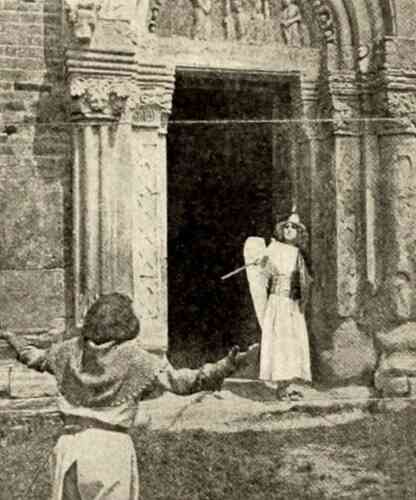
It’s a film that demands viewing with an understanding of its historical context. Stripped of the immersive soundscapes and rapid-fire editing we now take for granted, Parsifal offers a glimpse into a foundational period of cinematic art. It reminds us of the power of visual storytelling in its purest form, where gesture, set design, and the raw emotion of the performers carried the entire weight of the narrative. Its influence, though subtle, can be traced through subsequent historical epics and literary adaptations, demonstrating how these early trailblazers laid the groundwork for the cinematic language we understand today.
The thematic resonance of Parsifal, with its exploration of innocence, suffering, and redemption, remains timeless. It speaks to the universal human search for meaning and purpose, a quest as relevant today as it was in the mythical days of Camelot or the nascent years of cinema. For students of film history, or indeed for anyone fascinated by the intersection of myth and media, Parsifal is more than just an archival curiosity; it is a vital chapter in the ongoing story of human storytelling, a silent echo of a legendary quest that continues to captivate and inspire. Its brave ambition in an era of nascent technology solidifies its position as a significant cultural artifact, illustrating the medium's swift ascent from mere novelty to a powerful vehicle for profound narratives. The film’s very existence, let alone its artistic merit, serves as a beacon for the aspirations of early filmmakers who saw beyond the fleeting images to the enduring power of myth rendered in light and shadow.
Furthermore, Parsifal's narrative structure, though constrained by the technical limitations of its time, still manages to convey the cyclical nature of the hero's journey. Parsifal's initial ignorance, his failure to ask the crucial question that would heal the Fisher King, and his subsequent years of wandering and self-reflection, all contribute to a character arc that feels earned and impactful. The film doesn't rush his enlightenment; rather, it allows for a gradual unfolding, paralleling the often-arduous path of spiritual growth in real life. This patient storytelling, while perhaps challenging for audiences accustomed to faster pacing, is precisely what gives the film its contemplative depth and allows the symbolic weight of the Grail to truly resonate. It's a reminder that sometimes, the most profound journeys are those undertaken with a slow, deliberate pace, allowing for introspection and genuine transformation.
The cultural context of early 20th-century Italy also infuses Parsifal with a particular flavor. Italian cinema, at this juncture, was renowned for its historical epics, often characterized by grand scale and lavish production values, as seen in other contemporary works like I tre moschettieri (1911) or Beatrice Cenci (1911). This tradition lent itself well to the Arthurian legend, providing the visual vocabulary and production expertise necessary to bring such a revered tale to life. The film's aesthetic, therefore, is not merely a product of silent cinema but also a reflection of a specific national cinematic identity that prized spectacle and dramatic intensity. It's a fascinating cross-section of early film artistry, blending universal myth with nascent national cinematic styles. The use of elaborate backdrops and large ensemble scenes, while sometimes appearing stagey, were innovative ways to convey scope before the advent of more sophisticated camera techniques. The sheer ambition to recreate medieval pageantry on film, with hundreds of extras and detailed costumes, underscores the pioneering spirit of its creators. This commitment to visual storytelling, even without synchronized sound, laid crucial groundwork for the epics that would follow, proving that cinema could indeed tackle narratives of immense historical and mythical weight.
Ultimately, Parsifal stands as a crucial waypoint in the evolution of cinema, a silent testament to the enduring power of myth and the audacious vision of early filmmakers. It’s a work that compels us to look beyond the surface of its age and appreciate the foundational stones laid for the art form we cherish today. Its quest for the Grail mirrors cinema’s own eternal quest for narrative perfection and profound meaning, making it an indispensable piece of cinematic history. The film is a dialogue between ancient legend and burgeoning technology, a conversation that continues to evolve, but one which found a powerful voice over a century ago in this silent, yet eloquent, epic. Its survival, even in fragmented forms, offers invaluable insights into the aesthetic choices, technical limitations, and narrative priorities of a bygone era, affirming its status as a cornerstone of early world cinema. The meticulous attention to detail in costume and set design, despite the limitations of black and white film and static camera work, reveals a dedication to authenticity and immersion that was truly ahead of its time, further cementing its place in the annals of film history.
IMDb —
1920
Community
Log in to comment.