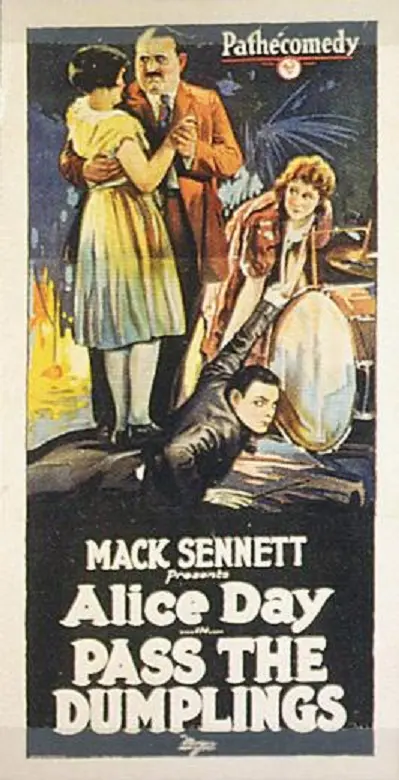
Is 'Pass the Dumplings' worth watching today? Short answer: yes, but with significant caveats that demand a certain appreciation for its era and genre. This film is an unexpected treat for those who cherish early cinema's nuanced character studies and understated romantic rivalries, yet it will undoubtedly test the patience of viewers accustomed to modern pacing and explicit storytelling. It’s a film for the cinephile who enjoys peeling back layers of cinematic history, not for someone seeking instant gratification.
This feature, often overlooked in the vast catalog of early Hollywood, delivers a surprisingly potent emotional core. It’s a quiet film, one that asks its audience to lean in and observe, rather than be overtly entertained. For those willing to engage with its particular rhythm, 'Pass the Dumplings' offers a unique window into the social dynamics and romantic sensibilities of its time, presenting a narrative that, while simple on the surface, hints at deeper human truths about desire, security, and aspiration.
This film works because... it delivers a surprisingly intimate and emotionally resonant character study, buoyed by the genuine charm and nuanced performances of its central players, particularly Alice Day.
This film fails because... its narrative can feel incredibly slow by contemporary standards, with some supporting characters devolving into broad caricatures, and certain plot resolutions feeling abruptly convenient.
You should watch it if... you possess a deep appreciation for the subtle artistry of early 20th-century filmmaking, enjoy character-driven romantic dramas where unspoken emotions speak loudest, or are simply curious about how complex human relationships were explored in the nascent days of cinema.
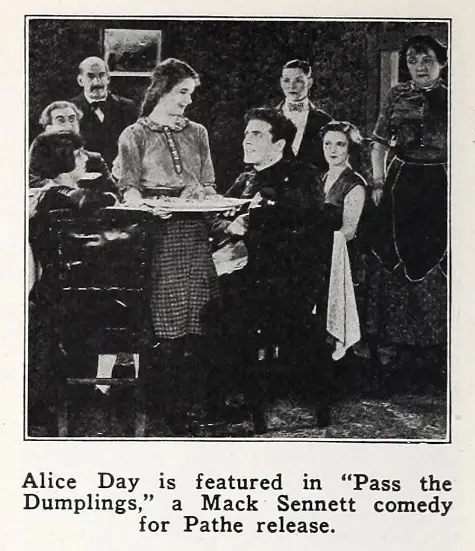
Scene from Pass the Dumplings
Cinematic perspective: Exploring the visual vocabulary of Pass the Dumplings (1927) through its definitive frames.
A Dance of Delicate Desires: Plot and Themes
'Pass the Dumplings' unfolds within the humble, yet bustling, setting of a boarding house – a common backdrop for early cinematic dramas, often serving as a microcosm of society. Here, the everyday interactions are infused with a simmering undercurrent of romantic tension. The central figure is a beautiful servant, played with understated grace by Alice Day, whose presence inadvertently becomes the focal point for two vastly different men.
On one side stands the prizefighter, portrayed by Danny O'Shea. He embodies raw ambition and a desire for something more than just fleeting victories in the ring. His pursuit of the servant isn't merely physical attraction; it hints at a deeper longing for domesticity, stability, and perhaps a gentle hand to guide him beyond the brutal world of boxing. His character, while initially appearing to be all brawn, reveals a surprising tenderness that makes his affections genuinely compelling.
His rival is the cop, played by William McCall. He represents a different kind of security – law, order, and a more conventional, perhaps predictable, future. McCall’s portrayal is one of quiet steadfastness, suggesting a man who offers reliability rather than flash. The conflict between these two suitors isn't one of overt aggression, but rather a subtle competition for attention, a silent battle waged through gestures, favors, and the unspoken promises of different lives.
The film cleverly uses the boarding house environment to highlight these dynamics. The shared meals, the daily routines, the close quarters – all contribute to an atmosphere where emotions are constantly on display, yet rarely articulated. The titular 'dumplings' themselves, a symbol of shared sustenance and domestic comfort, become a silent metaphor for the prize both men seek: a shared life with the woman who prepares them. It’s a simple conceit, yet deeply effective in its context.
Performances That Resonate (or Falter)
The strength of 'Pass the Dumplings' rests squarely on the shoulders of its lead actors, particularly Alice Day. Her performance as the servant is a masterclass in subtlety. In an era often characterized by broad gestures and overt melodrama, Day offers a refreshingly restrained portrayal. She conveys a complex inner world – vulnerability, resilience, and quiet dignity – often with little more than a glance or a slight shift in posture. Observe, for instance, a scene at the dinner table where her eyes subtly dart between O'Shea and McCall; in that brief moment,