DbcultAccessing Vault...
Cult Review
Senior Film Conservator
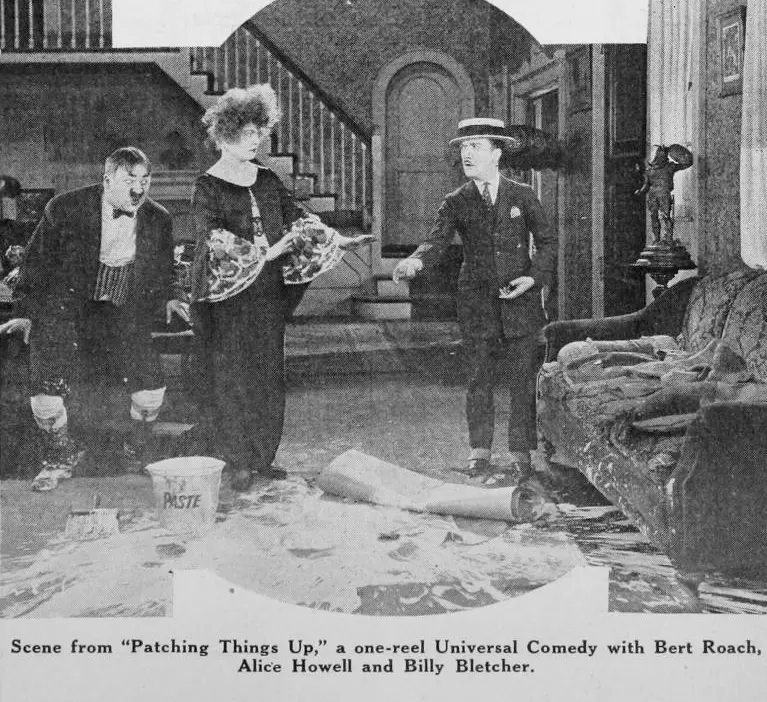
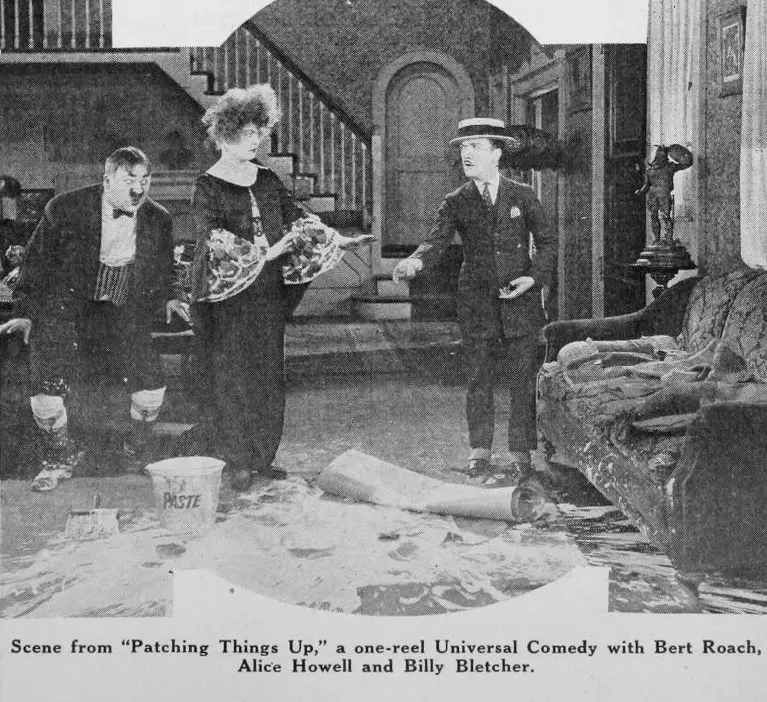
In the grand tapestry of early 20th-century cinema, where the silent screen often served as a vibrant canvas for exaggerated human foibles and the sheer delight of physical comedy, William Watson's 'Patching Things Up' emerges as a particularly effervescent example. This 1920 gem, featuring the notable talents of Bert Roach, Harold Austin, Alice Howell, and Billy Bletcher, is more than just a relic; it's a boisterous testament to the enduring power of a simple premise executed with comedic precision and an undeniable zest for slapstick.
The film's narrative, deceptively straightforward, delves into the universal human impulse for economy, albeit through a lens of escalating absurdity. Our story pivots around a wife, portrayed with spirited determination by Alice Howell, who embarks on a mission to save household funds by personally fabricating a suit for her husband. This domestic endeavor, fraught with the inherent perils of amateur tailoring, quickly spirals into a comedic maelstrom, primarily due to the 'assistance' of Bert Roach's character. Roach, a master of the bewildered and the bumbling, injects a crucial element of unpredictable chaos into the proceedings, transforming a well-intentioned act of thrift into a sartorial catastrophe.
William Watson, as the architect of this comedic blueprint, demonstrates a keen understanding of silent film's unique language. The plot of 'Patching Things Up' is a meticulously constructed series of escalating misfortunes and improbable turns, each designed to elicit maximum mirth without the aid of spoken dialogue. Watson's genius lies in his ability to craft scenarios that are visually intuitive and universally relatable, even when they descend into the realm of the utterly preposterous. The initial premise of a homemade suit immediately sets the stage for potential disaster, tapping into the common anxieties of domestic imperfection and the often-humorous gap between aspiration and reality.
The film's central conflict, the ill-fitting suit, is not merely a plot device but a character in itself, embodying the wife's earnest efforts and Bert's inadvertent sabotage. When Harold Austin's character, the unsuspecting husband, finally dons the garment, the audience is treated to a visual gag of epic proportions. The suit, an "awful misfit," is a masterpiece of comedic tailoring, its exaggerated proportions and awkward lines speaking volumes about the chaos that transpired in its creation. This moment is a prime example of silent comedy at its best: the humor derived purely from visual incongruity and the universal understanding of a fashion faux pas.
However, Watson doesn't stop at mere domestic farce. He introduces a brilliant, unexpected twist that elevates the film from a simple slapstick comedy to a commentary on luck, opportunism, and the unpredictable nature of fate. The husband, in his ill-fitting attire, ventures into the bustling street, where an automobile, seemingly out of nowhere, snips off one of his excessively long trouser legs. This bizarre incident, rather than leading to further misfortune, results in an astonishing offer: the contrite autoist, perhaps overwhelmed by guilt or simply keen to avoid legal complications, offers a staggering $500 in damages. This sudden turn of events is the film's masterstroke, transforming a moment of disfigurement into a lucrative opportunity. It's a comedic inversion of expectations, where calamity breeds cash, and sartorial ineptitude accidentally leads to financial gain.
This particular plot point resonates with the era's fascination with chance and the burgeoning urban landscape, where such incidents, though exaggerated for comedic effect, were not entirely outside the realm of possibility. It's a moment that could easily fit into the more adventurous narratives of the time, like the unexpected turns in The Phantom Fortune, though 'Patching Things Up' grounds its fantastical elements in domestic absurdity.
The true genius of the film's latter half lies in Bert Roach's character. Witnessing the husband's improbable windfall, Bert, whose earlier 'help' was the catalyst for the suit's initial failure, sees an opportunity for personal enrichment. His attempt to replicate the 'accident' – presumably by intentionally exposing his own trouser leg to a passing vehicle – is a classic comedic setup. It's the fool's errand, the hubris of believing one can manipulate fate. And, as expected, fate delivers a different kind of blow. Bert's endeavor results not in a tidy sum of $500, but in a "smash in the face." This concluding gag is both a punchline and a moral lesson, delivered with the blunt force characteristic of silent comedy. It underscores the idea that lightning rarely strikes twice, especially for those who actively seek to exploit its path.
The juxtaposition of the husband's accidental gain and Bert's intentional failure provides a satisfying narrative arc. It highlights the inherent difference between genuine misfortune (even if comically presented) and cynical opportunism. This kind of karmic retribution is a recurring motif in many silent comedies, where the well-intentioned often stumble into success, while the avaricious or clumsy meet their deserved comeuppance. One might draw parallels to the misadventures in Squabs and Squabbles, where characters often find themselves in ludicrous situations due to their own misguided actions.
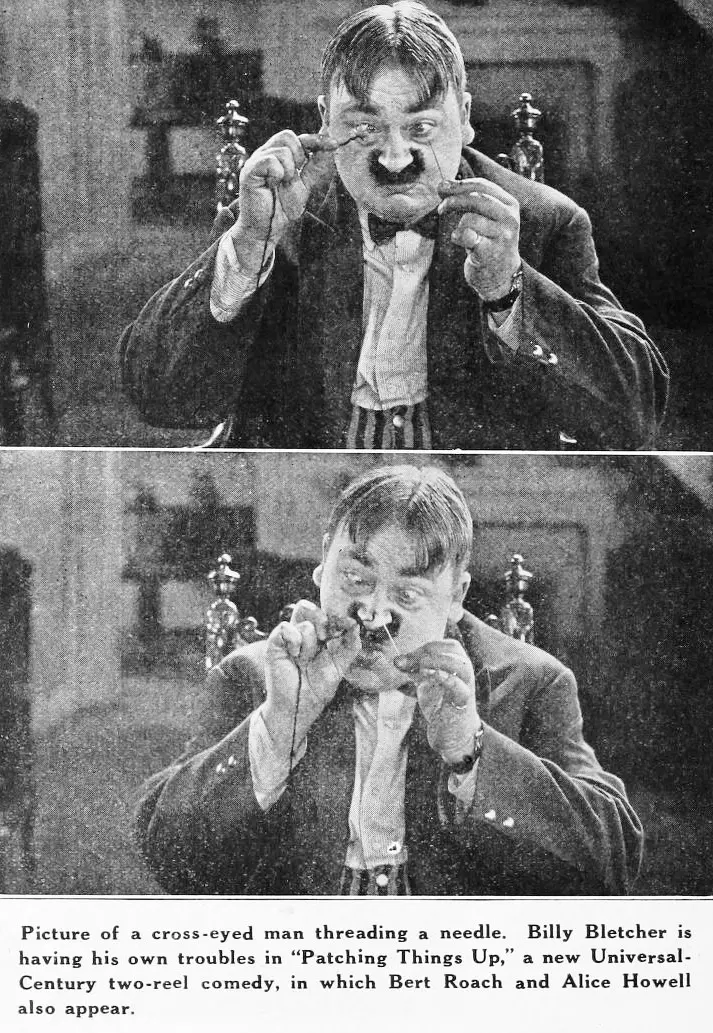
The success of 'Patching Things Up' rests heavily on the shoulders of its talented cast. Bert Roach, a veteran of numerous comedies, brings his signature blend of physical comedy and expressive facial contortions to the role of the meddling assistant. His portrayal is a masterclass in silent film acting, conveying confusion, misguided enthusiasm, and eventual pain without a single spoken word. Roach's comedic timing is impeccable, making his character's blunders both frustrating and endlessly amusing. His performance here feels like a natural progression from the kind of roles seen in films such as The Pinch Hitter, where physical presence and reaction are paramount.
Alice Howell, as the industrious wife, anchors the domestic chaos with a relatable earnestness. Howell was known for her comedic prowess, often playing resourceful or exasperated women caught in absurd situations. Here, her frustration with Bert's 'help' and her initial dismay at the suit's failure are palpable, creating a strong emotional core for the otherwise slapstick proceedings. Her ability to convey a range of emotions, from hopeful determination to utter exasperation, makes her character a compelling foil to Roach's antics. Her presence evokes the strong female comedic leads found in other films of the era, such as those in Who Loved Him Best?, where character depth, even in comedy, was crucial.
Harold Austin, as the long-suffering husband, plays the straight man with admirable restraint and expressive reactions. His initial try-on of the suit, a moment of pure visual comedy, is made all the more effective by his bewildered and somewhat resigned demeanor. His subsequent reaction to the accidental trouser-leg amputation and the unexpected $500 offer is a subtle blend of shock and dawning realization, perfectly capturing the absurdity of the situation. Billy Bletcher, though perhaps in a smaller role, likely contributes to the ensemble's dynamic, adding another layer to the comedic fabric.
'Patching Things Up' fits comfortably within the golden age of silent comedy, a period characterized by its innovative use of visual gags, exaggerated expressions, and a relentless pace. Films like this were the bread and butter of early cinema, providing much-needed escapism and laughter to audiences recovering from global conflicts and societal shifts. The comedic tropes employed—the bumbling assistant, the domestic mishap, the unexpected twist of fate, the physical punishment for hubris—were well-established and universally understood, making the film accessible to a wide audience.
The film's exploration of domestic life, albeit in a highly stylized and comedic manner, also reflects a common theme in cinema of the era. Many films, from lighthearted romps to more dramatic fare, often centered on the home and family dynamics. While 'Patching Things Up' leans heavily into farce, it subtly touches upon the pressures of household budgeting and the often-unforeseen consequences of trying to cut corners. This thematic resonance can be seen in other films that explore familial relationships or societal pressures, even if their tones differ, such as the more dramatic undertones in The Devil-Stone or the lighter, romantic escapades of His Briny Romance.
The technical aspects of silent filmmaking, though perhaps rudimentary by today's standards, were precisely what allowed for such unadulterated physical comedy. The fixed camera positions, the reliance on wide shots to capture full body movements, and the emphasis on clear, exaggerated gestures were all conducive to this style of performance. 'Patching Things Up' utilizes these techniques effectively, ensuring that every pratfall, every bewildered glance, and every chaotic interaction is clearly communicated to the viewer. The pacing, crucial for silent comedies, would have been brisk, moving from one gag to the next with relentless energy, preventing any moment from overstaying its welcome.
In an age where cinematic spectacles often relied on grand narratives or dramatic tension, 'Patching Things Up' reminds us of the profound joy found in simple, well-executed comedy. It's a film that doesn't aim for profundity but achieves something arguably more valuable: pure, unadulterated entertainment. The performances are vibrant, the plot is ingeniously structured, and the humor remains remarkably fresh, even a century later. It stands as a testament to the timeless appeal of human folly and the delightful chaos that often ensues when good intentions meet clumsy execution.
For enthusiasts of early cinema, 'Patching Things Up' offers a delightful glimpse into the comedic sensibilities of the 1920s. It showcases the talents of actors who honed their craft in an era without dialogue, relying solely on their physical presence and expressive capabilities. It also highlights the clever writing of individuals like William Watson, who understood how to build a comedic edifice from seemingly mundane domestic situations. While it might not possess the epic scope of a film like The Sons of Satan or the dramatic intensity of Az utolsó éjszaka, its modest ambitions are met with resounding success, leaving audiences with a smile and a renewed appreciation for the art of silent laughter.
The film's enduring charm lies in its relatability, despite its exaggerated circumstances. Who hasn't experienced a project gone awry due to well-meaning but incompetent help? Who hasn't dreamed of an unexpected windfall, or perhaps, faced the harsh reality that imitating another's luck can lead to disastrous consequences? 'Patching Things Up' taps into these universal experiences, distilling them into a potent, hilarious concoction that transcends its historical context. It's a reminder that sometimes, the best way to 'patch things up' is to simply embrace the glorious mess.
Ultimately, 'Patching Things Up' is a vibrant piece of cinematic history, a testament to the ingenuity and comedic prowess of its creators. It's a film that, despite its age, still holds the power to entertain, to provoke laughter, and to remind us of the simple, yet profound, joy of a good old-fashioned slapstick comedy. It's a delightful journey into a bygone era of moviemaking, where visual storytelling reigned supreme, and the sound of laughter was the only soundtrack truly needed. A true gem that deserves its place in the annals of comedic cinema, standing proudly alongside other classic shorts like What Happened to Jones or The Humming Bird, each contributing to the rich tapestry of early film.

IMDb 7.4
1930
Community
Log in to comment.