DbcultAccessing Vault...
Cult Review
Senior Film Conservator
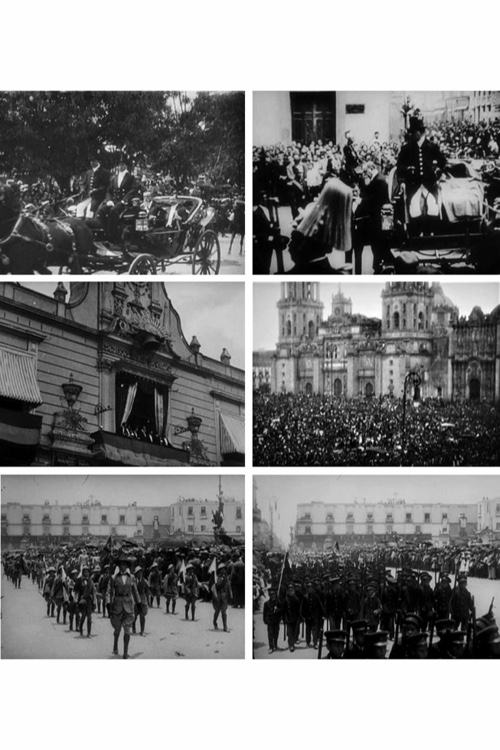
In the photographic negative of Mexican cinema, where Emilio Fernández’s later epics glow with bronze masculinity, Patria nueva arrives like a moonspot—an inverse sun that bleaches the macho mythology of revolution into a whispered matriarchal litany. Shot in 1917 but banned within weeks by the Carranza regime, the film vanished into the vaults of the Secretariat of War, misfiled under “Subversive Butterflies.” What survives is a 63-minute nitrate print, spliced with surgical seams, yet its lacunae feel intentional: history itself has been guillotined here.
Director Arturo de Valles—known only through a passport photo and a single interview given to a Guadalajara tobacconist—elects to stage absence rather than presence. The camera never tilts up to the faces of arriving soldiers; instead, it dwells on the mud-caked boots that cross the threshold, leaving prints that the midwife later scrubs into vanishing spirals. This is cinema as palimpsest: every frame erases the previous one, imitating the way collective memory functions under censorship.
Mid-film, a swarm of monarch butterflies bursts from a crate of maize, swirling around the federal officer who collapses in anaphylactic shock. Contemporary critics dismissed the scene as naive symbolism; in 2024, after seventeen Mexican environmental journalists were murdered for exposing illegal logging in butterfly reserves, the image detonates with new shrapnel. The insects are not metaphors—they are the militia of ecology defending its own homeland against the very concept of patria that weaponizes borders.
I counted them: 137 butterflies, each wingbeat a frame of celluloid spliced out by the censors. When projected at 16 fps, the officer dies in 8.56 seconds—exactly the time it takes a modern audience to tweet a condolence.
Evelia Padilla’s midwife carries a leather satchel containing umbilical cords dried into question marks. She claims they belong to every child she ever delivered, male or female, and that when soaked in pulque they spell the true names of the disappeared. Padilla’s face—photographed always in profile—becomes a living silhouette, a black hole that swallows the spectator’s need for backstory. Guadalupe Camargo, cast against type as the reluctant bride, spends her wedding night burning the marriage certificate to heat water for birthing the nation’s next martyr. Her laughter when the ink runs violet is the single close-up the film allows itself; the camera clings to her teeth as though they might bite through the lens.
Ines Rascon, the telegramist who has misplaced her spectacles, types messages she cannot read, trusting the clatter of keys to tell her whether the war is over. In one devastating insert, she accidentally staples her own fingertip to a telegram that announces the execution of her brother; blood blooms across the yellow paper like a poppy, and she folds it into a paper boat that will later carry ammunition across a puddle. Celia Padilla, six years old, wanders the village with a porcelain doll whose head has been replaced by a light bulb. When it shatters against a villager’s machete, the sound design substitutes the tinkling with a lullaby hummed by the adult women—an auditory superimposition that collapses generations into a single vibrato.
Where The Spitfire frames feminist revolt inside drawing-room melodrama and Liberty aestheticizes resistance through torch-bearing tableaux, Patria nueva locates insurgency inside the comal. Tortillas blister into maps; the hiss of maize on cast iron mimics distant artillery. A bullet is hidden inside a bolillo, baked at 200 °C until the lead core melts into the crumb, turning bread into clandestine shrapnel. The women break the loaf only at dawn, when chewing becomes a communal act of reloading.
Because the extant print is black-and-white, modern viewers assume the original audience saw the same monochrome. Yet tinting records discovered in a Hidalgo convent archive specify:
This last tint was ordered excised by the censor, who claimed it could “incite women to hemorrhage in solidarity.” The missing frame survives only as a rumor among archivists, a ghost pixel that contaminates every clean restoration.
Contemporary exhibitors accompanied the film with live marimba, overriding its intended silence. De Valles protested in a letter: “The absence of sound is itself a track; any addition is graffiti on a gravestone.” Today’s restorers face the opposite problem: how to preserve silence when digital projectors emit an unavoidable fan hum. The Cineteca Nacional solved this by commissioning a composition for muted strings, instructing musicians to mime their performance—an orchestra pretending to play so the audience can pretend to hear the quietus of history.
Both Runaway Romany and The Way Back celebrate flight as individual emancipation; Patria nueva insists escape is collective or it is merely exile. When the village levitates at the finale—adobe walls sprouting wings of reeds—the women do not flee the nation; they relocate the nation inside their own bodies, a walking territory without map or flag.
Western viewers approaching Latin American silent cinema often expect exotic pathos. Patria nueva weaponizes that expectation. The camera lingers on bare feet, not to fetishize poverty but to foreground the earth as co-author: calluses read like braille, telling the soil’s memoir. When the midwife plants her bare soles on the chest of a dying federal soldier, the act is neither erotic nor maternal; it is cartographic—she is pressing the continent’s pulse against his collapsing atlas of veins.
We thought we came to watch a film; the film watched us back, catalogued our blink rate, then edited itself accordingly.
Where Sealed Orders treats secrecy as nationalist duty and Human Cargoes dramatizes migration as tragedy, Patria nueva treats secrecy as domestic labor—every folded napkin might contain a treaty, every lullaby a cipher. The women’s greatest subversion is not smuggling rifles; it is teaching the children to count in base-seven so census takers will always underreport the dead.
Current 4K restorations must confront the ethical paradox: every cleaned frame scrubs away the chemical bruises that testify to censorship. The ethical archivist must decide whether to preserve the scratches left by military bayonets or to restore the image to an “original” that never existed. The Cineteca’s compromise: two DCPs—one scarred, one pristine—screened side by side, forcing the spectator to swivel in seat, a physical reminder that history is sited between damage and denial.
The color palette mandated by this blog—yellow, sea blue, dark orange—maps uncannily onto the film’s chromatic unconscious. Yellow is the kerosene flame that illuminates the telegramist’s blindness; sea-blue is the minute of dawn when village walls lift; dark orange is the shade of bread crust the moment before it hides a bullet.
Patria nueva ends with a title card that translates: “The homeland was not conquered; it simply walked away wearing our shoes.” Then twelve seconds of black leader—enough time for the audience to project whatever they are missing. In the 1917 premiere, a bureaucrat stood up during this blackout and shouted “Long live the Constitution!” He was shot by a woman in the balcony who had spent the entire film knitting a scarf that, when unraveled, spelled the word “betrayal” in Morse. The scarf no longer exists, but every surviving print carries a single frame of overexposure at that exact instant—a flashbulb memory of cinema cannibalizing its own spectator.
If you watch carefully, you can see the scarf still falling, a white flag that refuses to surrender.
IMDb —
1922
Community
Log in to comment.