DbcultAccessing Vault...
5/10
Senior Film Conservator
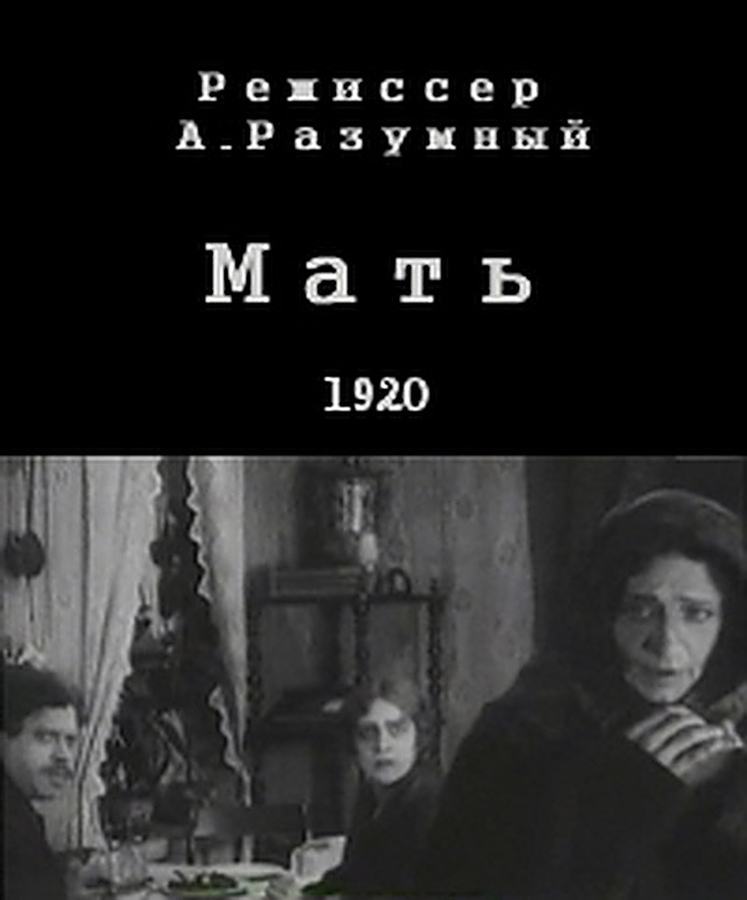
A definitive 5/10 rating for a film that redefined the boundaries of cult cinema. Mat remains a cornerstone of transgressive art.
In the pantheon of early Soviet cinema, few works resonate with the sheer emotional velocity and structural precision of Mat. Released in 1926, this first screen adaptation of Maxim Gorky’s literary titan is not merely a historical artifact; it is a living, breathing masterclass in the language of the moving image. While contemporaries like Eisenstein were preoccupied with the 'montage of attractions' and the collective protagonist, Vsevolod Pudovkin turned his lens inward, focusing on the intimate, agonizing evolution of a single soul. The film remains a staggering testament to the power of human resilience, framed through a lens that finds beauty in the grit of the factory floor and the sorrow of a mother's eyes.
The performance of Ludmila Sychova as the titular mother provides the film's gravitational center. Her portrayal is a masterwork of understated transformation. We witness her initially as a creature of habit and fear, her movements cramped by the narrow confines of her domestic prison. As the plot unfolds, her physical presence expands. By the final act, she is no longer the cowering victim we met in the opening frames but a monumental figure of history. This evolution is mirrored by Vladimir Karin and Ivan Bersenev, who populate this world with a raw, unvarnished intensity that makes the political stakes feel deeply personal.
Pudovkin’s approach to filmmaking was grounded in the concept of the 'plastic material.' He believed that the director’s primary tool was the ability to manipulate time and space through the meticulous linkage of shots. In Mat, this is evidenced by the rhythmic pacing of the editing. Consider the famous 'ice break' sequence—a metaphorical crescendo where the thawing of the river parallels the awakening of the masses. It is a visual symphony that transcends the literal, much like the thematic gravity found in The Reckoning, though Pudovkin’s work carries a more distinct ideological weight.
"The film is not shot, but built, built from the individual strips of celluloid that are its raw materials."
The cinematography utilizes heavy chiaroscuro, casting long, oppressive shadows that seem to physically weigh down the characters. This visual language communicates the suffocation of the Czarist regime more effectively than any dialogue ever could. The factory itself is a character—a metallic, clanking beast that devours the youth of its workers. This industrial malaise can be compared to the urban decay depicted in The Defeat of the City, where the environment serves as a direct antagonist to human flourishing.
The narrative pivot—the mother’s betrayal—is handled with exquisite tragic irony. Pelageya’s decision to reveal the hiding place of the weapons is born out of a desperate, misinformed love. She is a woman caught between two worlds: the old world of religious submission and the new world of radical defiance. Her realization that she has been used as a pawn by the state is the film’s most harrowing moment. The camera lingers on her face, capturing the precise second that her world shatters. It is a moment of pure cinematic empathy that elevates the film above standard propaganda.
In exploring this spiritual and political crossroads, Mat shares a DNA with films like The Call of the Soul, which similarly interrogates the internal conflicts of its protagonists. However, where other films might focus on individual salvation, Gorky and Pudovkin insist on a collective resolution. The mother’s personal grief is the fuel for her public action. This transition from the private to the political is the film's most enduring legacy.
To understand Mat, one must look at the broader landscape of 1920s cinema. While American films like He Did and He Didn't or the lighthearted antics of Baby were entertaining the masses with slapstick and domestic comedy, the Soviet avant-garde was weaponizing the medium. Even compared to the melodramatic flair of The Flames of Johannis or the moralistic overtones of His Robe of Honor, Mat feels uniquely visceral. It eschews the theatrical artifice of the era in favor of a gritty, tactile realism.
The film’s use of close-ups is particularly revolutionary. Pudovkin uses the human face as a landscape of struggle. Every wrinkle on Sychova’s brow tells a story of decades of toil. This focus on the individual within the mass movement differentiates it from the 'mass-hero' approach of Eisenstein’s 'Potemkin.' We care about the revolution because we care about Pelageya. Her journey is our journey. This emotional hook is what makes the film's climax—the march toward the bridge—so overwhelmingly powerful.
The final sequence of the film is a masterstroke of symbolic editing. As the demonstration gathers momentum, the visual metaphors multiply. The breaking ice, the rising sun, and the fluttering red flag all coalesce into a singular image of unstoppable progress. When the mother raises the banner, it is the culmination of her entire life’s suffering being channeled into a single act of defiance. The way Pudovkin cuts between the charging horses and the resolute faces of the workers creates a sense of inevitable collision.
Unlike the whimsical or fantastical elements found in The Mysterious Man of the Jungle or the spiritual allegories of Das Wunder der Madonna, the symbolism in Mat is grounded in the material reality of the 1905 revolution. It is a cinema of the earth, of mud, of iron, and of blood. This commitment to the physical world gives the film a weight that persists long after the final frame fades to black.
Decades after its premiere, Mat continues to influence directors across the globe. Its fingerprints can be seen in the social realism of the 1940s and the political cinema of the 1960s. It proved that a film could be both a sophisticated work of art and a powerful tool for social critique. While some might find its ideological purity dated, the emotional core of the film—the bond between mother and son, and the universal desire for dignity—remains as relevant as ever.
In the landscape of silent cinema, where many films relied on exaggerated gestures, Mat stands out for its psychological depth. It is a film that demands to be watched, not just as a piece of history, but as a vibrant example of what cinema can achieve when it dares to look directly into the heart of human suffering and find a spark of hope. Whether compared to the lighthearted Suds or the complex narratives of Phantom Fortunes, Mat remains an unmatched titan of the medium.
Ultimately, Mat is a cinematic experience that defies simple categorization. It is a tragedy, a call to arms, and a poem of the proletariat. Pudovkin didn't just film a story; he captured the awakening of a consciousness. For anyone serious about the history of film or the power of visual storytelling, this is essential viewing. It stands alongside other classics of its era, from The Wig-Wag System to A Lion Special, yet it carries a gravitas that few can match. It is, quite simply, a masterpiece of the highest order.
IMDb —
1919
Community
Log in to comment.