DbcultAccessing Vault...
Cult Review
Senior Film Conservator
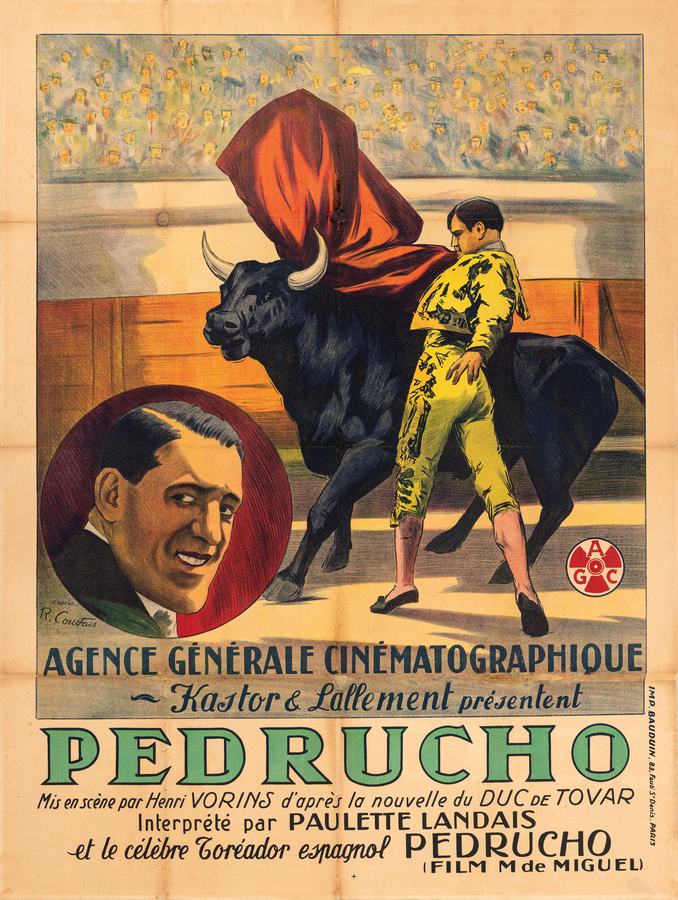
There are films that merely tell a story, and then there are those that etch themselves into the very fabric of memory, resonating with a timeless quality that transcends their era. 'Pedrucho,' a cinematic endeavor that, for too long, languished in the shadows of obscurity, is unequivocally the latter. It is a vibrant, searing portrait of human passion set against the stark, beautiful backdrop of traditional Spain, a narrative steeped in the dust and blood of the bullring, yet ultimately concerned with the more profound battles waged within the human heart. One cannot approach 'Pedrucho' as a mere historical artifact; it demands engagement as a living, breathing work of art, a testament to the enduring power of dramatic storytelling and the indelible mark left by its performers.
At its core, 'Pedrucho' is a masterclass in thematic juxtaposition. The brutal elegance of the bullfight serves not just as a setting but as a potent metaphor for the protagonist’s internal and external struggles. The arena’s sand, stained with the crimson of courage and sacrifice, mirrors the emotional landscape of Pedrucho himself. His journey from an impetuous *novillero* to a man confronting the full weight of his choices is painted with strokes of both fervent idealism and crushing pragmatism. This isn't merely a tale of a man and a bull; it's a profound exploration of class divisions, the unyielding grip of tradition, and the often-destructive nature of ambition when intertwined with love. The societal pressures exerted upon Elena, portrayed with a delicate vulnerability by Paulette Landais, are palpable. Her world, one of comfort and expectation, clashes violently with Pedrucho's dangerous, visceral existence. This tension, rather than feeling contrived, feels organic, a consequence of a world where social strata dictated destiny with an almost medieval rigidity. It brings to mind the societal constraints explored in Tess of the D'Urbervilles, where love and social standing are often at odds, though 'Pedrucho' imbues its struggle with a distinctly Spanish flair for dramatic confrontation.
The screenplay, a thoughtful collaboration between Duque de Tovar and Josep Amich i Bert, avoids simplistic villainy or saccharine romanticism. Instead, it delves into the nuanced motivations that drive its characters. Ricardo, played by José Durany, is not merely a rival; he represents a path of stability, a vision of the future that, while perhaps less passionate, is undeniably safer. His actions, though often detrimental to Pedrucho, stem from a logical, if somewhat cold, desire for security and societal approval. This complexity elevates the narrative beyond a mere love triangle, transforming it into a meditation on differing philosophies of life and love. The film's refusal to offer easy answers is one of its most commendable attributes, allowing the audience to grapple with the characters' moral quandaries long after the credits roll.
The cast of 'Pedrucho' delivers performances that are nothing short of electrifying, each actor seemingly channeling the very essence of their character. Pedro Basauri, in a role that cleverly plays on his own public persona, imbues El Fénix with a profound sense of world-weariness and an almost prophetic wisdom. His eyes, heavy with the weight of past glories and present anxieties, speak volumes, conveying the silent counsel he offers Pedrucho. It’s a performance that anchors the film, providing a crucial bridge between the youthful exuberance of the protagonist and the harsh realities of his chosen path. One can draw parallels to the seasoned, battle-scarred mentors found in films like A Man's Fight, where an older figure guides a younger, more impetuous protégé through life's trials.
Paulette Landais, as Elena, is a revelation. Her portrayal is a delicate dance between societal constraint and burgeoning personal desire. She conveys Elena's inner turmoil with a quiet intensity, her expressions alone capable of communicating volumes of unspoken longing and fear. The chemistry between Landais and Basauri (as Pedrucho, the character) is undeniable, a magnetic force that propels the narrative forward. Their interactions are imbued with a raw, desperate tenderness, making their ultimate separation, or potential reunion, all the more impactful. Landais avoids the trap of making Elena a passive object of affection; instead, she crafts a character who, despite her societal limitations, possesses an inner strength and a fierce loyalty that defines her choices.
José Durany, as Ricardo, manages the difficult feat of making his character both antagonist and understandable. He is not a mustache-twirling villain but a man of his time, operating within the established rules of his class. His polished demeanor and logical arguments for Elena's future present a compelling counterpoint to Pedrucho's fiery passion. This nuanced performance prevents the film from descending into melodrama, grounding the conflict in believable human motivations. Even supporting roles, such as Leonor Perelli's Carmen, the fiery tavern owner whose unrequited affection for Pedrucho adds another layer of emotional complexity, are rendered with vivid authenticity. Her character provides a stark contrast to Elena, a woman of the people who understands Pedrucho's world intimately, offering him a different kind of solace, a raw and earthy connection that Elena, for all her love, cannot fully provide.
Visually, 'Pedrucho' is a feast for the senses. The cinematography captures the stark beauty of the Spanish landscape, from the sun-drenched plazas to the dusty, intimate corners of the town. The sequences within the bullring are particularly breathtaking, filmed with a visceral intensity that places the viewer directly in the heart of the action. These scenes are not merely spectacle; they are integral to the narrative, each pass of the cape, each daring maneuver, reflecting Pedrucho's courage, his desperation, and his dance with fate. The use of shadow and light, particularly in the more intimate moments, adds a layer of chiaroscuro depth, echoing the dramatic contrasts inherent in the story itself. The film’s aesthetic choices are deliberate, contributing significantly to its overall emotional resonance. One might recall the powerful visual storytelling in films like Du Barry, where the grandeur of the setting is inseparable from the drama unfolding within it, though 'Pedrucho' opts for a more grounded, raw beauty.
Beyond the grand spectacle, it is often the quiet moments that leave the most lasting impression. A stolen glance between Pedrucho and Elena across a crowded square, the melancholic strumming of a guitar in a dimly lit tavern, the silent understanding passing between El Fénix and his protégé—these are the details that build the film’s emotional architecture. The film masterfully employs non-verbal storytelling, allowing the audience to infer much from the subtle shifts in expression, the lingering gazes, and the unspoken words. This sophisticated approach to character development, relying on suggestion rather than overt exposition, is a hallmark of truly accomplished filmmaking.
The enduring appeal of 'Pedrucho' lies in its universal themes, rendered with a specificity that makes them feel profoundly personal. It explores the eternal conflict between duty and desire, tradition and progress, the individual's will against the tide of societal expectations. The film’s resolution, or rather its poignant lack thereof, is perhaps its most powerful statement. It refuses to neatly tie up loose ends, instead leaving the audience with a sense of lingering melancholy, a recognition that life's most profound struggles often defy simple solutions. This ambiguity invites reflection, compelling viewers to ponder the characters' fates and the broader implications of their choices long after the final frame.
In an era where many classic films are revisited through the lens of nostalgia, 'Pedrucho' stands apart as a work that feels remarkably current in its emotional honesty. Its portrayal of a passionate, flawed hero and a woman caught between conflicting worlds resonates with contemporary audiences just as powerfully as it must have upon its initial release. The film's meticulous attention to cultural detail, from the vibrant costumes to the evocative musical score, transports the viewer authentically to its specific time and place, yet its emotional core remains universally accessible. It avoids the pitfalls of becoming a mere period piece, instead asserting itself as a timeless human drama.
One could argue that 'Pedrucho' shares a spiritual kinship with films like The Reed Case or Tainted Money, where characters are forced to navigate treacherous social landscapes and make impossible choices under immense pressure. However, 'Pedrucho' distinguishes itself with its heightened sense of operatic drama, its willingness to embrace the tragic beauty inherent in its subject matter. It is a film that understands the power of grand gestures, both in the arena and in the quiet intensity of a lover's gaze. The raw, unvarnished emotion on display is a stark reminder of cinema's capacity to move and provoke, to hold a mirror up to the most fundamental aspects of the human condition.
A particular strength of 'Pedrucho' lies in its sophisticated use of subtext. Much of the narrative's tension and emotional weight is conveyed through implication rather than explicit dialogue. The lingering shots of Elena's face as Pedrucho enters the bullring, her hands clasped tightly, convey more fear and love than any monologue could. Similarly, the subtle shifts in the townspeople's reactions, their whispers and gazes, effectively communicate the shifting tides of public opinion and the pressures Pedrucho faces. This artistic restraint allows the audience to actively participate in the storytelling, filling in the emotional gaps and drawing their own conclusions, a hallmark of truly intelligent filmmaking. It's a stark contrast to some more straightforward narratives of the era, such as You Know What I Mean, which often relied on more direct exposition.
The film's pacing, too, is a masterclass in controlled suspense. It allows moments of quiet reflection to breathe, building a palpable sense of anticipation before unleashing the full force of its dramatic confrontations. The scenes within the bullring are meticulously choreographed, not just for physical action but for emotional impact. Each movement of the bullfighter, each charge of the bull, is imbued with symbolic meaning, transforming the spectacle into a ritualistic dance with mortality. This deliberate rhythm ensures that every peak and valley of the narrative is felt with profound intensity, never rushing the emotional beats, but allowing them to fully resonate.
Ultimately, 'Pedrucho' is more than just a film about a bullfighter; it is a profound meditation on the human spirit's capacity for both soaring ambition and devastating sacrifice. It explores the notion of legacy, not just in the public eye but in the quiet, indelible marks we leave on the lives of those we love. The final image, irrespective of its specific resolution, imprints itself upon the viewer's consciousness, a testament to the enduring power of a love forged in the crucible of adversity. It is a film that deserves to be seen, discussed, and celebrated, a vital piece of cinematic heritage that speaks to the universal human experience with an eloquence and passion that few films ever achieve. 'Pedrucho' is a visceral, beautiful, and heartbreaking journey that reminds us why cinema, at its best, is an indispensable art form, capable of capturing the very essence of life's most profound dramas. Its narrative echoes the timeless struggle found in classics, a testament to its powerful storytelling and emotional depth that endures across generations. It stands as a beacon for compelling human drama, a work that truly transcends its temporal origins to speak to the universal heart of humanity.

IMDb 6.1
1930
Community
Log in to comment.