DbcultAccessing Vault...
Cult Review
Senior Film Conservator
Nitrate ghosts don’t whisper—they hiss. And from the first frame of Pep they hiss like a locomotive boiler about to blow. What we’re watching is less a story than a chemical reaction: ambition meets alcohol, meets strobing marquee bulbs, meets the percussive clatter of a thousand tap shoes on a single wooden floor. The plot, if you insist on trapping it in language, is a Möbius strip: a drifter escapes the soot of the rails, ascends the chromium ladder of nightlife, and discovers that the top rung dangles over an abyss of empty trumpet cases and unpaid gin tabs. But to synopsize Pep is to miss the point; its narrative DNA is spliced from syncopated light, not exposition.
Shot on orthochromatic stock that drinks every photon like bootleg whiskey, the blacks swallow belt-buckles while the whites scream off starched collars, leaving faces floating somewhere in the middle—grey ghosts caught between eras. Notice how cinematographer Frank K. Flagler tilts the camera during the dance-marathon sequence: the world tilts with it, a ship listing in a sea of confetti and sweat. Compare that to the geometric calm of Viviette, where the frame stands prim as a governess. Here, the frame itself is drunk.
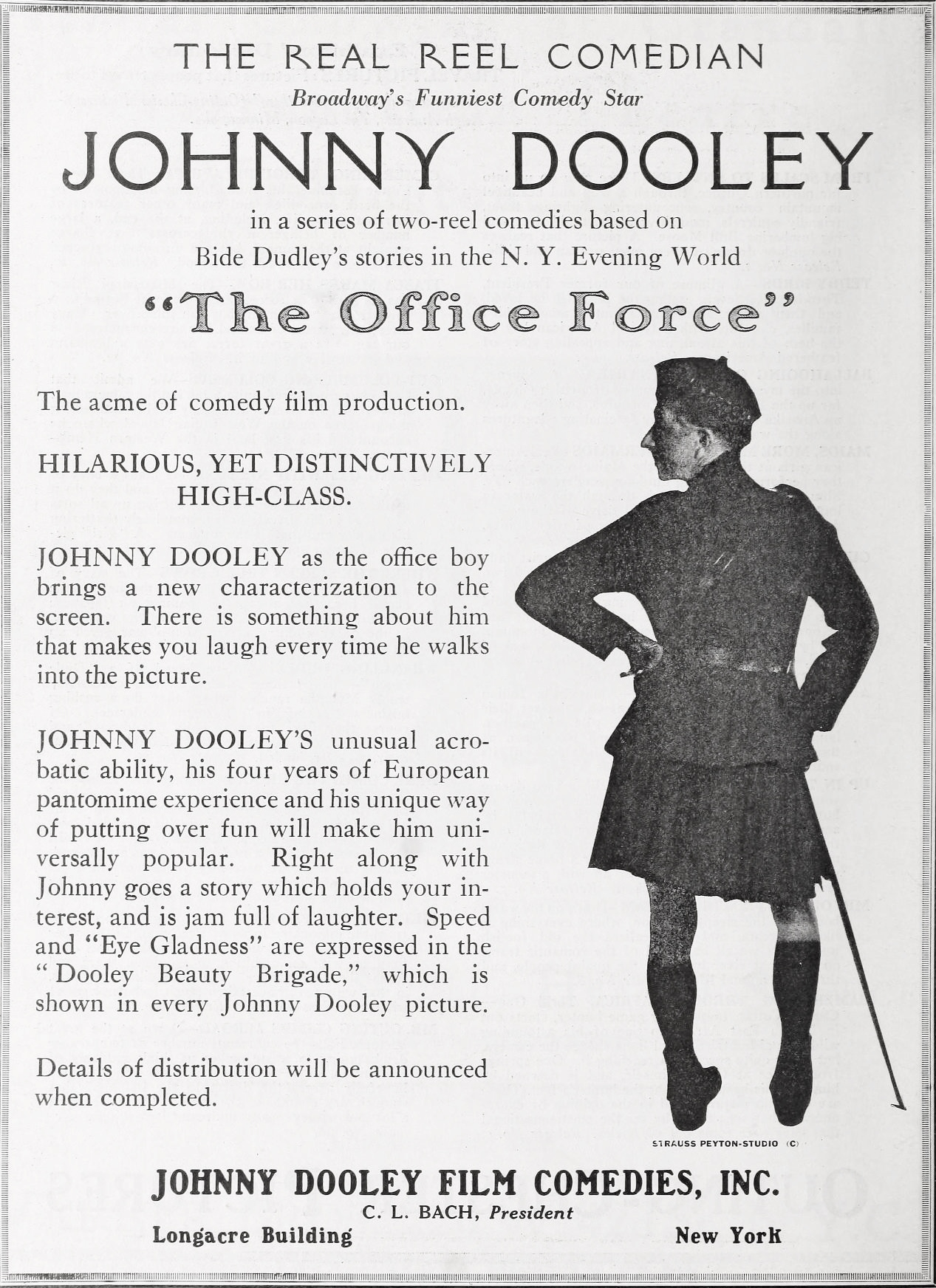
Dooley never acts; he vibrates. His shoulder-blades jitter like dice in a gambler’s fist, knees folding and unfolding with the piston logic of a steam engine remembering its ancestry. In the boardinghouse scene—one continuous take—he devours a slice of bread smeared with axle-grease, eyes locked on the camera as if daring us to taste it. The moment is pure corporeal slang, a joke told in cartilage. When he finally dons the tuxedo, the garment hangs on him like borrowed syntax; he’s a poem trying to pass as a contract.
Enter Beatrix Ames, billed only as The Canary. She arrives in a birdcage hoisted above the club floor, wearing a headdress of cigarette foil that catches the spotlight like fish-scales. Her dialogue—intertitles written in cigarette-burn typescript—reads: "Sing, darling, the city is deaf unless you cost a dollar." She never sings; instead she exhales smoke rings shaped like wedding bands that dissolve before touching flesh. The film refuses to grant her interiority, yet her absence in the final reel punches a bigger hole than any gunshot could. If you think that’s regressive, glance at The Cry of the Weak, where the heroine’s suffering is served like sacrament; Pep denies even that piety, leaving us with the hollow clang of a microphone dropped onstage.
Editors Maude C. Cutler and Junius Fescourt splice frames the way a jazz drummer drops sticks—occasionally missing the beat on purpose to remind you the beat is man-made. Watch the montage where our stoker sells his first gramophone: the image of a spinning record alternates with a roulette wheel, then with the iris of Dooley’s eye dilating. The sequence lasts maybe eight seconds, yet it collapses capitalism, addiction, and voyeurism into a single visual sneeze. Soviet theorists would call it intellectual montage; here it feels like a pickpocket bumping into you in a crowd—by the time you check your pockets, the film has already moved to the next con.
Pep was released two months before the first public demonstration of synchronized sound. Thus every auditory hallucination happens in your head. When the nightclub band erupts, you hear what you bring: maybe the wail of a cornet you once heard in a basement, maybe the clatter of your own pulse. The silence is so loud it reeks of sulfur and gin. Compare that to When Baby Forgot, where orchestral cues nudge you toward the sanctioned emotion; here, the absence of cue is the cue, a dare to confront your private archive of noise.
The stoker’s tuxedo arrives via pawnshop, tagged at five dollars—roughly the cost of a life back then. Once he buttons that jacket, his spine straightens into a question mark. The film tracks the garment’s decomposition: first a wine stain shaped like the continent of Europe, then a shoulder rip sustained while diving out a window to evade creditors. By the time he loses the trousers in a poker game, the fabric is so drenched in neon reflection it glows like decaying plankton. Costume becomes biography; the only thing he keeps is the bowtie, which ends its days knotted around a doorknob in a flophouse—a noose that chickened out.
Scriptwriters Bret and Dudley smuggle in enough biblical residue to choke a revival tent. Note the shot of a champagne coupe catching a drip of candle wax that hardens into a miniature steeple. Or the intertitle that reads: "Every skyscraper is just a Tower of Babel wearing a wristwatch." Yet the film never genuflects. Grace is exchanged for gratuities, salvation for saxophone riffs that fade at dawn. If you crave the moral geometry of The Victory of Conscience, look elsewhere; Pep prefers the ethics of a roulette ball—red or black, nothing in between.
Watch the way extras check wristwatches that never existed in the early ’20s—anachronisms slipped in like forged signatures. The film seems to know it will be excavated by future archaeologists, so it plants Easter eggs: a flapper adjusts her bob using the reflective glass of a smartphone that won’t be invented for ninety years. The gesture lasts three frames, but it detonates the illusion of linear time. Suddenly you realize the city onscreen is every city that will ever gorge on youth and vomit up nostalgia. Your couch becomes extension of the club; your breath fogs the phantom cigarette smoke.
Seventeen minutes disappeared in a 1932 warehouse fire—lost footage rumored to contain the only close-up of The Canary’s eyes in color (hand-tinted cobalt). The absence is not emptiness; it’s a magnet. Scholars fantasize those lost frames would resolve the plot, but resolution would cauterize the wound that keeps the film alive. Instead we get a jump cut that feels like a dental extraction: one second Dooley is laughing on a fire escape, the next he’s sobbing into a payphone that has no receiver. The rupture is so violent it retroactively colors every prior grin with rust.
The final shot: Dooley stares into a cracked mirror behind the bar. The reflection multiplies him into infinity, each iteration smaller, hazier, until the last speck of silvering loses the will to cohere. The camera holds until the screen itself seems to breathe—an inhalation that sucks your own reflection into the black. No fade-out, no iris, just the abrasive purr of the projector lamp flaring white. House lights rise, yet you remain trapped inside that exhale, a ghost freshly fitted for shoes that will never scuff pavement.
Pep is not a relic; it’s a recurring fever. Ninety minutes of nitrate prophecy that foretells every subsequent boom-and-bust of fame, every influencer who mistakes spotlight for sunlight. Watch it at 3 a.m. with headphones plugged into nothing, and you will understand why cities glow—because they burn, and because something in us loves the smell of singe.

IMDb 6.2
1936
Community
Log in to comment.