DbcultAccessing Vault...
6.8/10
Senior Film Conservator
A definitive 6.8/10 rating for a film that redefined the boundaries of cult cinema. Perils of the Jungle remains a cornerstone of transgressive art.
Short answer: No, unless you are a dedicated historian of the silent serial or a completionist of early action cinema. While the film offers a fascinating look at the physical capabilities of pre-sound era stars, its repetitive structure and dated cultural perspectives make it a chore for the average modern viewer.
This film is for students of the 'jungle adventure' genre and fans of early physical stunts. It is absolutely NOT for anyone looking for a nuanced plot, high-stakes emotional drama, or a realistic depiction of the African continent.
Before diving into the weeds of this 1927 production, let’s establish the core reality of the viewing experience. This is a film that exists almost entirely to showcase movement rather than meaning.
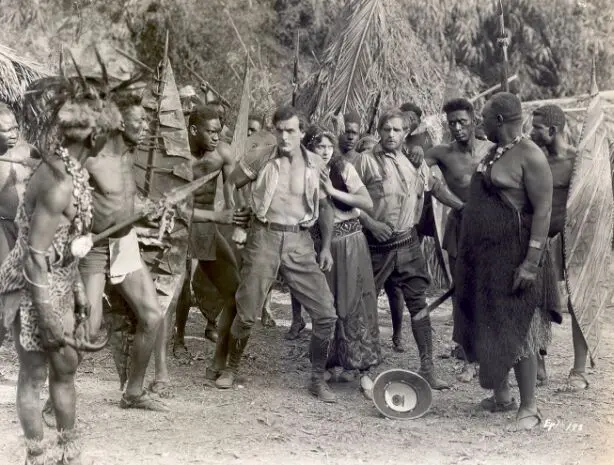
1) This film works because of Frank Merrill’s genuine athletic ability, which provides a visceral thrill that CGI cannot replicate.
2) This film fails because the narrative is a redundant loop of capture, escape, and confrontation that loses its impact by the third act.
3) You should watch it if you want to see the exact moment when the 'Tarzan-style' hero archetype was being codified in the American consciousness.
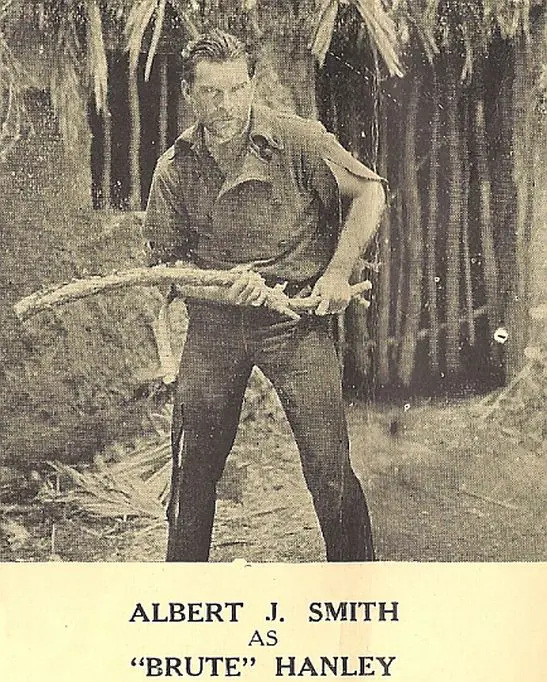
Frank Merrill was not a traditional actor, and it shows in every frame where he isn't moving. However, the moment he begins to climb, swing, or wrestle, the film transforms. In a landscape where we are used to wire-work and digital doubles, seeing a man in 1927 actually grapple with the environment is refreshing.
Merrill, who had a background as a champion gymnast, brings a rhythmic grace to the action. There is a specific scene involving a vine swing across a ravine that, while clearly staged, possesses a terrifying lack of safety protocols. You can see the tension in his forearms; you can feel the weight of the jump. It’s a primitive form of the spectacle we now see in the Mission: Impossible franchise.
Compared to the more refined melodrama of The Eagle's Mate, Merrill’s performance is blunt and physical. He isn't here to emote; he’s here to survive. This makes the film feel more like a documentary of a stuntman’s workday than a piece of narrative fiction.
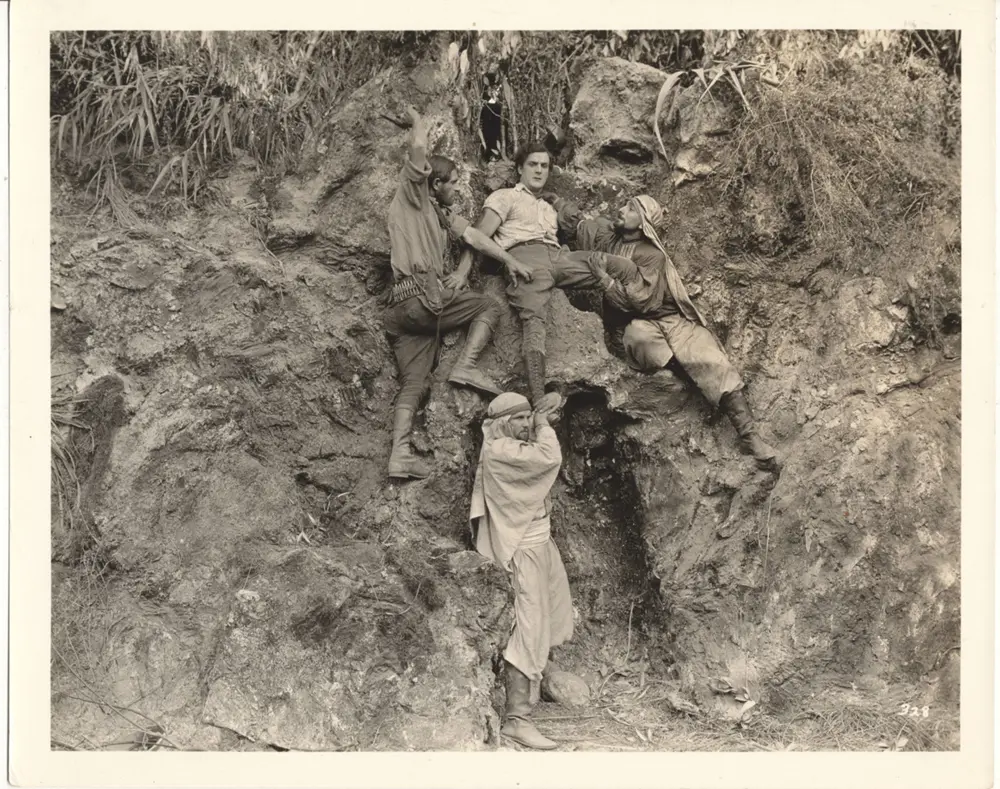
Director and writer Harry L. Fraser was a journeyman of the B-movie world, and his fingerprints are all over the pacing of Perils of the Jungle. The film feels like a series of chapters stitched together—a common trait for the era. This results in a jarring rhythm where the tension resets every fifteen minutes.
Fraser’s use of the 'jungle' (likely a mix of Los Angeles botanical gardens and studio sets) is surprisingly effective at times. He uses high-contrast lighting to hide the artificiality of the flora. In the scenes where the father and daughter are huddled around a campfire, the deep blacks of the silent film stock create a genuine sense of isolation.
However, the script is where things fall apart. Fraser relies heavily on the 'treasure map' trope, which even by 1927 was becoming exhausted. The dialogue intertitles are sparse and often redundant, telling the audience exactly what they just saw. If you've seen the procedural logic of Medicine Bend, you will recognize the same 'A-to-B-to-C' plotting that prioritizes movement over character growth.
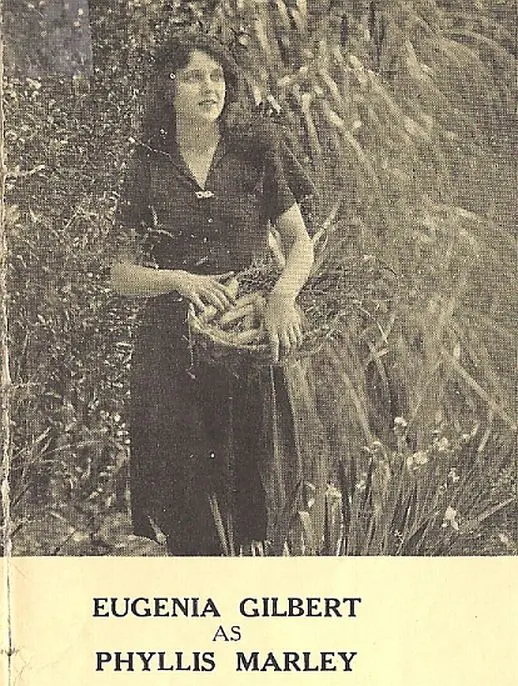
Eugenia Gilbert plays the daughter, and her role is a fascinating study in the 'damsel in distress' trope of the 1920s. While she is frequently the catalyst for Merrill’s rescues, Gilbert brings a certain level of grit to the role. She isn't just a prop; she is an active participant in the trek, even if the script eventually forces her into a corner.
Her chemistry with her father (played by Harry Belmour) is minimal. Their relationship is purely functional—they are two people who happen to be in the same dangerous place. This lack of emotional core makes it hard to care whether they find the treasure or not. It’s a stark contrast to the sentimental weight found in Only a Shop Girl, where the stakes are deeply personal.
The cinematography in Perils of the Jungle is a masterclass in 'making do.' The camera is often static, a limitation of the heavy equipment of the time, but the framing is clever. By keeping the camera low to the ground in the brush, the filmmakers create an illusion of density in what was likely a sparse set.
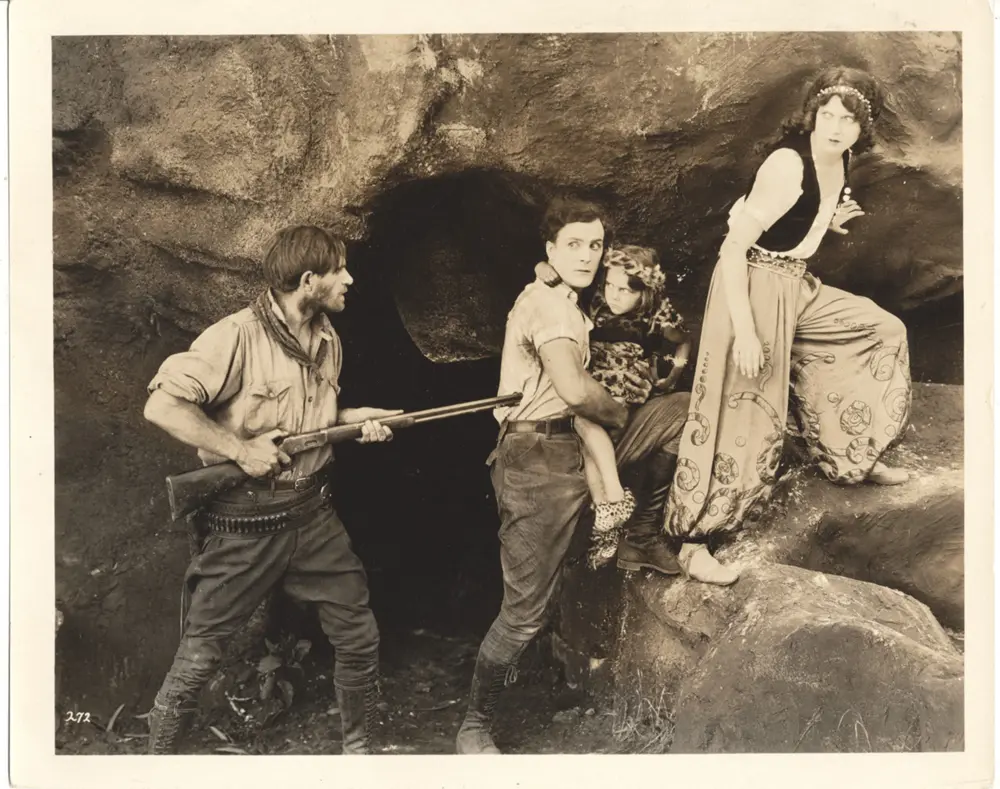
The 'wildlife' encounters are the most debatable part of the film. Most of the animals are clearly trained or filmed separately and edited in. There is a moment where a lion stalks the camp that is edited with such frantic energy that it almost works. But the illusion is broken by the static reaction shots of the human cast.
It works. But it’s flawed. The grain of the film adds a layer of grit that modern digital 'jungle' movies lack. There is a texture to the sweat and the dirt that feels earned. Yet, the lack of a coherent visual language beyond 'point and shoot' keeps it from being a visual landmark like The End of the Game.
Only for those with a high tolerance for the limitations of the silent era. If you enjoy seeing the roots of the adventure genre, there is value here. If you are looking for an engaging story, you will likely find yourself checking the runtime. The film is a historical artifact, not a living piece of entertainment.
The stunts are unique because they were performed without the safety nets, harnesses, or digital touch-ups available today. Frank Merrill used his background as a world-class gymnast to perform complex maneuvers in real environments. This gives the action a heavy, dangerous quality that is rarely seen in modern cinema.
Pros:
Cons:
Perils of the Jungle is a fascinating, if grueling, look at the ancestors of Indiana Jones and Tarzan. It is a film built on the muscles of Frank Merrill and the tropes of a bygone era. While it lacks the narrative sophistication to be a 'must-watch' for the general public, its place in the evolution of the action film is undeniable. It is a rough, unpolished diamond that has mostly turned back into coal over the last century. Watch it as a history lesson, but don't expect to be moved.
IMDb —
1926
Community
Log in to comment.