DbcultAccessing Vault...
5.1/10
Senior Film Conservator
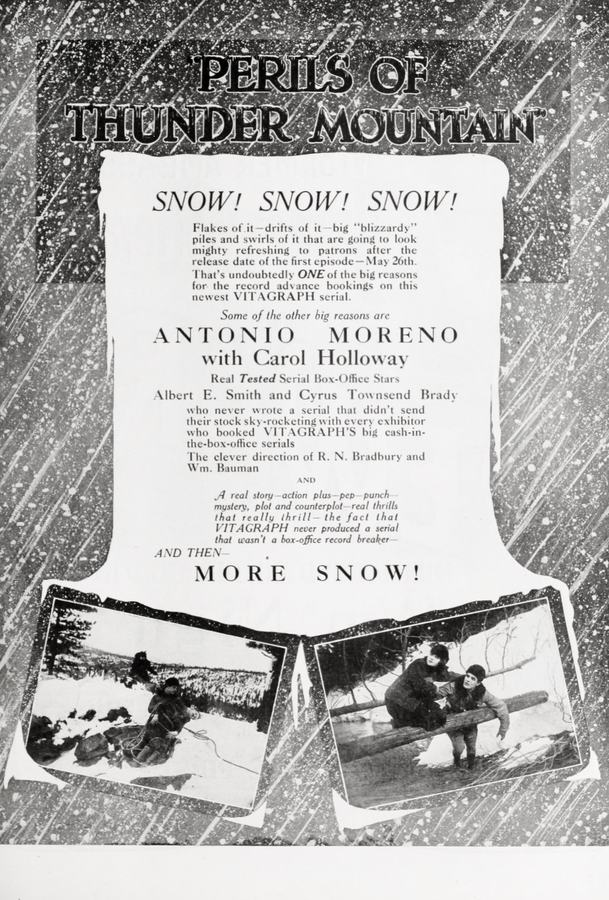
A definitive 5.1/10 rating for a film that redefined the boundaries of cult cinema. Perils of Thunder Mountain remains a cornerstone of transgressive art.
The flickering shadows and grand gestures of early cinema often hold a unique allure, a raw, unfiltered energy that speaks volumes without uttering a single word. Perils of Thunder Mountain stands as a fascinating artifact from this nascent era, a quintessential Western melodrama that, despite its age, resonates with timeless themes of avarice, familial treachery, and the relentless pursuit of justice. It’s a film that encapsulates the foundational elements of a genre that would come to define American cinematic identity, presenting a narrative propelled by a clear-cut conflict between good and evil, set against the breathtaking yet unforgiving backdrop of the wild frontier.
At its heart, the story is a crucible of human ambition, ignited by a deceased uncle's will. This isn't merely a document; it's a Pandora's Box, unleashing a torrent of greed and malevolence. The uncle’s thoughtful, if perhaps naive, arrangement for his adopted daughter, Ethel, and the division of his gold mine fortune, becomes the catalyst for a Machiavellian plot. John Davis, the rightful inheritor and the embodiment of frontier integrity, finds himself pitted against his own cousin, Hawke Morgan, a character whose villainy is as stark and unyielding as the mountain ranges themselves. Morgan’s arrival from the civilized East, ostensibly to fulfill his guardianship duties, quickly devolves into a calculated campaign to eliminate Davis, seize the entire fortune, and claim Ethel's affections, despite her unequivocal love for John. This premise, while straightforward, provides a robust framework for the episodic adventures that follow, each more perilous than the last.
The film’s title itself, Perils of Thunder Mountain, is a declaration of intent, promising a relentless barrage of danger and suspense. And indeed, it delivers. The screenplay, credited to Cyrus Townsend Brady, Albert E. Smith, and C. Graham Baker, weaves a tapestry of thrilling escapades that keep the audience on the edge of their seats. From daring chases across rugged terrain to treacherous encounters in dimly lit cabins, the narrative propulsion is constant. The plot doesn't just unfold; it explodes with incident, each scene designed to heighten the stakes and push our protagonists to their absolute limits. This relentless pacing was a hallmark of serials and early feature films, designed to captivate an audience accustomed to theatrical spectacle and vaudeville thrills. It's a masterclass in building tension through sheer narrative velocity.
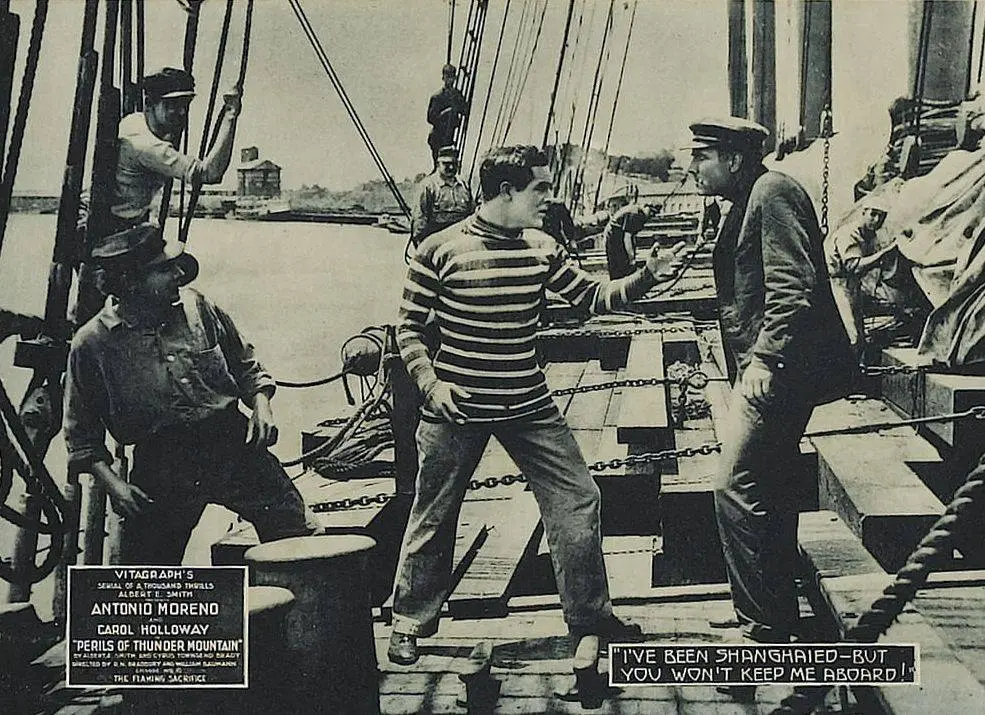
The character of Hawke Morgan is particularly compelling in his unadulterated villainy. He is not a nuanced antagonist struggling with inner demons; he is pure, unadulterated avarice personified. This stark portrayal, while perhaps lacking the psychological depth favored by modern cinema, serves the narrative perfectly, creating a formidable and unambiguous threat that fuels the hero's journey. His every action is driven by a singular, rapacious desire, making him a truly formidable force against the honest, earnest John Davis. This clear delineation of moral boundaries was crucial for audience engagement in the era, allowing for immediate identification with the virtuous and visceral revulsion for the wicked. It’s a trope that, when executed with conviction, as it is here, remains undeniably effective.
The performances, even through the lens of time, are remarkably expressive. Tote Du Crow, Kate Price, George Stanley, Charles Rich, Jack Waltemeyer, Antonio Moreno, Alfred Regnier, and Carol Holloway, among others, bring a vibrant physicality to their roles. In the silent era, actors relied heavily on exaggerated gestures, facial expressions, and body language to convey emotion and intent. This theatricality, often misunderstood by contemporary viewers, was a sophisticated art form in its own right. Antonio Moreno, as John Davis, embodies the stoic heroism and unwavering resolve expected of a Western protagonist. He's the archetype of the strong, silent type, whose actions speak louder than any intertitle could. Carol Holloway, as Ethel, portrays a spirited heroine, not merely a damsel in distress, but one who endures trials with remarkable fortitude, her love for John serving as a beacon amidst the encroaching darkness. Their chemistry, communicated through longing glances and desperate embraces, forms the emotional core of the film.
Visually, the film leverages the grandeur of its setting. The "Thunder Mountain" itself becomes almost a character, a formidable, untamed entity that mirrors the wildness of human nature. The cinematography, though rudimentary by today's standards, effectively captures the sweeping vistas and treacherous landscapes that are integral to the Western genre. These natural elements are not just backdrops; they are active participants in the drama, providing challenges for the heroes and hiding places for the villains. The use of natural light and rugged outdoor locations lends an authenticity that studio sets could rarely replicate, immersing the viewer in the raw beauty and inherent dangers of the frontier. One can almost feel the dust and hear the wind whistling through the canyons, a testament to the filmmakers' ability to evoke atmosphere.
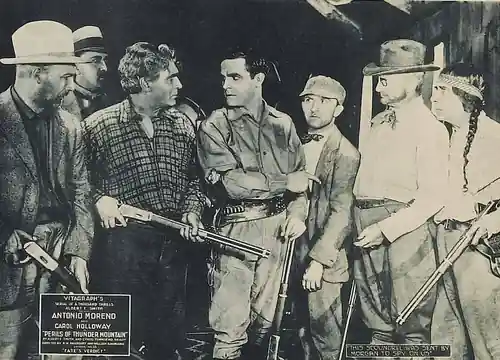
Comparing Perils of Thunder Mountain to other films of its era, one can discern common threads of dramatic urgency and moral clarity. While perhaps not as overtly comedic as The Earl of Pawtucket or as focused on urban subterfuge as The Dummy, it shares with many contemporary productions a reliance on clear narrative arcs and heightened emotional stakes. The theme of inheritance and the corrupting influence of wealth, for instance, finds echoes in films like The Fear of Poverty or even the stark morality play of L'avarizia, though Perils of Thunder Mountain frames these within a distinctly American frontier context. The relentless pursuit and escape sequences, a staple of action cinema, align it with the thrilling pace seen in productions like Wolves of the Rail, showcasing the era's fascination with kinetic energy and practical stunts.
The film's exploration of justice, often meted out through direct, physical confrontation rather than legal process, speaks to the prevailing ethos of the Western. In a land where law was often a distant whisper, individual heroism and self-reliance were paramount. John Davis embodies this ideal, fighting not just for his inheritance and his love, but for a fundamental sense of right. This moral clarity, while perhaps simplistic by modern standards, was profoundly resonant with audiences of the time, offering a comforting narrative of good triumphing over evil in a world undergoing rapid and often unsettling change. The notion of a just resolution, even if achieved through extraordinary means, provided a cathartic experience.
The script effectively utilizes the concept of the "map" as a MacGuffin, a plot device that drives the narrative forward without necessarily being the central thematic element. Its existence is crucial, but its true value lies in the conflict it generates. This simple, yet effective, narrative tool ensures that the characters are constantly in motion, either seeking to secure it or prevent its misuse. The charitable contributions stipulated in the will also add a layer of moral complexity, reminding the audience of the potential for good that the gold mine represents, contrasting sharply with Morgan's purely selfish desires. This juxtaposition elevates the conflict beyond mere personal gain, hinting at broader societal implications of wealth and responsibility.
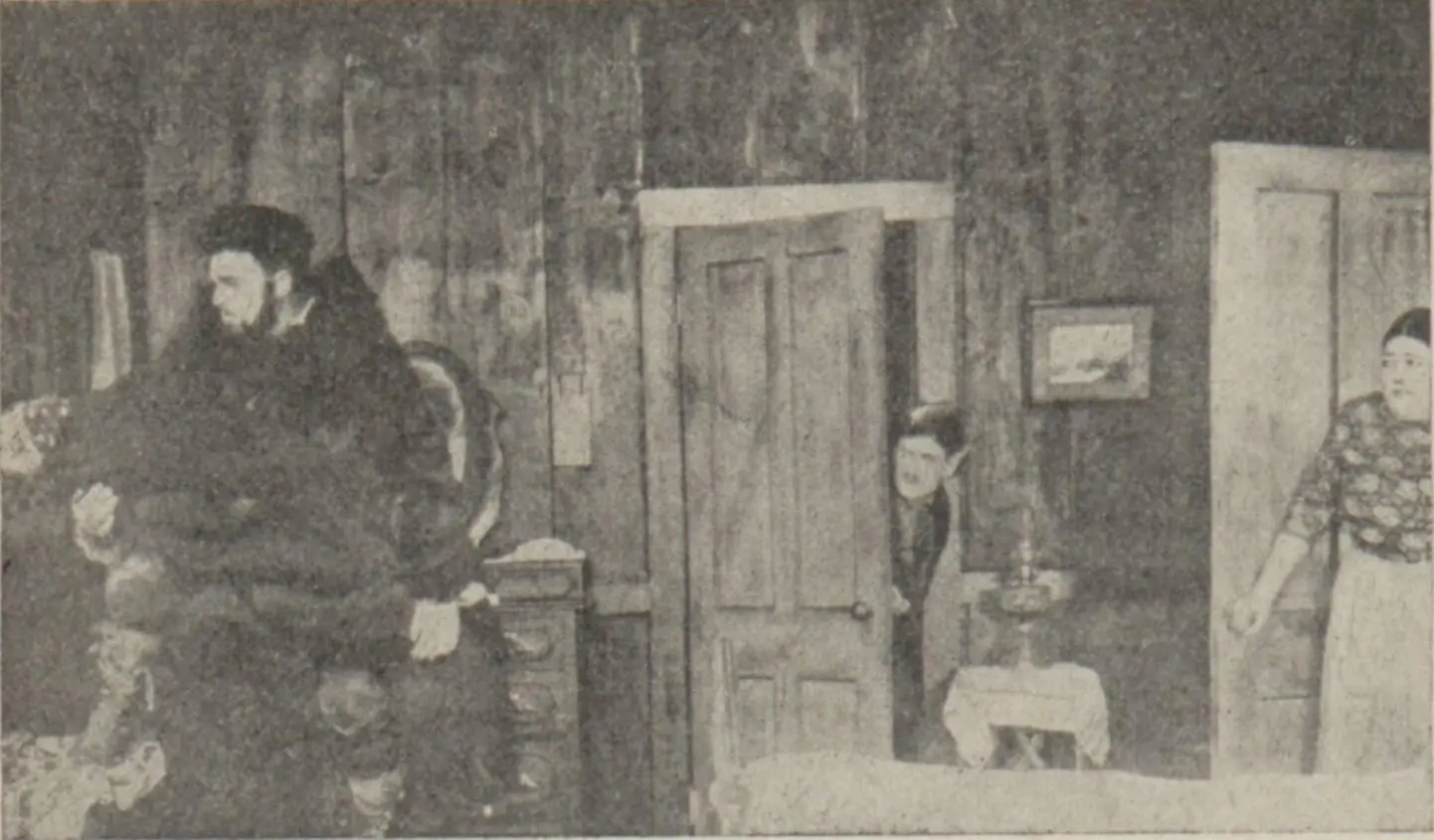
Moreover, the film's title suggests a literal and metaphorical journey through danger. The "perils" are not just external threats but also the internal struggles against despair, the moral compromises that characters might be tempted to make, and the inherent risks of human trust. The resilience of Ethel, who often finds herself caught in Morgan's clutches, is particularly noteworthy. She is not a passive object to be won but an active participant in her own survival, displaying courage and resourcefulness. This portrayal, while perhaps not fully feminist by contemporary metrics, hints at the evolving role of women in cinema, moving beyond mere decorative elements.
The directorial choices, though not explicitly detailed in historical records, can be inferred from the film's kinetic energy and clear visual storytelling. The staging of action sequences, the use of close-ups for emotional impact, and the overall narrative flow suggest a keen understanding of cinematic grammar, even in its nascent stages. The film’s ability to sustain excitement over multiple reels, without the benefit of spoken dialogue or complex sound design, is a testament to the power of visual narrative. It relies on universal human emotions and archetypal conflicts, making it accessible even to modern audiences willing to engage with its historical context.
In an era where films like The Virtuous Thief explored moral ambiguities and A Mother's Sin delved into personal sacrifice, Perils of Thunder Mountain stands firmly in the tradition of adventure and straightforward heroic narrative. It doesn't seek to challenge societal norms or dissect complex psychological states; rather, it aims to entertain and thrill, to transport its audience to a world where courage is tested and virtue is ultimately rewarded. This focus on pure, unadulterated escapism is precisely what made such films popular and enduring. It offered a respite from the often-harsh realities of early 20th-century life, a chance to witness triumphs on screen that mirrored the aspirations of the audience.
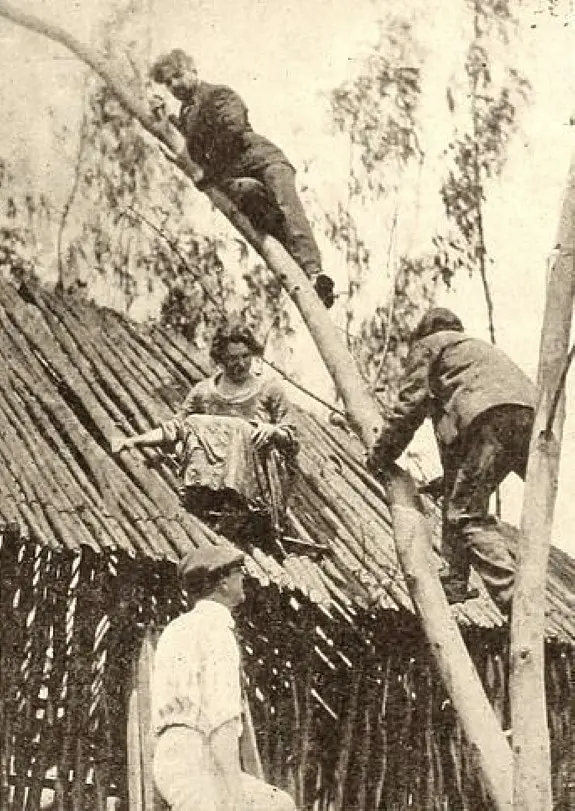
The enduring appeal of the Western genre, of which Perils of Thunder Mountain is an early exemplar, lies in its foundational myths: the rugged individual, the untamed frontier, the struggle for civilization, and the eternal battle between right and wrong. This film, with its clear narrative and archetypal characters, contributes significantly to this cinematic lexicon. It's a reminder of a time when stories were told with bold strokes and unambiguous messages, relying on universal themes that transcend cultural and temporal boundaries. It’s a foundational text for anyone interested in the evolution of the Western, showing how early filmmakers used the vast landscapes and inherent dangers of the American frontier to craft compelling, action-packed narratives.
Ultimately, Perils of Thunder Mountain is more than just a historical curiosity; it is a vibrant, exciting piece of early cinematic storytelling. It may lack the sophisticated narrative structures or the nuanced characterizations of later films, but it more than compensates with its relentless energy, its clear moral compass, and its unpretentious commitment to delivering thrilling adventure. For enthusiasts of silent cinema, or anyone seeking to understand the roots of the Western genre, this film offers a valuable and thoroughly entertaining glimpse into a bygone era of filmmaking. It’s a testament to the enduring power of simple, well-told stories, proving that even without sound, the perils on Thunder Mountain could resonate profoundly and leave an indelible mark on its audience.
The resolution, the securing of John and Ethel's final happiness, feels earned after the gauntlet of trials they endure. It’s a classic narrative payoff, satisfying precisely because of the immense struggle that precedes it. The villain, Hawke Morgan, inevitably faces his comeuppance, reinforcing the moral order that the Western genre so often upholds. This predictable yet gratifying conclusion is a cornerstone of the genre, providing a sense of closure and reinforcing the idea that justice, however hard-won, will ultimately prevail in the rugged, lawless expanses of the frontier. The film’s legacy lies not just in its individual narrative but in its contribution to establishing these very genre conventions, influencing countless Westerns that would follow.
IMDb —
1917
Community
Log in to comment.