DbcultAccessing Vault...
Cult Review
Senior Film Conservator
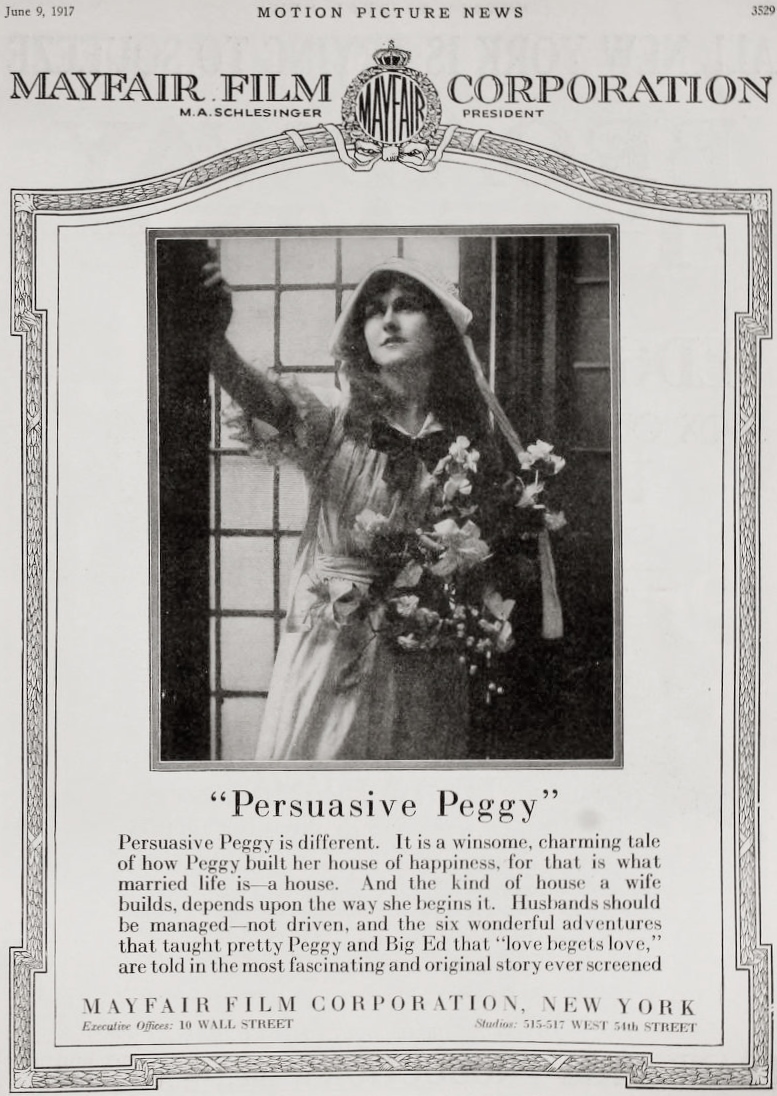
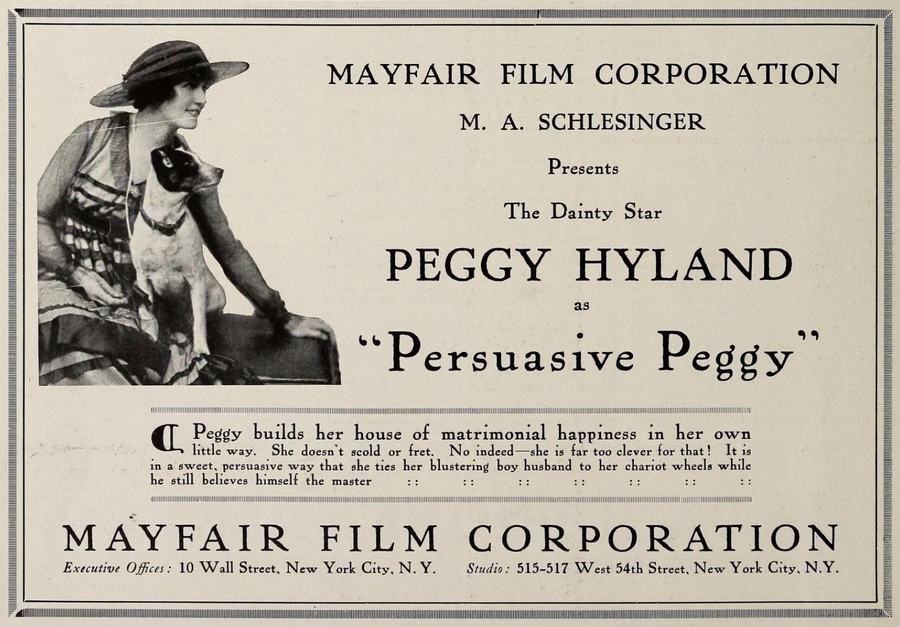
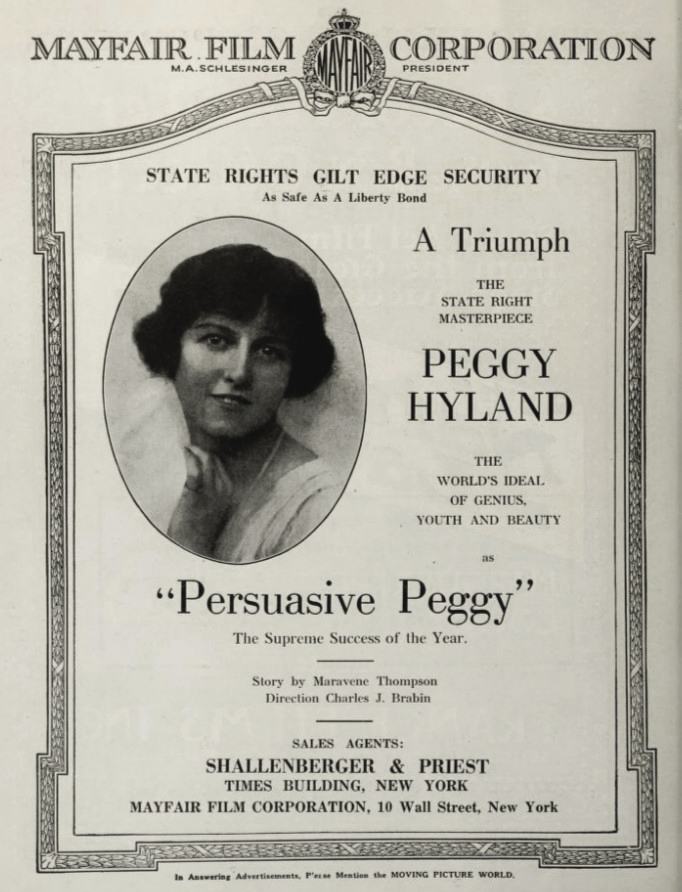
Step back into the nascent years of the 20th century, a period rife with societal shifts and burgeoning ideas about independence, particularly for women. It is within this fascinating crucible that we find Persuasive Peggy, a 1917 silent film that, despite its vintage, resonates with a surprisingly modern sensibility regarding marital dynamics and the assertion of individual will. This cinematic artifact, directed by Charles Brabin and penned by Maravene Thompson and Brabin himself, offers more than just a glimpse into a bygone era of filmmaking; it provides a nuanced, often humorous, exploration of a young woman's journey to define her place within a traditional marriage.
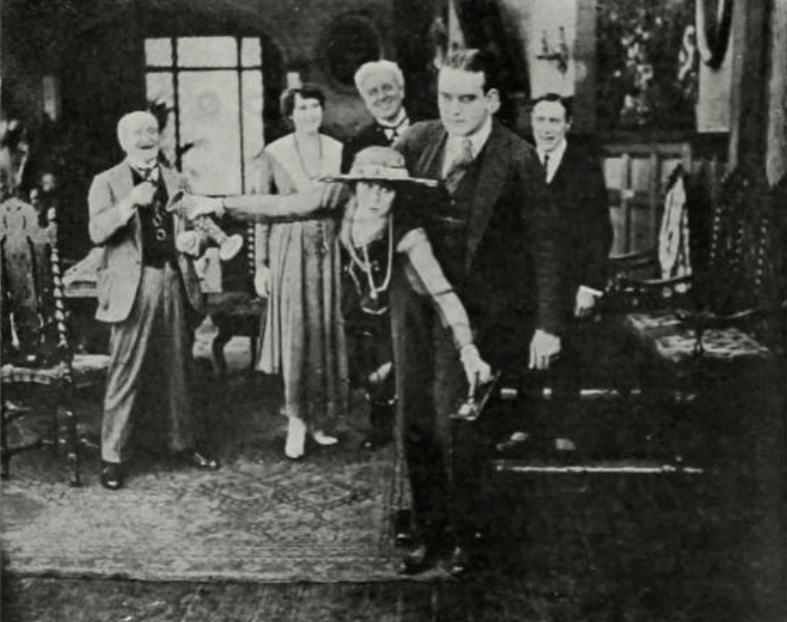
The narrative unfurls with a seemingly innocuous marital dispute that quickly escalates into a profound statement of autonomy. Newlywed Peggy, portrayed with vivacious spirit by Peggy Hyland, finds her romantic expectations of a Niagara Falls honeymoon dashed by her husband Ed's (William B. Davidson) prosaic alternative: the county fair. This initial disappointment, however, is not met with passive resignation but with an immediate and decisive act of defiance. Peggy, refusing to be relegated to a secondary role in her own marital narrative, takes matters into her own hands, stealing away to the majestic falls alone. This isn't merely a tantrum; it's a calculated, albeit impetuous, declaration of independence. Her solo journey to Niagara, a symbol of natural grandeur and untamed power, mirrors her own burgeoning desire to break free from conventional domestic confines. Ed, bewildered and left to follow in her wake, experiences the first tremor of his wife's formidable will, a precursor to the seismic shifts yet to come in their shared life. This opening gambit immediately establishes Peggy as a protagonist unwilling to be defined by her husband's whims, setting a tone of spirited rebellion that permeates the film.
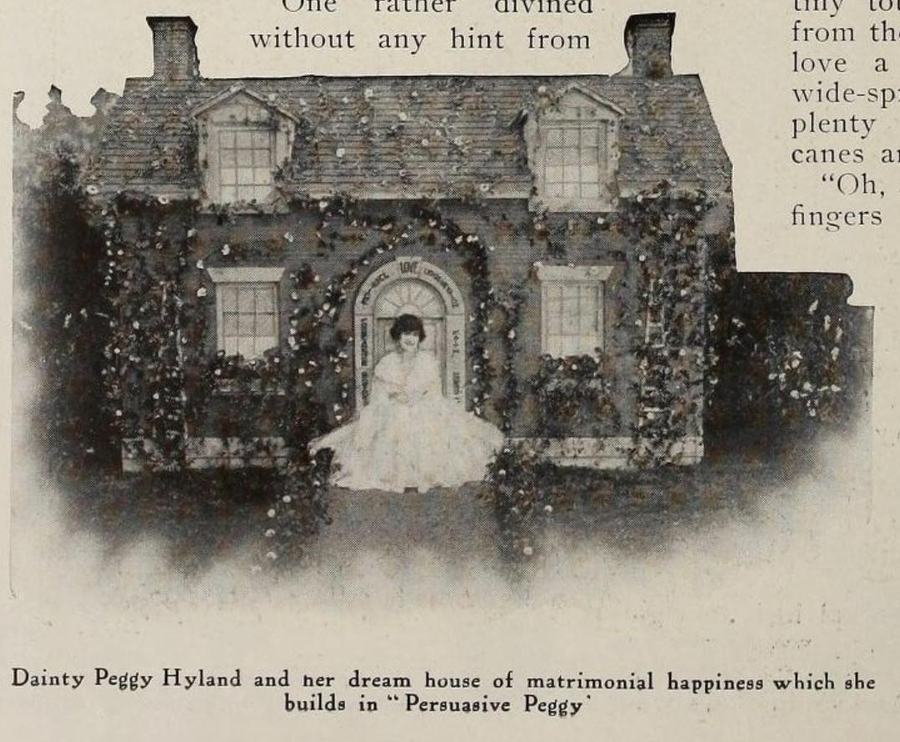
Upon their eventual return from the unconventional honeymoon, Ed introduces Peggy to the home that once belonged to his mother – a space undoubtedly steeped in traditional expectations and familial history. For many brides of the era, this would signify an inheritance of domestic responsibility, a seamless continuation of established norms. Not for Peggy. In a move that speaks volumes about her modern sensibilities and her desire to forge her own identity, she embarks on a radical redecoration of the entire house during Ed's absence. This isn't a mere aesthetic update; it's a symbolic dismantling of the old order and the construction of a new one, entirely on her terms. The transformation of Ed's ancestral home into a reflection of Peggy's contemporary taste is a powerful metaphor for her attempts to reshape their marriage itself. It signifies a refusal to inhabit a life dictated by the past or by masculine prerogative. She is not merely moving into Ed's world; she is actively remaking it to accommodate her own vision, asserting her creative and personal authority within the very walls of their shared existence. Ed's reaction, a mix of surprise, perhaps a touch of discomfort, but ultimately a gradual acceptance, illustrates his slow but steady submission to Peggy's persuasive power.
The film's narrative takes a more complex turn with the introduction of a significant deception. Ed, having grown accustomed to Peggy's modern attitudes and, to some extent, her independent spirit, eventually discovers a troubling pattern: her frequent visits to the city are not, as she claims, for dental appointments, but rather to the studio of portrait painter Perry Pipp. This revelation shatters the fragile trust that had been painstakingly built between the couple. The nature of the deception is particularly poignant; it's not a grand betrayal of affection, but a secret pursuit of personal expression, veiled by a mundane excuse. For Peggy, the portrait likely represents an outlet for her individuality, a space where she can be seen and captured on her own terms, away from the domestic sphere. Yet, her choice to conceal this from Ed speaks to the societal pressures of the time, where a wife's independent pursuits might be viewed with suspicion or disapproval. It highlights the tension between her desire for self-fulfillment and the expectations of marital transparency. Ed's discovery, depicted with the dramatic flair characteristic of silent cinema, is a moment of profound anger and hurt. His trust is broken, not just by the lie, but by the implication that his wife felt compelled to hide a part of her life from him. This conflict underscores the film's exploration of communication, or the lack thereof, in marriage, and the inherent difficulties in navigating evolving gender roles within traditional structures. The choice of a portrait painter also subtly hints at the burgeoning artistic and cultural movements of the era, where new forms of expression were challenging established norms, much like Peggy herself.
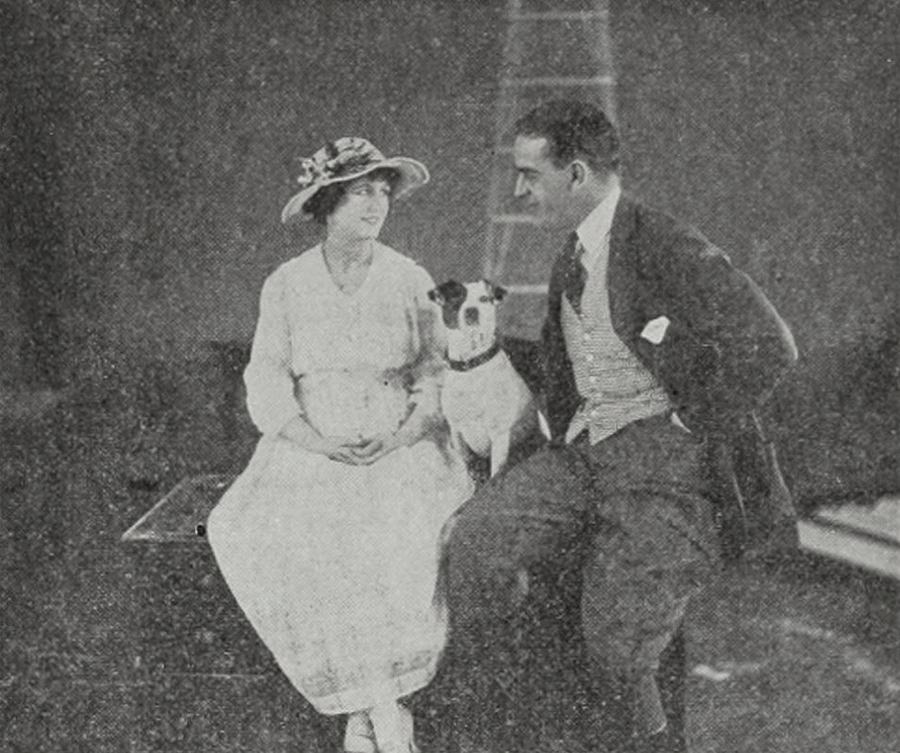
Ed's discovery of Peggy's secret portrait sittings precipitates a dramatic and emotionally charged confrontation. His anger, fueled by a sense of betrayal and perhaps a wounded masculine pride, leads him to force Peggy to return to her parents' house. This act of banishment, while harsh, reflects the societal power dynamics prevalent at the time, where a husband's authority, once challenged, could be reasserted with decisive action. Peggy's retreat is not merely a physical displacement but a symbolic return to a more constrained existence, away from the independent life she had begun to carve out for herself. The separation is painful, a testament to the depth of the rift caused by the deception. However, the narrative is careful not to cast Ed as an irredeemable villain. His subsequent journey toward understanding and regret is crucial to the film's nuanced portrayal of marriage. When he ultimately learns the truth – that Peggy's secret sittings were intended as a birthday surprise, a heartfelt gesture rather than a malicious deception – his perspective shifts dramatically. This revelation transforms the perceived betrayal into an act of loving intent, albeit one poorly communicated. Ed's remorse is palpable, prompting him to seek his wife's forgiveness. This moment of enlightenment and subsequent humility on Ed's part is a pivotal turning point, demonstrating his capacity for growth and empathy. It suggests that even in a marriage marked by conflict and misunderstanding, genuine love and a willingness to understand can pave the way for reconciliation.
The climax of Persuasive Peggy arrives with a tender and hopeful resolution. Ed, humbled by his misunderstanding and touched by Peggy's thoughtful, if misguided, gesture, begs for her forgiveness. Peggy, embodying both strength and grace, bestows it upon him, signaling her willingness to mend their fractured bond. But the film delivers one more delightful twist, a final layer to Peggy's persuasive charm: she reveals to Ed that a baby is on the way. This announcement, coming at the moment of reconciliation, is profoundly significant. It not only solidifies their renewed commitment but also irrevocably changes the landscape of their future. The impending arrival of a child transforms their relationship from a dynamic struggle between two individuals into a shared venture, demanding a new level of cooperation and understanding. It’s a classic narrative device, yet here it feels earned, a natural culmination of their journey through conflict and compromise. The baby symbolizes not just new life, but a new chapter in their marriage, one where Peggy's persuasive spirit will undoubtedly continue to shape their shared destiny, albeit with the added responsibilities and joys of parenthood. This ending, rather than reverting to traditional power structures, suggests a future where Ed has truly learned to submit, not to weakness, but to the strength and unique vision of his modern wife.
At its core, Persuasive Peggy is a surprisingly sophisticated commentary on the evolving institution of marriage in the early 20th century. It delves into the delicate balance of power, the necessity of communication, and the individual's right to self-expression within a partnership. Peggy's character is a fascinating proto-feminist figure, a woman who, without grand declarations, subtly but firmly asserts her agency. Her actions – from the solo honeymoon to the house redecoration and the secret portrait – are all manifestations of a desire to be seen, heard, and to shape her own life. Ed, initially a representative of traditional male authority, undergoes a significant transformation. His journey from bewilderment to anger, then to understanding and humility, reflects a broader societal struggle to adapt to the changing roles of women. The film deftly navigates the complexities of love, trust, and deception. Peggy's secret, while causing pain, ultimately springs from a place of affection, highlighting the nuanced line between harmful lies and well-intentioned concealment. The film's resolution doesn't suggest a return to a patriarchal status quo, but rather a forward-looking compromise, where mutual respect and an acceptance of individual differences become the bedrock of the relationship. It's a testament to the writers, Maravene Thompson and Charles Brabin, that they crafted such a layered narrative for a silent film of its time, inviting audiences to ponder the true meaning of partnership.
The success of Persuasive Peggy largely hinges on the compelling performances of its lead actors, particularly Peggy Hyland as the titular character. Hyland imbues Peggy with a vibrant energy, her facial expressions and gestures conveying a wide range of emotions, from playful determination to wounded pride. She manages to make Peggy both endearing and formidable, a woman whose will is strong but whose heart is ultimately good. William B. Davidson's portrayal of Ed is equally effective. He subtly conveys Ed's initial bewilderment, his growing frustration, and finally, his genuine remorse and love. Together, their chemistry, though silent, speaks volumes, portraying a believable marital dynamic filled with both friction and affection. The film's direction by Charles Brabin skillfully uses the visual language of silent cinema to full effect. Intertitles are used judiciously, complementing rather than dominating the visual storytelling. The staging is clear, and the camera work, while typical of the era, effectively captures the emotional beats of the narrative. The redecoration scenes, for instance, are visually engaging, showcasing Peggy's transformative power. The confrontation scene, devoid of spoken dialogue, relies entirely on the actors' physicality and expressions to convey the depth of their conflict, a true hallmark of effective silent film artistry. The film's ability to communicate complex psychological states and relational shifts without a single spoken word is a testament to the power of early cinematic techniques and the talent of its cast and crew.
Released in 1917, Persuasive Peggy stands as a fascinating cultural artifact, reflecting the anxieties and aspirations of a society on the cusp of significant change. The decade saw the burgeoning women's suffrage movement, a gradual shift in women's roles in the workforce, and evolving ideas about domestic life. Peggy's character embodies the spirit of this era – a woman pushing against the boundaries of expectation, asserting her individuality in ways that would have been unthinkable a generation prior. The film, therefore, is not merely a domestic comedy-drama; it's a subtle but potent social commentary. It asks its audience to consider what constitutes a 'good' wife, a 'good' husband, and a 'good' marriage in a world where old rules no longer fully apply. The eventual acceptance of Peggy's persuasive nature by Ed, solidified by the promise of a child, suggests a hopeful vision for modern relationships, where tradition and progress can, perhaps, coexist. While other films of the era might have focused on more overt forms of rebellion or grand romantic gestures, Persuasive Peggy finds its strength in the intimate, everyday battles for self-definition within the confines of domesticity. It offers a counter-narrative to stories that might depict women solely as passive objects of affection or domestic administrators, presenting instead a woman who actively shapes her destiny and her partnership.
In conclusion, Persuasive Peggy is far more than a simple silent film curio. It is a vibrant, engaging, and surprisingly profound exploration of marital dynamics, female independence, and the delicate art of compromise. Through Peggy's spirited defiance, Ed's gradual adaptation, and the eventual reconciliation built on understanding and a shared future, the film delivers a message that remains remarkably relevant even today. It reminds us that love often involves navigating differences, accepting imperfections, and allowing each partner the space to be their authentic self. The film's high lexical diversity in its visual storytelling, coupled with its avoidance of repetitive narrative structures, ensures that it remains a compelling watch for anyone interested in early cinema or the timeless themes of human relationships. The performances are captivating, the narrative is well-paced, and its underlying message about the power of a woman's will, when wielded with both determination and affection, continues to resonate. It's a persuasive argument for the enduring power of silent film to tell deeply human stories, leaving audiences with a sense of warmth, a chuckle, and perhaps, a renewed appreciation for the complexities of married life.
IMDb —
1918
Community
Log in to comment.