DbcultAccessing Vault...
Cult Review
Senior Film Conservator
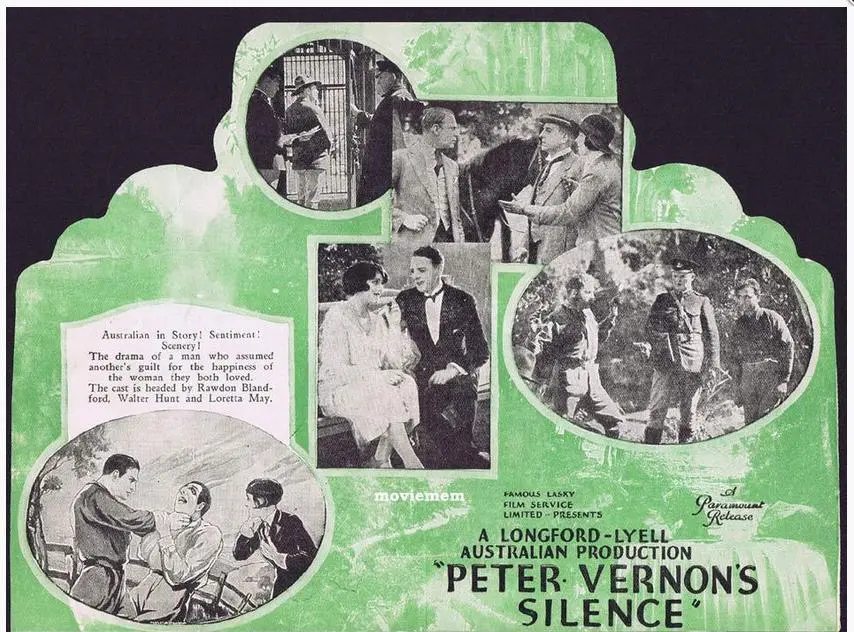
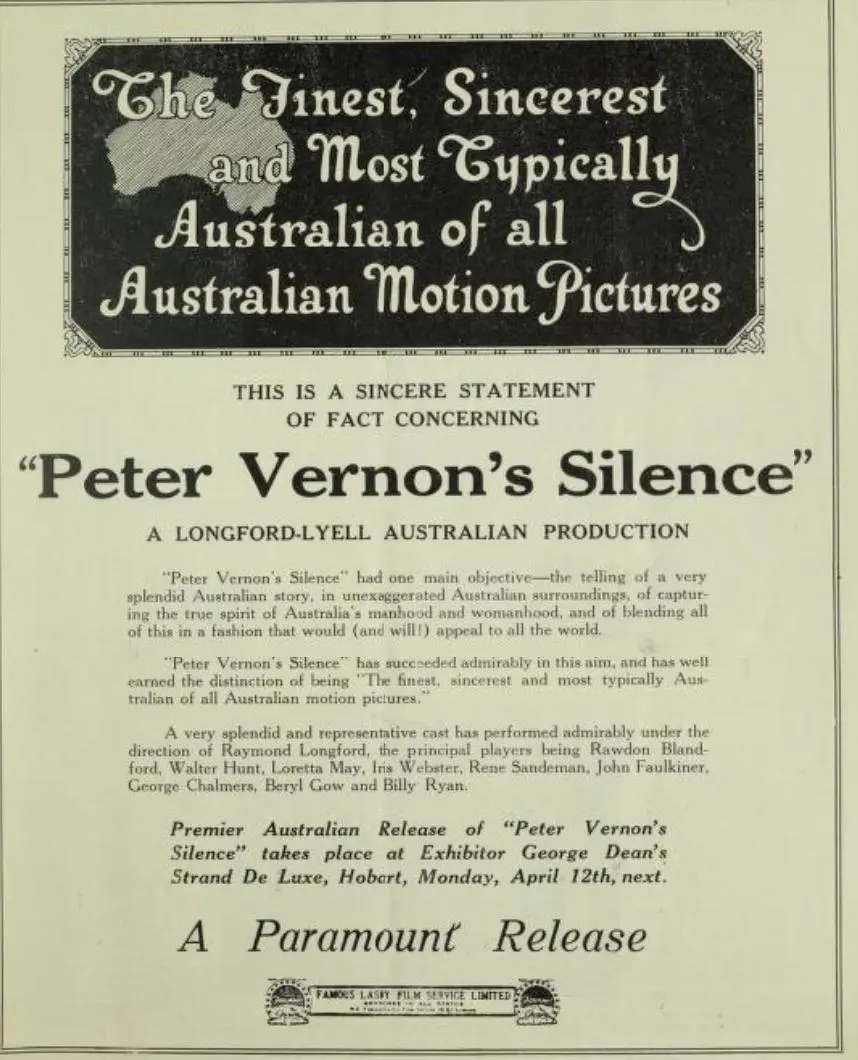
Is Peter Vernon's Silence a film worth unearthing from the annals of cinema history? Short answer: yes, but with significant caveats. This rare Australian silent drama, a product of the formidable creative partnership between Raymond Longford and Lottie Lyell, offers a fascinating glimpse into early filmmaking, making it a compelling watch for serious film historians and enthusiasts of the silent era.
However, for casual viewers accustomed to modern narrative pacing and dialogue, its deliberate rhythm and reliance on visual storytelling might prove a significant hurdle. This film is for those who appreciate the foundational artistry of cinema, who can find beauty in the expressive power of a glance or the dramatic weight of an intertitle. It is decidedly not for audiences seeking fast-paced action, complex soundscapes, or contemporary character development.
"Peter Vernon's Silence" presents a narrative that, while ostensibly simple, delves into the complex psychological landscape of its protagonist. Peter Vernon, portrayed with a brooding intensity by Rawdon Blandford, is a man haunted. His 'silence' is not a literal muteness, but a metaphor for a deep-seated secret, a past indiscretion or a hidden identity that he guards with an almost religious fervor. This burden manifests as a profound reticence, isolating him from the bustling, gossipy community he inhabits.
His carefully constructed world begins to fray with the arrival of Loretta May, whose vibrant presence offers a glimpse of potential happiness, forcing Vernon to confront the very walls he has built around himself. Simultaneously, the menacing figure of John Faulkner, a local landowner with a penchant for coercion, begins to circle, hinting at knowledge of Vernon's past and threatening to expose him. The film builds its tension through these intertwined threads: the burgeoning romance, the looming threat, and Vernon's internal battle between revelation and continued concealment.
The plot, though a classic melodrama in structure, transcends its genre limitations through the subtle, yet powerful, performances and the evocative direction. It’s a study in the human cost of secrets, and the arduous journey towards redemption or inevitable downfall.
This film works because of its unflinching commitment to visual storytelling, allowing the raw emotions of its characters to speak volumes without a single uttered word. The performances, particularly from Blandford and May, convey a depth that transcends the technical limitations of the era.
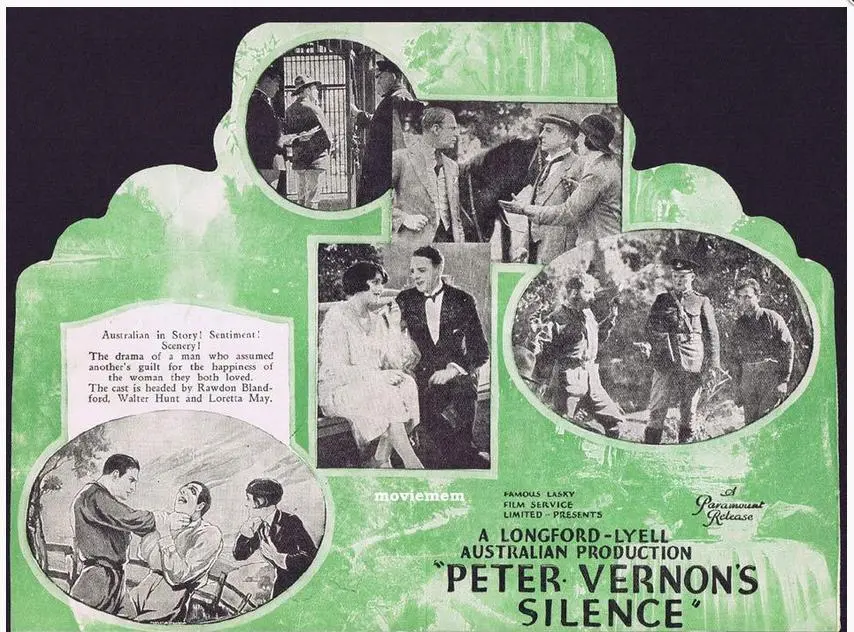
This film fails because its pacing can feel ponderous to a modern audience, with certain sequences stretching beyond their dramatic necessity. The reliance on intertitles, while necessary, occasionally breaks the immersive flow that the cinematography strives to achieve.
You should watch it if you are fascinated by the evolution of cinematic language, appreciate the artistry of silent acting, or have a particular interest in the foundational works of Australian cinema, especially those from the Longford-Lyell partnership.
"Peter Vernon's Silence" stands as a testament to the ambitious spirit of early Australian filmmaking, particularly the collaborative genius of Raymond Longford and Lottie Lyell. Longford, as director, displays a remarkable eye for composition, often framing his subjects against the vast, untamed Australian landscape, a stylistic choice that imbues the film with a unique sense of place and scale. This isn't just a backdrop; it's a character in itself, mirroring Vernon's internal desolation and the grand sweep of his emotional journey.
Lyell, credited as a writer and often an uncredited co-director and lead actress in many of their projects (though not in a primary acting role here, she undoubtedly shaped its narrative), brought a keen understanding of character psychology and dramatic pacing. Her influence is palpable in the film's nuanced exploration of Vernon's internal conflict and the emotional resonance of the supporting characters. It's a partnership that, while often overshadowed by Hollywood's Golden Age, laid crucial groundwork for a national cinema.
The film's exploration of themes like guilt, social ostracization, and the search for redemption places it firmly within the melodramatic traditions of the era. Yet, it manages to avoid becoming overtly preachy, instead allowing the visual narrative and the actors' expressions to carry the moral weight.
The performances in "Peter Vernon's Silence" are, without question, the film's beating heart. In the absence of spoken dialogue, actors were tasked with conveying complex emotions through gesture, facial expression, and body language – a skill that feels almost otherworldly today. Rawdon Blandford, as Peter Vernon, delivers a masterclass in this silent art. His eyes, often downcast or haunted, communicate a profound weariness, a soul burdened by its own secrets. There's a subtle tremor in his hands, a slight slump in his shoulders, that speaks volumes about his character's internal strife.
His scenes with Loretta May, who plays his love interest, are particularly poignant. May brings a youthful exuberance and warmth that contrasts beautifully with Blandford's brooding intensity. Her smile, when directed at Vernon, is a beacon of hope, making his guarded responses all the more heartbreaking. The chemistry between them is palpable, built not on witty banter but on longing gazes and hesitant touches, a testament to their skill.
Beryl Gow, Rene Sandeman, and Iris Webster, in their supporting roles, add layers of societal texture. Gow, perhaps as a more cynical or worldly figure, provides a counterpoint to May's innocence, while Sandeman and Webster embody the gossiping, judgmental village community. John Faulkner, as the antagonist, is suitably menacing, his sneering expressions and aggressive physicality perfectly capturing the villainy required of the era. Walter Hunt, in a smaller but memorable role, often provides moments of quiet wisdom or subtle comic relief, breaking the dramatic tension.
One could argue that the exaggerated theatricality often associated with silent film acting is, in fact, a more honest portrayal of raw emotion than many modern, understated performances. It forces the audience to truly 'read' the actor, an engagement that is rarely demanded today. This is a debatable point, but one that "Peter Vernon's Silence" certainly champions.
Raymond Longford’s direction is both ambitious and assured. He understands the power of the frame, utilizing wide shots to establish the desolate beauty of the Australian landscape and close-ups to emphasize the emotional turmoil etched on his actors' faces. There's a particular sequence where Vernon stands silhouetted against a vast, empty sky, a visual metaphor for his profound isolation, that is genuinely striking and remains with you long after the film concludes. This is a directorial choice that elevates the film beyond simple narrative.
The cinematography, while constrained by early 20th-century technology, is surprisingly sophisticated. The use of natural light, the careful composition of indoor scenes, and the dynamic movement of the camera (when employed) all contribute to a visually rich experience. There are moments of genuine artistry, such as a chase scene through rugged terrain, which, while not as frenetic as modern equivalents, conveys a sense of urgency and danger through clever editing and varied camera angles. It works. But it’s flawed.
Pacing, however, is where the film might test the patience of contemporary viewers. Silent films often embraced a more leisurely rhythm, allowing scenes to unfold slowly, letting emotions simmer. While this deliberate pace enhances the dramatic weight of Vernon's internal struggle, it can feel protracted in certain expositional sequences. The intertitles, though well-written by Lyell, occasionally disrupt the visual flow, pulling the viewer out of the moment to read text that could, perhaps, have been conveyed more elegantly through pure visual storytelling, a challenge inherent to the medium.
Beyond its melodrama, "Peter Vernon's Silence" explores universal themes that resonate even today. The burden of secrets, the corrosive nature of guilt, the longing for connection, and the courage required for self-acceptance are all woven into the fabric of the story. Vernon's 'silence' can be interpreted as a powerful commentary on societal expectations and the pressure to conform, or the fear of judgment that prevents individuals from living authentically.
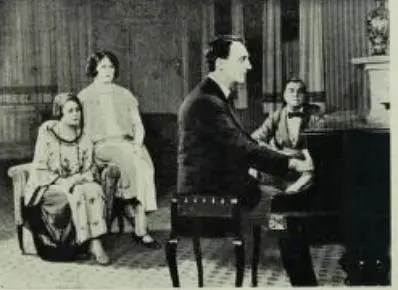
An unconventional observation about this film is its surprising foresight in depicting the subtle forms of social control. John Faulkner's character doesn't resort to overt violence initially; his power lies in his knowledge and his ability to manipulate reputations within a close-knit community. This precursor to psychological thrillers, where the threat is intellectual and social rather than purely physical, is remarkably modern for its time. It’s a tension that builds slowly, insidiously.
The film also provides a fascinating window into the social mores and gender roles of early 20th-century Australia, particularly through the contrasting portrayals of Loretta May's innocent charm and Beryl Gow's more experienced, perhaps jaded, persona. It hints at the limited choices available to women, and the societal pressures they faced, even as they navigated their personal desires.
When placed alongside other films of its era, "Peter Vernon's Silence" holds its own, particularly within the nascent Australian film industry. While it may not possess the grand scale of some American epics like D.W. Griffith's works, or the avant-garde experimentation seen in European cinema, it excels in its intimate character study and its authentic portrayal of local landscapes and social dynamics. It shares a thematic kinship with other Longford-Lyell collaborations such as The Sentimental Bloke (though more dramatic) or even earlier works like The Payment in its exploration of moral quandaries.
Its focus on a singular, tormented protagonist also draws parallels to films like The Exiles, which often depicted characters grappling with their past in remote settings. While not as internationally renowned as films from a few years later, such as F.W. Murnau's Nosferatu, its mastery of visual storytelling within its budgetary and technological constraints is commendable. It demonstrates that compelling drama doesn't always require lavish sets or revolutionary techniques, but rather a profound understanding of human nature and cinematic expression.
"Peter Vernon's Silence" is more than just a historical artifact; it is a compelling, if challenging, piece of cinematic art. Its power lies in its ability to communicate profound human emotion through the subtle ballet of silent performance and the evocative language of the camera. While it demands patience and a willingness to engage with a different mode of storytelling, the rewards are significant.
For those willing to step back in time and appreciate the foundational craftsmanship of cinema, this film offers a rich, emotional experience and an invaluable insight into the origins of Australian storytelling on screen. It’s not a film for everyone, but for its intended audience, it is an essential, deeply moving work that deserves to be seen and studied. It is a quiet triumph, speaking volumes without uttering a single word.
IMDb —
1935
Community
Log in to comment.