DbcultAccessing Vault...
Cult Review
Senior Film Conservator
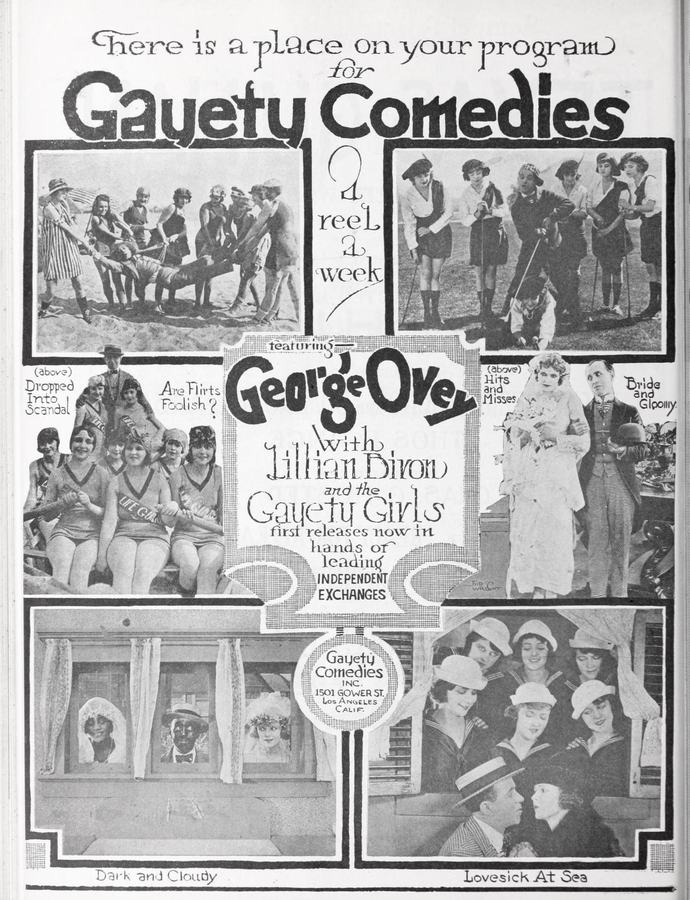
To witness Lovesick at Sea is to step into a time capsule where the grammar of cinema was still being written in the ink of physical exertion and celluloid sweat. George Ovey, often overshadowed by the pantheon of Chaplin, Keaton, and Lloyd, asserts a distinct comedic identity here that is both frantic and surprisingly nuanced. In this 1917 gem, the ocean is not merely a setting; it is a malevolent, oscillating character that demands a specific type of performance—one that Ovey delivers with a rubber-limbed brilliance. Unlike the structured romanticism found in Young Romance, Ovey’s approach to courtship is filtered through the lens of pure, unadulterated chaos.
The film operates on a delightful pun, intertwining the literal nausea of a rough voyage with the metaphorical vertigo of infatuation. As Jerry stumbles across the deck, his struggle to maintain a vertical posture becomes a metaphor for the common man’s struggle against the overwhelming forces of nature and society. The lexical diversity of his movements—the way he pivots, collapses, and recovers—suggests a deep understanding of the burlesque traditions that preceded the silver screen. While a film like Ivan the Terrible utilizes the frame to project monumental power, Lovesick at Sea uses it to capture the hilarious impotence of a man at the mercy of the tides.
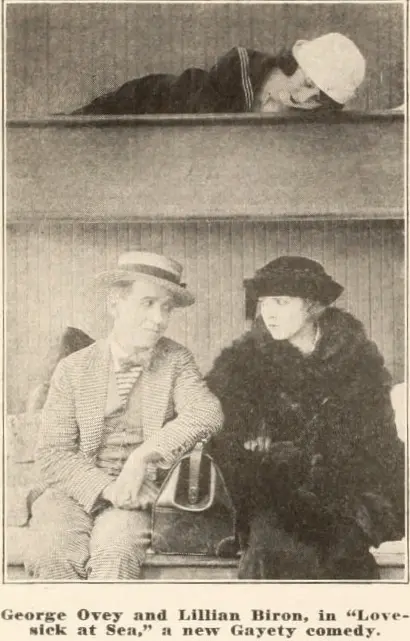
Lillian Biron provides the necessary emotional ballast to Ovey’s kinetic storm. Her performance is a masterclass in the 'straight-man' archetype, though to label her as such diminishes the subtle comedic timing she employs to elevate Jerry’s absurdity. In the silent era, the female lead often served as a mere trophy, yet Biron imbues her character with a sense of agency and amusement that feels remarkably modern. Her interactions with Ovey are characterized by a rhythmic push-and-pull, a social dance that mirrors the ship’s own movement. This dynamic is far removed from the dark, atmospheric dread found in The Eyes of the Mummy, proving that even within the confines of a short comedy, there is room for sophisticated character interplay.
The chemistry between the two leads is the engine that drives the film forward. When Jerry attempts to woo Biron’s character while simultaneously battling the urge to succumb to seasickness, the resulting tension is both pathetic and endearing. This is not the high-stakes moral drama of According to the Code, but rather a localized, intimate comedy of errors. The simplicity of the premise allows the audience to focus on the textures of the performance—the way a hat is tipped, the desperation in a wide-eyed stare, and the frantic scramble for a railing that isn’t there.
When placing Lovesick at Sea within the broader context of its contemporaries, its unique flavor becomes even more apparent. While Hearts or Diamonds? explored the thrill of the heist and the glitter of high society, Ovey’s work remains grounded in the visceral, messy reality of the human body. There is a certain honesty in his portrayal of physical discomfort that resonates across the century. The film lacks the existential weight of The End of the Tour, yet it possesses a frantic vitality that is just as compelling in its own right.
Furthermore, the technical execution of the maritime scenes deserves recognition. Filming on water in 1917 was a logistical nightmare, yet the cinematography manages to capture a sense of genuine peril and disorientation. The horizon line is rarely stable, forcing the viewer into a state of empathetic instability. This visual strategy is a far cry from the static, stage-like compositions of Matija Gubec. Instead, the camera in Lovesick at Sea is an active participant in the gag, often framing the action in a way that maximizes the impact of Jerry’s tumbles.
The pratfall is often dismissed as the lowest form of wit, but in the hands of an expert like George Ovey, it becomes a sophisticated tool of narrative expression. In Lovesick at Sea, every fall is a sentence, every stumble a punctuation mark. The way Jerry navigates the narrow corridors of the ship suggests a world that is closing in on him, a theme that echoes through the more somber A Strange Transgressor. However, here the claustrophobia is played for laughs, turning the ship into a giant, wooden puzzle box that Jerry is unable to solve.
The film also touches upon the class distinctions inherent in early 20th-century travel. Jerry’s status on the ship—whether as a stowaway or a lowly passenger—creates a friction with the more affluent voyagers. This social commentary is subtle, hidden beneath layers of slapstick, but it provides a necessary depth that prevents the film from becoming a mere series of disconnected jokes. It shares a certain DNA with All 'Fur' Her in its depiction of the lengths a man will go to for love and status, though the stakes here are decidedly more aquatic.
Why does a film like Lovesick at Sea matter today? In an era of digital perfection and over-rehearsed action, there is something profoundly refreshing about the raw, unpolished energy of 1917 comedy. The film captures a moment in time when the medium was still discovering its own power to make people laugh through pure visual storytelling. It lacks the complex plotting of Irrungen or the historical grandeur of Hans Faders Ære, but it possesses a purity of purpose that is rare in modern cinema.
The preservation of such films is vital for our understanding of the evolution of humor. To see Ovey’s face contort in a mixture of romantic longing and gastric distress is to see the human condition laid bare in its most ridiculous form. It is a reminder that, despite all our technological advancements, we are still the same fallible creatures who get dizzy on boats and tongue-tied around those we admire. The film’s brevity is its strength, delivering a concentrated dose of joy that lingers long after the final frame has flickered out. It is as culturally significant as The Life of St. Patrick, albeit for very different reasons—one documents a saint, the other documents the glorious, messy reality of being a fool.
The editing of Lovesick at Sea is surprisingly brisk for its time. The cuts are timed to the physical movements of the actors, creating a sense of internal rhythm that propels the viewer through the narrative. This is particularly evident in the scenes where Jerry is trying to hide his seasickness from Biron. The quick transitions between his forced smiles and his moments of private agony are edited with a precision that would make a modern editor proud. This rhythmic quality is something that was also explored in European works like Bal gospoden, though with a much darker tone.
The use of light and shadow on the open water also adds a layer of visual interest. The harsh sunlight reflecting off the waves creates a high-contrast environment that emphasizes the starkness of the characters' silhouettes. This visual clarity is essential for slapstick, as the audience needs to see every gesture and facial expression to fully appreciate the gag. It is a different kind of visual beauty than the stylized artifice of A Szeszély, but it is no less effective in creating a compelling world for the characters to inhabit.
Ultimately, Lovesick at Sea is a testament to the enduring power of physical comedy. George Ovey and Lillian Biron may not be household names today, but their work in this film remains as vibrant and funny as it was over a century ago. The film’s ability to find humor in discomfort and romance in chaos is a universal theme that transcends the boundaries of time and language. Whether Jerry is tripping over a coil of rope or staring wistfully at the horizon, he is a character we can all relate to—a man just trying to stay upright in a world that won’t stop moving.
As we look back on the vast history of cinema, from the epic scale of The Spurs of Sybil to the intimate character studies of the present, it is important to save a space for the 'Merry Jerrys' of the world. Lovesick at Sea is a reminder that sometimes, the most profound thing a film can do is make us laugh at our own instability. It is a small, perfectly formed piece of nautical nonsense that deserves its place in the sun—or rather, its place on the deck, perpetually rocking, perpetually funny, and eternally lovesick.

IMDb 7
1928
Community
Log in to comment.