DbcultAccessing Vault...
6.5/10
Senior Film Conservator
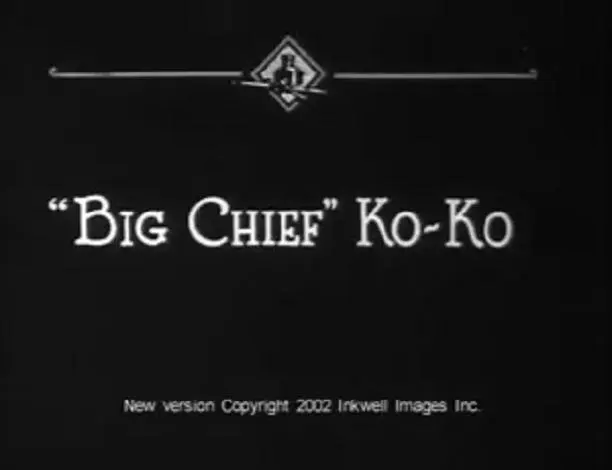
A definitive 6.5/10 rating for a film that redefined the boundaries of cult cinema. Big Chief Koko remains a cornerstone of transgressive art.
Is this 1924 short worth your time today? Short answer: Yes, but primarily as a historical curiosity for those obsessed with the evolution of visual effects and early 20th-century surrealism.
This film is for animation historians, fans of the Fleischer brothers' technical ingenuity, and those who enjoy the 'Out of the Inkwell' era of silent cinema. It is definitively not for those looking for a sensitive or nuanced portrayal of indigenous cultures, as it leans heavily into the broad, often uncomfortable caricatures of its time.
If you are looking for a quick, seven-minute masterclass in how early animators blended live-action with hand-drawn art, then yes, it is essential viewing. In a direct answer: it remains a fascinating example of the rotoscoping technique that Max Fleischer patented, showing a fluidity of movement that was decades ahead of its time. However, if you are seeking a narrative with emotional depth or modern sensibilities, you will find it lacking. It is a technical showcase first and a story second.
1) This film works because the physical comedy between the live-action Max Fleischer and the animated Ko-Ko creates a seamless 'meta' world that still feels magical.
2) This film fails because the antagonist's motivation is thin, serving only as a vehicle for repetitive chase gags that lack the punch of later Fleischer works.
3) You should watch it if you want to see the literal blueprints of character-driven animation before Disney dominated the industry.
Max Fleischer was never content with just drawing a character; he wanted to live with them. In Big Chief Koko, we see the studio itself become a character. The film opens with a real-world artist entering Max's office, a trope that anchors the cartoon in a tangible reality. This isn't just a movie; it’s an invitation into the artist's workspace. When Ko-Ko emerges from the inkwell, the transition is so smooth it puts modern CGI 'hybrid' films to shame.
The way Ko-Ko interacts with the physical objects in Max’s office—the pens, the paper, the furniture—creates a sense of wonder. It’s a trick the Fleischers used often, seen in other works like Mother Gooseland, but here it feels more personal. The ink isn't just a medium; it's a living substance. This is the core of the Fleischer appeal: the idea that the world of imagination is just a spill away from our own.
One specific moment stands out: when the 'cartoon Indian' character begins his revenge. The way the lines of the drawing begin to vibrate and move independently of the paper is a chillingly effective bit of early horror-lite. It reminds me of the psychological tension in The Secret of the Moor, where the environment itself feels hostile. In Big Chief Koko, the hostility comes from the ink itself.
We have to talk about rotoscoping. For the uninitiated, this was Max Fleischer’s invention where he traced over live-action footage of his brother, Dave Fleischer, in a clown suit. This is why Ko-Ko moves with a weight and grace that other 1920s characters, like those in Col. Heeza Liar, Detective, simply don't have. Ko-Ko doesn't just 'bounce'; he shifts his center of gravity like a human being.
In this specific short, the character of the 'Chief' is animated with a similar attention to detail, though with more exaggerated, rubbery limbs. The contrast between the grounded, rotoscoped Ko-Ko and the more 'cartoony' antagonist creates a visual friction that keeps the eye engaged. It’s a deliberate choice. Ko-Ko is our surrogate in the real world, while the Chief represents the untamed chaos of the drawing board.
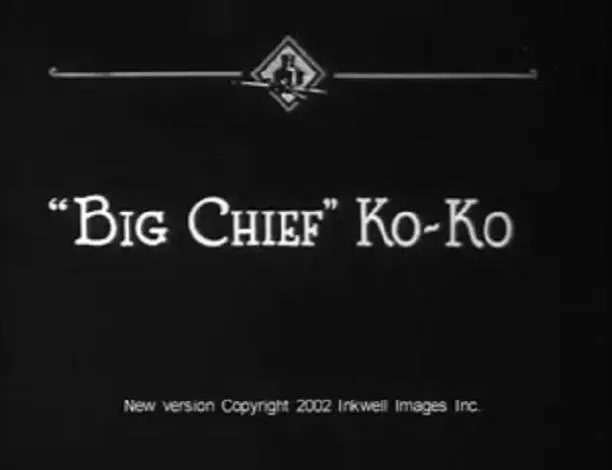
The pacing is breakneck. Unlike the slower, more theatrical pacing of films like Trilby (1923), Big Chief Koko moves with the logic of a dream. One scene ends, and the next begins with a literal splash of ink. It is aggressive. It is fast. It is occasionally overwhelming. But it never feels boring.
It would be dishonest to review this film without addressing the elephant in the room: the caricatures. By 1924 standards, this was standard comedy. By today’s standards, it is a relic of a time when indigenous identity was reduced to feathers and 'war whoops' for the amusement of a white audience. The 'Chief' is not a person; he is a collection of visual clichés. He is a prop.
However, there is a weird, almost accidental subtext here. The Chief is angry because his identity has been stolen by a clown. While the film plays this for laughs, there is a kernel of truth in the idea of the 'cartoon' being a poor substitute for the real thing. It’s a stretch to call it social commentary, but the tension between the artist’s creation and the artist’s subject is palpable. It lacks the sophistication of The Bruce Partington Plans, but it shares a certain obsession with the 'wronged' party seeking justice.
The dog, Fitz, serves as the audience’s anchor. He is frequently terrified, frequently confused, and always reactive. His presence softens the blow of the more aggressive gags. He is the 'everyman' in a world where ink can kill you. His design is simple, but his expressions are remarkably clear, proving that the Fleischers didn't need rotoscoping to convey emotion.
Pros:
The animation remains fluid and impressive even 100 years later. The meta-narrative of the 'inkwell' is a brilliant framing device. The physical comedy is expertly timed.
Cons:
The cultural caricatures are dated and offensive. The plot is essentially non-existent beyond the initial premise. The ending feels abrupt, even for a short film.
Is Big Chief Koko a masterpiece? No. It lacks the heart of later Fleischer productions like Betty Boop or Popeye. Is it a failure? Absolutely not. It is a daring, experimental piece of media that pushed the boundaries of what a camera could capture. It is a film that exists in the friction between two worlds: the real and the drawn.
Compared to other films of the era like The Bull's Eye or Meyer from Berlin, Big Chief Koko feels more modern because of its visual trickery. It doesn't rely on intertitles to tell its story; it relies on motion. That motion is its greatest strength and its primary reason for existing.
In the end, you should watch it once. Watch it to see the ink flow. Watch it to see the clown dance. Then, put it back in the inkwell and let it stay there. It is a ghost of a different era—technically brilliant, but culturally haunted. It works. But it’s flawed. It is a seven-minute fever dream that reminds us where we came from, even if we don't want to go back there.
IMDb 5.6
1933
Community
Log in to comment.