DbcultAccessing Vault...
6.4/10
Senior Film Conservator
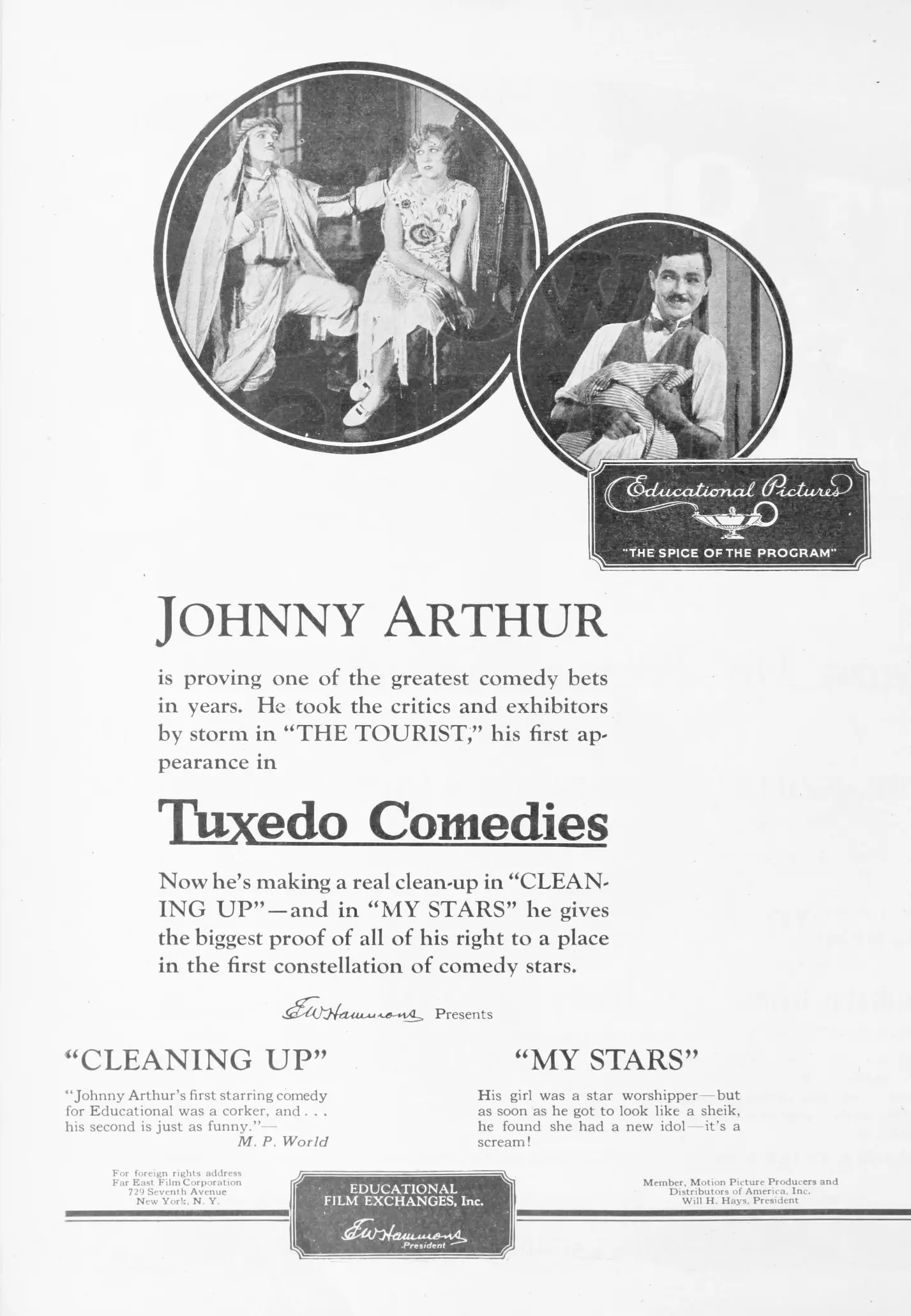
A definitive 6.4/10 rating for a film that redefined the boundaries of cult cinema. My Stars remains a cornerstone of transgressive art.
Is 'My Stars' worth your time in the modern era? Short answer: yes, if you can stomach the frantic, sometimes exhausting energy of 1920s physical comedy. This film is a must-watch for anyone interested in the history of celebrity culture or the technical precision of silent slapstick, but it will likely frustrate those who prefer the grounded, narrative-heavy pacing of contemporary dramedies.
This film works because it turns the camera back on the audience, mocking the very obsession with 'stars' that fueled the industry. This film fails because its middle act leans too heavily on repetitive chase sequences that lose their narrative punch. You should watch it if you want to see how Roscoe Arbuckle managed to maintain his comedic timing and directorial sharp-wittedness even while working in the professional shadows.
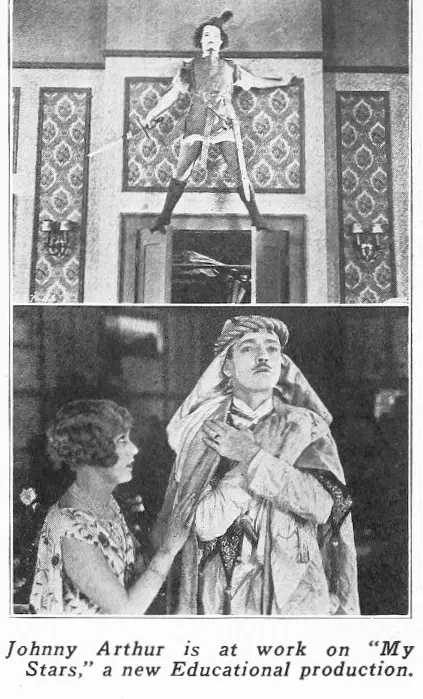
If you are looking for a quick, punchy example of how the silent era handled social satire, then the answer is a resounding yes. It is a fascinating artifact. The film doesn't just provide laughs; it provides a window into a world that was just beginning to understand the power of the movie star. Unlike Felix Goes West, which relies on the surreal logic of animation, 'My Stars' uses the physical vulnerability of its human lead to make its point. It is grounded in a very real kind of social anxiety.
However, if you are not a fan of the 'William Goodrich' style of direction—which is to say, Roscoe Arbuckle’s pseudonym-driven work—you might find the pacing a bit uneven. It lacks the cohesive emotional arc found in His Own Medicine. It is a collection of brilliant moments rather than a seamless narrative. It works. But it’s flawed.
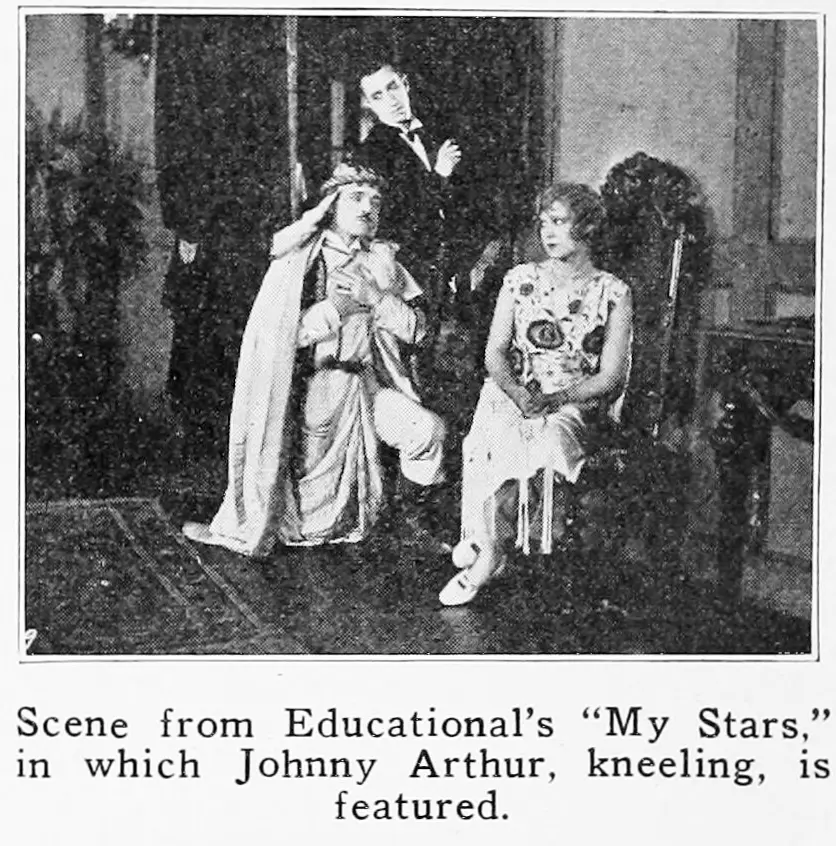
Roscoe 'Fatty' Arbuckle was a master of the frame, and even under the name William Goodrich, his fingerprints are all over this production. The way Johnny Arthur moves through the environment is choreographed with the precision of a ballet. Take, for example, the scene where Johnny attempts to mimic the heroic posturing of a Douglas Fairbanks type. The camera placement is intentional, emphasizing Johnny’s smallness against the 'larger-than-life' expectations of his girlfriend.
Arbuckle understood that comedy is often about the relationship between a man and his environment. In 'My Stars,' the environment is cluttered with the paraphernalia of movie stardom—posters, magazines, and the looming presence of the cinema itself. The direction here is sharper than what we see in many contemporary shorts like Cheap Kisses. There is a rhythmic quality to the gags that suggests a director who knew exactly how long a beat should last before the next disaster strikes.
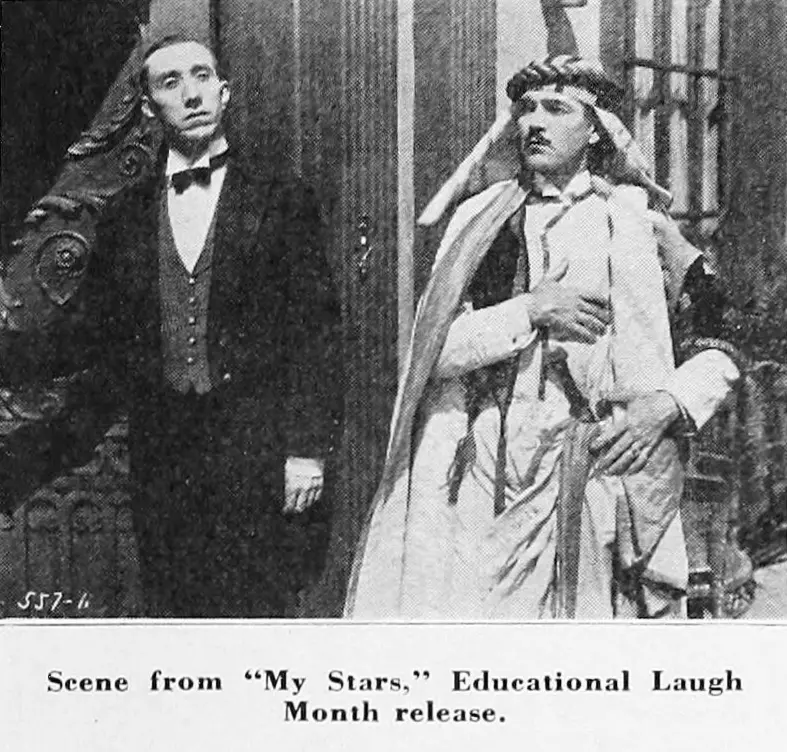
Johnny Arthur brings a specific kind of high-strung energy to the role that is distinct from the more stoic Buster Keaton or the overtly pathetic Charlie Chaplin. Arthur’s Johnny is a man of action, but his actions are almost always wrong. He is the quintessential 'try-hard.' This makes him both relatable and, at times, difficult to watch. His desperation is the engine of the film.
A standout moment occurs when he tries to impress Virginia Vance by recreating a high-stakes stunt. The look of sheer terror on Arthur’s face, masked by a thin veil of forced confidence, is a masterclass in silent acting. He isn't just playing a character; he is playing a man playing a character. This layers the performance in a way that feels surprisingly modern. It’s a meta-performance that predates the self-referential humor of modern sitcoms.
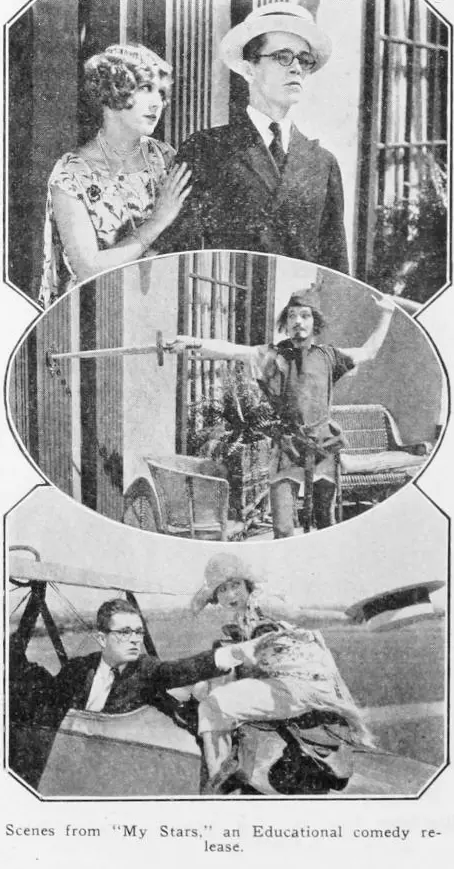
The cinematography in 'My Stars' is functional but effective. It doesn't have the experimental flair of Trapped in the Air, but it excels in clarity. In slapstick, if you can’t see the setup, the punchline fails. Arbuckle ensures that every prop is visible and every movement is tracked. The use of deep focus in the domestic scenes allows us to see the girl’s obsession with her movie star scrapbooks in the background while Johnny attempts to gain her attention in the foreground.
The pacing, however, is where the film shows its age. The first ten minutes are a whirlwind of character establishment and quick-fire jokes. But as we move into the second act, the film enters a 'chase mode' that feels a bit generic. Compared to the thematic depth of The Seekers, 'My Stars' occasionally prioritizes the gag over the growth. It is a common critique of the era, but it is felt more acutely here because the setup is so strong.
'My Stars' treats fame as a disruptive force in private life. It suggests that the 'stars' are not just people on a screen, but intruders in a relationship. The film handles this by making the movie stars the 'antagonists' without them ever actually appearing on screen. It is a clever, low-budget way to create conflict that resonates even today in the age of social media influencers.
"'My Stars' is a reminder that the 1920s were just as obsessed with the 'influencers' of their time as we are with ours, only their influencers wore greasepaint and did their own stunts."
'My Stars' is a fascinating, if slightly uneven, piece of silent cinema history. It succeeds as a showcase for Johnny Arthur’s physical range and Roscoe Arbuckle’s enduring talent as a director. While it may not reach the emotional heights of some contemporary features, its cynical take on celebrity worship gives it a bite that many of its peers lacked. It is a loud, physical, and occasionally brilliant comedy that deserves a spot in the conversation about the evolution of the genre. It is not a masterpiece, but it is a vital piece of the puzzle.
IMDb —
1916
Community
Log in to comment.