DbcultAccessing Vault...
Cult Review
Senior Film Conservator
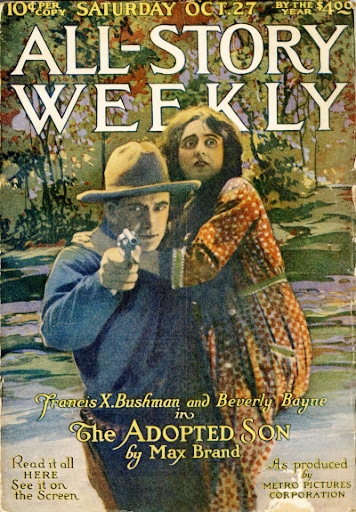
There is a peculiar, almost tactile grit to the celluloid of 1917, a year that saw the silent medium transition from its infancy into a more muscular, narratively complex adolescence. Among the luminaries of this era, few pairs commanded the screen with the magnetic gravitas of Francis X. Bushman and Beverly Bayne. In The Adopted Son, they are thrust into a landscape that feels less like a backdrop and more like a sentient antagonist: the unforgiving Appalachian heights. This isn't the sanitized pastoralism often found in contemporary works like Old Dutch; instead, it is a realm of ancestral ghosts and Winchester rifles, where the law of the land is written in the soil and the blood that soaks it.
The film introduces us to 'Two Gun Carter,' a man whose very moniker suggests a lineage of violence. Bushman portrays Carter not as a simple brawler, but as a wanderer seeking a soul-deep redemption he hasn't yet named. When he witnesses the murder of George Conover, the film pivots from a standard Western trope into a psychological study of displacement. The decision to carry the body back to the Conover homestead—a gesture of profound vulnerability in a territory defined by suspicion—sets the stage for a narrative of 'the stranger within.' Unlike the more urban social commentaries found in The Common Law, this film deals in the archetypal, the bone-deep realities of survival and honor.
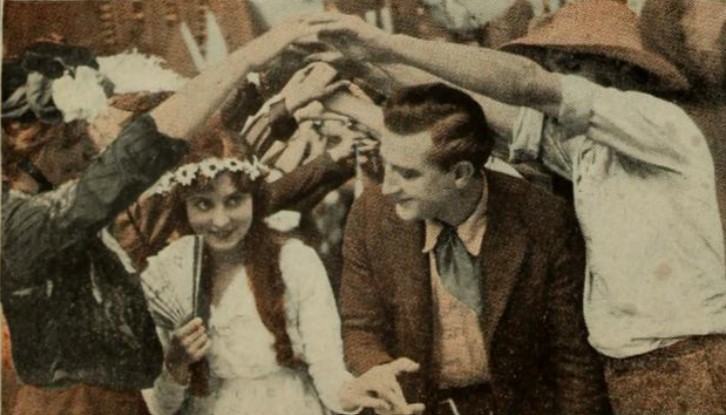
Written in part by the legendary Max Brand (Frederick Faust), the screenplay carries the hallmarks of high-stakes melodrama infused with a rugged philosophical inquiry. Brand, who would later become the king of the Western pulp, understands the economy of the duel. In The Adopted Son, the conflict between the McLanes and the Conovers is treated with a gravity that rivals the tragedies of antiquity. It’s a thematic cousin to films like The Mark of Cain, where the stain of one’s family history becomes a prison from which only extreme action can provide an exit.
The chemistry between Bushman and Bayne, the real-life 'King and Queen of the Movies,' provides the necessary emotional ballast to the film’s more violent sequences. Beverly Bayne’s Marian Conover is not merely a damsel in distress; she represents the possibility of a future untethered from the vendettas of the past. Her performance offers a softness that contrasts sharply with the jagged cinematography of the Tennessee wilderness. When Carter agrees to become the 'adopted son,' the film enters a fascinating space of artifice and reality—he is playing a role that becomes his truth, a theme explored with less nuance in The Pillory.
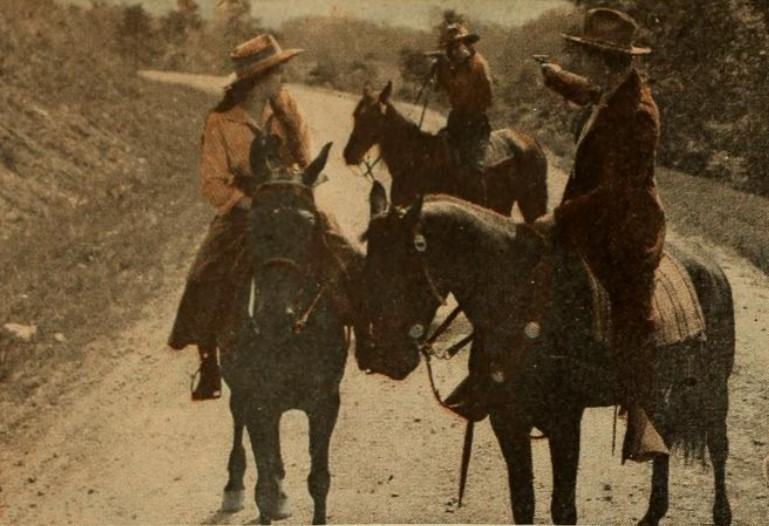
Visually, the film utilizes the natural topography with a sophistication that was rare for its time. The location shooting provides an authenticity that studio sets of the era could never replicate. The shadows cast by the deep ravines and the stark lighting of the mountain cabins create a chiaroscuro effect that mirrors the moral ambiguity of the characters. This isn't the icy desolation of The Chechako, but a humid, claustrophobic heat that seems to simmer beneath the surface of every encounter.
The climax is a masterclass in silent-era tension. The duel, a concept of honor that feels archaic even by 1917 standards, is subverted by the raw villainy of Henry McLane. The abduction of Marian triggers a kinetic chase sequence that culminates in the iconic image of a horse and rider plunging over a cliff. This moment of visceral spectacle serves as a catharsis for the audience, a literal breaking of the cycle. It echoes the high-octane energy seen in Captain Alvarez, though here the stakes feel more personal, more grounded in the dirt of the American South.
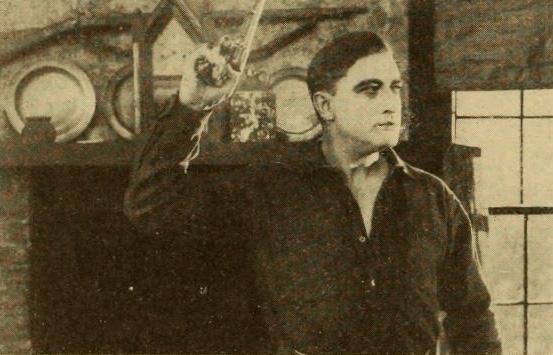
The final revelation—that Carter is himself a McLane by birth—is the stroke of genius that elevates the film from a standard revenge flick to a poignant irony. It suggests that the feud was always a form of self-mutilation. By becoming a Conover by choice and remaining a McLane by blood, Carter embodies the synthesis required for peace. This exploration of dual identity is a recurring motif in the era, appearing in various forms in films like Treason or the identity-swapping antics of The Honorable Algy, but here it is handled with a somber, almost religious intensity.
The resolution, where Carter demands an end to the hostilities to marry Marian, is a triumph of the individual over the collective madness of the clan. It’s a narrative arc that feels surprisingly modern, questioning the validity of inherited hatred. While contemporary audiences might find the pacing more deliberate than the frenetic energy of A Motorcycle Adventure, the emotional payoff is significantly more profound. The film doesn't just end; it settles, like dust after a long-awaited rain.
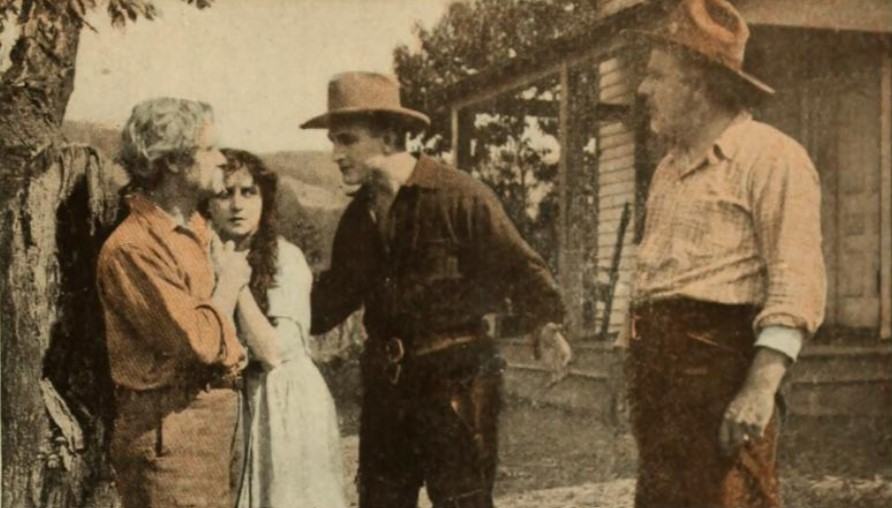
Viewing The Adopted Son today requires a recalibration of the senses. We must look past the occasional flicker of the film stock and see the ambition on display. This was a production that sought to capture the American spirit in all its contradictory glory—its capacity for extreme violence and its yearning for domestic peace. In the context of 1917 cinema, it stands alongside works like Sudden Riches or The Broken Promise as a testament to the power of storytelling before the advent of synchronized sound. It proves that the human face, when captured with the intensity of a Bushman or a Bayne, is a more eloquent instrument than any dialogue track.
Furthermore, the film’s depiction of the 'mountain man' archetype avoids many of the caricatures that would later plague the genre. There is a dignity in the grief of the Conover family that feels earned. Unlike the more sensationalized portrayals found in M'Liss, The Adopted Son treats its subjects with a sociological curiosity. It understands that the feud is not merely a plot device but a cultural prison. Even when compared to the raw physicality of World's Heavyweight Championship Between Tommy Burns and Jack Johnson, the cinematic struggle here feels equally visceral, albeit in a spiritual sense.
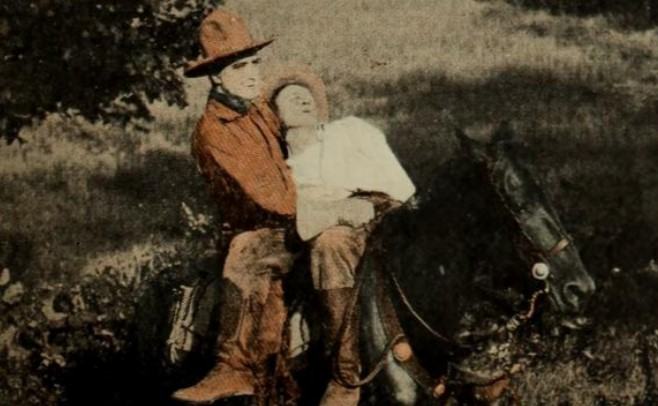
Ultimately, The Adopted Son remains a vital piece of film history. It is a bridge between the simplistic morality plays of the early 1910s and the sophisticated dramas of the 1920s. It captures a moment in time when the American Western was finding its soul in the mountains rather than the plains. For those willing to immerse themselves in its silent rhythms, it offers a reward as rich as the Tennessee soil it depicts: a story of love, blood, and the transformative power of a name. It is a cinematic experience that, much like the protagonist himself, demands to be adopted into the canon of great American storytelling, far surpassing the more ephemeral charms of Mary Moreland or the simplistic conflicts of Leben heisst kämpfen.
As the screen fades to black, the image of the reunited lovers stands as a beacon of hope against the dark history of the McLanes and Conovers. It is a reminder that while we are born into stories we did not write, we possess the ultimate authority to choose the ending. In the annals of 1917 cinema, few films achieve such a resonant and lasting harmony.
IMDb —
1917
Community
Log in to comment.