DbcultAccessing Vault...
Cult Review
Senior Film Conservator
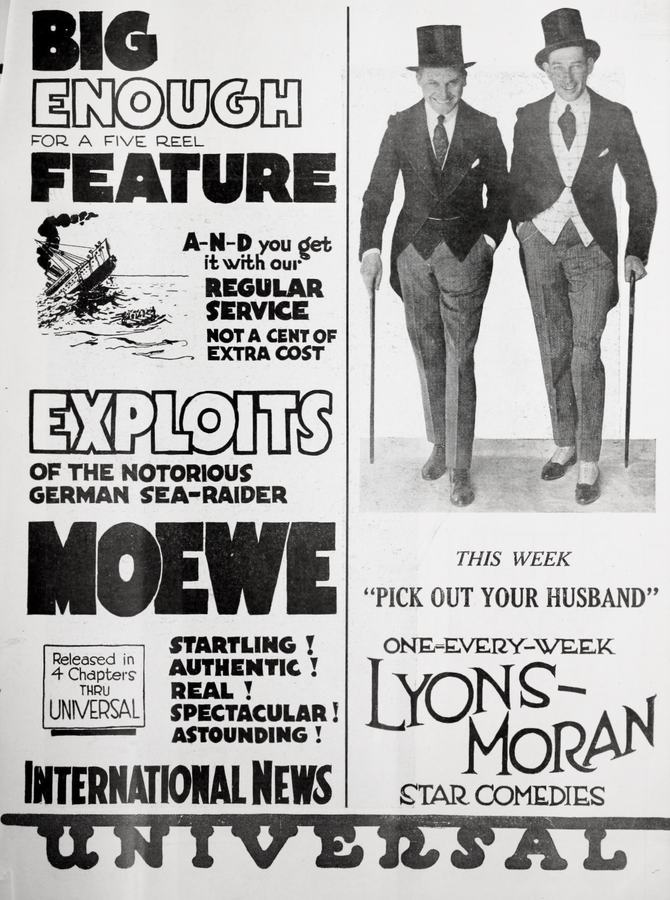
The year 1918 remains a pivotal nexus in the evolution of cinematic language, a time when the medium was shedding its nickelodeon skin and embracing the complexities of feature-length storytelling and sophisticated short-form narratives. Amidst this transition, 'Pick Out Your Husband' emerges not merely as a relic of the silent era, but as a vibrant testament to the comedic synchronicity of Eddie Lyons and Lee Moran. To watch this film today is to witness a masterclass in physical geometry and the rhythmic pacing of farce. Unlike the heavy emotional gravity found in contemporary dramas like Anna Karenina, Lyons and Moran opt for a levity that belies a sharp, satirical edge regarding the commodification of marriage.
The narrative engine of 'Pick Out Your Husband' is fueled by a relentless momentum. It eschews the contemplative pacing seen in In the Prime of Life, favoring instead a cascading series of events that challenge the protagonist's sanity. The film’s title serves as both an invitation and a warning, framing the act of choosing a spouse as a precarious game of chance. The screenplay, penned by the lead actors themselves, reveals a profound understanding of their own screen personas—Lyons, the often-flustered straight man, and Moran, the more eccentric catalyst of chaos. Their collaboration here is as tight as any gear in a Swiss watch, ensuring that no frame is wasted and no movement is without purpose.
While Lyons and Moran are the undeniable suns around which this comedic solar system revolves, the supporting cast provides the necessary gravitational pull to keep the story from drifting into pure abstraction. William Dyer brings a certain gravitas that contrasts sharply with the central duo’s levity, echoing the tonal shifts one might find in A Man and His Mate. Alma Bennett, meanwhile, navigates her role with a grace that anticipates the sophisticated heroines of the 1920s. Her presence is a reminder that even in the most exaggerated slapstick, there is a need for a human core that the audience can root for.
The inclusion of Grace Marvin and Charlotte Merriam rounds out a cast that understands the specific requirements of 1910s ensemble acting. There is a gestural vocabulary at play here—a tilt of the hat, a widening of the eyes, a frantic gesture toward a doorway—that communicates more than a page of dialogue ever could. In an era where films like The Lost Battalion were capturing the harrowing realities of global conflict, 'Pick Out Your Husband' offered a necessary domestic escapism, albeit one that subtly critiqued the very structures it sought to celebrate.
When situating 'Pick Out Your Husband' within the broader tapestry of its release year, the film’s unique identity becomes even more apparent. While The Retreat of the Germans focused on the macro-level shifts of history, Lyons and Moran were focused on the micro-level shifts of the household. This focus on the domestic sphere aligns it more closely with works like Father and the Boys, yet 'Pick Out Your Husband' possesses a frantic energy that feels more modern, more desperate, and ultimately more rewarding for a contemporary viewer.
Consider the tonal differences between this film and the tragic undertones of Lulu. Where 'Lulu' examines the destructive power of desire, 'Pick Out Your Husband' treats desire as a comedic inconvenience—a hurdle to be jumped over in the race toward a happy ending. Even when compared to the rugged individualism of A Yankee from the West or the regional charm of The Girl of the Sunny South, this film stands out for its urbanity. It is a product of the city, of the burgeoning middle class, and of a world that was becoming increasingly interconnected and increasingly absurd.
The direction—credited to the stars themselves—exhibits a surprising amount of visual sophistication. The use of depth within the frame allows for multiple layers of action, a technique that prevents the film from feeling static or stagey. This is a significant leap forward from the flatter compositions found in earlier works like Ivanhoe. The editing, too, is sharp, utilizing the jump-cut not as a mistake, but as a tool to emphasize the jarring nature of the comedic beats. This rhythmic editing is what gives the film its 'heartbeat,' a pulse that keeps the viewer engaged even during the more predictable plot points.
Furthermore, the set design reflects a fascination with the modern interior. The doors, hallways, and furniture are not just background elements; they are obstacles and allies in the comedic struggle. Much like the transformative spaces in The Cinderella Man, the environment in 'Pick Out Your Husband' is an extension of the characters' internal states. When the world becomes chaotic, the very house seems to conspire against them, creating a sense of claustrophobia that only heightens the eventual release of the resolution.
It is impossible to discuss 'Pick Out Your Husband' without acknowledging the shadow of the Great War. While the film avoids direct mention of the conflict, the frantic search for stability—for a 'husband'—can be read as a subconscious response to a world in flux. In a time of immense loss and uncertainty, the ability to 'pick' one's future was a powerful fantasy. This thematic thread connects it to A Question of Right, where moral choices are weighed against social survival.
The film also touches upon the changing roles of women. While the title suggests a female agency—the act of 'picking'—the execution often shows the male characters as the primary agents of action. However, the female characters in this film are far from passive observers. They are the gatekeepers of the social order, the ones whose approval must be won. This subtle power dynamic is reminiscent of the tensions found in Maria Pavlowna, albeit handled with a much lighter touch. The film toys with the idea of female independence while ultimately retreating into the safety of the status quo, a common trait of the era's commercial cinema.
As a part of the Universal 'Star Comedy' series, 'Pick Out Your Husband' was designed for mass consumption, yet it possesses an artisanal quality that many of its contemporaries lacked. The chemistry between Lyons and Moran was a valuable commodity, one that Universal exploited to great success. This film serves as a prime example of why they were so beloved; they didn't just perform jokes, they lived within a comedic logic that was entirely their own. This brand of humor is distinct from the more slapstick-heavy productions of the time, such as Oh, Girls!, which relied more on spectacle than character interaction.
The longevity of 'Pick Out Your Husband' in the minds of silent film enthusiasts is due to its sheer exuberant energy. It is a film that refuses to sit still, much like the restless society it was made for. It captures a moment in time when the world was poised between the Victorian past and the jazz-age future, and it does so with a wink and a smile. Even when compared to more somber fare like The Right Direction, the film's commitment to joy feels like a radical act.
In the final analysis, 'Pick Out Your Husband' is a vital piece of the 1918 cinematic puzzle. It showcases the brilliance of its creators, the talent of its ensemble, and the technical ingenuity of a studio system in its infancy. It is a film that rewards close viewing, revealing layers of physical comedy and social satire that are as relevant today as they were over a century ago. The interplay of light and shadow, the precision of the physical gags, and the underlying warmth of the performances all contribute to a work that is much more than the sum of its parts.
For the modern cinephile, this film is a window into a vanished world, yet the emotions it evokes—frustration, desire, embarrassment, and relief—are universal. It stands as a reminder that while technology and social norms may change, the fundamental absurdity of the human condition remains constant. Whether viewed as a historical artifact or as a piece of pure entertainment, 'Pick Out Your Husband' remains a sparkling example of the power of silent comedy to transcend its era and speak to the timeless dance of human relationships.
Final Verdict:
An essential watch for anyone interested in the roots of the buddy-comedy genre and the evolution of domestic farce. Lyons and Moran are at the peak of their powers, delivering a film that is as structurally sound as it is hilariously volatile. A true highlight of 1918.
IMDb 6.5
1919
Community
Log in to comment.