DbcultAccessing Vault...
Cult Review
Senior Film Conservator
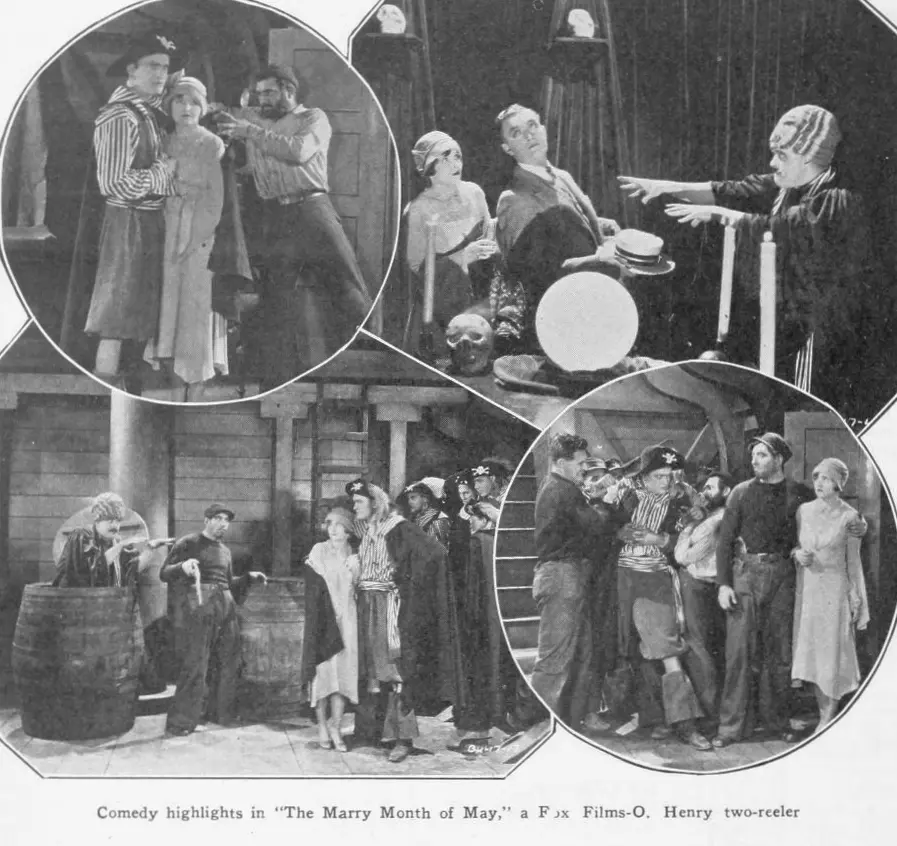
Should you seek out Marry Month of May in the vast ocean of classic cinema? Short answer: yes, but with significant caveats. This silent-era short film, a delightful if somewhat predictable farce, offers a fascinating glimpse into the comedic sensibilities of its time, particularly for those deeply invested in film history and the evolution of slapstick.
It is unequivocally for the dedicated silent film enthusiast, the academic, or anyone curious about the foundational elements of screen comedy. Conversely, it is decidedly not for viewers accustomed to modern narrative pacing, complex character arcs, or sophisticated humor; its charm lies in its simplicity and historical context, not its universal accessibility.
The year is 1920, and the world of cinema is still finding its voice, often through exaggerated gestures and broad humor. Marry Month of May, a silent short directed by Murray Roth and Jack Magee, from a story by the legendary O. Henry, is a prime example of this era's comedic output. It's a film that asks us to suspend disbelief not just about its plot, but about the very anxieties that drive its protagonist. Gladys, portrayed with an endearing, almost fragile timidity by Gladys McConnell, is a woman gripped by a singular, peculiar fear: that her sweetheart, a perfectly respectable young man, might be a direct descendant of the infamous pirate, Captain Kidd.
This isn't just a quirky character trait; it's the entire engine of the narrative. Her quest for ancestral purity, a notion that feels wonderfully archaic today, propels her into the clutches of a fraudulent spiritualist. This establishment, a staple of early 20th-century popular culture, serves as a clever narrative device to escalate the absurdity, hinting at the era's fascination with the occult and its easy exploitation. It’s a subtle nod, perhaps, to the gullibility of a public eager for reassurance.
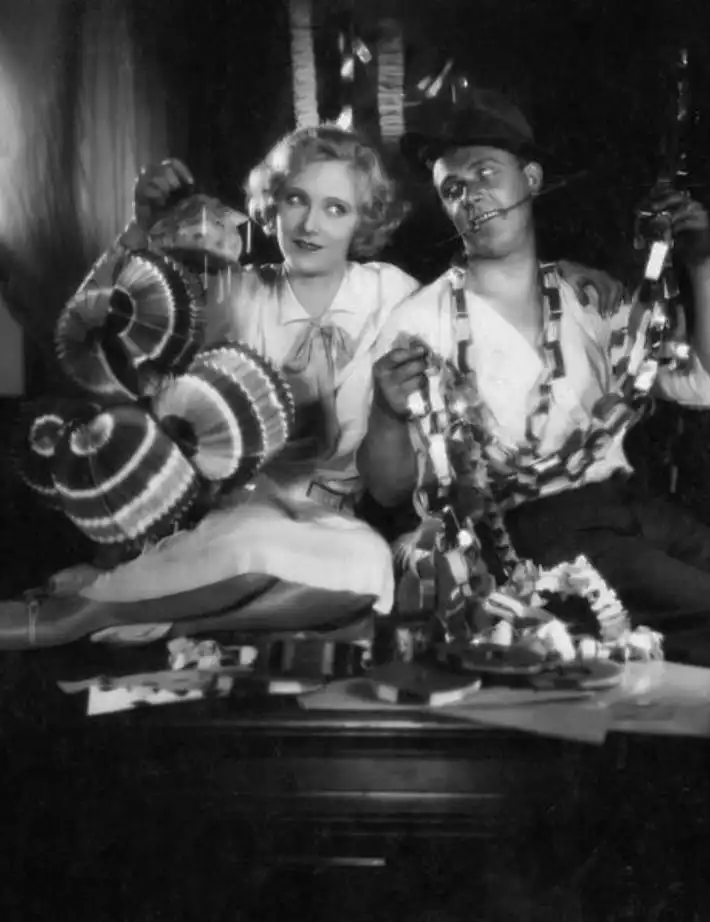
Meanwhile, her unwitting beau, played by Harold Goodwin, finds himself in a predicament that feels plucked straight from a vaudeville sketch. He becomes entangled with a group of waiters, inexplicably dressed as pirates, aboard a ship. This immediate, almost nonsensical setup is the film's strongest suit: it doesn't waste time on exposition but plunges headfirst into the farcical. The forced costume swap, a classic comedic trope, is executed with a brisk efficiency, setting the stage for the inevitable, hilarious misunderstanding.
To analyze a silent film like Marry Month of May requires a different critical lens. Performance here isn't about nuanced dialogue delivery but about exaggerated physicality and expressive pantomime. Gladys McConnell, as Gladys, embodies the 'timid girl' archetype with earnestness. Her wide-eyed expressions of anxiety and relief are clear, if a little one-note. She carries the emotional, albeit superficial, weight of the plot, making her fear of pirate lineage genuinely palpable within the film's comedic framework.
Harold Goodwin, on the other hand, is the quintessential accidental hero. His reactions to the unfolding chaos – the bewilderment, the frantic attempts to escape, and finally, the resignation to his pirate disguise – are the comedic backbone. There’s a particular moment where he first dons the pirate garb, a look of utter disbelief mixed with a fleeting sense of adventurous possibility crossing his face, that provides a genuine chuckle. It’s a testament to the silent performer’s art that such subtle shifts could be conveyed without a single spoken word.
The direction by Murray Roth and Jack Magee is straightforward, prioritizing clarity in visual storytelling over artistic flourishes. The camera is largely static, serving to capture the action rather than interpret it. This isn't a film aiming for cinematic grandeur like The Dragon Painter; it's a vehicle for gags. The strength lies in the staging of the physical comedy. The sequence aboard the ship, with its confined spaces and the frantic energy of the 'pirate' waiters, is choreographed with an understanding of comedic timing. Every near-miss and mistaken identity builds towards the climax, even if the individual gags aren't revolutionary.
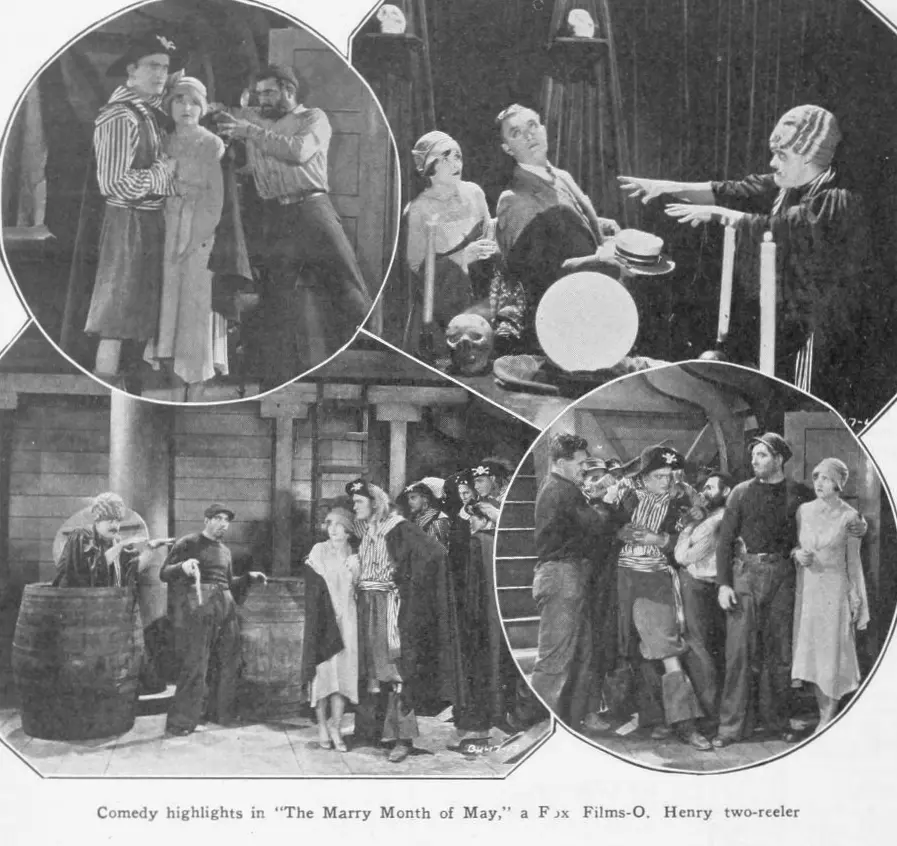
Pacing is critical in short comedies, and Marry Month of May largely succeeds here. It moves quickly, establishing the premise, escalating the misunderstanding, and delivering the payoff with efficient brevity. There's little wasted motion. The film understands its limitations and plays to its strengths, ensuring the audience is never bored, even if they aren't deeply invested. This briskness is a hallmark of early shorts, designed to entertain quickly before the next reel began, much like a modern TikTok video.
The inclusion of O. Henry as a writer is a fascinating detail. Known for his clever plot twists and surprise endings in short stories, one might expect a similar narrative intricacy in Marry Month of May. And indeed, the entire premise, hinging on a misunderstanding and a sudden reveal, has the flavor of an O. Henry tale, albeit one stripped down for visual slapstick. The irony of the sweetheart being forced into a pirate costume just as Gladys arrives to verify his non-pirate lineage is pure O. Henryesque situational irony.
However, the cinematic execution here is far simpler than his literary works. While the setup is clever, the resolution feels somewhat perfunctory, lacking the profound 'aha!' moment often associated with his stories. It's a testament to the challenges of translating literary wit into early cinematic farce. The film captures the spirit of his irony but perhaps not the depth. This isn't necessarily a flaw, given the film's purpose, but it's an interesting point of comparison for those familiar with his bibliography.
The film’s biggest strength is its unabashed commitment to a single, ridiculous premise. It doesn't try to be more than it is, and in that honesty, it finds its charm.
The cinematography of Marry Month of May is typical of its era: static shots, clear lighting, and a focus on capturing the action within the frame. There are no elaborate tracking shots or complex compositions that would define later cinematic periods. The visual gags are simple but effective, relying on the actors' movements and the immediate juxtaposition of costumes and settings. For instance, the contrast between the dimly lit, mysterious spiritualist's office and the bustling, brightly lit ship deck helps to delineate the film's two primary worlds of deception and chaos.
The overall tone is one of lighthearted, innocent farce. There’s no malice, no genuine threat, only a series of escalating comedic misunderstandings. Even the 'pirates' are clearly harmless, more akin to performers than actual threats. This contributes to the film’s enduring, if niche, appeal. It's a comfort watch for those who appreciate the simpler, less cynical humor of a bygone era. It reminds us that laughter doesn't always need to be complex or profound; sometimes, it just needs a girl afraid of pirates and a guy accidentally dressed as one.
While Marry Month of May isn't a groundbreaking work akin to Chaplin or Keaton's masterpieces, it sits comfortably within the tradition of popular silent shorts. Its reliance on mistaken identity and physical comedy places it alongside other lighthearted fare of the period. One might draw parallels to the early works of two-reel comedies that populated movie houses before the feature film era truly took hold. It lacks the sophisticated stunt work of a Buster Keaton or the pathos of a Charlie Chaplin, but it shares the same comedic DNA of broad appeal and visual storytelling.
It’s certainly more focused on situational comedy than the character-driven humor of films like The Foolish Virgin (though that’s a later film) or the adventure-comedy blend of something like The Yosemite Trail. This film is pure, unadulterated farce, designed for a quick laugh and then forgotten until, perhaps, a critic like myself unearths it a century later. And that's okay. Not every film needs to be a towering achievement; some are simply charming diversions.
IMDb 6.6
1928
Community
Log in to comment.