DbcultAccessing Vault...
Cult Review
Senior Film Conservator
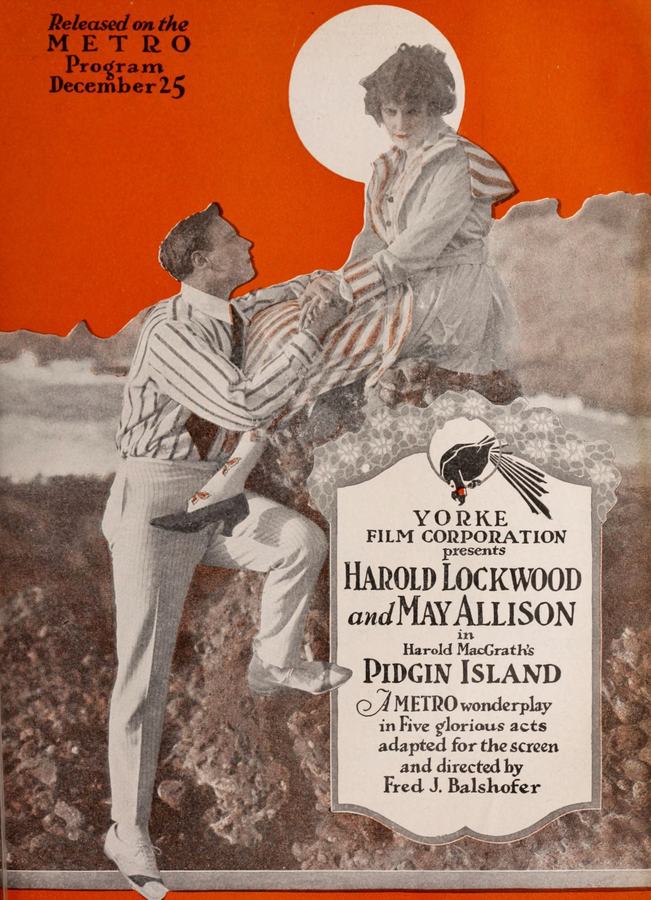
From the annals of early cinematic thrillers emerges Pidgin Island, a compelling narrative that plunges its audience into a complex web of espionage, high-stakes smuggling, and a romance fraught with suspicion. This isn't merely a tale of good versus evil, but a nuanced exploration of duty, deception, and the profound personal costs exacted by a life lived in shadows. The film, a product of its era, nevertheless resonates with timeless themes, presenting a dramatic spectacle that captivates with its intricate plot and the compelling performances of its leading players.
Our journey begins with John Cranford, an agent of the United States Customs service, a man whose professional acumen is matched only by his unwavering commitment to justice. Cranford's initial triumph—the unearthing of a colossal smuggling ring dealing in everything from illicit opium to precious diamonds—sets the stage for the film's central conflict. The public burning of confiscated opium, a stark warning against future transgressions, underscores the gravity of his mission. Yet, this early victory is tinged with the frustration of an incomplete conquest; while the foot soldiers of this criminal empire are apprehended, the enigmatic figure orchestrating it all, the "man higher up," remains tantalizingly out of reach. This elusive mastermind, Michael Smead, becomes the singular focus of Cranford's professional existence. The relentless pursuit of Smead forms the bedrock of the plot, pushing Cranford into unexpected territories, both geographical and emotional. This initial setup, reminiscent of the cat-and-mouse thrillers that would define the espionage genre for decades, immediately establishes a high-stakes atmosphere.
Seeking a brief respite from the rigors of his demanding profession, Cranford retreats to the serene expanse of the St. Lawrence River for a much-needed fishing trip. His plans for a quiet recuperation are, however, immediately upended. Expecting the companionship of his trusted guide, "Uncle Billy," Cranford finds the venerable old man's time already engaged by a captivating, yet profoundly mysterious, young woman. This is Diana Wynne, a figure who instantly commands attention not merely for her charm, but for her peculiar insistence on fishing exclusively in the vicinity of the remote Pidgin Island. Their introduction at Billy's boathouse ignites a spark, leading to frequent encounters that draw Cranford deeper into Diana's orbit. He finds himself inexorably falling in love, yet a nagging curiosity persists, fueled by Diana's enigmatic aura and her almost obsessive interest in the various launches traversing the waters around Pidgin Island. This delicate balance of budding romance and professional suspicion is a masterstroke of the screenplay, creating a palpable tension that underpins their every interaction. The film deftly uses the picturesque setting of the St. Lawrence to contrast with the underlying currents of deceit and danger, making the landscape itself a character in the unfolding drama.
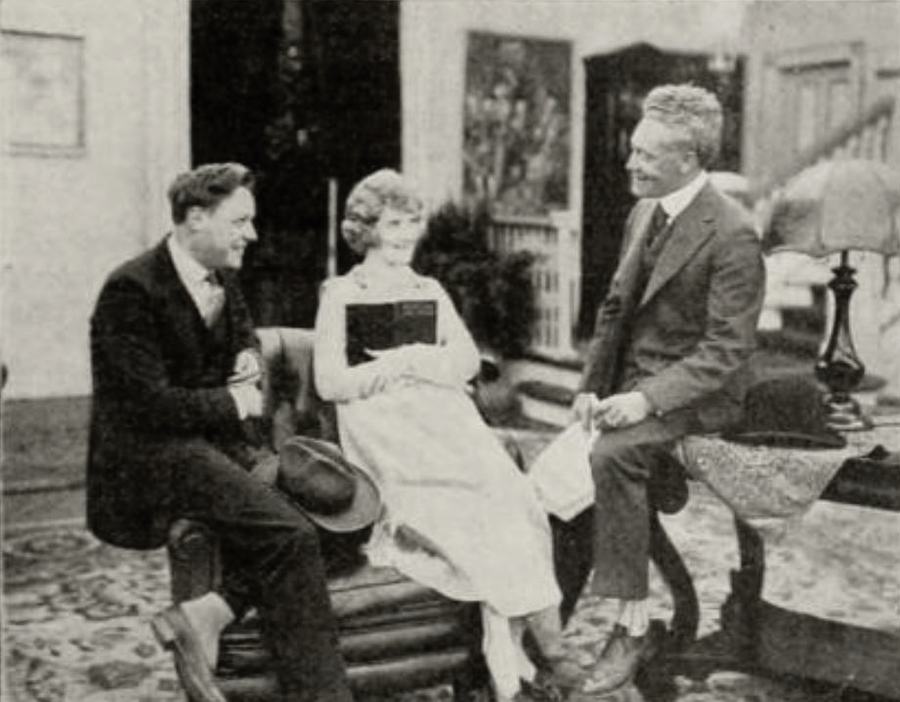
The tranquility of Cranford's "vacation" is abruptly shattered by the arrival of none other than Michael Smead, accompanied by his son, Donald, and two accomplices. Their purpose: to execute a significant smuggling operation along the Canadian border. Cranford's recognition of Smead is immediate and visceral; he had previously thwarted the criminal's attempt to smuggle a fortune in diamonds. Donald, a newcomer to this illicit game, remains an unknown quantity to Cranford, adding another layer of complexity to the unfolding scenario. What began as a personal quest for rest transforms into the most critical assignment of Cranford's career. He dedicates himself to shadowing Smead, meticulously observing his every move, the idyllic fishing trip now a cover for intense surveillance. This revelation dramatically escalates the stakes, transforming the romantic interlude into a perilous convergence of personal desire and professional imperative. The film brilliantly establishes how destiny, or perhaps the relentless pursuit of justice, can intertwine disparate elements of one's life into a singular, all-consuming mission.
The plot thickens with a crucial revelation: Diana Wynne is not merely a charming enigma, but a secret service agent herself, also tasked with monitoring Smead. This twist introduces a rich vein of dramatic irony and mounting tension. As Diana diligently observes Smead, her actions, viewed through Cranford's lens of suspicion, inadvertently paint her as an accomplice to the very criminals she seeks to expose. The two agents, each operating under a veil of secrecy, find themselves caught in a bewildering dance of mutual distrust. Cranford, struggling with his burgeoning feelings for Diana, is simultaneously tormented by the possibility that the woman he loves might be deeply entangled in the criminal underworld. This internal conflict, conveyed through the expressive acting prevalent in silent cinema, adds considerable psychological depth to the narrative. The film excels in portraying the isolating nature of espionage, where even potential allies can appear as adversaries. This aspect of the story, where protagonists are pitted against each other due to circumstances rather than inherent malice, is a compelling device, echoing the intricate plots found in contemporary thrillers like The Man Trap, which often explored themes of mistaken identity and deception.
The narrative hurtles towards its breathtaking climax during a furious storm on the St. Lawrence. Diana intercepts a cryptic telegram to Smead: "Pidgin tonight at 8 without fail." Recognizing the urgency, she implores Uncle Billy to take her to the island immediately, despite the raging tempest. Their departure, against Billy's better judgment, sets in motion a chain of events that will irrevocably alter their fates. Cranford, arriving moments later and learning of their perilous destination, is consumed by fear for Diana's safety. He compels young Lester, another guide, to pursue them into the heart of the storm. The scene is one of pure cinematic spectacle, with both boats battling colossal waves, a testament to the ambitious filmmaking of the era. Simultaneously, Smead's Canadian agents are en route via aeroplane, smuggling the illicit gems concealed within hollow fishing poles. However, the storm claims another victim as the plane is lost near Pidgin Lighthouse, scattering its precious cargo. Billy's boat is dashed to pieces on a reef, throwing him and Diana into the treacherous waters. They manage to cling to an isolated, wreckage-strewn rock, momentarily safe but vulnerable to the relentless waves. In a heart-stopping moment, Diana is swept away, prompting Cranford to heroically swim to her rescue. Lester, meanwhile, battles the elements to save Uncle Billy, and all find temporary refuge with the keeper of the light on Pidgin Reef. This sequence, a tour de force of dramatic action, expertly blends natural peril with the human drama of survival and sacrifice. The storm serves not only as a physical obstacle but as a metaphorical crucible, stripping away pretenses and forcing the characters to confront their true selves and their feelings for one another. It's a gripping display of early cinema's capacity for visceral storytelling, much like the intense dramatic moments found in films such as The Clemenceau Case, which also explored characters pushed to their limits by external forces.
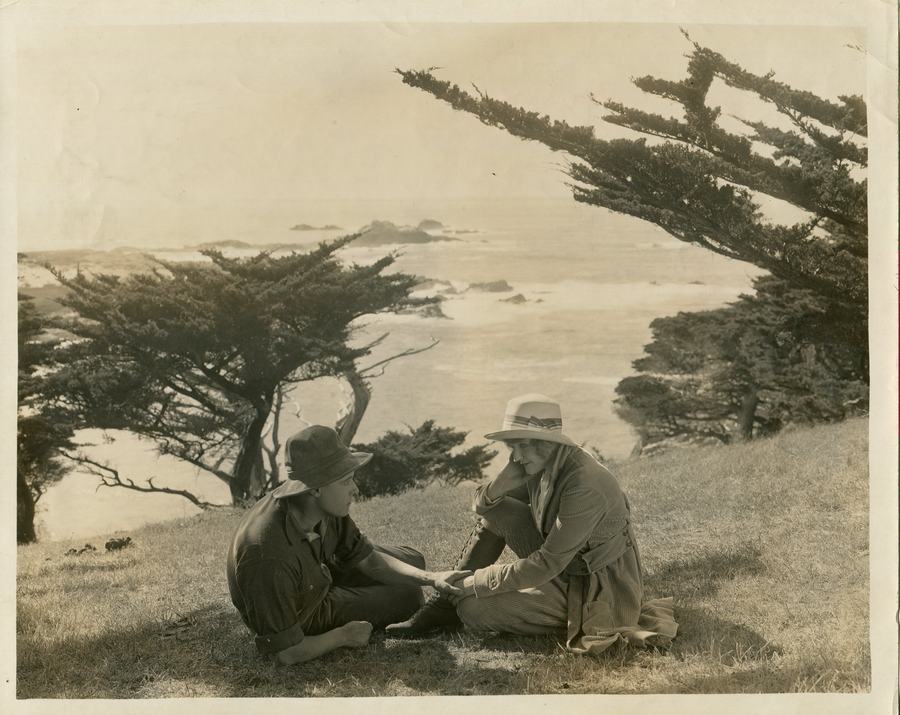
The dawn after the storm brings with it the clarity of truth. Cranford, sifting through Diana's waterlogged coat, discovers not only Smead's incriminating telegram but also a letter from the customs department, unequivocally establishing Diana's identity as a fellow government agent. Though Diana initially surprises him rifling through her belongings, Cranford quickly assuages her concerns by revealing his own official credentials. The air of suspicion that had choked their burgeoning romance finally dissipates, replaced by understanding and a shared purpose. The plot's final pieces fall into place when Uncle Billy, ever resourceful, discovers the ill-fated fishing rods on the island. Bringing them to the lighthouse, Cranford uncovers their hidden contents: a fortune in pearls. Armed with irrefutable evidence, he swiftly moves to the village, apprehending Smead, Donald, and their accomplices before they can even comprehend the extent of their exposure.
Yet, the personal drama is far from over. Cranford, emboldened by their shared ordeal and the revelation of their true identities, proposes to Diana. Her initial refusal is a poignant moment, steeped in tragic family history. She confesses her agonizing secret: she is the daughter of a criminal (Smead) and the sister of another (Donald). Her presence at Pidgin Island, her work as a secret agent, was driven not just by duty, but by a desperate, heartbreaking hope to prevent her brother from fully succumbing to their father's nefarious schemes. This revelation adds immense emotional weight to her character, transforming her from a mere mysterious love interest into a figure burdened by profound internal conflict and a valiant, albeit ultimately unsuccessful, attempt at familial intervention. Her sacrifice and moral struggle elevate the film beyond a simple crime thriller, giving it a profound human core. This complex depiction of family ties within a criminal context draws parallels to the moral quandaries seen in films like A Woman's Honor, where characters grapple with difficult choices influenced by loyalty and societal expectations.
Despite Diana's initial, heartbreaking refusal, Cranford's unwavering devotion shines through. He refuses to accept "no" as an answer, his sincerity and profound love ultimately prevailing over the shadows of her past. His steadfastness convinces Diana that her lineage does not define her worth, and that a future free from the taint of her family's crimes is possible with him. Her consent to become his wife signifies a triumph of love and personal redemption, a testament to the idea that one's past need not dictate one's future. This romantic resolution, hard-won through shared danger and honest revelation, provides a deeply satisfying emotional conclusion to a narrative rich with suspense and intrigue. The film, in its silent eloquence, manages to convey the depth of their connection and the promise of a new beginning, much like the emotionally resonant conclusions of other dramas of the period.
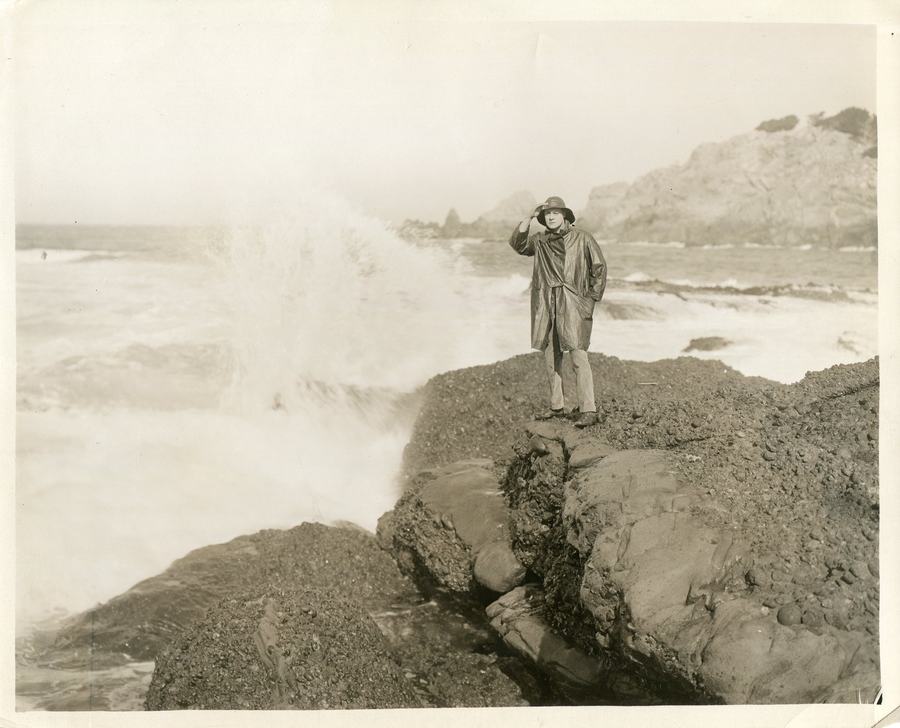
Pidgin Island, as a product of the silent film era, offers a fascinating glimpse into the storytelling techniques of the period. The absence of spoken dialogue necessitated a heightened reliance on visual cues, expressive acting, and well-crafted intertitles to convey plot, emotion, and character motivation. The cast, particularly Harold Lockwood as John Cranford and Lillian Hayward as Diana Wynne, would have had to master the art of conveying complex internal states through gesture, facial expression, and body language. Lockwood's portrayal of Cranford would have oscillated between the stoic, determined agent and the conflicted lover, his eyes betraying the struggle between duty and desire. Hayward's Diana, meanwhile, would have embodied mystery and vulnerability, her expressions carefully modulated to hint at her hidden agenda and inner turmoil. The dramatic storm sequence, for instance, would have been a masterclass in visual effects for its time, employing miniature work, clever editing, and dynamic cinematography to immerse the audience in the peril.
The film’s thematic richness is another notable aspect. Beyond the thrilling surface of espionage and crime, Pidgin Island delves into profound questions of identity, loyalty, and morality. Diana's struggle to reconcile her familial ties with her professional duty is particularly compelling, offering a nuanced perspective on the burdens of inherited legacy. Her attempt to steer her brother away from a life of crime underscores a powerful, universal theme of redemption and the enduring hope for familial salvation. This moral complexity sets it apart from more simplistic adventure narratives, aligning it with the deeper character studies found in melodramas such as Prunella or the intense psychological drama of Dämon und Mensch. The film also touches upon the idea of perception versus reality, as Cranford and Diana initially misinterpret each other's intentions, highlighting the inherent dangers and isolation of secret work. The St. Lawrence River setting, with its vastness and hidden coves, provides a perfect backdrop for a story steeped in secrets and clandestine operations, much like other adventure stories that utilized natural landscapes to heighten drama.
In comparison to its contemporaries, Pidgin Island stands as a robust example of the early thriller genre. While films like The Essanay-Chaplin Revue of 1916 offered comedic relief and You Can't Believe Everything explored social mores, Pidgin Island carved out its niche in suspense and romantic intrigue. Its blend of a large-scale criminal plot with intimate personal drama gives it a broad appeal. The film's structure, with its escalating stakes, dramatic climax, and satisfying resolution, demonstrates a sophisticated understanding of narrative pacing for the time. Even the concept of a female secret agent was progressive, showcasing a strong, capable female lead who is not merely a damsel in distress but an active participant in the dangerous game of espionage. This makes Diana a particularly engaging character, whose internal struggles add layers to the external conflict.
Ultimately, Pidgin Island is more than just a historical artifact; it is a vibrant piece of cinematic history that showcases the foundational elements of genres that continue to thrive today. Its ability to weave together a thrilling criminal investigation, a compelling love story, and profound thematic explorations within the constraints of silent film is commendable. The film serves as a testament to the power of visual storytelling and the timeless appeal of well-crafted narratives that explore the complexities of human nature under duress. For those who appreciate the intricacies of early cinema and the dramatic flair of classic thrillers, Pidgin Island offers a captivating journey into a world where duty and desire clash amidst the turbulent waters of the St. Lawrence, culminating in a resolution that is both just and profoundly romantic. It reminds us that even in the absence of spoken words, the human heart, and the pursuit of justice, can speak volumes.
IMDb —
1916
Community
Log in to comment.