DbcultAccessing Vault...
Cult Review
Senior Film Conservator
Ah, the silent era! A time when storytelling was an exquisite ballet of gesture, expression, and the rhythmic flicker of celluloid. It's a period often romanticized, sometimes misunderstood, but always brimming with a unique charm that contemporary cinema, for all its technological marvels, can rarely replicate. Today, we're diving deep into a particular gem from this bygone age: The City of Beautiful Nonsense. What a title, eh? It immediately conjures images of whimsical absurdity, of a world where logic takes a backseat to sentiment and grand, heartfelt gestures. And in many ways, the film lives up to this evocative moniker, offering a narrative that, while simple in its premise, resonates with a profound emotional sincerity that transcends the decades.
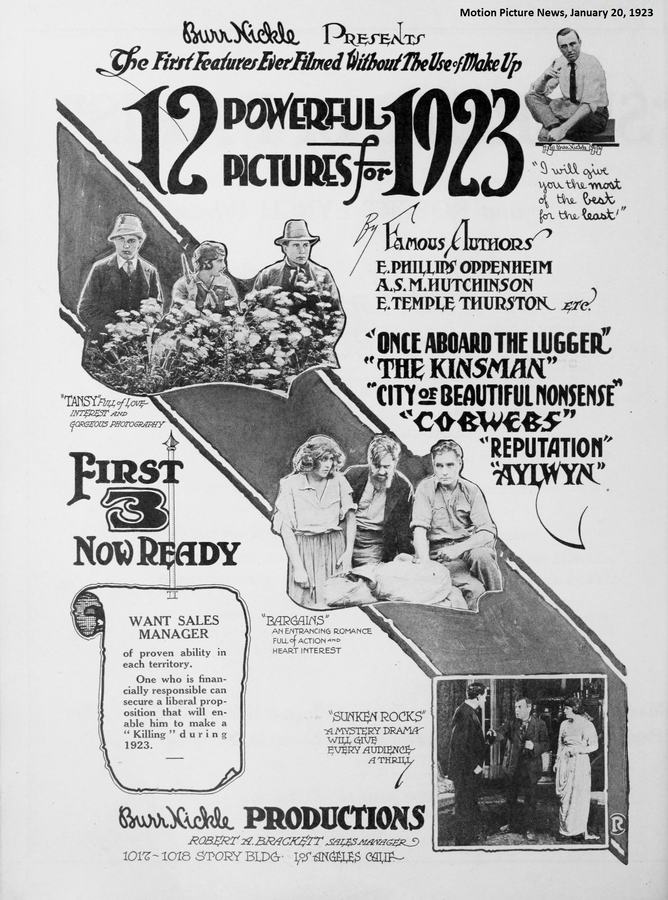
Directed by an uncredited hand, but penned by the astute E. Temple Thurston, this cinematic offering from the annals of silent film history brings to life a tale of love, sacrifice, and the lengths to which one might go to bring comfort to a cherished loved one. The plot, at its core, is disarmingly straightforward: a struggling author, facing the imminent loss of his ailing father, concocts an elaborate deception – a feigned marriage – to fulfill his father's dying wish. But as is often the case with such seemingly simple narratives, the true artistry lies not just in the 'what' but in the 'how' and the 'why.'
Let's unpack this 'beautiful nonsense,' shall we? Our protagonist, a man of letters perhaps more adept at crafting fictional worlds than navigating the harsh realities of his own, finds himself in a predicament that is both financially dire and emotionally crushing. His father, on the precipice of eternity, yearns for the simple solace of knowing his son will not face life's tribulations alone. This desire, a universal human yearning for continuity and security, sets the stage for a poignant, if ultimately unsustainable, charade. The film doesn't present this deception as a malicious act, but rather as an act of profound, if misguided, love – a testament to the desperate inventiveness born of a tender heart.
The casting here is crucial, and the ensemble assembled for The City of Beautiful Nonsense delivers with the earnestness typical of the era. Henry Edwards, in the role of the struggling author, embodies the conflicted spirit of a man torn between integrity and compassion. His facial expressions, the subtle shifts in his posture, convey a deep well of internal turmoil and affection. He's not merely playing a part; he's living the quiet desperation and eventual resolve of a son determined to give his father peace. One can almost feel the weight of his artistic aspirations clashing with the brutal practicalities of his existence.
Then there's Chrissie White, whose portrayal of the 'feigned' bride must navigate the delicate balance of conviction and complicity. Her character is not just a prop in this elaborate scheme; she becomes an essential emotional anchor, a silent partner in a truly unique conspiracy of kindness. Her performance, often relying on the subtle nuances of her gaze and the grace of her movements, speaks volumes about the silent sacrifices often made in the name of empathy. It's a role that could easily fall into caricature, yet White imbues it with a quiet dignity that makes her involvement feel genuinely motivated, rather than merely opportunistic.
And of course, the venerable Gwynne Herbert lends her considerable presence to the proceedings. While details of her specific role might be sparse in contemporary records, her inclusion in the cast list suggests a foundational performance, likely grounding the more dramatic elements with a sense of gravitas or perhaps even a touch of much-needed levity. Silent film acting, often maligned for its perceived over-the-top nature, was in fact a highly stylized art form, requiring actors to convey complex emotions without the aid of dialogue. Each gesture, each widening of the eye, each subtle turn of the head, had to communicate a universe of meaning. The ensemble, including James Lindsay, Henry Vibart, Stephen Ewart, Douglas Munro, and Teddy Taylor, contributes to the creation of a believable world, populated by characters who, despite the theatricality inherent in silent cinema, feel remarkably human.
What makes The City of Beautiful Nonsense particularly compelling is its exploration of thematic dualities. It's a film about illusion versus reality, about the sacrifices we make for those we love, and about the sometimes-fragile boundary between truth and a comforting lie. The 'nonsense' isn't truly nonsensical; it's a desperate, beautiful act of compassion. This theme of benevolent deception can be seen echoing, albeit in vastly different contexts, in other films of the era. While not directly comparable in plot, the emotional manipulation and societal pressures at play in something like The Climbers or the morally ambiguous choices faced by characters in The Prison Without Walls share a common thread of characters navigating complex ethical landscapes. However, The City of Beautiful Nonsense distinguishes itself by rooting its central deceit in a purely altruistic, if ultimately unsustainable, motive.
The cinematic language of the silent era, characterized by its reliance on intertitles, exaggerated expressions, and often theatrical blocking, is on full display here. Yet, within these conventions, there's a delicate artistry. The pacing, though perhaps slower than modern audiences are accustomed to, allows for a deeper immersion into the characters' emotional states. The frames are often composed with a painterly eye, utilizing available light and set design to evoke a particular mood or atmosphere. One can imagine the subtle shifts in light conveying the passage of time, or the claustrophobia of the author's cramped quarters emphasizing his financial struggles.
It's fascinating to consider how films like The City of Beautiful Nonsense existed alongside vastly different genres during their heyday. While our author is crafting a domestic illusion, audiences were also thrilled by the jungle adventures of Tarzan of the Apes or the dramatic societal critiques in Those Who Pay. This diversity speaks volumes about the burgeoning film industry and its rapid experimentation with narrative forms. The City of Beautiful Nonsense, with its intimate, character-driven drama, represents a vital strand of this early cinematic tapestry, proving that spectacle wasn't the only draw for audiences. Sometimes, the quietest stories resonated the most profoundly.
The film's exploration of poverty and social standing, though not overtly political, is subtly woven into the fabric of the story. The author's struggle isn't just a plot device; it's a reflection of the economic realities for many creative individuals. His inability to provide for his father's comfort, despite his intellectual gifts, highlights a societal tension that remains relevant even today. This undercurrent of social commentary, often implicit rather than explicit, is a hallmark of many silent dramas, differentiating them from pure escapism like Mickey, which leaned more heavily into comedic escapades, or the more direct social critiques found in films like Rags.
While The City of Beautiful Nonsense might not possess the same widespread recognition as some of its more spectacular contemporaries, its enduring appeal lies in its sincere portrayal of human emotion. It's a reminder that the fundamentals of compelling storytelling – relatable characters, genuine conflict, and heartfelt resolutions – are timeless. The film doesn't rely on grand pronouncements or explosive action; instead, it draws its power from the quiet dignity of its characters and the emotional weight of their predicament. It’s a testament to the power of human connection, even when that connection is built upon a delicate foundation of necessary falsehoods.
For modern viewers, approaching a silent film requires a shift in perspective, an openness to a different rhythm of storytelling. One must engage actively with the visual cues, interpret the intertitles, and allow the performances to unfold without the constant barrage of dialogue. But for those willing to make that leap, films like The City of Beautiful Nonsense offer a rich, rewarding experience. They are windows into a nascent art form, showcasing the raw talent of early filmmakers and performers who were, in essence, inventing the cinematic grammar as they went along. The subtle nuances of Chrissie White's expressions, the stoic resolve in Henry Edwards's eyes, and the grounding presence of Gwynne Herbert all contribute to a collective performance that transcends the limitations of the era's technology.
Comparing it to other domestic dramas of the time, such as Lydia Gilmore or even the more lighthearted premise of Please Help Emily, one notices a shared exploration of societal expectations and personal desires. However, The City of Beautiful Nonsense stands out for its unique blend of poignant melancholy and heartwarming sincerity. It avoids saccharine sentimentality by grounding its central deception in a very real, very human motivation: the desire to alleviate suffering and bring joy, however fleeting, to a loved one. The narrative arc, while seemingly simple, allows for a nuanced exploration of character, particularly the moral quandaries faced by the author.
In conclusion, The City of Beautiful Nonsense is more than just a historical curiosity; it's a tender, thoughtful piece of early cinema that speaks to universal themes of family, love, and the often-complex nature of truth. It's a film that asks us to consider the ethical boundaries of compassion and the lengths to which we might go to protect those we cherish. The performances, while adhering to the stylistic conventions of the silent era, manage to convey a deep well of emotion, drawing the viewer into the characters' lives with remarkable efficacy. E. Temple Thurston's story, brought to life by a dedicated cast, serves as a poignant reminder of the power of narrative, even when that narrative is, by design, a carefully constructed illusion.
It’s a film that, despite its age, feels remarkably fresh in its emotional core. It doesn't rely on cheap tricks or convoluted plot twists; instead, it trusts in the inherent drama of its premise and the expressive capabilities of its actors. For anyone with an appreciation for cinematic history, or simply a yearning for a story told with genuine heart, The City of Beautiful Nonsense is a journey well worth taking. It's a quiet triumph, a testament to the enduring power of human connection, and a beautiful, if fleeting, piece of cinematic art that continues to resonate with its understated charm. It may be 'nonsense' in its premise, but its emotional impact is anything but.
IMDb 6.6
1926
Community
Log in to comment.