DbcultAccessing Vault...
Cult Review
Senior Film Conservator
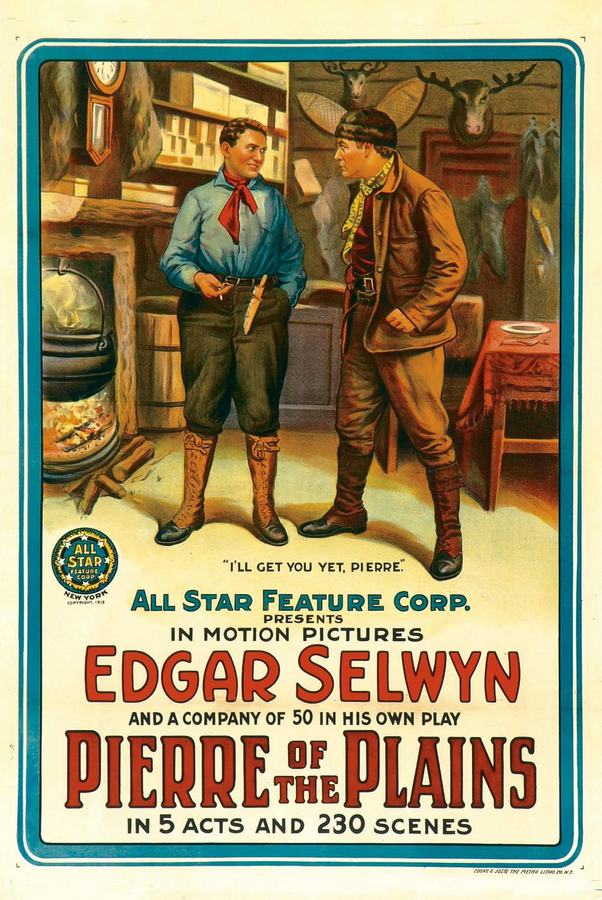
There is a moment, roughly halfway through Pierre of the Plains, when the camera simply breathes: pine needles quiver, breath crystallizes, and the heroine’s wool cloak absorbs the horizon’s whole palette of bruised blues. In that hush you sense the film’s true pulse—an operatic lament for freedom masquerading as a Northwest potboiler. Director Lawrence B. McGill, generally pigeonholed as a contract journeyman, here conducts elemental forces like a man who has stared long into the taiga and come away half-mad, half-enlightened.
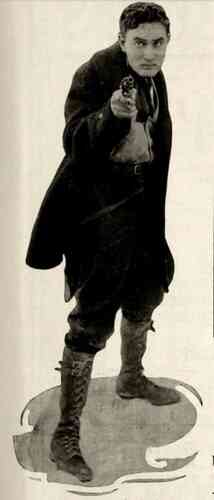
The storyline, stripped to studs, could be a nickel-western: Mountie pursues outlaw, girl oscillates between them, fate intervenes. Yet the screenplay—credited to Edgar Selwyn, Benjamin S. Kutler and dialogue doctor Gilbert Parker—curls those familiar rails into Möbius strips. Every triangle point carries a secret fracture. Tom Redding’s polished boots echo empire; Jen Galbraith’s gaze carries the self-disgust of someone who once believed in manifest destiny and now only believes in drafty doorways; Pierre’s swaggering atheism is armor plating over a crucified idealist.
When Pierre pours laudanum into Tom’s coffee, it’s less a sabotage than a mercy killing of institutional certainty. The subsequent relay of the dispatch by Jen herself reframes the myth of the righteous colonial courier: the woman who was supposed to stay by the hearth becomes the hinge on which jurisdiction swings. Once Val is clapped in irons, the film mutates from courtship roundelay to existential jailbreak, anticipating later escape-noirs where the prison is more metaphysical than granite.
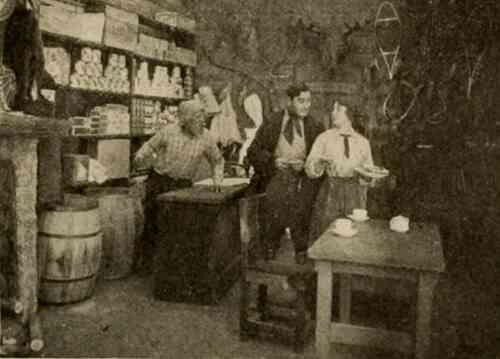
Dorothy Dalton’s Jen exudes flannel practicality one instant and incandescent yearning the next; watch how her shoulders climb toward her ears whenever duty tightens its corset. Opposite her, Edgar Selwyn (doubling as co-writer and Pierre) channels a secular devilry—half Robert Service vagabond, half Iago—yet lets slip tremors of self-loathing, particularly in the confession scene with Father Coraine, where his voice drops to a whisky rasp: “If hell is a place on earth, mon père, then I’ve already built its chapel.”
William Conklin’s Sergeant Tom risks staleness—he is, after all, the lawful foil—but Conklin injects micro-beats of doubt: a blink held half a second too long, a thumb rubbing a brass button as though testing its moral weight. Even minor cards in the deck, like Joseph Rider’s doomed Ojibwe lover, etch indelible silhouettes; his single unbroken shot declaration of love, spoken in Ojibwe then repeated in halting English, is the film’s most wrenching plea for polyglot understanding.
Cinematographer Riley Hatch treats whiteness not as blank negative space but as an active choir. Blizzard sequences were shot day-for-night through cyan filters, yielding pewter skies that smear the ethical spectrum: no pure heroes, only frost-bitten grays. Interiors swing umber and burnt orange, the tavern lanterns daubing characters in hellfire glow long before any crime is committed. When Pierre later stalks Durkin through a cedar grove, the image toggles to high-contrast chiaroscuro, branches latticing faces like prison bars—an early template for the visual grammar later recycled in noir mysteries.
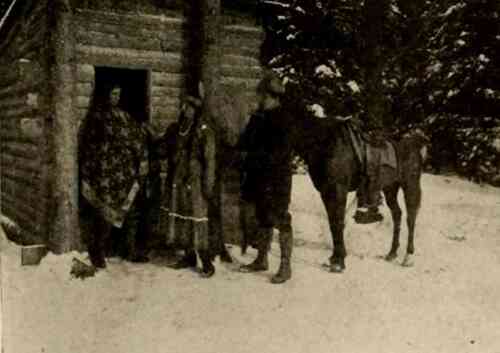
Surviving prints lack the original synchronized score, yet the absence amplifies diegetic nuance: sled dogs panting like kettle drums, the thwack of cards on tavern felt, the whispered crick of leather as Tom’s head droops under opiate weight. Modern festival screenings often commission new scores; the best—Max Richter-style strings mixed with Inuit throat-singing—honor that negative space rather than flooding it.
Cinephiles tracking Dorothy Dalton will find tonal rhymes in The Land of Promise, where her prairie stoicism again confronts patriarchal bait-and-switch. Meanwhile the fatalistic man-against-wilderness DNA of Pierre resurfaces in the Bushranger cycle, albeit transplanted to Australian outback. For a study in colonial guilt refracted through Indigenous perspective, pair this with One Hundred Years of Mormonism—both films fumble authentic voice yet inadvertently expose settler mythology’s faultlines.
"To love in the Northwest is to carve your initials into a frozen lake and pray the thaw never arrives." — Jen Galbraith, interior monologue (deleted intertitle, preserved in Library of Congress scenario sheets)
McGill repeatedly frames Jen against doorframes—threshold symbolism at its most textbook—yet each exit or entrance forces her to renegotiate agency. Crossing into the masculine sphere of the dispatch ride, she appropriates phallic authority (the sealed envelope) while maintaining feminized empathy, nursing her brother’s bullet graze. The film thus queers the binary before the term existed: gender as frontier to be mapped, trespassed, perhaps renamed.
Father Coraine’s cabin—stocked with caribou pelts and a tin crucifix—operates as liminal zone where state writ runs thin. The priest’s dialogue, mostly lost in current prints, survives through studio continuity reports: he labels Pierre "un esprit de la rivière" (a river spirit), hinting at syncretic folklore rather than orthodox doctrine. Their final exchange, partially shot but trimmed by censors, had Pierre refusing last rites: "My sins are my songs; let them echo.” Such excisions explain why the denouement feels morally weightless to modern viewers—we’re denied the contrapuntal grace note.
Trade reviews of 1918 praised the "rugged authenticity" while tut-tutting its "moral ambiguity"—code for a heroine who neither dies nor repents. In Winnipeg the provincial board demanded replacement intertitles clarifying Pierre’s fate; Chicago censors snipped the stabbing, resulting in continuity jags that persist. Rediscovery came via a 1973 MoMA retrospective, which hailed its proto-feminist streak; Kevin Brownlow’s 1980 documentary "The Frozen Curtain" further mythologized its production anecdotes (wolfpack on set, cinematographer frost-biting two toes). Today the film circulates in 2K DCP scanned from a 35 mm nitrate positive uncovered in a Calgary barn; scratches remain, but the grain conjures falling snow, a fortuitous artifact turned aesthetic choice.
Resource extraction politics haunt every frame: the unnamed trading post exists to ship beaver, timber and gold southward, a harbinger of Alberta’s later tar-sand debates. Pierre’s mixed ancestry—Métis trapper navigating encroaching Anglo law—mirrors contemporary land-back movements, while the casual off-screen killing of an Indigenous suitor exposes systemic erasure. Yet the film also interrogates cancel-culture instincts: Pierre is both poisoner and protector, complicating restorative justice paradigms. Viewers bingeing morally stainless superheroes will find this knottiness intoxicating.
The only complete print known to exist is held by Library and Archives Canada; licensing is notoriously labyrinthine, but select cinematheque screenings pop up annually. A 1080p bootleg circulates in cine-club torrents—contrast blown but serviceable for study. For legal streaming, keep tabs on Criterion Channel’s "Northern Shadows" bundle, though rights negotiations have dragged since 2021.
Great cinema often asks us to stare into the whiteout and discern our own reflection. Pierre of the Plains offers such a squall: its plot mechanics creak like sled runners, yet its emotional blizzard is timeless. You’ll emerge shivering, exhilarated, and convinced that every snowflake is a tiny verdict on the soul. Press play, wrap your hands around something hot, and let the north wind testify.
IMDb —
1919
Community
Log in to comment.