DbcultAccessing Vault...
6.4/10
Senior Film Conservator
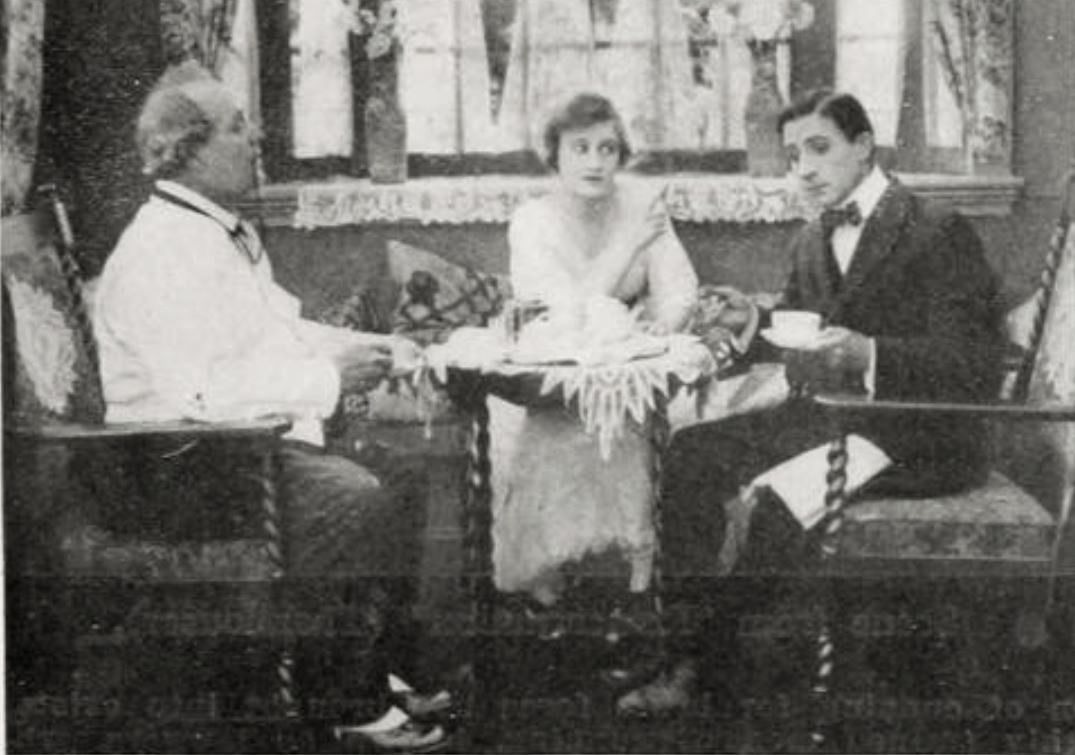
A definitive 6.4/10 rating for a film that redefined the boundaries of cult cinema. The Impostor remains a cornerstone of transgressive art.
Somewhere between the pit-head steam and the ballroom chandeliers, The Impostor stages a sleight-of-hand that feels almost profane: it turns the corpse of a capitalist into the seedbed of a workers’ utopia—without ever once preaching revolution.
The film opens on a coastline the colour of wet iron. Sir Anthony Gregson—baronet, colliery ogre, walking ledger-book—paces the deck of his private yacht, jaw clenched like a vice. One cut later we are in a cliff-top shack where candle stubs gutter over cards and cheap gin; here lounges Blink, the mirror-image wastrel, married to a gypsy girl whose nickname “The Tearer” suggests both erotic ferocity and the ripping of social fabric. The edit that slams these two faces together is the first thrill: a visual haiku of Edwardian inequality.
When the stroke fells the baronet, the body swap occurs with pagan swiftness. Clothes—those badges of caste—are exchanged in a mute ritual that feels older than the celluloid itself. From this moment the film becomes a conjuring trick: can the lowerborn twin inhabit not merely the wardrobe but the conscience of the ruling class?
The answer is yes, but only because the movie rewrites morality as spectacle.
Director E. Magnus Ingleton lets the mine tunnels swallow shafts of magnesium-white light; the frames look almost trowelled with coal dust. Every pickaxe clang lands like a threat. Yet once Blink-in-a-starched-collar descends underground, the soundtrack—silent though it is—seems to invert: the workers’ silence becomes accusatory, the owner’s past speeches echo like crimes. In a bravura tableau, the new “Sir Anthony” raises wages and orders safety timber, while the real corpse moulders beneath a shawl of tarpaulin. The ethical algebra is dizzying: restitution purchased with identity theft.
Jacqueline Morhange plays Mary Priestly with a darting intelligence; her eyes track the impostor’s every hesitation as though reading footnotes in his soul. When she finally consents to marry Aubrey, the gesture feels less like romantic resolution than political amnesty: by accepting the usurper’s authority she ratifies the new social contract. Sumner Gard’s Aubrey, all gangly earnestness, supplies the film with its only unclouded virtue; his willingness to love the fraud who once wore his father’s cruelty is the story’s most radical act.
Meanwhile Jose Collins as The Tearer prowls the corridors in silk borrowed from dead women’s trunks. Her performance is silent-era electricity: hips thrown forward like a prow, mouth half open as though tasting the chandelier crystals. She is both trophy and hostage, yet Collins lets us glimpse the calculation behind the swagger. Watch her rehearse the phrase “Miss Gibson, trained nurse” in front of a tarnished mirror—fingers tapping the glass, eyes narrowing—until the lie fits like kid leather.
The mine sequence, shot in two-tone stencil that flickers between sulphur-yellow and bruise-blue, anticipates the expressionist caverns of Metropolis. Cribbed timbers splinter underfoot; a child’s chalk drawing of a canary keeps reappearing, a premonition of the gas that will never now claim these lungs because the impostor has signed the requisition forms. It is as if history itself has been bargained with.
Yet the film refuses to sanctify its con man. Blink’s final confession—delivered in a single, sustained close-up that dilates from smug triumph to tremulous relief—carries the metallic taste of self-disgust. The camera does not dolly forward; instead the frame seems to recoil, leaving him isolated in a pool of moral solitude. We realise the true coup de théâtre: the aristocrat died twice, once in body and once in ideology, while the guttersnipe survives by assuming the very guilt he never owned.
Compare this to In the Nick of Time where mistaken identity is a mere cocktail fizz, or to Fine Feathers whose social climbing ends in sentimental marriage. The Impostor dares a darker arithmetic: it balances a human ledger with counterfeit coin and declares the account square.
Technically, the picture is a bridge between Victorian tableau and the coming grammar of montage.
Intertitles appear sparingly, often no more than gnomic haiku: “Wages are the echo of the master’s heartbeat.” The iris-in that closes the yacht sequence is shaped like a coin, literalising the idea that vision itself has been bought. Even the tinting carries ideology: sea scenes are steeped in bilious green, parlours in rose madder, mines in the same umber that tinges the workers’ skin—colour as class stain.
Leslie Stowe’s cinematographer eye deserves cult status. Notice the moment when Blink first buttons the baronet’s waistcoat: the mirror reflection is out of sync by half a second, a micro-delay that prickles the neck. It is the first crack in the mask, a hint that identity is not wardrobe but choreography.
And then there is the sound we cannot hear: the clatter of the projector in 1920, the nickelodeon pianist pounding out a reel whose final chord must resolve in major key despite the narrative’s minor sins. That tension—between the moral ambiguity onscreen and the audience’s hunger for harmony—gives the film its lingering metallic tang.
Is it perfect? Hardly. The subplot of Gouger’s revenge arrives like a dropped spanner, its resolution dependent on a handshake so brisk it feels contractually obligated. The strike leaders are sketched with crayon-thick villainy before their abrupt conversion, and the child-labourers who appear in one shot vanish in the next, as though the camera itself were embarrassed.
Yet these flaws feel of a piece with the picture’s reckless wager: that you can swap the soul of a society as easily as a pair of boots, provided the gloss of charity is applied quickly enough.
One leaves the film hearing pickaxes that never fall, seeing in every ballroom mirror the smudge of coal dust that no amount of servants’ scrubbing can erase.
Modern viewers, jaded by antiheroes and prestige grift, may underestimate how shocking this conciliation must have seemed to audiences who still tipped their hats at the very name of “Sir.” Here, the proletariat does not storm the gates; the gatekeeper simply changes face, and the gates swing open from inside. That the result is kindness rather than comeuppance is the true, unsettling miracle.
Watch it late at night when the house creaks like old timber. Imagine the celluloid flapping through the projector gate, each frame a shutter slamming on the question: if you wore your enemy’s skin, would you also wear his guilt? The Impostor suggests the answer is yes—and that the world, dizzy with relief, would thank you for the theft.
IMDb 6.9
1932
Community
Log in to comment.