DbcultAccessing Vault...
5/10
Senior Film Conservator
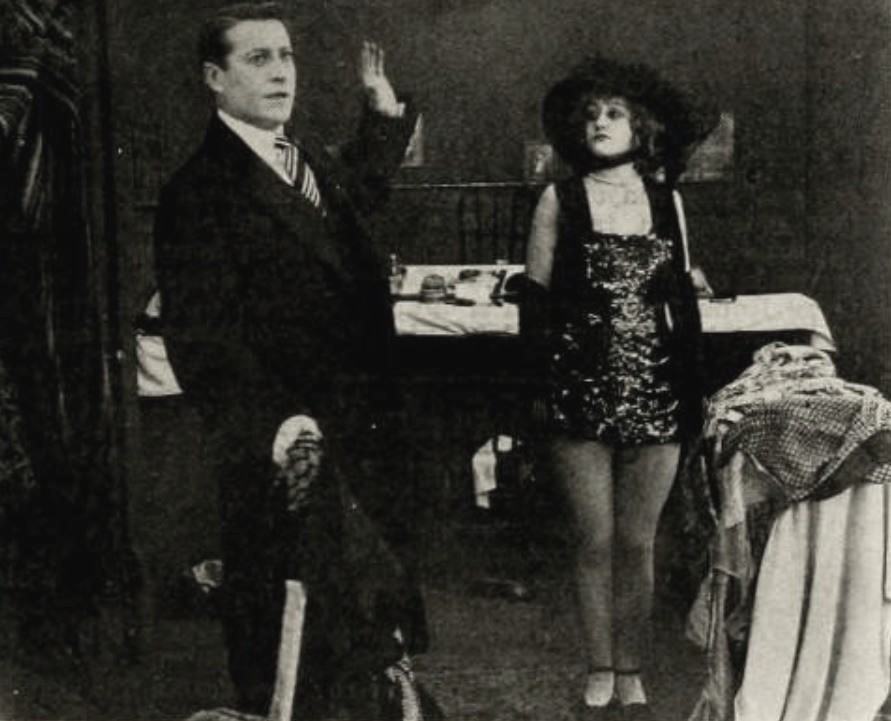
A definitive 5/10 rating for a film that redefined the boundaries of cult cinema. The Millionaire Baby remains a cornerstone of transgressive art.
Stepping back into the nascent days of cinema, one encounters a fascinating tapestry of storytelling, often raw yet undeniably potent. Among these early gems, ‘The Millionaire Baby’ emerges as a particularly compelling artifact, a silent film that, despite its vintage, pulsates with a timeless mystery. This isn't merely a quaint relic; it's a sophisticated whodunit, a psychological drama cloaked in the grand gestures and expressive visages characteristic of its era. Based on the intricate narrative crafted by Gilson Willets and the legendary Anna Katharine Green, a pioneer in detective fiction, the film plunges its audience into a vortex of suspicion following the inexplicable disappearance of an infant heiress, Gwendolyn. Its enduring power lies not just in the central enigma but in the profound exploration of human motivations that spiral outward from this single, devastating event.
The narrative, as penned by Green and Willets, is a testament to the enduring appeal of a well-constructed mystery. It doesn't merely present a crime; it dissects the emotional and moral fallout, forcing viewers to interrogate the very fabric of the characters’ lives. The central question – who stole Gwendolyn? – becomes a prism through which we examine ambition, desperation, and the often-fraught dynamics of family. The film predates the sophisticated psychological thrillers of later decades, yet it lays crucial groundwork, demonstrating that the silent medium was capable of conveying profound internal conflict without a single spoken word. The reliance on visual storytelling, exaggerated expressions, and carefully crafted intertitles meant that every gesture, every glance, every textual explanation had to carry immense weight, a challenge that ‘The Millionaire Baby’ meets with remarkable dexterity. It’s a masterclass in how to build suspense and character through purely visual means, a skill that many contemporary filmmakers could still learn from.
At the heart of this intricate web of intrigue are the potential culprits, each painted with strokes of moral ambiguity. There's Doctor Pool, portrayed with a chilling blend of calculated ambition and ruthless determination. His motivations appear clear-cut: a desire for personal gain, a cold-blooded pursuit of an objective that overrides any ethical considerations. His character, while perhaps a stock villain archetype, is rendered effective through the actor's ability to convey menace and cunning through silent performance. The subtle shifts in his gaze, the deliberate movements, all contribute to an unsettling portrait of a man driven by insatiable greed. This kind of character, a puppet master pulling strings from the shadows, is a recurring motif in mystery cinema, echoing later, more nuanced portrayals in films like The Masked Motive, where the antagonist's true intentions are often shrouded until the very climax.
Then we encounter Valerie Carew, a character of profound complexity and pathos, brought to life by the expressive Charlotte Stevens. Her past as a 'Burlesque Queen' injects a layer of societal judgment and personal struggle into her character, making her a figure both vulnerable and potentially dangerous. Yet, it is her overwhelming 'Mother-Love' that truly defines her, suggesting a desperation that could easily lead to extreme measures. Could a mother, driven to the brink by circumstances or a desire to protect her child from perceived harm, resort to kidnapping her own offspring? Stevens’s performance must have conveyed this agonizing internal conflict, the battle between her tarnished reputation and her pure maternal instinct. This duality, the societal outcast driven by a powerful, redeeming love, is a theme that resonates across cinematic history, finding echoes in films like The Regeneration, which similarly explores the moral complexities of individuals living on the fringes of acceptable society, seeking redemption or a new beginning.
The film also introduces Marion Ocumpaugh, a character whose knowledge of Gwendolyn's disappearance remains tantalizingly ambiguous. Is she an unwitting accomplice, a silent observer, or an active participant with motives yet to be fully revealed? Her presence adds another layer of intrigue, suggesting that the truth is far more convoluted than a simple 'good versus evil' dichotomy. The beauty of such a character in a silent film lies in the interpretation; the audience is left to project their own suspicions and theories onto her often-stoic expressions. This deliberate ambiguity is a hallmark of effective mystery writing, preventing easy answers and keeping the viewer engaged in the intellectual puzzle. It’s a technique that allows for multiple readings and discussions long after the credits roll, a testament to the depth of Green’s original source material.
Finally, there is Justin Carew, the estranged husband and father, played by Harry Mestayer. His journey from a state of separation to a sudden, potent desire for reconciliation with his wife and child provides another compelling motive. Could his belated paternal awakening, his 'seeing the light,' have driven him to kidnap his own daughter in a desperate, misguided attempt to reunite his fractured family? This narrative thread explores the themes of regret, redemption, and the sometimes-destructive power of love. The emotional weight of such a realization, particularly in a silent film, would have relied heavily on Mestayer’s ability to convey profound internal shifts through body language and facial expressions, illustrating a man grappling with his past mistakes and yearning for a future he inadvertently jeopardized. The film thus transcends a simple crime story, becoming a poignant examination of the human heart's capacity for both error and yearning.
The ensemble cast, including John Charles, Mrs. A.C. Marston, Lucille Ricksen, Grace Darmond, Robert Sherwood, Frederick Hand, and Charles Siddon, undoubtedly contributed to the rich tapestry of suspicion and revelation. While individual performances might be lost to the mists of time for many modern viewers, their collective presence would have been crucial in building the atmosphere of uncertainty and the high stakes of the central mystery. Lucille Ricksen, in particular, was a notable child actress of the era, and her portrayal of the titular baby, even if limited, would have been vital in establishing the object of everyone's desperate search. The very concept of a 'Millionaire Baby' immediately conjures images of vulnerability and privilege, making the kidnapping all the more scandalous and captivating for audiences of the time, much like the public's fascination with high-profile disappearances in any era. The film taps into a primal fear: the loss of innocence, compounded by the allure and dangers of wealth.
Cinematically, 'The Millionaire Baby', like many films of its period, would have relied heavily on visual storytelling conventions that are now largely obsolete but were groundbreaking then. The use of intertitles to convey dialogue, exposition, and internal thoughts was paramount. These textual insertions were not merely functional; they often carried emotional weight, guiding the audience's understanding and amplifying the dramatic impact of the visual scenes. The editing, while perhaps not as rapid-fire as modern cinema, would have been carefully paced to build suspense, revealing clues incrementally and allowing the audience to absorb the emotional intensity of each development. The cinematography, though limited by the technology of the day, would have focused on clear compositions and effective use of available light, often with dramatic contrasts to underscore moments of tension or revelation. These techniques were foundational to the language of film, and studying such works provides a crucial insight into the evolution of cinematic grammar.
The thematic richness of 'The Millionaire Baby' extends beyond its immediate plot. It delves into the societal anxieties of its time, particularly concerning wealth, class, and the moral compromises often made in their pursuit. The very title, with its emphasis on 'Millionaire,' highlights a fascination with affluence and the inherent vulnerabilities it can create. The film subtly questions whether wealth truly brings happiness or if it merely attracts predators and complicates human relationships. Valerie Carew's past as a 'Burlesque Queen' is another potent social commentary, touching upon themes of reputation, forgiveness, and the struggle for respect in a judgmental society. Her journey, whether she is the culprit or a victim of circumstance, speaks to the enduring challenges faced by women attempting to transcend their pasts and claim their rightful place in a world quick to condemn. This exploration of social strata and personal redemption finds parallels in other silent-era dramas, such as The Better Woman, which also navigated complex female characters grappling with societal expectations and personal choices.
The film's place within the broader landscape of early cinema is significant. It represents an era where storytelling was evolving rapidly, moving beyond simple actualités to complex, multi-layered narratives. The influence of literary giants like Anna Katharine Green was instrumental in this transition, bringing a level of structural sophistication and character depth that elevated film from a mere novelty to a serious art form. The success of such a mystery would have cemented the genre's appeal, paving the way for countless detective stories and thrillers that followed. One can draw a line from the intricate plotting of ‘The Millionaire Baby’ to the serial adventures of characters like Lucille Love: The Girl of Mystery, where episodic suspense kept audiences riveted week after week. While differing in format, both capitalized on the audience's desire for unraveling secrets and following a compelling quest.
Moreover, the film's exploration of family dynamics, particularly the estranged relationship between Justin and Valerie, speaks to universal human experiences. The yearning for reconciliation, the pain of past mistakes, and the desperate hope for a renewed connection are themes that transcend time and medium. The 'Millionaire Baby' itself becomes less of a character and more of a symbol – a catalyst for forcing its parents to confront their past and their true feelings. The resolution of the mystery, therefore, isn't just about identifying a kidnapper; it's about the potential for healing, forgiveness, and the re-establishment of a family unit, albeit one tested by extreme adversity. This psychological depth, even if conveyed through the more overt acting styles of the silent era, would have resonated deeply with contemporary audiences, inviting them to reflect on their own relationships and moral compasses.
To truly appreciate 'The Millionaire Baby' today requires a certain willingness to engage with the unique aesthetics of silent film. The absence of synchronized sound, the reliance on orchestral scores (often live), and the highly stylized performances demand a different kind of viewership. Yet, for those willing to immerse themselves, the rewards are considerable. It offers a window into the origins of cinematic storytelling, showcasing how early filmmakers grappled with complex narratives and evoked powerful emotions using a limited palette of tools. It’s a reminder that compelling drama doesn't require dialogue or advanced special effects; it requires compelling characters, an engaging plot, and a keen understanding of the human condition. The film stands as a testament to the ingenuity and artistic ambition of its creators, particularly the seminal work of Anna Katharine Green, whose literary contributions translated so effectively to the visual medium. Her influence on the mystery genre, both in print and on screen, cannot be overstated.
In conclusion, 'The Millionaire Baby' is far more than a historical curiosity. It is a robust and engaging mystery that skillfully explores themes of greed, maternal love, redemption, and societal judgment. The film’s narrative sophistication, particularly given its early production date, solidifies its place as an important work in the silent era. Its ability to create palpable suspense and emotional depth through purely visual means is a testament to the power of early cinema and the foundational brilliance of its source material. It invites us not only to solve a captivating puzzle but also to ponder the timeless complexities of human nature. For anyone interested in the evolution of film, the genesis of the mystery genre, or simply a compelling story well told, this silent classic offers an enriching and thought-provoking experience, proving that some stories, and some cinematic techniques, are truly immortal.
IMDb —
1923
Community
Log in to comment.