DbcultAccessing Vault...
Cult Review
Senior Film Conservator
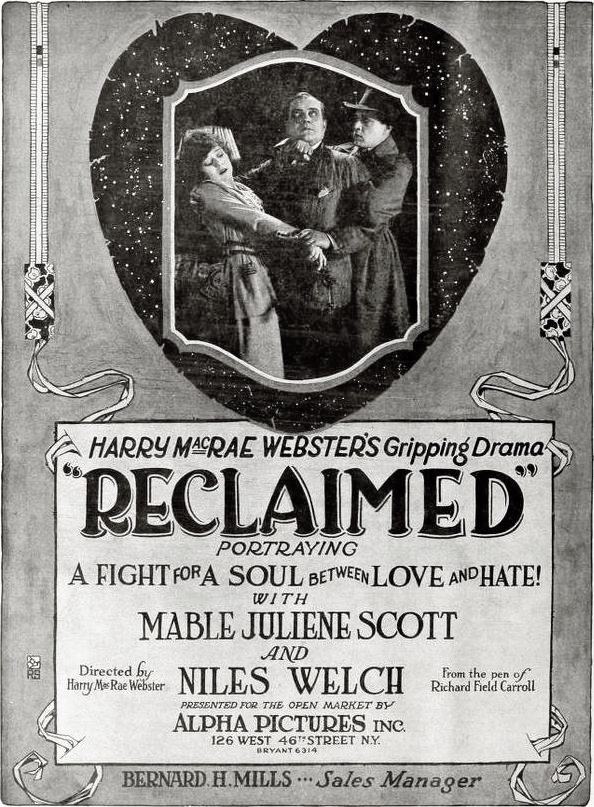
Ah, the silent era! A time when storytelling transcended spoken dialogue, relying instead on the visceral power of performance, the eloquent sweep of cinematography, and the sheer audacity of narrative ambition. Among the treasures unearthed from that bygone epoch, Reclaimed: The Struggle for a Soul Between Love and Hate stands as a testament to cinema's enduring capacity for melodrama, justice, and profound human emotion. It’s a film that, even a century later, still resonates with themes that are heartbreakingly, thrillingly, and eternally relevant.
This isn't just a simple tale of good versus evil; it's a sprawling epic woven with threads of brutal tragedy, unexpected transformation, and the relentless pursuit of retribution. At its heart lies a narrative so intricately layered, so fraught with the twists of fate, that it could easily be mistaken for a grand European novel rather than a product of early American cinema. It commences not with gentle exposition, but with a shockwave of primordial violence in the sun-drenched, vibrant landscape of Mexico. Here, the beautiful Lola and her beloved husband are cruelly snatched from life, their existence extinguished by the malevolent hand of Mark Sinister, portrayed with chilling efficacy by Anders Randolf. Sinister, a character whose very name drips with villainy, is driven by a dark obsession, a covetous desire for Lola that, when thwarted, erupts into an act of unforgivable brutality. This foundational act of depravity leaves an indelible scar, not just on the idyllic Mexican setting, but on the soul of their orphaned child, Amorita.
Amorita, initially portrayed with a raw, untamed energy by the young Bobby Connelly before the formidable Maude Le Roy takes the reins, is a child forged in the crucible of this unimaginable loss. She grows up not in the gentle embrace of a family, but in the harsh school of self-reliance, developing a keen intellect and a fierce independence that belies her tender years. She is a survivor, a wild bloom pushing through cracked earth, her spirit unbroken despite the shadow of her parents' murder. Her journey, at the tender age of sixteen, from the dusty byways of Mexico to the glittering, unforgiving canyons of New York, is nothing short of a migration of the soul. It is a pilgrimage not merely across geographical distance, but across the chasm of her own past, toward an uncertain future.
New York, the bustling metropolis, becomes the stage for Amorita’s most profound metamorphosis. Here, she is serendipitously adopted by Jasper Creature, a character brought to life by the nuanced performance of Sidney Bracey. The irony of Jasper's association is not lost on the astute viewer; he serves as none other than Sinister's lawyer, unwittingly bringing the orphaned girl into the orbit of her parents' murderer. It is under the tutelage of Jasper's sister, Patience, a figure whose very name suggests calm and refinement, that Amorita undergoes a remarkable transformation. The wild, untutored girl begins to shed her rough edges, embracing education, acquiring a grace and poise that speak of a newfound sophistication. This period of refinement, a chrysalis of societal polish, is rendered with a meticulous attention to detail that highlights the stark contrast between Amorita's origins and her burgeoning identity.
The narrative, deftly crafted by writer Richard Field Carroll, then introduces a cruel twist of fate that propels the melodrama to dizzying heights. The newly refined Amorita, radiant and elegant, captures the attention of none other than Mark Sinister himself. Unaware of her true lineage, of the blood on his hands that stains her past, Sinister becomes utterly smitten, his dark heart captivated by the very woman whose life he so brutally fractured. This dramatic irony is a stroke of narrative genius, building a palpable tension that hums beneath every interaction between the two. The audience, privy to the horrific truth, watches with bated breath, anticipating the moment of revelation, the inevitable collision of past and present.
Yet, Amorita’s heart, though refined, remains true to a different path. She falls deeply in love with Frank Truman, portrayed by the earnest Niles Welch. Frank is the son of Col. John Truman, a man whose fortunes were ruthlessly decimated by Sinister’s financial machinations. This romantic entanglement adds another layer of familial and financial revenge to the already simmering pot, binding Amorita and Frank through shared victimhood at Sinister's hands. Their love story, tender and genuine, provides a stark contrast to Sinister's predatory affections, highlighting the film's central struggle between the pure motives of love and the corrupting influence of hate and greed.
Sinister, ever the orchestrator of misfortune, cannot abide this rival. His machinations escalate, demonstrating his boundless capacity for cruelty and manipulation. Frank is unfairly imprisoned, a victim of fabricated charges, his future unjustly stolen. Jasper, the unwitting benefactor, finds himself ensnared in Sinister's web, framed for crimes he did not commit. And Amorita, the object of Sinister's twisted affection, is nearly coerced into a marriage that would seal her fate in a gilded cage of misery. These escalating acts of villainy, depicted with the dramatic flair characteristic of the era, plunge our protagonists into a maelstrom of despair, pushing them to the brink.
The climax of Reclaimed is a masterclass in narrative convergence, a symphony of individual vendettas converging on a single, fateful night. Frank, Amorita, and Jasper, each driven by their own profound grievances and a singular, desperate intent, independently make their way to Sinister’s opulent, yet sinister, abode. Each intends to be the instrument of his downfall, to exact the justice that the world has denied them. The tension is almost unbearable as they stalk through the shadows, their hearts pounding with the weight of their purpose. But fate, ever the capricious puppeteer, has a final, unexpected twist in store.
Upon entering the villain’s lair, they discover that the architect of their suffering has already met his end. Sinister lies fatally wounded, not by the hand of his avengers, but by a cruelly-treated servant, a nameless victim whose desperate act of rebellion delivers the ultimate, ironic justice. It is a moment of profound anti-climax and chilling satisfaction. In the throes of Sinister's death, a fragmented memory, a flash of recognition, ignites within Amorita. The face of the dying man, contorted in agony, awakens a dormant horror, revealing the monstrous truth: the man who lies before her, the object of her relentless, unspoken quest for vengeance, is the very fiend who shattered her childhood, who murdered her beloved parents. This revelation, delivered without a single spoken word, relies entirely on Maude Le Roy’s extraordinary ability to convey a universe of emotion through her eyes, her posture, her every subtle tremor. It's a moment that defines the silent film era's power.
The performances across the board are commendable, capturing the heightened emotionality required of silent cinema. Maude Le Roy, as Amorita, delivers a performance of remarkable depth, transitioning seamlessly from the wild, spirited girl to the refined woman, all while carrying the weight of her traumatic past. Her expressive eyes and gestures convey a rich inner life, making her journey of vengeance and self-discovery utterly compelling. Niles Welch imbues Frank Truman with a noble sincerity, making his unjust suffering keenly felt. And Anders Randolf as Sinister is the epitome of the silent film villain – menacing, cunning, and utterly devoid of remorse, his every gesture dripping with malevolence. The supporting cast, including William Lambert, Warren Cook, Mabel Wright, Frederick Peters, and Mabel Julienne Scott, all contribute to the rich tapestry of this dramatic world, each playing their part in the intricate dance of alliances and betrayals.
Richard Field Carroll's screenplay is a masterclass in building tension and developing character arcs within the constraints of the silent medium. He understands that a compelling narrative doesn't always require dialogue; sometimes, the sheer force of circumstance and the raw emotion of the performers are enough to carry the weight of the story. The pacing is deliberate, allowing the audience to fully invest in Amorita's plight and the insidious nature of Sinister's cruelty. The themes explored — justice, revenge, the corrosive power of greed, and the transformative potential of love — are universal and timeless, making the film's emotional impact as potent today as it was upon its release.
When considering Reclaimed: The Struggle for a Soul Between Love and Hate within its cinematic context, one can draw parallels to other compelling dramas of the era. The strong, resilient female protagonist seeking justice in a world riddled with corruption brings to mind figures from films like The Tiger Woman, which often explored the agency of women in challenging social norms or exacting personal retribution. Similarly, the theme of a character embarking on a significant journey, both physical and spiritual, resonates with the trials faced in The Only Road, where protagonists often navigate hardship to forge their own destiny. The manipulative schemes and the unjust imprisonment of Frank Truman echo the kind of intricate plotting and themes of entrapment seen in films like The Hostage, where characters are often pawns in a larger, more sinister game. Reclaimed is not just a standalone work but a vibrant thread in the rich tapestry of early cinema, reflecting the era's fascination with moral dilemmas and the enduring human spirit.
The film’s enduring legacy lies in its ability to transcend its technological limitations and deliver a narrative that is both grand in scope and deeply intimate in its emotional resonance. It reminds us that stories of love, hate, and the relentless pursuit of justice are fundamental to the human experience, regardless of the era or the medium. The final, poignant recognition by Amorita, a moment of tragic clarity that underscores the futility of her planned vengeance while simultaneously affirming the ultimate triumph of cosmic justice, leaves an indelible mark. It’s a powerful, almost philosophical conclusion to a journey steeped in blood and tears.
In an age dominated by sound and spectacle, Reclaimed: The Struggle for a Soul Between Love and Hate serves as a potent reminder of the pure artistry of silent film. It is a testament to the power of visual storytelling, of performances that speak volumes without a single word, and of narratives that, even a century on, continue to captivate, to provoke thought, and to stir the very depths of our souls. It’s a film that deserves to be reclaimed by new generations of cinephiles, to be appreciated not just as a historical artifact, but as a vibrant, living piece of cinematic art.
Community
Log in to comment.