DbcultAccessing Vault...
6.9/10
Senior Film Conservator
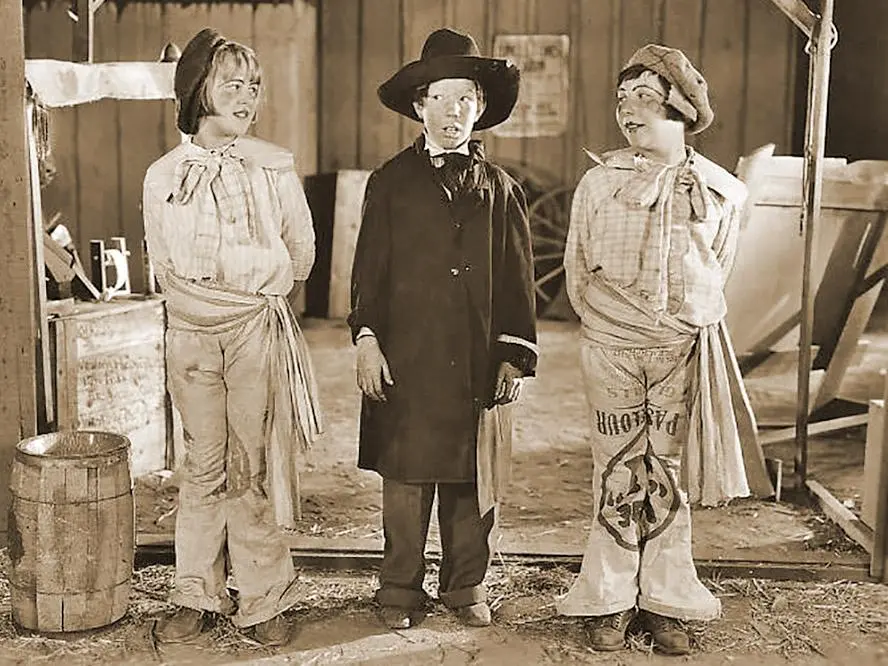
A definitive 6.9/10 rating for a film that redefined the boundaries of cult cinema. Uncle Tom's Uncle remains a cornerstone of transgressive art.
Should you invest twenty minutes into this 1926 silent short? Short answer: Yes, but only if you view it as a cultural time capsule rather than a modern comedy.
This film is strictly for cinema historians and silent-era completionists who want to see the 'Our Gang' troupe in their prime. It is absolutely not for viewers who are easily offended by the racial caricatures prevalent in 1920s media or those who demand high-stakes narrative arcs.
1) This film works because it captures the authentic, unscripted-feeling chaos of children at play, a hallmark of the Hal Roach studio style.
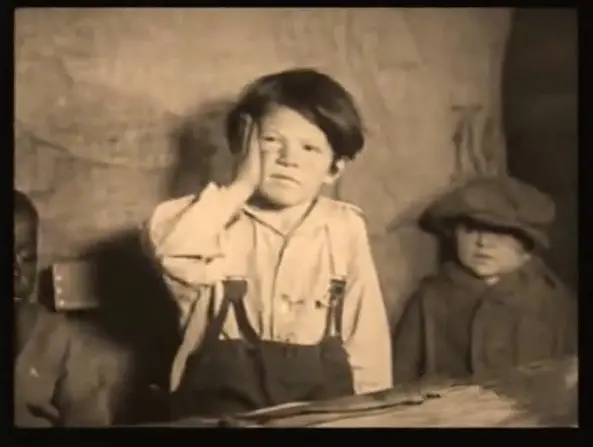
2) This film fails because the pacing is severely hampered by repetitive domestic interruptions that break the comedic momentum.
3) You should watch it if you have an interest in the evolution of child acting or the specific history of the 'Our Gang' (Little Rascals) franchise.
Short answer: Yes, for the historical insight. This film offers a raw look at 1920s play culture. It is not for those who want modern sensibilities. It is for those who enjoy silent slapstick and the unique energy of the Hal Roach era.
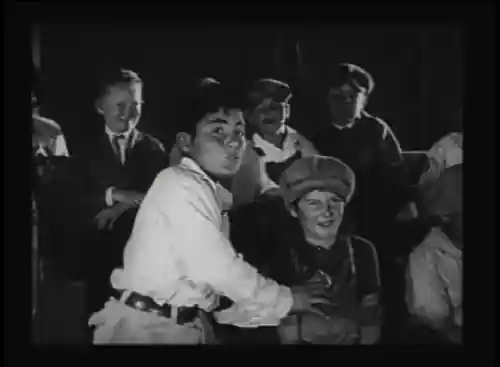
Uncle Tom's Uncle belongs to a specific sub-genre of early comedy: the 'kids putting on a show' trope. It is a formula that worked then and, surprisingly, still carries a certain charm today. The setting—a dilapidated barn—serves as a character in its own right. The way the children utilize mundane objects to recreate the high drama of 'Uncle Tom’s Cabin' is where the film’s creative heart lies. For example, using the family dog, Pal the Wonder Dog, as a ferocious bloodhound is a stroke of simple comedic genius that highlights the gap between a child's imagination and their reality.
The direction by Robert F. McGowan is loose, almost improvisational. Unlike the more rigid structures found in films like Pals First, there is a sense here that the camera is simply catching the kids in their natural state. This 'naturalism' is, of course, a carefully constructed illusion by the Roach studio, but it remains effective. The film captures a period of American childhood that was largely unsupervised and tactile, a far cry from the digital distractions of today.
Mickey Daniels is the standout here. His facial expressions are legendary in the silent world, and as Simon Legree, he leans into a grotesque hyperbole that is genuinely funny. He doesn't just play a villain; he plays a child *trying* to be a villain, which is a much more complex layer of acting than it first appears. When his fake mustache begins to peel off, his frantic attempts to maintain his 'menacing' persona provide the film's most honest laughs.
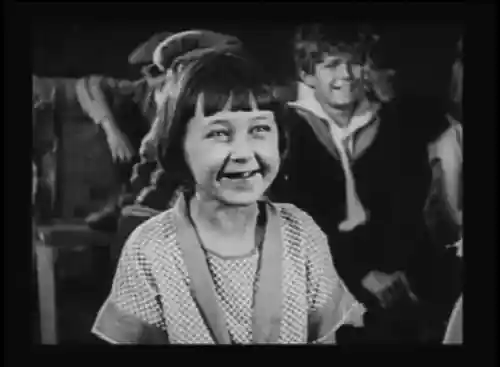
Joe Cobb, as Uncle Tom, provides the physical comedy. His struggle to stay in character while his mother yells from the background creates a relatable tension. Every time Joe is forced to stop a scene to go pick up trash in the yard, the film comments on the eternal conflict between the artist's vision and the authority's demand for productivity. It’s a theme we see echoed in other shorts of the era, such as His Own Medicine, where domestic duties frequently clash with personal desires.
Then there is Allen 'Farina' Hoskins. Farina was often the soul of these shorts, and here, playing Topsy, he showcases a comedic timing that was far beyond his years. While the racial dynamics of the 1920s are undeniably present and uncomfortable, Farina’s individual talent often transcends the material. His reactions to the 'supernatural' elements of the play are highlights of physical comedy that would influence performers for decades.
Visually, the film is standard for 1926, but the use of the barn's architecture is clever. The high angles used when the 'bloodhounds' chase the characters through the rafters add a sense of scale to the small-stakes drama. The lighting is harsh, typical of the era, but it serves the dusty, gritty atmosphere of the barn. It doesn't have the stylized flair of Felix Goes West, but it grounded in a gritty reality that makes the slapstick feel more impactful.
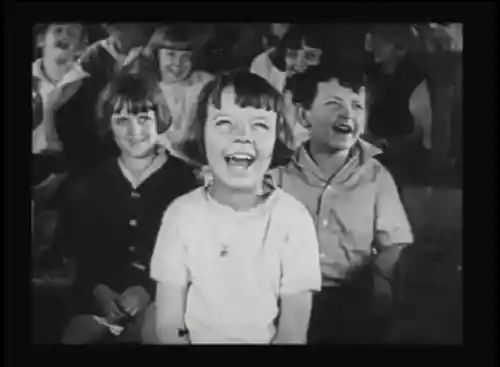
The pacing, however, is where the film stutters. The 'interruption' gag is used one too many times. By the third time Joe's mother calls him away, the joke has lost its teeth. It feels like a padding technique to reach the two-reel runtime. A tighter edit would have made the climax of the play feel more explosive. Instead, it sort of limps to a finish as the cast literally thins out.
Pros:
- Exceptional physical comedy from Mickey Daniels.
- A fascinating look at 1920s domestic life and childhood play.
- High-energy performance from Farina Hoskins.
- Creative use of low-budget props and settings.
Cons:
- Problematic racial caricatures by modern standards.
- Redundant plot points involving Joe’s chores.
- The ending feels abrupt and somewhat unsatisfying.
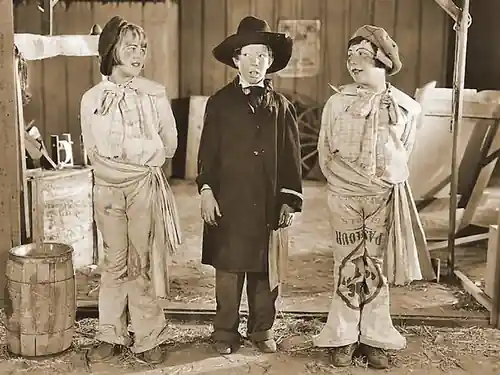
What makes Uncle Tom's Uncle particularly interesting is how it treats its source material. In 1926, 'Uncle Tom’s Cabin' was still a massive cultural touchstone, but here it is treated with a irreverence that is almost punk-rock. The kids aren't trying to deliver a message; they are trying to have fun. This 'revisionism' is unintentional, born of a child's misunderstanding of adult themes, but it results in a film that is more about the act of creation than the story being created.
Compare this to Trapped in the Air, which relies on high-concept thrills. Uncle Tom's Uncle stays grounded in the dirt. It reminds us that the most compelling stories often happen in the margins of our responsibilities. The 'play' is a failure, but the film is a success because it captures that failure so vividly.
Hal Roach’s vision for 'Our Gang' was to show kids being kids, not miniature adults. This film is a prime example of that philosophy. While other studios were putting child actors in ringlets and suits, Roach let them get dirty. You can practically smell the hay and the dust in the barn. This commitment to a 'lived-in' look is why these shorts have more staying power than many of their contemporaries.
However, we cannot ignore the 'elephant in the barn.' The portrayal of Farina and the use of 'Uncle Tom' as a comedic vehicle is a stark reminder of the era's prejudices. To watch this today is to engage in a dual experience: appreciating the craft while acknowledging the flaws. It’s a difficult balance, but one that is necessary for any serious cinephile.
Uncle Tom's Uncle is a fascinating, messy, and occasionally hilarious artifact. It works. But it’s flawed. The performances of Mickey Daniels and Farina Hoskins elevate what could have been a forgettable short into something that demands a place in the conversation of silent comedy. It is a film of its time, for better and for worse. If you can navigate the historical baggage, you will find a charming, chaotic piece of filmmaking that perfectly encapsulates the spirit of the 'Our Gang' series. It isn't a masterpiece, but it is an essential piece of the puzzle for anyone trying to understand the evolution of American comedy.
IMDb 2.3
1934
Community
Log in to comment.