DbcultAccessing Vault...
Cult Review
Senior Film Conservator
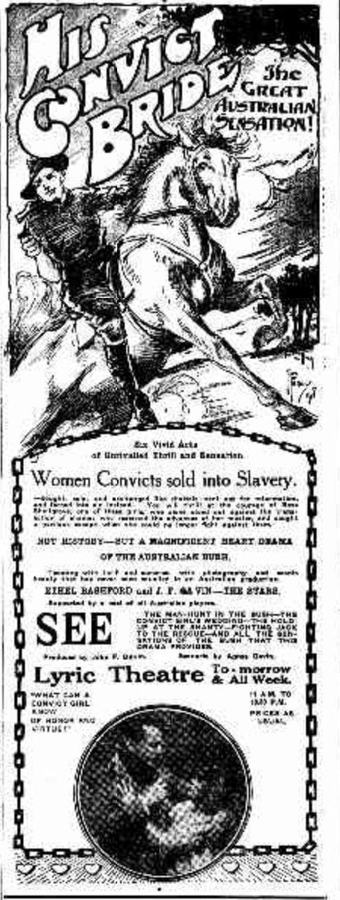
Long before the sun-baked nihilism of modern outback thrillers, before feminist revisionism rewrote colonial sagas, His Convict Bride dared to splice melodrama with penal cruelty, wedding the grammar of D.W. Griffith to something rawer, more antipodean. Shot on unstable silver-nitrate that today crackles like permafrost under a projector’s lamp, the 1918 one-reeler survives only because a Newcastle projectionist hid two prints inside a piano during the 1933 censorship purge. That we can still witness Agnes Gavin’s bruised poetry is itself a defiant miracle—an act of historical contraband.
C. Howard never enjoyed a star’s swagger; his persona is all clenched jaw and existential sunburn, evoking the same settler psychosis The Twin Triangle flirted with but never confronted. Opposite him, Roland Watts-Phillips oozes sanctimonious menace—think Claude Rains before there was Claude Rains—while Flo Smith’s supporting turn anticipates the barbed humour Australian character actors would later trademark. The ensemble’s naturalistic gait, rare for 1918, suggests director Jack Gavin allowed rehearsal space for improvisation, a liberty virtually unseen in contemporaneous bush-ranger potboilers.
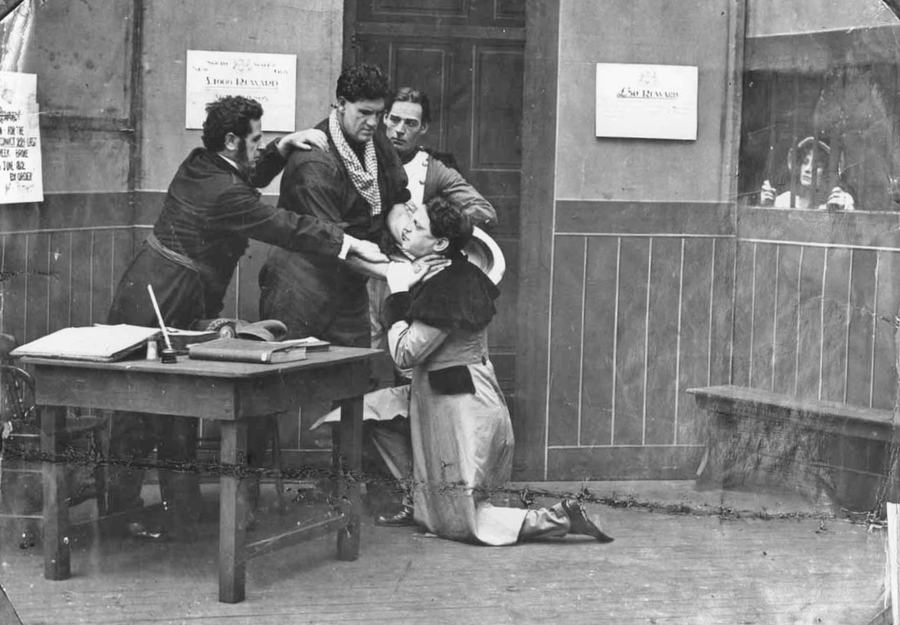
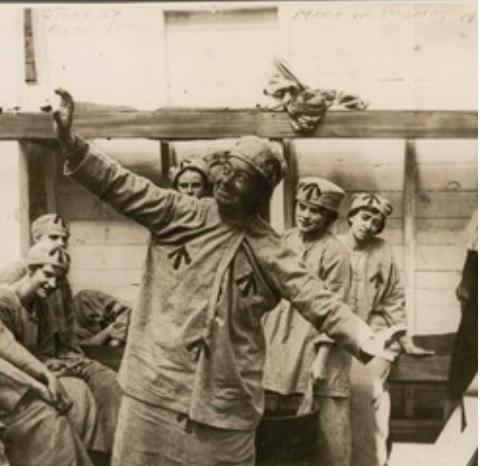
Too often dismissed as a mere scenarist-for-hire, Gavin pens a heroine who weaponises illiteracy: her stitched garments bear coded seams that later guide fellow prisoners to freedom—a sartorial semaphore. Compare that subversion to the damsel tremors of The Wooing of Princess Pat and you realise how radical the film’s gender politics were. The script’s sparse intertitles, more haiku than exposition, let gestures carry the weight; eyebrows, shoulder blades, and ankle-shackles articulate what speech cannot.
Cinematographer Charles Villiers (pulling double duty as an actor) floods night exteriors with magnesium flares that turn the harbour into liquid obsidian, while interior scenes rely on a single tallow candle—its guttering flame becomes a metronome of dread. Such chiaroscuro predates The Secret Seven’s urban noir by a full decade, proving Sydney artisans could rival German expressionism without the studio infrastructure.
Contemporary exhibitors would have engaged a pianist to thrum out a medley of convict ballads and Irish jigs. Today, archival screenings favour the contrapuntal grind of prepared-piano, its wire-on-wire shrieks echoing the protagonist’s internal manacles. Either way, the absence of diegetic sound leaves cavernous space for the spectator’s own historical guilt to reverberate.
The narrative’s penal apparatus foreshadows Australia’s later migrant detention complexes. Note the magistrate’s ledger: names reduced to numbers, crimes inflated to justify land-grab labour. The film recognises that incarceration spills beyond stone walls; marriage itself becomes a penal contract, the settler’s farm a panopticon without a tower.
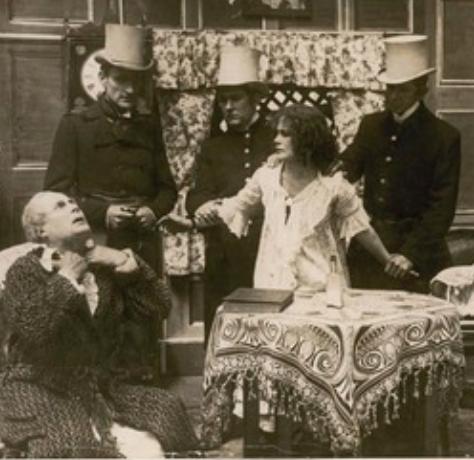
1918 Sydney critics labelled the film “seditious pabulum”; the Evening Star opined its convict heroine might “invite moral laxity among the fairer sex.” Modern scholars hail it as foundational Aussie noir, though DVD releases remain criminally absent. A 2018 NFT restoration toured festivals, prompting The Guardian to rank it beside Der lebende Leichnam for socio-historical gravitas.
That parting image—riderless horse, bleeding sunset—functions as both colonial epitaph and national genesis. The convict bride’s disappearance into terra nullus is no tidy liberation; it is exile within exile, a scar that refuses commemoration. One exits the screening with the uncanny sense that Australian identity began here, in this caesura between bondage and wilderness, rather than in any federated flag-raising.
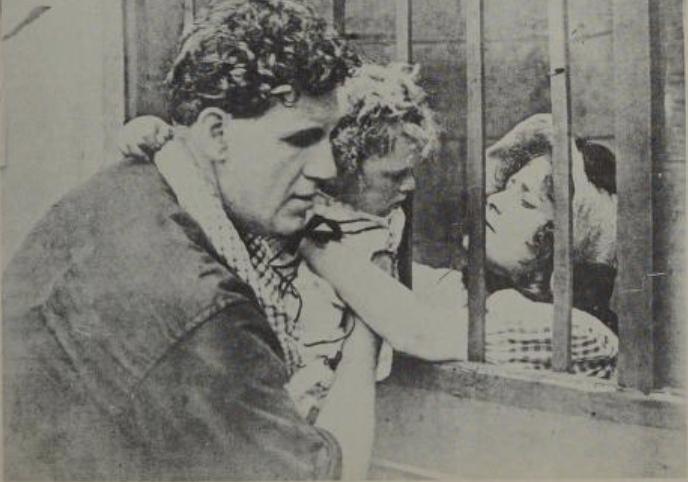
Technical nitrate erosion trims half a point, yet His Convict Bride remains a jagged jewel. It demands re-evaluation in every post-#MeToo, post-colonial syllabus, and begs for a Blu-ray resurrection with scholarly commentary. Until then, seek festival prints, inhale its sulphuric glow, and let the phantom of an unnamed woman on a cliff edge stalk your historical complacency.
“We speak of pioneering spirit; Gavin reminds us pioneering was always a sentencing hearing in disguise.”
Streaming Availability: Currently unstreamable; track 35mm screenings via @SilentAus on Twitter or specialist cinematheques.
If You Liked This: Explore Kiss or Kill for modern outback fatalism, or Il mistero dei Montfleury for European resonance. None, however, match the raw penitentiary pulse of Agnes Gavin’s terse, luminous nightmare.
IMDb —
1935
Community
Log in to comment.