DbcultAccessing Vault...
5.8/10
Senior Film Conservator
A definitive 5.8/10 rating for a film that redefined the boundaries of cult cinema. Playing Dead remains a cornerstone of transgressive art.
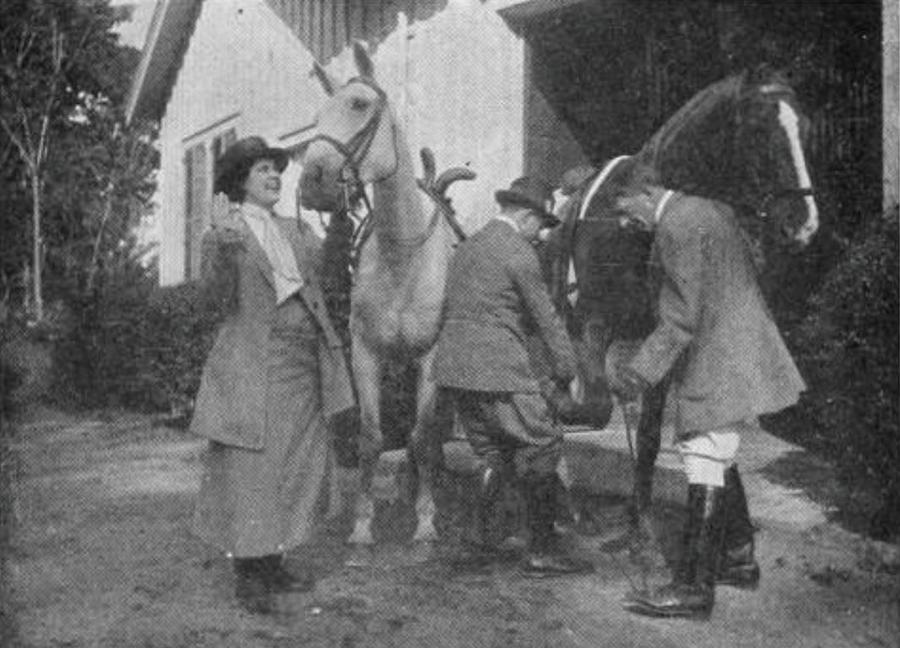
There is a moment, roughly two-thirds through Playing Dead, when the camera forgets to blink. A hearse rolls past a confectioner’s window; reflected in the glass, black plumes mingle with pastel bonbons, as though grief itself had been sugared for consumption. That single superimposition—achieved in 1913 with nothing more than angled mirrors and nerve—encapsulates the film’s perverse confection: a marriage dismantled with the same meticulous whimsy a child might pull wings off a fly.
Donald Hall’s James is the fly, though he imagines himself the spider. His suspicion that wife Clara (Alice Lake, all cheekbones and withheld breath) loves the town’s resident boulevardier is never confirmed by spoken dialogue—intertitles are sparse, almost bashful—but by micro-gestures: the way her gloved hand trembles when the postman appears, how she stores unopened letters inside a music box whose waltz now sounds off-key. Hall, a veteran of the Broadway stage, modulates his reactions in millimeters: a blink held half a second too long, a swallow that ripples the starched collar like a stone dropped in a well. Silent cinema rewards such parsimony; the smallest muscle twitch inflates to Shakespearean heft.
The decision to fake his demise arrives not as melodramatic flourish but as accountant’s ledger. James tallies the emotional debit columns—one wife, dwindling ardor, rival suitor—then opts for the ultimate write-off. The machinations unfold like a séance staged by an insurance clerk: he purchases a life policy payable to Clara, rows to the river’s middle at dawn, leaves behind coat and hat snagged on reeds. The film cross-cuts between that empty skiff drifting downstream and Clara’s breakfast table, where the newspaper’s ink bleeds onto her untouched egg. Causality implodes; we realise the husband has choreographed his own absence more meticulously than he ever orchestrated his presence.
“To vanish is easy; to be seen vanishing—that is the artistry.”
Mrs. Sidney Drew, co-writer and uncredited script doctor, reportedly scribbled that line in the margin of an early treatment. It survives only as anecdote, yet the film embodies it. James attends his own funeral in disguise—top hat lowered, widow’s weed of crepe around the arm—watching Clara bend over a coffin containing nothing but his collected letters tied in lavender ribbon. The camera assumes his voyeuristic vantage: every tear she sheds feels auctioned to the highest bidder of guilt. Meanwhile Isadore Marcil’s camerawork, usually content to park itself at mid-distance, inches into an iris shot that narrows until Clara’s face becomes a postage stamp on a parcel of grief. The effect is suffocating; we gasp for oxygen with the supposed deceased.
Comparisons spring unbidden. In Les misérables Jean Valjean’s resurrection is moral; society itself must die to his past so he can be reborn. James’s resurrection is narcissistic—he needs the world to die to him. The difference between sacrifice and self-indulgence is the difference between cathedral and carnival. Likewise, The Birth of a Nation would later rehearse the spectacle of the returned soldier, but Griffith’s revenants ride history’s tide; James merely surfs a puddle of bruised ego.
Yet the film refuses to lampoon him outright. A lesser short would turn this premise into slapstick: coffins upended, mistaken identities, a sprint to the station. Instead, Playing Dead lingers inside the hollowed-out middle of remorse. When Clara, informed of her husband’s generosity—he has bequeathed her freedom—retires to the bedroom, the camera stays outside the door. We hear only the creak of floorboards, like a ship negotiating fog. What happens within? Possibly prayer, possibly a pistol. The door opens; her face is porcelain smooth, but the mirror behind her reveals a crack running ceiling to floor. No exposition required.
Visually, the picture borrows more from Whistler than from Méliès. Interiors are swallowed in charcoal shadow; faces emerge as half-lit moons. A sea-blue tint (#0E7490) bathes night scenes, rendering moonlight aquatic. Characters seem to drown even on dry land. The production budget was modest—even by 1913 standards—but cinematographer Marcil compensates with texture: lace curtains breathe in and out like lungs, wallpaper roses bruise under candle soot. These details accumulate into a taxonomy of marital rot.
Consider the breakfast table, revisited three times. First morning: sunlight stripes the linen, jam glows rubied, a marital still-life. Second morning: same table, but one chair removed; the light now sickly, jam congealed into blood clot. Third morning: chair restored, yet the couple’s placement has shifted—Clara at the head, James at the side, as though hierarchy itself had suffered a stroke. No intertitles announce the shift; we infer tectonic drift through crockery.
Contemporary critics complained the film offered “too little title,” fearing audiences would drown in ambiguity. They underestimated the vernacular of bodies. Alice Lake, barely twenty during production, possessed the gift of micro-expression: a nostril flare that conveyed adulterous guilt more eloquently than paragraphs. Watch her in the post-office scene where she collects the fateful letter. The clerk asks a question (lost to us), she responds with a nod, but her right eyebrow arches a millimetre—an aerial of panic transmitting on a frequency only the heart detects.
Hall, by contrast, acts from the jaw downward. His James clenches molars so fiercely one expects to hear enamel splinter. The performance is a study in masculine foreclosure: emotion enters the body but never exits as speech. When he finally reveals himself to Clara—stepping from behind the funerary curtain—his apology arrives not as words but as a slow sink to his knees, head resting on her waist like a penitent at shrine. The gesture feels ancient, pre-verbal, a regression to the infant’s plea for absolution.
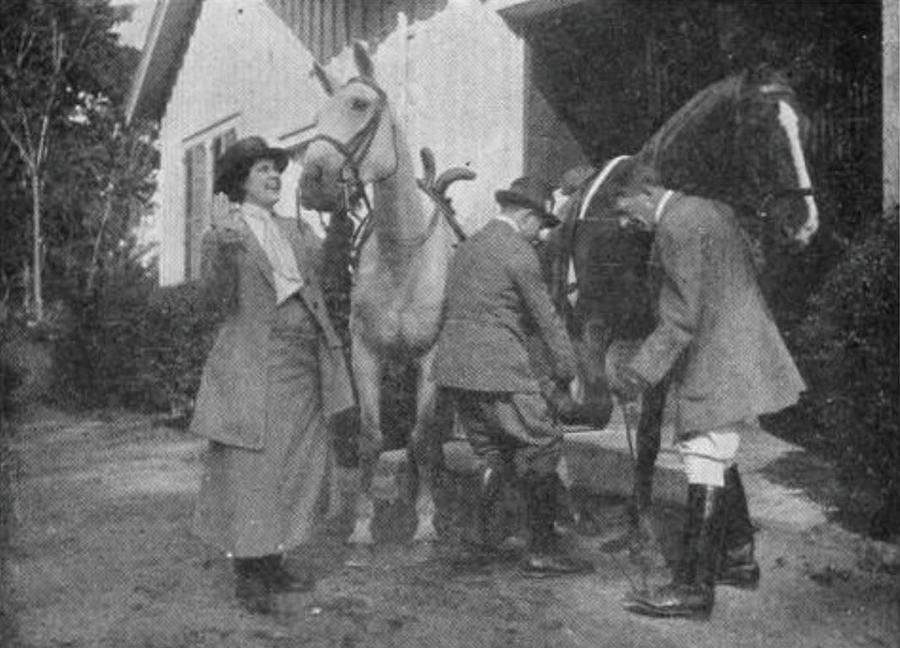
Early silent cinema often punished female desire with death or destitution; Playing Dead inverts the scaffold. Clara’s prospective lover, played by Sidney Drew with a moustache so waxed it could slice bread, is never villainised. He courts decorously, accepts refusal with grace, exits frame. The true antagonist is James’s possessiveness masquerading as altruism. By faking death he attempts authorship over Clara’s future, only to discover narratives written in another’s blood rarely cooperate. When she chooses—ambiguously, agonisingly—to remain alone rather than transfer her grief to the waiting suitor, the film lands its most subversive beat: a woman’s right to inhabit mourning on her own terms.
One wonders how much Mrs. Drew, credited co-scenarist, channelled her own frustrations. In 1913 married women could not obtain divorce in New York without proof of adultery and corroborative witnesses. To leave an unhappy union required either humiliation or disappearance. The screenplay’s obsession with vanishing reads like covert manifesto: if the law denies exit, perhaps death—social, nominal—becomes the sole portal to autonomy.
Running a scant twenty-two minutes at 18 fps, the film nonetheless experiments with temporal overlap. We witness James’s preparations (letter forgery, boat rental) intercut with Clara’s quotidian routines. Cross-cutting implies simultaneity, yet costume details—a torn hem, a smudge of ink—appear in both strands, suggesting either sloppy continuity or intentional rupture. I favour the latter: time itself has grown porous under the weight of deceit. The world, like marriage, suffers a rip no tailor can mend.
Editors in 1913 usually spliced for clarity; here they splice for vertigo. When James rows toward the foggy horizon, the image repeats thrice—each iteration darker, as though the river were developing its own photographic negative. Critics of the era dismissed the flourish as “excess.” Modern eyes recognise an ancestor of Eisenstein’s metric montage: emotion quantified through duration.
Place Playing Dead beside Sins of the Parents and you see two divergent moral universes. The latter film punishes transgression across generations; the former punishes the very wish to transgress. Or juxtapose it with Sonho de Valsa, where a dancer’s fantasy liberates her from matrimonial cage. James’s fantasy imprisons rather than frees; even the wish to escape curdles into fresh snare.
Only The Invisible Power offers tonal kinship: both movies personify force as absence. Yet where that picture literalises invisibility via sci-fi contraption, Playing Dead achieves the same through social contract: a man is invisible because community agrees he no longer exists.
Though monochromatic, the 35 mm prints carried tinting instructions: amber for interiors, blue for night, straw for exteriors. Modern restorations often neglect these cues, projecting sterile black-and-white. If you encounter a version awash in #0E7490 nocturnes, treasure it; the sea-blue floods the frame with aqueous dread, turning bedrooms into shipwrecks. One can almost taste brine.
Upon release the film toured variety bills alongside jugglers and boxing kangaroos. Audiences, primed for pratfall, shifted restlessly in their seats. Yet a critic for the Newark Evening Star noted “a hush so complete one hears the gaslights.” That hush followed the picture into obscurity; no complete print survived the 1920 nitrate purges. What circulates today is a 16 mm abridgement discovered in a Saskatchewan barn, fused with another reel of Australia Calls. Restoration required digital grafting; some frames bear water stains shaped like continental drift. Imperfect, yes—yet the scars suit a tale about the fragility of presence.
Modern viewers, spoiled on twist-driven thrillers, may sniff at the “predictable” reveal. But predictability is genre’s DNA; the pleasure lies in how the film stages inevitability. When James finally confesses, the camera retreats to the far end of a corridor, shrinking the couple into dolls inside a dollhouse. We are not invited to eavesdrop; we are asked to contemplate the architecture of regret. The corridor becomes a timeline: past at one terminus, future at the other, present forever suspended in echo.
So what lingers? Not the plot—its bones are pickable in minutes—but the aftertaste: the sense that love, when weaponised as martyrdom, turns double-edged. James sought to gift freedom; instead he gifts trauma. Clara, denied both husband and corpse, occupies a limbo more corrosive than widowhood. The last iris shot closes not on her face but on the empty chair opposite, a lacuna where marriage once sat.
I have screened this film at midnights, at noons, on subway phones and gallery walls. Each viewing secretes new bacteria: sometimes I see a comedy of manners, sometimes a horror of entitlement. The film refuses catharsis; like the river that swallows and returns the boat, it loops, inviting us to drown again.
Watch it, then watch your own reflection in the black glass after credits fade. Ask which of your relationships you have tried to edit from outside the frame. Ask what corpse you keep hidden in the cellar of good intentions. Playing Dead offers no answers, only a mirror—slightly cracked, sea-blue, humming with the chill of self-recognition.
IMDb —
1936
Community
Log in to comment.