DbcultAccessing Vault...
Cult Review
Senior Film Conservator
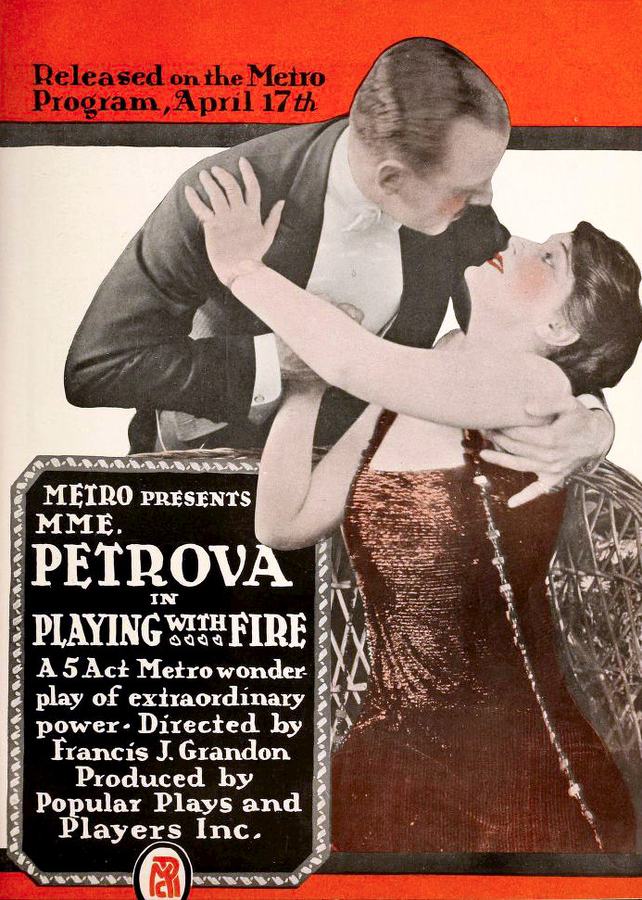
In the annals of early cinematic drama, where emotions were writ large across the screen and the absence of spoken dialogue only intensified the visual narrative, certain films stand out as potent distillations of human experience. 'Playing with Fire', a 1916 silent masterpiece, is unequivocally one such work. It is not merely a film; it is a profound journey into the labyrinthine corridors of a woman's heart, a searing examination of desperation, societal expectation, and the unpredictable, often tragic, path to self-discovery. Directed with an astute eye for dramatic tension and brought to life by a cast whose very expressions conveyed volumes, this film, penned by the insightful Aaron Hoffman, transcends its era to offer a timeless meditation on love, sacrifice, and the often-unforeseen consequences of our most desperate choices. It invites us to ponder the moral ambiguities that define us, long before the advent of synchronized sound or Technicolor, proving that true artistry needs no vocal accompaniment to resonate deeply within the soul.
The narrative's foundational tragedy is laid bare with the introduction of Jean Servian, portrayed with breathtaking vulnerability and steely resolve by the incomparable Olga Petrova. Jean's predicament is painted in stark, unforgiving strokes: her eyesight is failing, a cruel metaphor for a future growing increasingly dim, and her financial situation is precarious, threatening to plunge her into destitution. In an era where a woman's economic security was often inextricably linked to matrimony, Jean's options are brutally limited. Her choice, then, to marry the wealthy widower Geoffrey Vane (Arthur Hoops) is not born of romantic affection but of sheer, unadorned pragmatism. This is no fairytale union; Jean is unflinchingly honest, declaring that Geoffrey must be content with her gratitude rather than her love. This transactional agreement sets a somber, almost fatalistic, tone for the story, immediately positioning Jean not as a romantic heroine, but as a survivor navigating a world with few safety nets. Her decision, while morally complex, is entirely understandable within the social strictures of the time, highlighting the profound pressures exerted upon women to secure their future, even at the cost of personal desire. The film, through Petrova's nuanced performance, conveys the heavy weight of this decision, the quiet dignity with which Jean accepts her fate, and the unspoken yearning for something more that flickers beneath her pragmatic exterior.
Into this carefully constructed, emotionally sterile existence walks Philip Derblay (Philip Hahn), an artist whose bohemian charm and passionate nature ignite a spark within Jean that her marriage to Geoffrey could never hope to kindle. The affair that ensues is portrayed with a tantalizing mix of forbidden exhilaration and impending doom. It is a desperate grasp for genuine human connection, a fleeting escape from the gilded cage of her dutiful life. For a time, Jean experiences the intoxicating rush of being truly desired, truly loved, if only in secret. However, the very intensity of their liaison makes it unsustainable, a flame destined to consume itself. Philip, perhaps a cad, perhaps merely a free spirit incapable of commitment, eventually leaves her, shattering Jean's fragile world and leaving her to face the consequences alone. This segment of the film is crucial, illustrating the profound risks Jean was willing to take for emotional fulfillment and the devastating emotional fallout when that gamble fails. It is a powerful commentary on the double standards of the era, where a man could walk away relatively unscathed, while a woman bore the full brunt of societal condemnation and personal heartbreak. The quiet suffering that follows Philip's departure is palpable, rendered with a poignant realism that makes Jean's subsequent retreat into her quiet life with Geoffrey all the more melancholic.
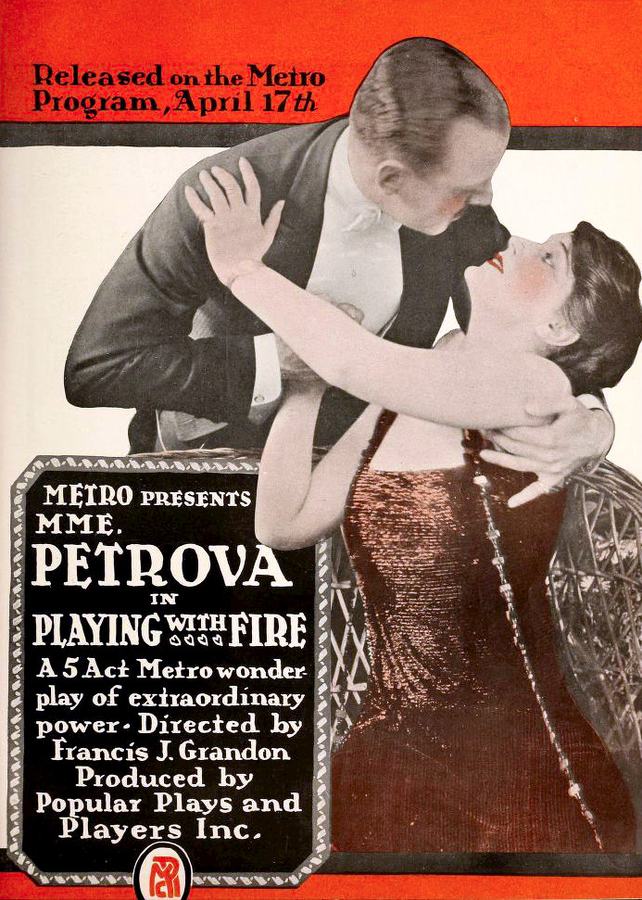
Following the devastating end of her affair, Jean settles into a life of apparent domestic tranquility with Geoffrey. The film suggests years pass in this quiet, perhaps boring, routine, a period marked by the absence of drama but also, crucially, the absence of true passion. Geoffrey, oblivious to the tempest that once raged within his wife's heart, provides stability and comfort, if not fervent love. This interlude, while outwardly peaceful, is underpinned by Jean's unspoken secret, a ticking time bomb waiting for the right catalyst. That catalyst arrives in the most unexpected and dramatically potent fashion: Geoffrey's daughter, Lucille (Evelyn Brent), announces her engagement to Philip Derblay. The irony is excruciating, the dramatic tension immediate and almost unbearable. Jean is thrust into an impossible dilemma: remain silent and watch her former lover marry her stepdaughter, or confess and risk shattering not only her own fragile peace but also the lives of those she has come to care for. Her decision to disclose her past affair is born of a complex mix of guilt, a desire for honesty, and perhaps, a subconscious need to purge herself of the secret's burden. It is a moment of profound courage, albeit one fraught with peril, setting the stage for the film's climactic unraveling. This narrative twist, masterfully crafted by Aaron Hoffman, elevates the story beyond a simple melodrama, imbuing it with the weight of classical tragedy where past sins invariably return to haunt the present.
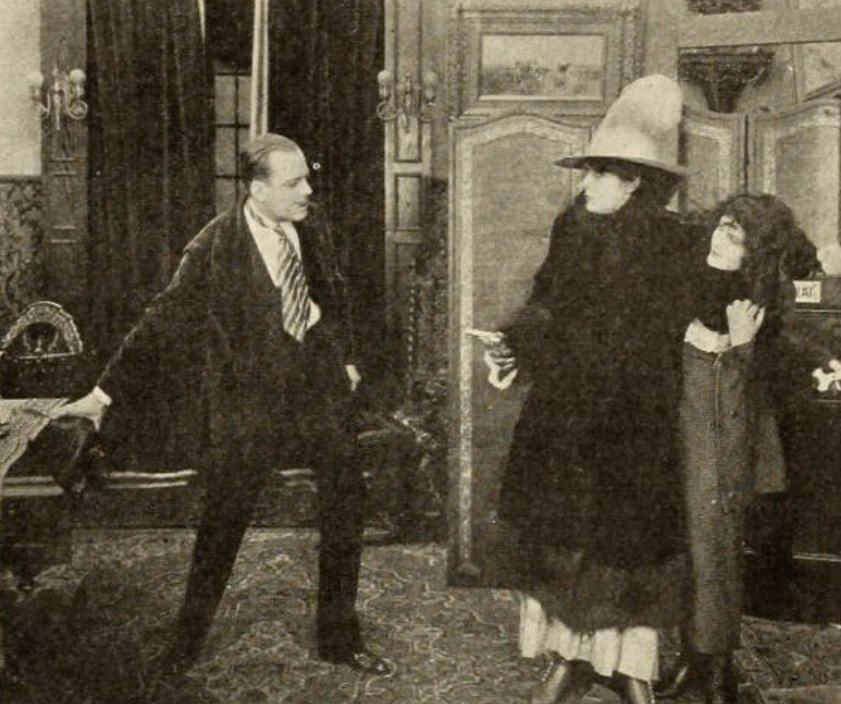
Jean's confession, surprisingly, has little immediate impact on Lucille, who, perhaps out of youthful idealism or a stubborn belief in her own love, remains resolute in her wedding plans. This defiance only amplifies the underlying tension, creating a volatile atmosphere that is destined to erupt. The climax of 'Playing with Fire' is a harrowing sequence of events, a visceral explosion of pent-up emotions and unresolved conflicts. Jean stumbles upon a violent argument between Philip and Lucille, a scene fraught with raw anger and desperation. In the ensuing chaos, a gun is introduced, and in a moment of sheer, horrifying accident, Jean shoots and kills Philip Derblay, the man who once ignited her passion and then abandoned her. This accidental act of violence is a devastating turning point, transforming a domestic drama into a courtroom thriller. The trial that follows is a testament to the film's ability to maintain suspense and explore the intricacies of justice. Despite the tragic outcome, Jean is ultimately acquitted, a verdict that speaks to the circumstances of the shooting and perhaps, to a deeper understanding of her desperate plight. The scene of the shooting itself, conveyed through the powerful visual language of silent cinema, is a masterclass in conveying terror and shock without a single spoken word, relying entirely on the actors' physicality and facial expressions to communicate the profound gravity of the moment.
The aftermath of the trial brings with it a profound emotional revelation for Jean. Having navigated the treacherous waters of desperation, illicit love, and accidental tragedy, she finally arrives at an unexpected truth: her genuine love for Geoffrey Vane. It is a love born not of initial passion or pragmatic necessity, but forged in the crucible of shared adversity and his unwavering kindness. Geoffrey, a man of quiet strength and immense compassion, easily forgives his wife for her past indiscretion, demonstrating a depth of understanding and unconditional affection that transcends the conventional expectations of marriage. His forgiveness is not merely an act of magnanimity but a powerful affirmation of a love that has matured beyond its utilitarian origins. This resolution, while perhaps surprising given the tumultuous journey, offers a poignant commentary on the nature of love itself—how it can evolve, deepen, and reveal itself in the most unforeseen circumstances. It suggests that true connection can be built on foundations other than initial romantic fervor, and that forgiveness, when freely given, can be the ultimate act of devotion. Olga Petrova's portrayal of Jean's realization is subtle yet powerful, her silent expressions conveying the dawning of this profound emotional truth. The film thus concludes not with a dramatic flourish, but with a quiet, hard-won understanding of enduring love and acceptance.
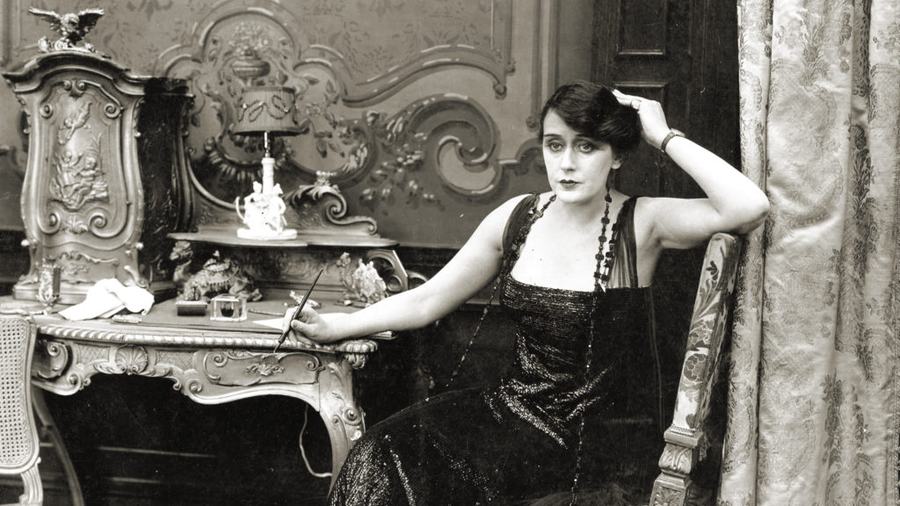
At the heart of 'Playing with Fire' lies the towering performance of Olga Petrova as Jean Servian. Petrova, a renowned stage actress and a significant figure in early cinema, brings an extraordinary intensity and nuance to her character. Her ability to convey Jean's complex inner world—the quiet desperation, the fleeting joy of forbidden love, the crushing weight of guilt, and the final, profound realization of affection—without the aid of dialogue is nothing short of masterful. Petrova's expressive eyes, subtle gestures, and powerful physicality speak volumes, drawing the audience into Jean's emotional vortex. She embodies the archetype of the 'fallen woman' with dignity, refusing to allow Jean to be merely a victim or a villain, but rather a multifaceted human being making difficult choices under immense pressure. Her performance is a testament to the power of silent acting, where every flicker of emotion, every deliberate movement, carries amplified meaning. In an era when actresses like Theda Bara were creating vamps and Mary Pickford epitomized innocence, Petrova carved out a niche for complex, often morally ambiguous, yet deeply sympathetic characters. Her portrayal of Jean Servian stands as one of her most compelling, solidifying her legacy as an actress capable of immense dramatic range and emotional depth. Comparing her work to contemporaries, Petrova often brought a more cerebral, almost European, intensity to her roles, setting her apart from some of the more overtly theatrical American silent stars.
While Olga Petrova rightly commands the screen, the supporting cast of 'Playing with Fire' provides essential depth and realism to the narrative. Arthur Hoops, as the wealthy widower Geoffrey Vane, delivers a remarkably understated performance. His character could easily have been a one-dimensional figure, a mere plot device, but Hoops imbues Geoffrey with a quiet dignity, a genuine kindness, and a profound capacity for love and forgiveness that makes his eventual acceptance of Jean's past all the more moving. His subtle expressions of concern and unwavering support for Jean are crucial to the film's emotional arc. Philip Hahn's portrayal of Philip Derblay, the charismatic artist, is equally effective. Hahn captures the allure and superficiality of a man who can inspire passion but lacks the moral fiber for lasting commitment. His performance makes his betrayal believable and the subsequent tragedy all the more impactful. Evelyn Brent, as Lucille, Geoffrey's daughter, brings a youthful exuberance and fierce independence to her role. Her initial defiance of Jean's confession and her passionate defense of Philip are vital to escalating the dramatic tension leading to the climax. The interplay between these characters, conveyed through their expressive acting and the film's skilled direction, creates a rich tapestry of human relationships, each performance contributing significantly to the overall emotional resonance and narrative coherence of the film. Their collective efforts ensure that the story feels grounded, despite its melodramatic turns, making the audience invest deeply in the fate of each individual.
The intricate plot and compelling character arcs of 'Playing with Fire' are a testament to the masterful screenwriting of Aaron Hoffman. Hoffman's script is a marvel of dramatic construction, building tension incrementally, introducing unexpected twists, and exploring complex moral dilemmas with a keen eye for human psychology. He understands how to craft a story that keeps the audience engaged, not just through sensational events, but through the profound internal struggles of its protagonist. The narrative unfolds with a logical yet unpredictable flow, each decision by Jean leading inexorably to the next, culminating in the tragic shooting and the subsequent journey to self-realization. Hoffman's ability to create sympathetic characters, even those making questionable choices, is a hallmark of his writing. He doesn't shy away from the darker aspects of human nature but frames them within a context that allows for understanding and empathy. The structure of the screenplay, moving from desperation to forbidden love, quiet domesticity, resurfaced past, and finally, a tragic yet redemptive resolution, demonstrates a sophisticated understanding of dramatic pacing and emotional impact. His work here showcases how a well-crafted narrative, even without spoken words, can convey profound truths and evoke powerful emotions, making 'Playing with Fire' a standout example of early cinematic storytelling.
Beyond its gripping plot, 'Playing with Fire' delves into a rich tapestry of thematic undercurrents that resonate far beyond its silent era origins. The film is a powerful commentary on the limited agency of women in the early 20th century, particularly regarding economic independence and personal choice. Jean Servian's initial marriage of convenience highlights the societal pressures that often forced women into pragmatic unions, sacrificing personal happiness for security. This leads to a deeper exploration of the nature of love itself: is it an initial spark, a contractual obligation, or a slow-burning affection forged through shared experience and forgiveness? The film posits that it can be all three, and that the most profound love might emerge from unexpected places and through arduous trials. The theme of consequence is ever-present; Jean's past actions, no matter how distant, inevitably return to shape her present. Yet, the film also offers a compelling argument for redemption. Jean's journey is one of profound self-discovery, leading her to understand and appreciate the genuine, unconditional love offered by Geoffrey. His capacity for forgiveness, even in the face of significant transgression, serves as a powerful testament to the redemptive potential of human connection. These complex moral and emotional themes elevate 'Playing with Fire' from a mere melodrama to a thoughtful examination of human resilience, the enduring power of love, and the possibility of finding peace after profound turmoil.
'Playing with Fire' serves as an exemplary illustration of the silent film era's unique capacity for profound expression. Stripped of dialogue, filmmakers and actors were compelled to hone their craft, relying on visual storytelling, exaggerated yet effective facial expressions, powerful body language, and carefully constructed intertitles to convey narrative and emotion. The film's direction masterfully utilizes close-ups to emphasize key emotional moments, and wider shots to establish setting and mood, creating a visual rhythm that guides the audience through Jean's tumultuous journey. The use of light and shadow, characteristic of the period, adds a layer of dramatic intensity, often mirroring the internal conflicts of the characters. Intertitles, far from being mere plot devices, become integral parts of the narrative, providing crucial exposition and sometimes even poetic commentary, bridging the gap between purely visual storytelling and the audience's understanding. In its exploration of complex moral dilemmas and societal pressures, 'Playing with Fire' shares thematic kinship with other silent dramas of the period, such as The Climbers, which also explored social climbing and its moral costs, or The Vow, examining the weight of promises and their consequences. These films, including 'Playing with Fire', demonstrate that silent cinema was far from simplistic; it was a sophisticated art form that demanded active engagement from its audience, inviting them to interpret and feel the narrative on a deeply personal level. The reliance on universal human emotions and visually striking imagery ensures that these stories continue to resonate, even a century later.
In conclusion, 'Playing with Fire' stands as a compelling testament to the power and artistry of early cinema. It is a film that defies simplistic categorization, weaving together elements of melodrama, psychological drama, and moral inquiry into a cohesive and deeply affecting whole. Olga Petrova's unforgettable performance as Jean Servian anchors the narrative, transforming a woman driven by desperation into a figure of profound complexity and unexpected resilience. Aaron Hoffman's intelligent screenplay ensures that the dramatic stakes are consistently high, while the supporting cast provides robust emotional support, creating a fully realized world of human ambition, fallibility, and redemption. For contemporary audiences, 'Playing with Fire' offers more than just a glimpse into cinematic history; it provides a timeless exploration of themes that continue to resonate: the choices we make under duress, the enduring consequences of our actions, and the surprising paths to love and forgiveness. It is a powerful reminder that even in silence, stories can speak volumes, igniting emotions and sparking introspection that lingers long after the final frame. Its legacy is not just as a well-crafted silent film, but as a poignant human drama that continues to play with the fiery complexities of the heart.
IMDb 5
1917
Community
Log in to comment.