DbcultAccessing Vault...
Cult Review
Senior Film Conservator
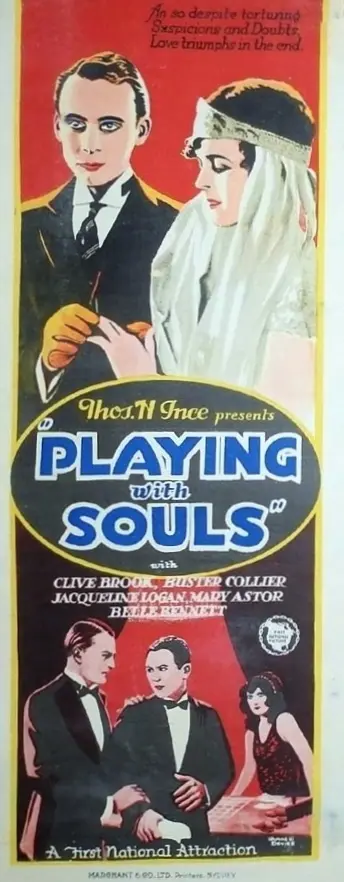
In the annals of silent cinema, few narratives delve as unflinchingly into the labyrinthine complexities of familial discord and the enduring quest for identity as "Playing with Souls". This 1925 drama, penned by the insightful C. Gardner Sullivan and Countess De Chambrun, is a masterclass in psychological tension, weaving a story so steeped in manipulation and revelation that it reverberates with a timeless resonance. It's a film that dares to explore the darkest corners of human relationships, where the very bonds that should offer solace become instruments of torment, and the search for truth leads down paths fraught with moral ambiguity.
The premise itself is a narrative powder keg. We open on the fracturing of the Dale family, a seismic event that sets in motion a chain of events both tragic and compelling. Matt and Amy Dale, caught in the throes of their own irreconcilable differences, make a decision with profound, unforeseen consequences: their son, Matthew, is to be raised in blissful, yet ultimately damaging, ignorance of his true parentage. Shipped off to an English school, Matthew grows to manhood haunted by an inexplicable void, a gnawing uncertainty about his origins. This isn't merely a plot device; it's the very crucible in which Matthew's character is forged, a testament to the fundamental human need for connection to one's roots. His subsequent journey to Paris isn't just a physical relocation; it's a desperate pilgrimage into the unknown, a symbolic descent into a European melting pot of self-discovery and potential ruin.
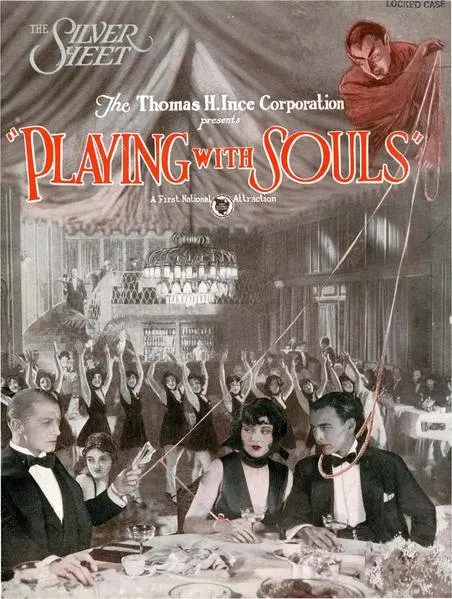
Paris, the city of lights and shadows, becomes a character in its own right in "Playing with Souls". For Matthew, it represents both liberation and temptation. Here, he encounters Bricotte, a denizen of Montmartre whose moral compass is, charitably speaking, less than perfectly aligned. Her presence introduces an element of worldly cynicism and potential corruption, a stark contrast to Matthew's English upbringing. This relationship, however fleeting, serves to deepen Matthew's immersion into a world far removed from the sheltered existence he has known, making him ripe for the manipulations that are soon to unfold. It's a classic cinematic trope, the innocent abroad, but here, it's imbued with a particular pathos, as Matthew's vulnerability stems from a fundamental lack of self-knowledge. The film masterfully uses the vibrant, yet morally ambiguous, backdrop of 1920s Paris to amplify the internal turmoil of its protagonist.
The arrival of Matt Dale, Matthew's father, in Paris marks a pivotal turning point, shifting the narrative from a quest for identity to a deliberate, calculated game of psychological torment. Introducing himself as a mere friend, the elder Dale’s motives are immediately suspect, his actions shrouded in a disturbing paternalistic control. His orchestration of Bricotte's presence in his own apartment, timed precisely for Matthew's discovery, is a stroke of narrative genius, a cruel twist designed to shatter Matthew's nascent trust and deepen his despair. This act of calculated betrayal is not merely a plot device; it speaks volumes about the capacity for human cruelty, even within the bonds of family. It raises uncomfortable questions about the nature of love and protection when warped by resentment and a desire for control. Similar themes of manipulation and the destructive power of secrets can be observed in films like A Soul for Sale, where characters navigate moral compromises under duress, though "Playing with Souls" takes it a step further by placing the manipulation squarely within a parent-child dynamic.
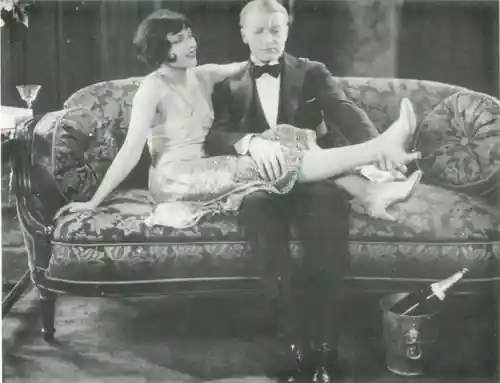
Just as Matthew grapples with one betrayal, another, far more transgressive, looms. Amy Dale, his mother, also surfaces in Paris, her character transformed by the intervening years. The film implies a hardening, perhaps a worldliness, that makes her subsequent actions all the more shocking. Her deliberate "vamping" of Matthew, her own son, is a moment of profound psychological horror, pushing the boundaries of what was acceptable even in the daring narratives of the silent era. This isn't merely seduction; it's an act laden with Freudian undertones, a perverse mirroring of the very intimacy Matthew craves from a parent, twisted into something illicit and deeply disturbing. The filmmakers, C. Gardner Sullivan and Countess De Chambrun, were unafraid to plumb the depths of human pathology, presenting a scenario that would undoubtedly have shocked contemporary audiences and continues to resonate with unsettling power today. This sequence underscores the film's title, truly playing with the souls of its characters, pushing them to their absolute breaking points.
The inevitable discovery by the elder Dale, witnessing this horrifying tableau, serves as the narrative’s cataclysmic climax. It is here that the carefully constructed facade crumbles, and the devastating truth is laid bare: Matt and Amy are Matthew's parents. The revelation is delivered with a dramatic force that silent film actors like Josef Swickard (Matt Dale), Helen Hoge (Amy Dale), and William Collier Jr. (Matthew) would have conveyed with heightened, yet nuanced, expressiveness. One can imagine the wide-eyed horror, the trembling disbelief, the silent scream of a soul utterly shattered. Matthew's subsequent suicide attempt is a visceral manifestation of this complete psychological collapse, a desperate bid to escape a reality too cruel to bear. The father's desperate act of saving his son, however, introduces a flicker of redemption, a suggestion that even after such profound cruelty, a vestige of paternal love might remain. The emotional weight of these scenes would have been carried by powerful facial expressions and body language, the hallmarks of great silent acting, making the audience feel every tremor of despair and relief.
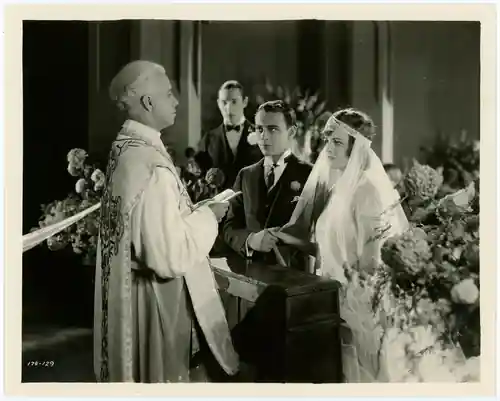
The film's resolution, while offering a semblance of closure, is far from a simple happy ending. Matthew's return to England and his marriage to Margo, his long-suffering fiancée, represents a retreat from the chaos of his past, an attempt to build a life founded on stability and genuine affection. Margo, a character often relegated to the periphery in such grand dramas, here embodies the promise of normalcy and unconditional love, a stark contrast to the manipulative affections he experienced in Paris. Her steadfastness provides a much-needed anchor for Matthew's shattered psyche. This kind of redemptive marriage after a period of intense turmoil is a recurring motif in cinema, seen in various forms across genres, albeit rarely with the same transgressive preceding events as in "Playing with Souls".
Perhaps most intriguing, and certainly most ambiguous, is the reunion of Matt and Amy Dale in their twilight years. After the emotional wreckage they have wrought, their reconciliation suggests a complex interplay of shared history, lingering affection, and perhaps, a weary acceptance of their own flawed humanity. It's not necessarily a joyous reunion, but rather one born of shared experience and the quiet understanding that certain bonds, however strained, endure. This ending resists easy categorization, leaving the audience to ponder the true nature of their reconciliation. Is it love, convenience, or simply the exhaustion of playing such dangerous games with souls? This nuanced conclusion elevates the film beyond a simple melodrama, imbuing it with a psychological depth that resonates long after the final frame.
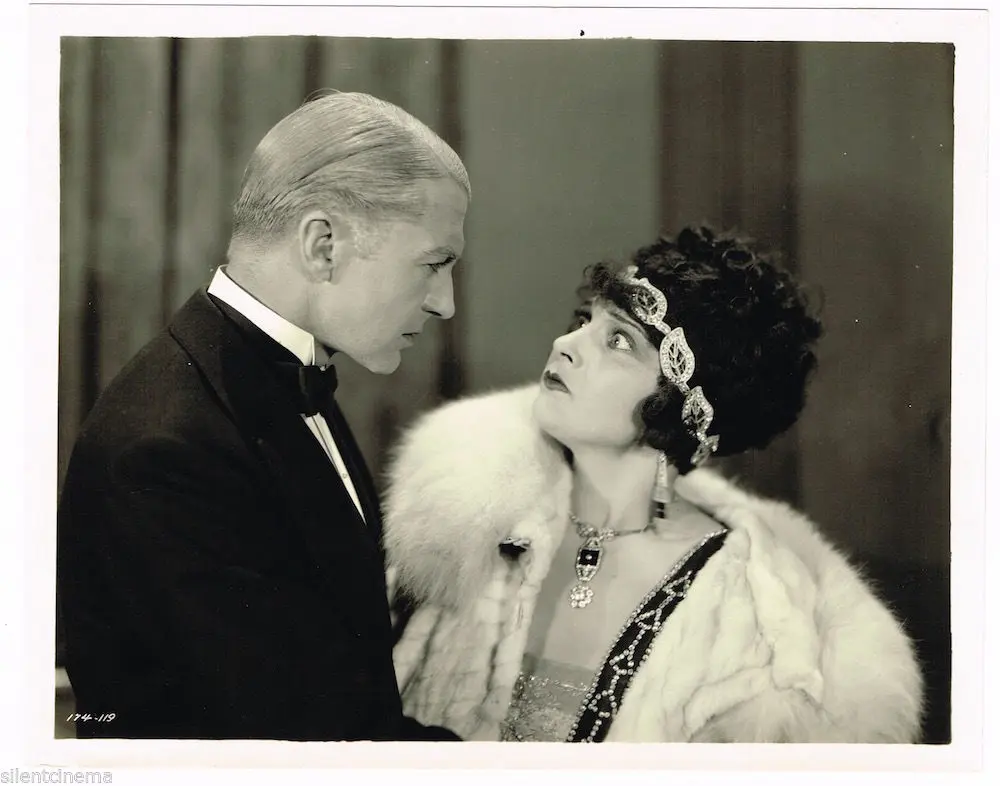
While specific details of individual performances from the era are often lost to time, the ensemble cast of "Playing with Souls", featuring talents like Josef Swickard, Helen Hoge, Garner Hamm, and William Collier Jr., would have been tasked with conveying this intricate narrative through the potent language of silent film. Their performances would have relied heavily on exaggerated yet precise facial expressions, dramatic gestures, and carefully choreographed movements to articulate the characters' inner turmoil and external conflicts. The intensity of Matthew's obsession, the chilling calculation of Matt Dale, and the conflicted, perhaps desperate, actions of Amy Dale would have been etched onto the screen through their physical artistry. The director, working with writers C. Gardner Sullivan and Countess De Chambrun, would have employed close-ups to capture the nuances of emotion, long shots to establish the dramatic settings, and innovative editing techniques to build suspense and convey the rapid shifts in the characters' psychological states. The choice of Paris as a setting, for instance, would have allowed for stunning cinematography, contrasting the city's beauty with the ugliness of human deception.
The film's exploration of identity and paternity places it in a lineage of dramas concerned with personal origins, albeit with a uniquely dark twist. Unlike the more straightforward search for family found in something like The Girl from Bohemia, which might focus on social integration, "Playing with Souls" delves into the destructive potential of withheld information and the psychological scars it leaves. The film asks profound questions about what constitutes a family, whether blood ties inherently mean love, and the moral responsibilities of parenthood. The sheer audacity of the plot—particularly the mother's actions—speaks to a period in cinema where filmmakers were pushing boundaries, exploring themes that would remain controversial for decades. It's a testament to the power of silent film to convey complex moral dilemmas without uttering a single spoken word, relying instead on visual storytelling and the raw emotional power of its actors.
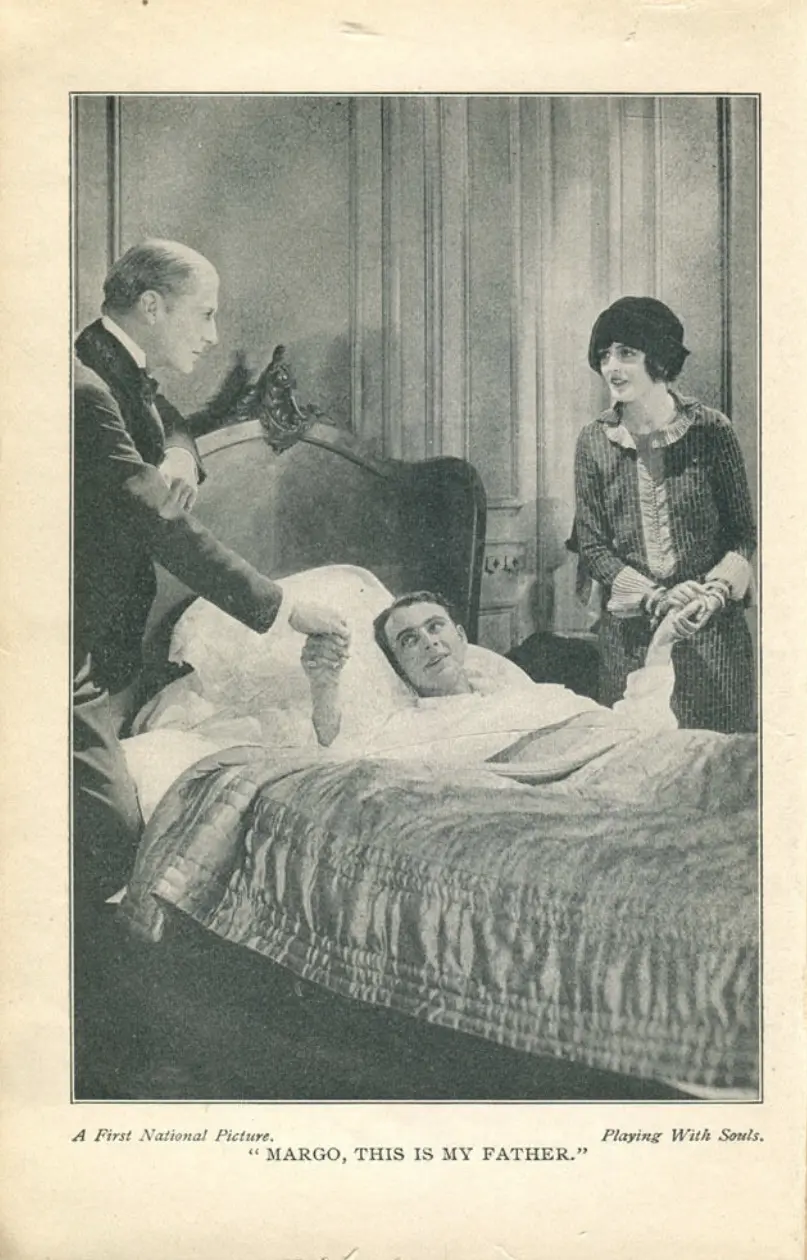
"Playing with Souls" stands as a compelling example of early psychological drama, a genre that would continue to evolve and captivate audiences throughout cinematic history. It anticipates later works that dissect family dysfunction and the trauma of hidden truths. The film’s narrative structure, with its escalating tensions and shocking revelations, keeps the audience perpetually on edge, demonstrating a sophisticated understanding of dramatic pacing. The writers, C. Gardner Sullivan and Countess De Chambrun, crafted a script that is both sensational and deeply introspective, allowing the characters' motivations to be explored, even if those motivations are often dark and disturbing. This isn't a film about good versus evil in a simplistic sense, but rather about the messy, often contradictory, nature of human beings, capable of both immense cruelty and surprising acts of redemption. The film's title itself is a perfect encapsulation of its central theme: the characters, particularly the parents, are indeed playing with the souls of others, and in doing so, irrevocably altering their own.
The enduring power of "Playing with Souls" lies in its fearless exploration of taboo subjects and its nuanced portrayal of human fallibility. It’s a reminder that even in an era without synchronized sound, cinema possessed the ability to delve into the most intricate corners of the human psyche, provoking thought and challenging societal norms. While it may not be as widely known as some of its contemporaries, its narrative audacity and psychological depth mark it as a significant piece of cinematic history. For those interested in the evolution of dramatic storytelling and the early forays into complex character studies, "Playing with Souls" offers a rich and rewarding experience, a testament to the power of a well-crafted story to transcend time and technological limitations.
Consider this film a vital precursor to the kind of intense, character-driven dramas that would define later decades. Its willingness to tackle incestuous undertones, paternal manipulation, and the devastating impact of identity suppression sets it apart. It’s more akin to the moral quandaries found in The Reckless Sex, which also navigated the treacherous waters of societal disapproval and personal scandal, though "Playing with Souls" anchors its scandal firmly within the family unit, making it even more potent. The film doesn't offer easy answers, and its resolution, while providing a degree of peace for Matthew, leaves an unsettling impression regarding the parents' ultimate fate. This ambiguity is one of its greatest strengths, inviting viewers to ponder the lasting consequences of their actions and the true meaning of forgiveness and reconciliation. It's a challenging, yet ultimately thought-provoking, piece of cinema that deserves rediscovery by modern audiences who appreciate the depth and artistry of the silent era.
IMDb —
1919
Community
Log in to comment.