DbcultAccessing Vault...
Cult Review
Senior Film Conservator
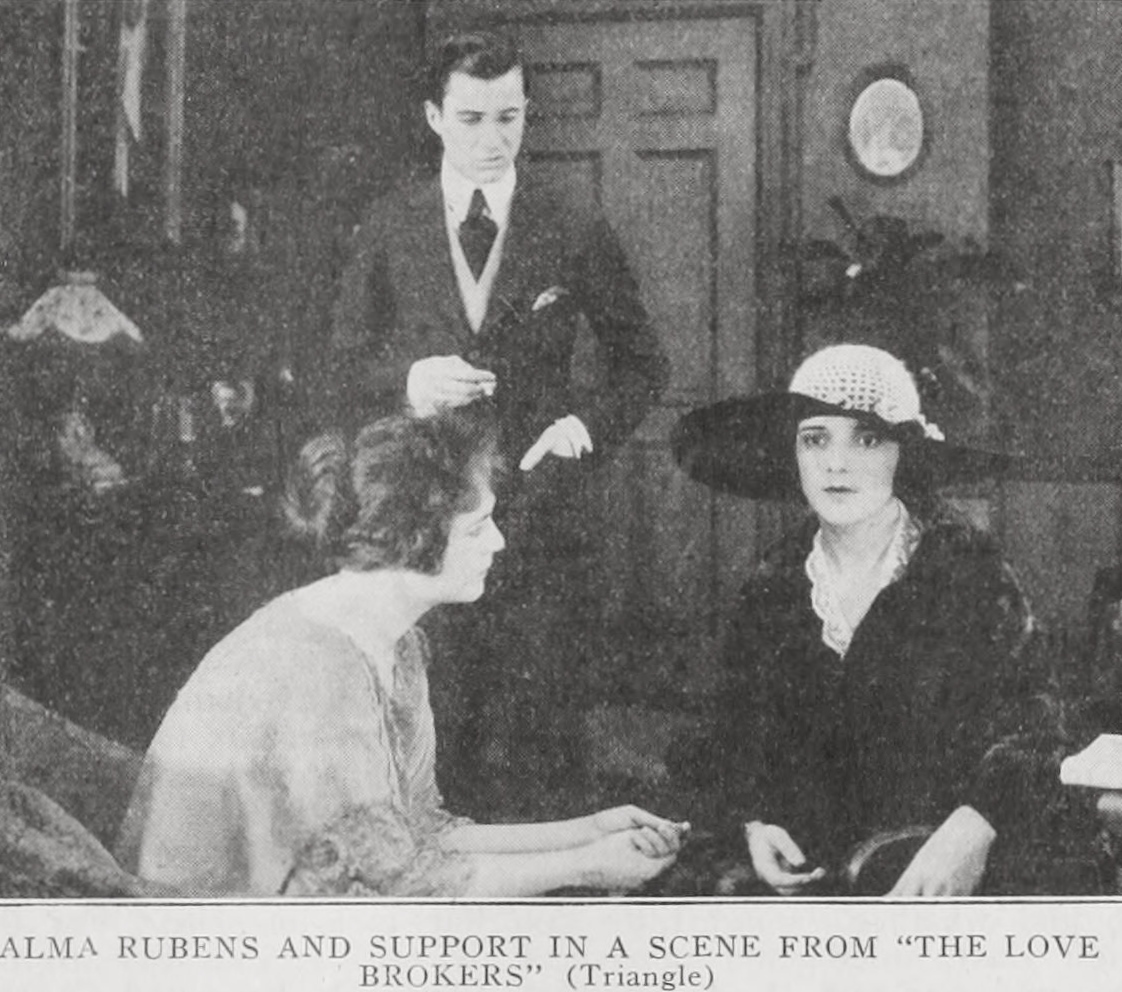
A celluloid exploration of the thin line between desperation and devotion, set against the backdrop of a burgeoning New York avant-garde.
In the pantheon of silent cinema, few narratives capture the intersection of urban squalor and high-society artifice with the poignant clarity found in The Love Brokers. Directed with a keen eye for the social stratifications of 1918, this film serves as more than a mere melodrama; it is a sprawling meditation on the ethics of survival in an era that offered little safety net for the artistically inclined. Alma Rubens, whose screen presence often bordered on the ethereal, delivers a performance of remarkable psychological density as Charlotte Carter. Unlike the protagonists in The Big Sister, who often grapple with more localized domestic tragedies, Carter is thrust into a macrocosmic web of legal jeopardy and financial predation.
The film opens by immersing the viewer in the Bohemian quarter—a space characterized by its creative vitality and its crushing poverty. It is here that we meet Charlotte, a songwriter whose melodies are the only currency she possesses in a world that demands hard cash. The cinematography utilizes the chiaroscuro of New York's alleyways to mirror the moral ambiguity that Peter Ladislaw introduces into her life. Ladislaw, played with a frantic energy by Joseph Bennett, represents the 'fallen man' archetype, a stark contrast to the stoic villains of The Yellow Traffic. His crime—the forgery of checks—is not born of malice but of a weak-willed desire to maintain appearances, a recurring theme in the works of writers W. Carey Wonderly and Charles J. Wilson.
The entry of Olga Grey, the 'dishonest schemer,' shifts the film into a higher gear of narrative complexity. Grey’s manipulation of Charlotte is a masterclass in predatory psychology. She doesn't just offer a solution; she constructs a moral trap, convincing Charlotte that a fraudulent marriage is a selfless act of mercy. This dynamic of the 'broker'—the middleman who commodifies human emotion—is a searing critique of the transactional nature of early 20th-century social climbing. It echoes the darker undertones found in Lady Audley's Secret, where identity and marriage are merely pawns in a larger game of class warfare.
The centerpiece of The Love Brokers is the hospital sequence, where Charlotte weds the seemingly doomed Gerard Townshend. George C. Pearce brings a fragile dignity to Townshend, a man whose wealth has made him a target even as he faces the end of his life. The tension in these scenes is palpable, driven by the audience's awareness of the macabre irony: Charlotte is praying for the recovery of a man she married only because he was expected to die. This narrative pivot is handled with far more nuance than the typical 'miracle' tropes of the era, such as those seen in The Flaming Sword.
When Townshend survives the operation, the film transitions from a heist thriller into a profound character study. The subsequent scenes of domestic life, fraught with Charlotte's guilt and Gerard's burgeoning affection, are among the most emotionally resonant in silent film. Rubens conveys a spectrum of internal conflict through subtle shifts in posture and gaze, avoiding the histrionics that often marred the performances in Syndig Kærlighed. Her confession—that she married him for the money—is a moment of pure cinematic honesty. It breaks the 'perfect heroine' mold, presenting a woman who is flawed, desperate, and ultimately, profoundly human.
The direction of The Love Brokers demonstrates a sophisticated understanding of spatial dynamics. The contrast between the cramped, shadow-filled rooms of the Bohemian quarter and the expansive, light-filled estate of Townshend serves as a visual metaphor for the characters' internal states. In the quarter, the camera feels intrusive, mirroring the pressure Charlotte feels from Ladislaw and Grey. In the Townshend estate, the wide shots emphasize the isolation of the couple, highlighting their need to find a common language in a house built on a foundation of lies. This use of environment as character is reminiscent of the atmospheric depth found in Sunshine Alley.
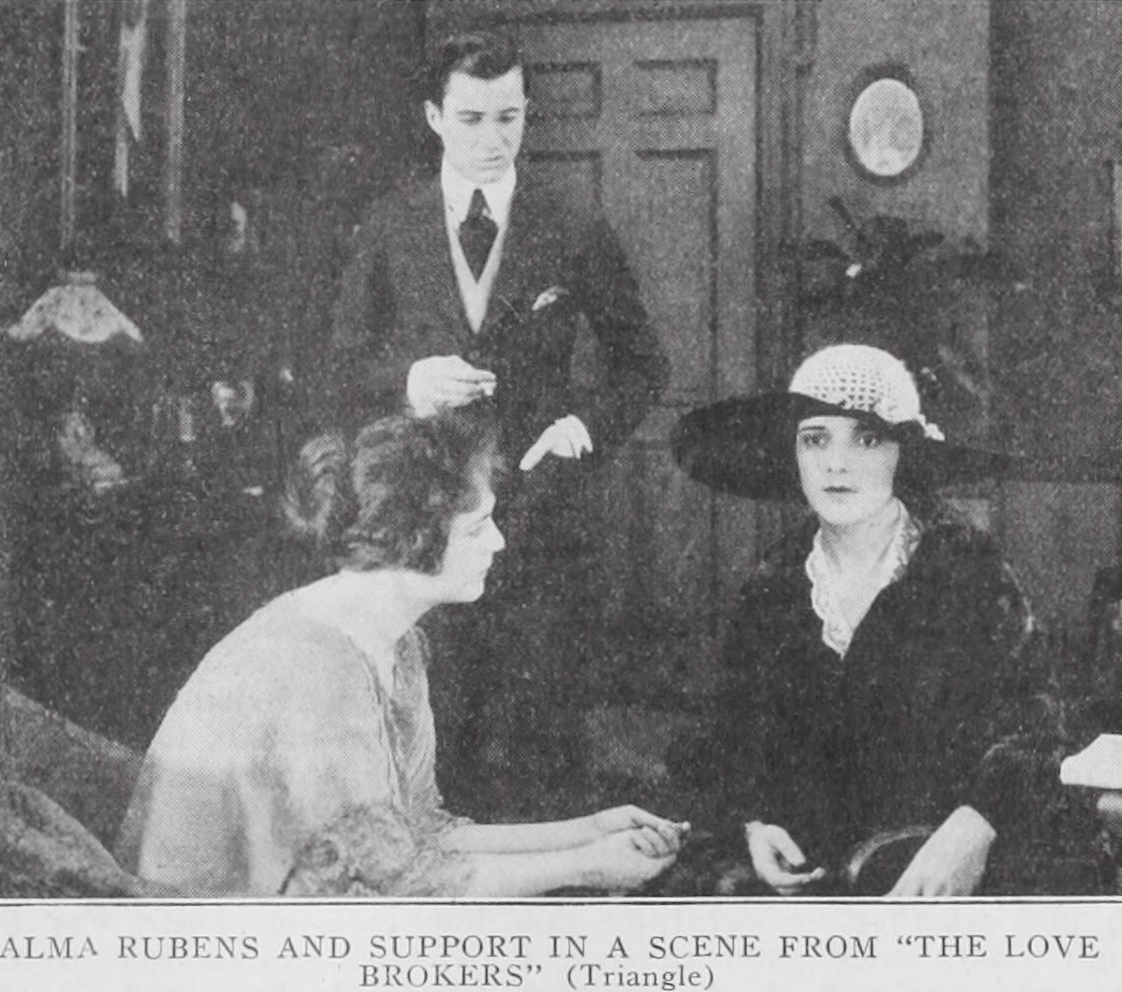
Furthermore, the film’s pacing is remarkably modern. While many silents of the late 1910s suffered from a theatrical rigidity, The Love Brokers maintains a fluid rhythm, particularly during the third-act climax where Olga and Peter attempt to frame the couple for divorce. The editing here is sharp, creating a sense of urgency that propels the story toward its redemptive conclusion. The way the couple 'rids themselves of the crooks' is not through violence, but through a unified front of moral clarity—a thematic resolution that feels earned rather than forced.
At its core, The Love Brokers is an exploration of the transformative power of forgiveness. Townshend’s decision to forgive Charlotte's initial deception is the catalyst for the film's true emotional climax. In a cinematic landscape often dominated by the rigid morality of films like The Rights of Man: A Story of War's Red Blotch, where transgressions are met with swift and often fatal consequences, The Love Brokers offers a more compassionate outlook. It suggests that love is not a static state but a process of constant negotiation and mutual purgation.
The supporting cast also deserves recognition for grounding this high-concept plot. Texas Guinan, appearing in an early role, provides a glimpse of the screen presence that would eventually make her a legend. The interplay between the antagonists—Peter's pathetic weakness and Olga's cold calculation—creates a multi-layered threat that feels far more substantial than the cartoonish villainy of The Jockey of Death. They represent the predatory fringes of society that thrive on the desperation of the talented but poor.
Reflecting on The Love Brokers over a century later, one is struck by how relevant its themes remain. The struggle of the artist to survive without compromising their integrity is a timeless narrative. Charlotte Carter’s journey from a 'good-hearted girl' to a woman who understands the cost of her choices is a precursor to the complex female protagonists of the 1920s and beyond. The film avoids the simplistic 'happily ever after' by acknowledging the scars left by the deception, choosing instead to focus on the 'beginning' of a marriage built on truth.
While it may not have the surrealist experimentation of The Fairylogue and Radio-Plays or the raw, gritty realism of A Case at Law, The Love Brokers finds its strength in its emotional intelligence. It is a film that respects its characters enough to let them be messy, to let them fail, and to let them grow. For any serious student of silent cinema, or for those who simply appreciate a well-crafted story of redemption, this film is an essential watch. It stands as a testament to the power of the medium to explore the deepest recesses of the human heart, proving that even in the silent era, the loudest truths were often found in the quietest moments of confession.
Related Cinematic Explorations:
IMDb —
1917
Community
Log in to comment.