DbcultAccessing Vault...
Cult Review
Senior Film Conservator
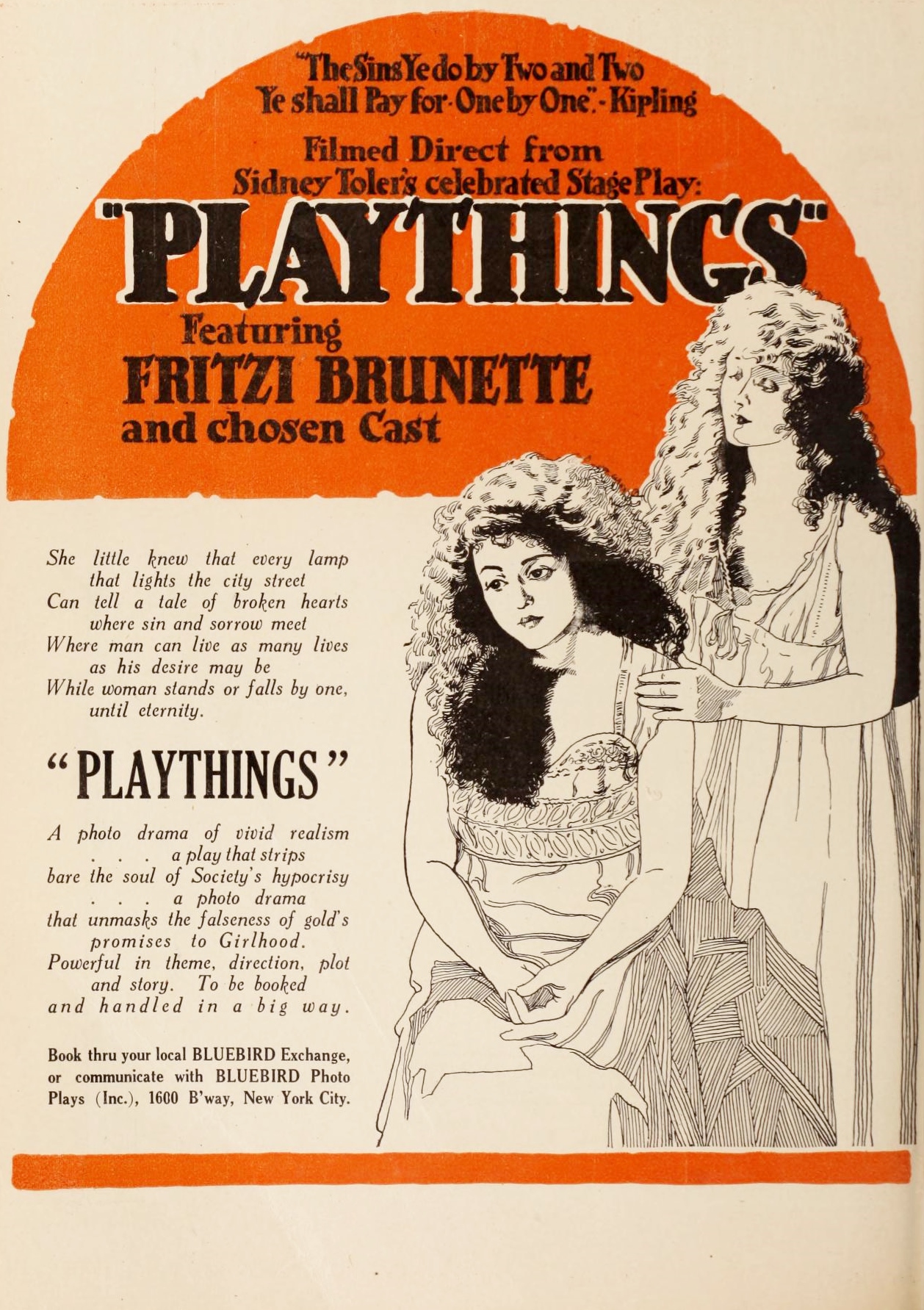
Stepping back into the flickering glow of early cinema, one often encounters narratives that, despite their age and the absence of spoken dialogue, resonate with a profound emotional depth. Such is the case with 'Playthings,' a 1918 silent film that, through its stark portrayal of love, betrayal, and eventual redemption, offers a window into the societal mores and human struggles of its era. It's a film that, much like a finely aged wine, reveals more of its intricate flavors with each contemplative viewing, proving that true artistry transcends the limitations of its medium. This isn't merely a historical artifact; it's a vibrant, pulsating drama that speaks to the enduring complexities of the human heart.
From its very inception, 'Playthings' plunges us into a world where social strata dictate destinies, and personal aspirations often collide violently with harsh realities. Our protagonist, Marjorie North, embodied with a poignant fragility by Mary Anderson, is introduced as a department store clerk. Her daily existence is one of diligent service, a life of modest expectations. Yet, within this seemingly ordinary facade, beats a heart yearning for something more, something beyond the confines of her station. This yearning finds a dangerous outlet in Gordon Trenwith, the scion of the very establishment where Marjorie toils. Gordon, played with a blend of charm and insidious self-interest, represents everything Marjorie believes she desires: status, security, and a love that promises escape. Their affair, born of a potent cocktail of infatuation and ambition, sets in motion a chain of events that will test Marjorie's resilience to its very limits.
Marjorie’s decision to embrace Gordon's affections is not made lightly, nor is it without consequence. She consciously forsakes the genuine, if nascent, devotion of John Hayward, a struggling young lawyer whose earnestness offers a stark contrast to Gordon's polished superficiality. This pivotal choice, a gamble on perceived prosperity over authentic connection, underpins much of the subsequent tragedy. When Marjorie's child is born, unnamed and unacknowledged by its father, the brutal truth of Gordon's intentions shatters her illusions. She realizes, with a crushing finality, that she was merely a 'plaything,' a temporary diversion for a man who viewed her as disposable. This moment of realization is depicted with a raw, visceral pain that transcends the silent screen, a testament to Anderson's powerful performance and the director's keen understanding of human suffering.
The subsequent descent into solitude and despair is harrowing. The societal condemnation of an unmarried mother in that era was swift and unforgiving, leaving women like Marjorie with few avenues for support or redemption. Her child's tragic death, a devastating blow, further isolates her, pushing her to the brink. It is in these darkest hours that a glimmer of humanity emerges, not from the grand halls of power, but from the simple kindness of strangers. Claire Morgan and her new husband, Jerry Thompson, offer Marjorie a refuge, a sanctuary where she can begin the arduous process of healing. This act of compassion, a lifeline thrown across a chasm of despair, highlights the film's nuanced exploration of community and empathy, contrasting sharply with the callousness previously displayed by Gordon.
Years pass, marked by quiet resilience and the slow mending of a broken spirit. Marjorie has built a new life, albeit one shrouded in the secret shame of her past. It is during this period of fragile stability that destiny, with its peculiar blend of cruelty and opportunity, intervenes once more. John Hayward, the earnest young lawyer she once rejected, re-enters her orbit, now a successful and respected attorney. His persistence speaks volumes of his character, a steadfast devotion that has weathered the passage of time. John, however, carries his own misconception, believing Marjorie's initial refusal stemmed from his lack of financial standing. This misunderstanding creates a poignant barrier, a silent wall between two souls who, in different circumstances, might have found solace much sooner.
Marjorie's refusal of John's renewed proposal, offered without explanation, is a testament to the crushing weight of her secret. The fear of judgment, the ingrained shame of her past, renders her incapable of articulating the truth. It's a heartbreaking demonstration of how societal pressures and personal trauma can silence even the most profound desires for happiness. This internal conflict, conveyed through subtle gestures and expressions in the silent medium, is one of the film's most compelling aspects. It forces the audience to confront the difficult choices faced by women in an unforgiving era, where a single misstep could define a lifetime.
The narrative escalates dramatically with the revelation of Gordon Trenwith's impending marriage to John's sister. This development, a cruel twist of fate, forces Marjorie's hand. The thought of John's innocent sister falling prey to the same manipulative charm that shattered her own life is unbearable. In a moment of profound courage and self-sacrifice, Marjorie finally confesses everything. This scene, undoubtedly a tour de force in its time, would have been charged with raw emotion, the silent screams of a woman unburdening years of anguish. Her confession is not merely an act of self-preservation, but a selfless attempt to protect another from the very fate that almost consumed her. It's a powerful moment of agency, where the 'plaything' reclaims her voice and her dignity.
The inevitable confrontation between Gordon and John is a clash of worlds: the entitled villain against the righteous protector. In the ensuing struggle, Gordon meets his end. The immediate assumption, naturally, is that John, driven by fury and a desire for justice, is responsible. The subsequent trial, however, introduces a startling and unexpected twist, a narrative device that keeps the audience captivated until the very last frame. Gordon's secretary, a character previously in the periphery, steps forward to confess. His motive? To settle a score concerning his own wife's honor, violated by Gordon. This revelation shifts the moral landscape, complicating the clear-cut villainy and heroism, and adding layers of intrigue to the already fraught plot. It speaks to the pervasive nature of Gordon's depravity and the far-reaching consequences of his actions, beyond even Marjorie's personal tragedy.
With the truth unveiled, John's understanding of Marjorie's past transforms. The initial misconception of her rejection dissolves, replaced by a profound respect for her strength, her suffering, and her ultimate sacrifice. He forgives her, not out of pity, but out of a deep and abiding love that has endured despite years of separation and misunderstanding. Their eventual marriage is not a fairy-tale ending devoid of scars, but a testament to the power of forgiveness and the possibility of redemption. It signifies a triumph over societal judgment, personal trauma, and the machinations of a cruel fate. 'Playthings' concludes not with a naive 'happily ever after,' but with a more realistic, and perhaps more profound, affirmation of love's capacity to heal and rebuild.
'Playthings' stands as a remarkable example of silent film craftsmanship. The performances, particularly Mary Anderson's portrayal of Marjorie, are a masterclass in non-verbal communication. Every flicker of an eye, every subtle change in posture, every heartfelt gesture conveys a wealth of emotion that words alone might struggle to capture. Her journey from naive hope to utter despair, and finally to a quiet strength, is etched across her face with compelling authenticity. Lew Cody, as the manipulative Gordon Trenwith, perfectly embodies the suave villain, his charm a thin veneer over a core of ruthless self-interest. The supporting cast, including Phil Dunham, Myrtle Reeves, and Charles K. Gerrard, contribute to a rich tapestry of characters, each playing their part in the intricate dance of fate and consequence.
The direction, by an uncredited hand in some records, or possibly a collaborative effort given the era, demonstrates a keen understanding of visual storytelling. The use of intertitles is judicious, serving to advance the plot and provide crucial dialogue without overwhelming the visual narrative. The cinematography, while perhaps lacking the elaborate tracking shots or complex editing of later eras, effectively frames the emotional intensity of the scenes. Close-ups are employed strategically to highlight moments of profound feeling, drawing the audience into Marjorie's internal world. The pacing, crucial for silent dramas, maintains a steady build-up of tension, culminating in the dramatic courtroom revelation.
The thematic concerns of 'Playthings' resonate far beyond its 1918 release. It’s a powerful exploration of class disparity, the vulnerability of women in patriarchal societies, and the insidious nature of moral corruption. Marjorie’s struggle to overcome societal judgment and reclaim her dignity is a timeless narrative, echoing the plights of countless women throughout history. The film critiques the hypocrisy of a society that readily condemns the victim while often allowing the perpetrator to evade consequences, at least initially. This theme of social justice, or the lack thereof, is a recurring motif in silent era melodramas, often serving as a mirror to contemporary societal anxieties.
Comparing 'Playthings' to other films of its time reveals its place within a broader cinematic conversation. The theme of a woman's honor and societal ostracism, for instance, finds parallels in films like Infidelity or Betrayed, which similarly grappled with the consequences of illicit affairs and the struggle for redemption. The nuanced portrayal of a woman navigating a harsh world with limited options might also bring to mind films like The Little Mademoiselle, which often explored the challenges faced by women attempting to assert their independence or survive social hardships. Even the legal drama aspect, with its unexpected twists, aligns with the narrative complexity seen in films such as According to Law, where the pursuit of justice is rarely straightforward.
At its core, 'Playthings' is a testament to the enduring human spirit, a narrative that refuses to shy away from the darkest aspects of life but ultimately champions the transformative power of love and forgiveness. It reminds us that even after profound loss and betrayal, the possibility of a genuine connection and a peaceful future remains, often found in the most unexpected places and through the most arduous journeys.
In an age dominated by sound and spectacle, 'Playthings' serves as a potent reminder of the silent film's unique power. It’s a film that demands active engagement from its audience, inviting them to interpret the unspoken, to feel the raw emotions conveyed through gesture and expression. It’s not just a story of a woman wronged, but a broader commentary on the societal structures that create such injustices, and the personal strength required to overcome them. The journey of Marjorie North, from a naive 'plaything' to a woman who finds her voice and her true partner, is both heartbreaking and ultimately uplifting. It’s a narrative arc that continues to resonate, proving that some stories are truly timeless, their messages echoing across generations, reminding us of the enduring quest for dignity, love, and a place in the world where one is not merely an object, but a cherished individual. Seek out 'Playthings' if you appreciate the profound artistry of silent cinema and narratives that delve deep into the human condition; you won't be disappointed by this compelling, emotionally rich experience.
IMDb 6.1
1929
Community
Log in to comment.