DbcultAccessing Vault...
Cult Review
Senior Film Conservator
So, you’ve stumbled upon Playthings of Hollywood. Is it worth your time today? Well, if you’re into digging up forgotten bits of early talkie melodrama, then maybe. It’s got that specific charm of a film trying to figure out what it is. If you’re a serious cinephile, you might find some interesting, *if* clumsy, moments. But if you’re just looking for a tight, engaging story, you’ll probably find yourself checking your watch. Seriously.
The core of this thing is simple: three sisters, Sheila, Rita, and Phyllis, all trying to make it big in Hollywood. They arrive with stars in their eyes, like so many do. It feels very much of its time, this idea that Hollywood was *the* place for dreams to come true, no matter how flimsy.
And then, as the plot synopsis promises, two of them fall for the same guy, Donald Reed’s character. His name is actually John Smith, which is already a red flag for a character meant to ignite a passionate rivalry. Smith, as in John Smith, is supposed to be the prize. That’s a lot to ask of a character called John Smith. 😅
What struck me first was just how uneven the sisters feel. Sheila Bromley, as the ambitious one, has this really sharp, almost brittle energy. You can almost feel her *willing* herself to be a star. Then there’s Rita La Roy, who plays the more glamorous, perhaps a bit manipulative, sister. She gets some truly wild outfits for the era, like one sparkly number that looks heavy as heck.
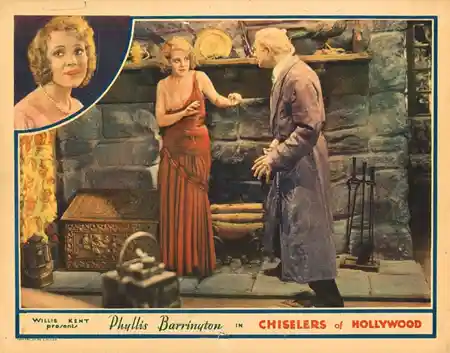
Phyllis Barrington, though, playing the youngest, kinda floats through scenes. Her character feels less defined, like the writers weren't quite sure what to do with her beyond being the 'sweet one.' She sort of just *reacts* to everyone else, which is a bit of a shame.
The pacing is… well, it’s 1930s pacing. Things happen, but not always with a lot of urgency. There are these long stretches where people just talk, and the camera just sort of sits there. You get a real sense of the stage play influence, you know? It’s not quite cinema yet, not always.
One scene, in particular, sticks with me. It's when Sheila's character is trying to get a role. She’s rehearsing lines, really trying to sell it. The director, played by Dell Henderson, just looks so *bored*. His reaction shot lingers for a good five seconds too long, and it made me giggle a little. Was it intentional? Hard to say with these older films. It felt more like an editor held the cut a beat too long.
And the dialogue, oh boy. It’s often very direct, no real subtext. People say exactly what they mean, sometimes over and over. "I love him!" "But *I* love him more!" You get the picture. It lacks the kind of natural flow you’d expect even from a slightly more polished film of the time.
The whole 'Hollywood dream' angle is a bit flimsy, too. They talk about making it big, but we don't really *see* much of the grind. It's mostly about the personal drama between the sisters and this John Smith character. The background noise of the movie industry just feels like a backdrop, not a living, breathing part of the story.
Charles Delaney pops up as a studio guy, and he’s got this great sneer. You just *know* he’s up to no good. It's a small part, but he makes an impression. Some of these character actors really knew how to chew scenery without saying much.
The film tries to build tension around the love triangle, but it never quite hits. John Smith, bless his heart, doesn't have a whole lot of personality to anchor the rivalry. You can almost feel the movie trying to convince you that this man is worth fighting over, but it just doesn’t land.
There's a moment near the end where one sister makes a grand sacrifice, but it feels unearned. Like, the plot just needed someone to do something noble, so *poof*, there it is. The emotional beats don’t always connect, which is a common issue with films from this specific period.
Look, Playthings of Hollywood is an interesting artifact. It shows you a particular style of moviemaking that was still finding its footing. It’s got some unintentionally funny moments, some clunky dialogue, and a few performances that genuinely try to elevate the material, even if the script doesn't always help them. It’s definitely not Blue Skies, that's for sure. For historians or folks who love the very early talkies, it might be a curious watch. For everyone else? Probably a pass. Unless you like watching people awkwardly profess their love for a man named John Smith. Then, by all means. 😉
IMDb —
1930
Community
Log in to comment.